
Aminatou Sow and Ann Friedman Saved Their FriendshipWith Couples Therapy
In their debut book ‘Big Friendship,’ the hosts of ‘Call Your Girlfriend’ explore the joys and challenges of their 11-year bond
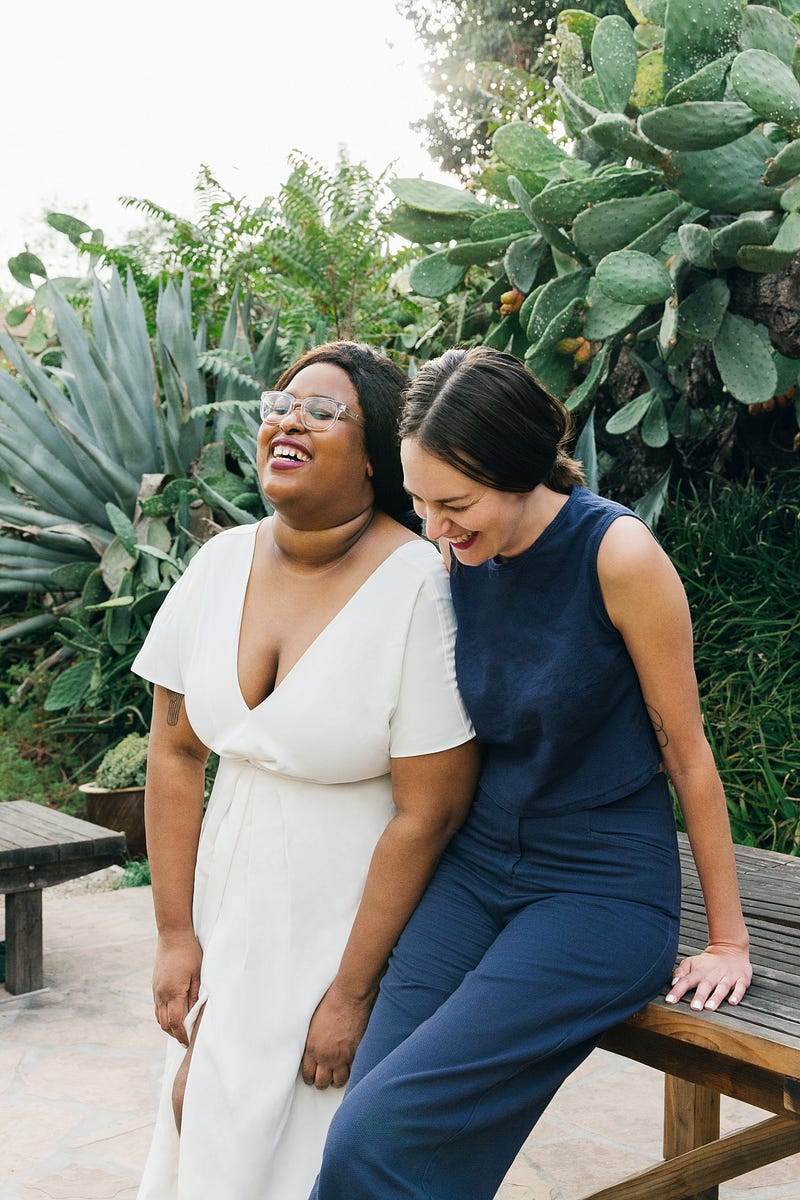
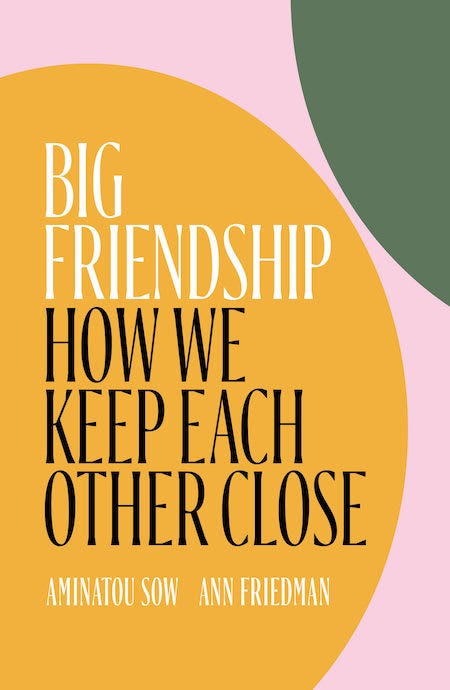
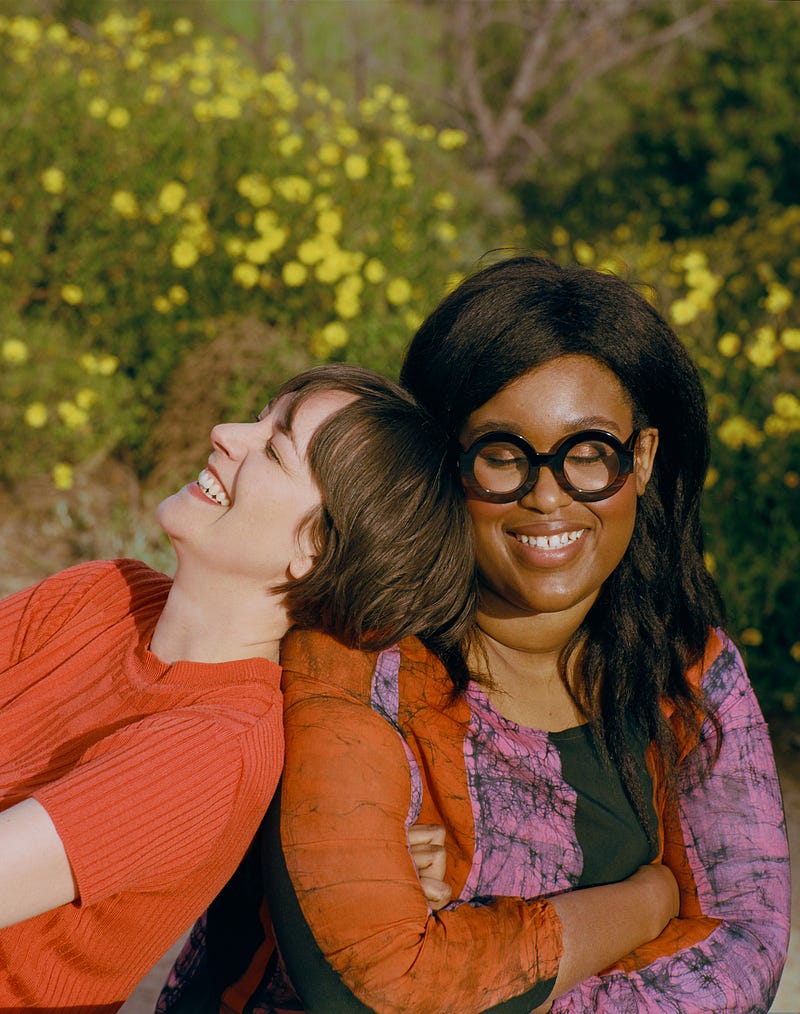
Aminatou Sow and Ann Friedman, hosts of the popular podcast Call Your Girlfriend, have been friends since 2009. Like a lot of friendships between BFFs, they’ve given each other much-needed pep talks, shared memorable vacations, and navigated uncomfortable conversations. Sow, a writer and cultural commentator, and Friedman, a journalist and media entrepreneur, value Big Friendship, which they define as “a strong, significant bond that transcends life phases, geographical locations, and emotional shifts.” Big Friendship is also the name of their new bestselling debut book, which explores the delights, complexities, and challenges of friendship, and what it takes to keep it going.
ZORA caught up with the long-distance besties to talk about love languages, going to couples therapy, and healing after a friendship ends.
This interview has been edited and condensed for clarity.
ZORA: After reading Big Friendship, I kept thinking about love languages. What are your friendship love languages?
Ann: One of our love languages is gifts. That’s for sure.
Aminatou: Yeah. I’m a quality of time person, I got to say.
Ann: We have a shared commitment to give gifts. But it’s true, quality time and acts of service. I am a big acts of service person.
What’s the best gift you’ve received from one another?
Aminatou: I can’t even start to tell you how many good gifts Ann has given me. But I will say that recently she made me these napkins that she had sewn herself. It was the perfect gift.
Ann: When I think about my answer to this question, I think about so many instances where Aminatou has noticed a gap in my life and bought me a little something to fill it. When we were working on this book, I was staying in New York and the place I was staying in had a nice bathtub. I was taking all these baths, so Aminatou brought me this really amazing bath oil that I used for the duration of the time I was staying there. It’s really such a little thing, but those are the things that really stand out to me, the noticing.
“The thing that has always been true about our relationship is that we are women who follow up.” — Aminatou Sow
What does showing up in a big friendship look like during a pandemic?
Aminatou: It goes back to your question about love language. How do people feel supported as individuals? I have really appreciated having regular phone check-ins with some friends and hearing spontaneously from other friends where we don’t have to compare schedules, figure it out. I will also say that the phone and voice memos have been really important for me. Check in with your friend to see how they want to be communicated with. Declaring the intention that you want to stay connected through this pandemic moment and then checking in with your friend about how they want to do that is important.
Ann: Checking in with friends on how they want to be checked in, for me, has been some of the best conversations that I’ve had in the pandemic because I know that I’ve been really anxious about showing up for people in my life. Sometimes that’s all it takes. The anxiety can drop from there and really, understanding that, “Oh, yeah. We are living in an extraordinary time right now.”
The book details how you both went to couples therapy to save your friendship. What did it take to go from making the verbal commitment to then physically and emotionally showing up to therapy?
Aminatou: The thing that has always been true about our relationship is that we are women who follow up. It’s how we are able to be friends and how we’re able to be co-workers. We gave each other homework about the next step. I think that that’s generally a good practice is to always have follow-up items, action items. Between the time we suggested going to therapy together to butts in the seats was probably a month and a half, because we had to find the person and that was an ongoing conversation. Then, we had to make the time to see the person.
Ann: I think for us, the agreement that we were going to do this was, in and of itself, very powerful because it was a moment in our friendship when we were both feeling unsure about whether the other person really wanted to keep it going or how committed we were to each other. The decision that we were going to at least try to find a therapist to work with us signaled, at some level, a vote of confidence that we both cared enough to take this next step together. Even though things were not great in our friendship at this time, just the act of deciding was very powerful.
“I think that is one of the incredible things about investing in a friendship — that it is also an investment in yourself and figuring out how you are in a big friendship.” — Ann Friedman
Did therapy change or improve how you each navigate rocky moments with other friends?
Aminatou: Yeah. Personally, I have so much more of an awareness of the fact that I have to be able to name things and feelings that are uncomfortable with other friends. I know that my tendency, in the past, has been to bury it and be like, “Oh, that’s not a big deal.” Now, from this experience with Ann, I know that that is something to be extra vigilant about. What are the things that I do not talk about with my other friends, and why are we not talking about them?
Ann: I have also learned so much about my own patterns, I guess, in friendship. What are the kinds of conflicts I routinely avoid? Similar to Aminatou, what are the things that I am not bringing up directly with my other friends, and instead making assumptions about? I think that is one of the incredible things about investing in a friendship — that it is also an investment in yourself and figuring out how you are in a big friendship. How you show up for a friend can really tell you a lot about the other stuff you have going on emotionally, which is not always easy for you to identify. The process was really, really revelatory about myself.
I appreciate that the book includes the opening lines of Pat Parker’s poem “For the white person who wants to know how to be my friend.” Given the current cultural climate, how do you show up for a friend of a different race without having them do the emotional work?
Ann: I’m thinking about the last part of that, the “without having them do the emotional work.” I think it is really true that being the one to initiate conversation about the way race and racism, anti-Black racism in particular, affects our friendship is something that I now really understand as an important part of my role as a White friend in this interracial friendship. But the idea of fully removing an emotional burden, I don’t know if that’s possible in this moment. I do know that it’s something that I definitely want to continue to work to do. But I also am very aware of that because this world treats us so very differently based on our different races, that I’m not sure that I can ever fully, through my actions in this friendship, remove the kind of emotional toll that it takes Aminatou to stay in the friendship with me. At least not 100%, and that doesn’t mean I’m throwing up my hands and not working or not being the one to name something or try to engage first.
In Big Friendship, you remind readers that exercising open dialogue and honesty during uncomfortable conversations about race and cultural differences is vital. Can you elaborate on the importance of communication and candor?
Aminatou: You have to remember that friendship is a really intimate kind of bond. Are you communicating your cultural differences? And how is the other person receiving? To be clear, in our friendship, we were talking specifically about Black and White interracial friendships. Not all interracial friendships are between White people and Black people, and that requires a different kind of cultural dexterity as well. But I will say that within a friendship, where you are saying to someone, “You are important to me,” that not being able to talk about your cultural differences will always be a threat to the friendship. Whether you acknowledge it or not. Because it means that you have a lack of communication about something that is foundationally different. But it doesn’t have to be that way.
Also, we write in our book that race is bigger than our friendship. There is no amount of one friend being woke enough or good enough or whatever that is ever going to close that gap. I think that thinking about it as less of how it’s being perceived externally and more of inside of our friendship. How are we showing up for each other? How are we being generous with each other? How are we communicating about our sameness and our differences? How we communicate points of pain is very important.
Ann: Thank you for that articulation because that is really what I was trying to get at when I said that I was struggling with how to remove the emotional burden, because that is exactly what I meant, which is that this is an ever-present situation that is going to require candor. Thank you, Aminatou.
In the book you all write about the act of stretching, which is when two friends are making an effort to figure out how to adapt to the differences and shifts that shape their bond. How did you each stretch yourselves while collaborating for this book?
Aminatou: One example that comes to mind is that we had to take time out of our lives and live together while we were writing a book. That is not in the day-to-day of our lives and it required a really big sacrifice from the both of us, in time, space, and comfort. It’s one thing to be collaborators; it’s another thing to just go this deeply into our lives to do this project together. Ultimately, it was a stretch that felt very good.
Ann: Also, we are people who are at our peak brain function at different times of the day. My brain really slivers off for real around 3 or 4 p.m. Aminatou comes alive in those hours. Sometimes that was a real advantage. At other times, we had to push ourselves to be working at a time that wasn’t comfortable or easy for us just because we had to get up and do it together. Then, there’s the basic fact that we wrote this whole book together. We were in such an intense negotiation — and I don’t mean that in a contentious way. We really had to talk through so many minor details, so it wasn’t even just work style. It was about us both feeling 100% good with what we were putting down in words.
Friendship breakups can be painful. For each of you, what does healing look like when a friendship ends?
Ann: Honestly, for me it has almost always been time. Not just time in the sense that it becomes less painful over time, but also that I learn more about myself or I have some perspective on what was happening in the friendship as time goes on. I know that is not very useful advice for someone who is feeling the very real pain. Like the acute pain of mourning the loss of a friendship right now, that still feels fresh. But the honest answer for me, is time and perspective.
Aminatou: I want to echo that: time and perspective. A deeper self-knowledge about myself, and realizing why I felt those feelings. I think it also made me think so much about the times that I have been the person who was the point of pain in the friend breakup. Confronting that part of myself has given me a lot of compassion for people who have also hurt me.
Any tips for making friends as we get older, while also living through a pandemic?
Ann: I think it requires a certain amount of bravery and vulnerability to put yourself out there, in part because there’s this perception that in adulthood, we’re all supposed to have great friendships that work. I will say that, for myself, I have found a lot of joy in starting to explore friendships with people who I met at the tail-end of the normal time, or the before times, and following up with them because there is also an acknowledgement that like, “Hey, they’re stuck at home too.” Maybe there’s a little bit more desire for this kind of connection. For Aminatou and I, our friendship is reared in a joyful first meeting where we felt excited by the potential that we felt and wanted to know everything that was going on in each other’s brains. I don’t have great starting-from-scratch-in-the-pandemic advice, but I do think that if you felt a spark with someone in recent months before we went into isolation, that could be a thing worth following up on.
Aminatou: The feeling of “After you’re 30, it’s hard to make friends” is something that I really want to push past. Especially in the pandemic, I want to push past it because I know that I am currently feeling like my world is very small right now because I have this overwhelming feeling of like, “Oh man, everywhere that I’ve been are probably the only places I will ever go to, and, everyone that’s there will be the only people I will ever meet.” When I give in to that, I get really overwhelmed and sad, and I’m just refusing to believe that that is true.
Reaching out to people that I didn’t know very well in the before times and reaching out to them now and extending this arm of like, “Okay. You are also at home. Are you open to getting to know me because I am open to getting to know you,” is a very small act of resistance in the face of the pandemic. It makes me feel more alive, and I want that to be true for all of us.f