
Google launches Primary and Foreign Keys for BigQuery
How you can now use Primary and Foreign Key Table Constraints

In BigQuery, you now have the possibility to use primary and foreign keys when creating tables. In relational databases this feature is a standard, but also other Data Warehouses that combine this concept with column based systems and NoSQL offer primary and foreign keys. Now, Google is following suit with its Data Warehouse.
Both primary and foreign keys are utilized for providing data integrity. A primary key value is unique for each row and is not NULL. Each foreign key value in a row must be present in the primary key column of the primary key table, or be NULL[1].
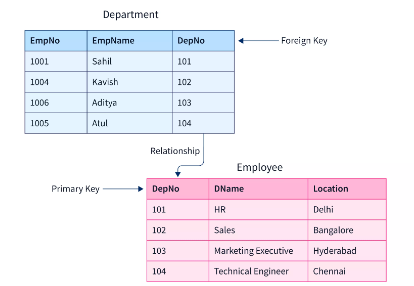
Also, after the creation with the CREATE TABLE statement you can provide existing tables with the ALTER TABLE ADD PRIMARY KEY statement, or the ALTER TABLE ADD CONSTRAINT statement if necessary with an appropriate key.
First of all good news, since you can now also reproduce structures like Star and Snowflake schemes in BigQuery from source systems. But one should also warn against misusing it, because using BigQuery as a relational database and its use cases makes no sense, and one should also consider adopting the schema of the source systems. BigQuery is column based and performs best with denormalized data. As I said, you can of course still do it but you should have costs and performance in mind, on the other hand you have data integrity as an argument, this must be assessed against each other.
Other recently added new features that have been added to Google BigQuery and might be interesting for you:
Sources and Further Readings
[1] Google, TABLE_CONSTRAINTS view (2023)
[2] Scaler, Foreign Key in SQL — Scaler Topics (2023)


