
Fences Is Not the Problem. Black Elitism Is.

I was drawn in by the photo of the tall young Black man with a red tie, staring wistfully into the ether, and his mother, a black woman, statuesque, perfectly coiffed and staring straight into the camera. I was intrigued by the headline, “A Black Student’s Mother Complained About ‘Fences.’ He Was Expelled” , which drew me in even further. As someone who writes, researches, and lives a life of a Black mother fighting for anti-racism in America’s schools, I began to read with earnest interest, believing that I would be silently praising this mother as she fought for her child.
But as I read, paragraph by paragraph, quote by quote, my interest turned to anger. By a third of the way in, I realized that instead of rooting for her, my distain for her quickly overcast any praise I may have for her. Indeed, by the end, I strongly disliked (I originally wrote “hate,” but I didn’t want to be that harsh) everyone in this story, but most intensely, I strongly disliked this Black mother.
A quick summary of the problem: This young man, Jamal, in the ninth grade, attends an elite private school in North Carolina. In his freshman English class, the teacher assigned the play “Fences,” written by acclaimed Black playwright, August Wilson for the class to read. Fences is a 1985 play about a working class Black family set in Pittsburgh in the 1950s. It won the 1987 Pulitzer Prize for Drama, and the Tony Award for Drama that same year. Fences was brought to the screen in 2016, with Denzel Washington and Viola Davis playing Troy and Rose. Viola Davis won the Academy Award for Best Supporting Actress that year.
Now, Jamal’s mother, Faith, did not like the idea of reading this play in her son’s class, where he is the only (or one of a few) Black children. She approached the teacher, and then escalated the complaint up through the administration. According to the school, based on some of Faith’s strident actions, the school terminated Jamal’s enrollment. So why does Faith oppose her son reading this play in his class? According to her, “the themes were too mature for the group and would foster stereotypes about Black families.” Also according to her, “You can have the important conversations about race and segregation without destroying the confidence and self-esteem of your Black students and the Black population.”
Let’s break this down. As mentioned above, Fences is about a Black family living in the Rust Belt in the 1950s. Troy, the father, makes a living as a trash collector, but really wants to drive the actual truck, and is rebuffed by his boss. Troy once had dreams to play baseball professionally, but the color line in professional sports had not yet been fully broken. He leads most of his life bitter about that dream being dashed. This bitterness leads him to be angered by his son Cory’s dreams of playing professional football and later being a musician. Troy throws Cory out of the house, and Cory eventually goes on to enlist in the military.
Rose, Troy’s wife and Cory’s mother, is the backbone in this family. She supports her husband without being controlled by him, and she supports her son, who shares his father’s stubbornness. She suffers several insults by her husband, including infidelity. The biggest insult is when he returns home one day, holding a newborn baby, after his mistress, the baby’s mother, died in childbirth. Troy begs his wife to raise the child as her own, as the baby had no where else to go. She agrees to raise the child as her own, but she refuses to take Troy back as her husband.
Eventually, Troy dies. Cory returns home to attend his father’s funeral, but still angry and reluctant to offer forgiveness to his father even in death. Eventually, however, both mother and son do their best at forgiving Troy.
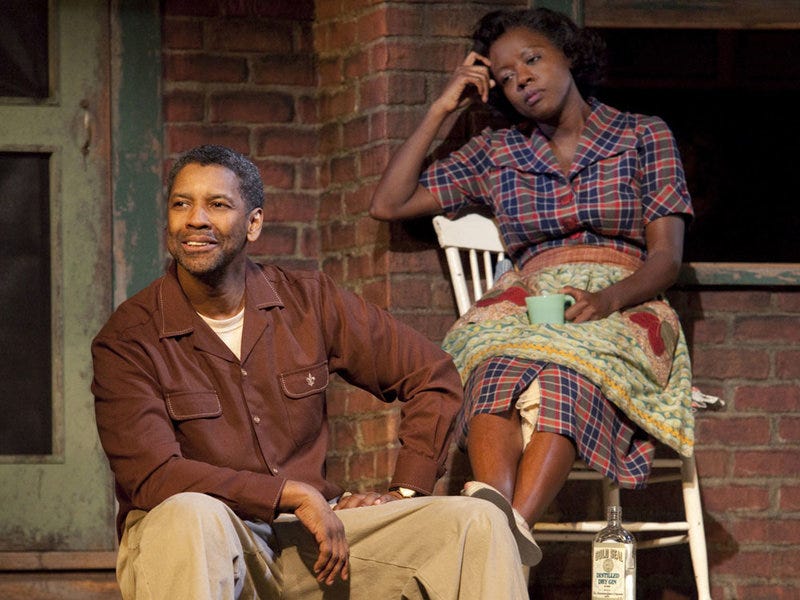
Fences tells a common story of Black people in the Rust Belt in its time. Indeed, its universality of experience of so many Black people led to the play being praised for its realness, its relatability, its sincerity.
I grew up in a family similar to that portrayed in Fences. Solidly working class, with parents who worked hard for my brother and myself, likely held from fulfilling their wildest dreams by racism and classism. My experience is the “stereotype” that Faith is so afraid would make her son feel bad about himself, such that his “confidence and self-esteem” would be destroyed by even reading the play.
It is ironic that Faith’s belief that working class Black people are to be ashamed of, such that her son should not be exposed to them, is the real problem happening at Providence Day: the virulent racism that Black children experience as a daily reality in their own school. This racialized violence is captured in a Instagram group where these Black children memorialize their experiences attending the school. These children write about being singled out in class by teachers and asked to speak on behalf of Black people; being cast out of a play because the drama teacher only wanted White children to play characters originally written as white; listening as their White classmates use n-gger with impunity; White children terrorizing their black classmates with clothing bearing the confederate flag; a teacher encouraging children to say the n-word while reading period literature.
Faith would have a strong case for not reading Fences not because of the play’s portrayal of Black people, but because the school could not be trusted to read and discuss the play without racism being attached to the play itself by the school. Jamal himself points not to the play’s themes themselves as a source of his discomfort in reading the play but because when words like Negro and n-gger come up, his classmates will “just look at you and laugh at you, talk about you as soon as you leave class. I can’t really do anything because I’m usually the only Black person there.” Reading Fences at Providence Day may quite well impact the “confidence and self-esteem” of Black children at the school, but their confidence and self-esteem has already been destroyed.
And here is where my anger toward Faith lies. Children are being called n-gger on a regular basis, but you want to fight about Fences? We in here talking about Fences? Fences. Not the every day racism. Not the daily violent assaults. Not the teachers who treat Black children like second-class citizens. We are talking about an award winning play written by a brilliant Black playwright, an award winning film directed by a Black icon. You are willing to subject your child to virulent racism every single day, but you want to fight about Fences? You admit that you continue to send your child to a school that visited a planation in his earlier years, but you want to fight about Fences? Your desire for elitism is so strong that, on a daily basis, you willingly drive your child to this school, kiss him and say have a good day, when you know he will be assaulted on account of his blackness… but you want to fight about Fences?
I ended reading this story wishing. Wishing that as a researcher, I could sit down and interview Faith, to try and understand why she’s fighting against a play instead of removing her child from daily racial assault before the school removed him. Wishing that as a writer, I could write her story, to understand her deep her desire for elitism. Wishing that as a Black mother, I could shake her to implore her to stop seeking prestige at the expense of protecting her child.