
ILLUMINATION Writing Challenge
Feeling Jealous? Here’s Why You Shouldn’t
Possessing what you love is the quickest way to lose it.
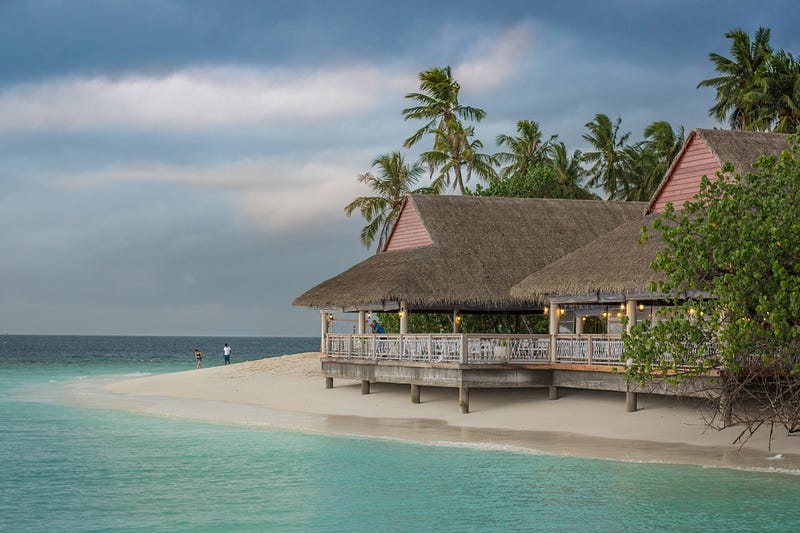
“Are you jealous of the ocean’s generosity?
Why would you refuse to give
This joy to anyone?
Fish don’t hold the sacred liquid in cups!
They swim the huge fluid freedom.” — Rumi
Grand passions make for better stories.
We all want to be good. Or at least, we want to appear to be good. But our hearts bubble and boil with destructive forces. Greed and lust and jealousy fascinate us because they make us feel alive.
When you want something, when you want it so badly that it feels like an invisible fist closing around your heart, you get to indulge in the exquisite pain of being absorbed by something greater than yourself.
The God of the Old Testament’s most notable characteristic is jealousy. His very first commandment to his chosen people is that they abandon all other gods.
But it’s a childish mind that conflates jealousy with love. Love inspires us to admire a thing of beauty, our hearts filling up with tenderness and wonder. Jealousy only wants to possess.
Desire is the engine of the world.
I’m not only talking of the Instagram thirst traps, the inspiration porn, the gloating stats and artless bragging of those who stumble into a bit of luck and cling to it with the full-throated arrogance of the talentless. Desire runs the world. The delicate mechanism of the watch that shows through the crystal casing.
The trees reach toward the light they crave and cast everything else in shadow. A hamster will eat her babies rather than let a predator take them. Every vein of silk that sparkles in dancing sunlight is a thread of wild desire.
Our brains are 50,000 years old. No update is coming. Born in dark forests where food was uncertain, we believe in scarcity while we sing about love. Our desires make us jealous. Our jealousy makes us afraid.
The desire to possess a beautiful thing is the music the world plays through you. You are one more hole in the flute. Stand on your rooftop and sing. But don’t mistake the instrument for the song.
Jealousy can be manufactured.
Electrical stimulation of the left side of the frontal cortex creates strong feelings of jealousy. Physically, we know where jealousy comes from. We can turn it on. But we can’t turn it off.
Some stroke patients lose function in the right frontal cortex. The left side takes over and can cause a condition called Othello syndrome. Patients become consumed with the idea that their spouses are cheating on them, and can’t be convinced otherwise, even when the accusations are impossible.
Jealousy rushes in when we feel ourselves losing or about to lose. It comes from those dark forests where we were born, fueled by ancestral memories of food shortages and lack of mates.
It’s the animal impulse that screams at you that there’s never enough to go around. That to be safe, you must control and possess what you desire so that nobody can take it from you.
But we know better, don’t we? We know that, guarded or not, everything will eventually be taken from us, one way or another. We know — I hope you know — that there’s no You for anything to be taken from.
We destroy what we love.
Our grasping hands are too clumsy to handle beauty without shattering it. On the mountain above my favorite park, multimillion-dollar houses rise out of the gray granite rock. Gigantic log cabins with professional-grade kitchens sprout in the forest. Ultramodern boxes of polished concrete sit on stilts above the ocean. This is what we are supposed to want.
People who loved the forests and the ocean here damaged both to build these houses. Every fertile valley is choked with development. Every sea-circled island is marred by homes. That mysterious girl whose caprice was half her charm becomes your vindictive ex-wife.
That high prize, so beautiful that you could hardly breathe when you gazed up from the base of the mountain, is just a slight variation on the hollowness you felt before you climbed.
The view from these multimillion-dollar homes is magnificent. The ocean is forever changing, shining under the summer sun or raging with January storms. But its beauty lies in no small part in its wildness. The beauty you can never possess is the only one we really want.
And if it belongs to anyone, the world belongs to whoever occupies it. The view belongs to everyone who sees it.
We live in the shadow of that jealous God.
Whether we believe in it or not.
It has shaped our understanding of love. Our once-monotheistic society was built on the idea of love as possession, of protection as ownership.
But there’s only something to lose if you think there is. If you don’t, there isn’t. As long as you believe yourself to be some concrete thing, set apart from a world you see as separate and hostile, you will live forever in the shadow of loss, where jealousy sharpens its beak on its scaly hide.
Jealousy is an emotion, and like all emotions, it can’t be eradicated completely. But like all emotions, you have the choice of whether to believe in it or not. You can’t change what you feel, but you can change how you feel about what you feel. Just like other emotions, when you stop believing in your jealousy, it fades away without leaving a trace behind.
At dusk, the windows twinkle.
The houses of the rich reflect the setting sun. From the other side of the bay, you can see them flash against the growing darkness of the mountain. Supercars growl into garages, and Filipino nannies and maids take the long bus ride home. We’ll never live in houses like this. Why would we want to?
Now is the time, the grinning realtors leer from a thousand billboards. Get that mortgage. Put that money down. There’ll never be a better time to buy. The same mantra they’ve been repeating for a generation now, at least.
Desire drives flowers up from the humid soil. But love makes them bloom. From one perspective, everything on earth competes with everything else, the savage battle for resources that has gone on since the dawn of time.
But you don’t have to look at it that way. The flowers share their pollen with the bees that visit and don’t worry about where the insects go afterward. The sea advances and retreats, advances and retreats, but never tries to possess the rocky beaches along its edge. The ocean gives us all life, and never asks for anything in return.
Who needs a mansion? I love the sea, the sky, the mountains, just as the millionaires do. The beauty of the world that shines with a melancholy glow, calling me back to a place without time, without words, without loss.
But everything I love can’t be owned. If it could, it would be worthless. When I look out over the multimillion-dollar view from the park, I feel no need to possess what I see. There’s no room for jealousy in that vast liquid freedom.
Thanks to Dr Mehmet Yildiz for this jealousy-themed writing challenge.


