
I’ve seen the need for Compassionate Release up close at both the state and federal levels — also the inexplicable power of Systemic Abuse that robs so many dying people and their families of a chance to say goodbye.
Federal Compassionate Release During COVID-19 Pandemic (the GOOD, the BAD, the UGLY)
Federal Bureau of Prisons (BOP) told lawmakers that between March 2021 to May 2021 nearly 31,000 prisoners requested compassionate release. The BOP approved just 36.
According to the Bureau of Justice Statistics, there were 4,515 deaths in state and federal prisons in 2018. This number has been steadily increasing in recent years, with an average of 4,000 deaths per year since 2010.
The leading cause of death in prisons is illness, followed by suicide and homicide. Illness accounts for about 80% of all deaths in prisons, with heart disease, cancer, and stroke being the most common causes. Suicide accounts for about 10% of all deaths in prisons, and homicide accounts for about 5%.
The rate of death in prisons is much higher than the rate of death in the general population. In 2018, the death rate in prisons was 346 per 100,000 inmates, compared to 8.5 per 100,000 people in the general population.
As an Ivy-league attorney, start-up techie, and someone who served a 6-year stint as San Quentin (also former Managing Editor of the San Quentin News), I often used novel ways to explain complex concepts to an uninitiated audience. New mental constructs are both difficult to formulate and consume. The time it takes to ‘set the table’ with context bores people and you lose their attention. I seek to keep your attention with this personal vignette from San Quentin.
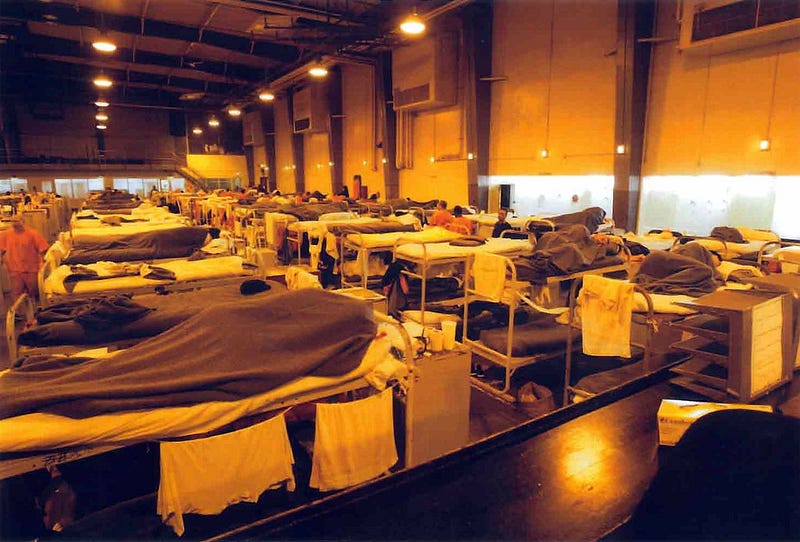
It’s 3 a.m. and I’m awake. Not that hard to explain, I’m five feet up in the air on a metal ‘cookie sheet’ bunk under the full-moon brightness of the safety lights in a Level II dorm with 200 other inmates in San Quentin’s H-Unit. The old Indian with the white ponytail and feather neck tattoo has gone ‘Man-Down’ again.
He is parchment-pale with stage IV cancer and the meds are messing with his digestive tract. He has been heaving for twenty minutes. The paramedics are here and have strapped him to a gurney for transport to the SQ’s clinic. It’s not like it’s the first time I’ve seen someone die at SQ.
The C.O.s are making most of the noise. When the alarm goes off in one of our five buildings (same alarm for ‘Man Down’ as anything else), they all come running to make sure it’s not a riot. Like cops everywhere, they have come to make a show of being busy in numbers. They are jaw-boning and making jokes as if they were at a Giants tailgater. I can’t tell if these self-absorbed ‘professionals’ are getting off on the suffering or just reminding themselves how they walk the ‘toughest beat in California.’ After all, they are working another boring night at the SQ and rarely their podiums for anything approaching real work.
PRISON DEATH EXEMPLIFIES SYSTEMIC RACISM/DEEP STATE
I’ve seen the need for Compassionate Release up close at both the state and federal levels — also the inexplicable power of Systemic Abuse that robs so many dying people and their families of a chance to say goodbye.
I saw death in prison, a lot of it. All the horrors media presents as news or entertainment are real if rare. Claims of extreme violence and depravity are over-blown. Most of the death I saw was cancer, suicide, Type-2 diabetes, Hepatitis C, and heart attacks. THE FIRE: How I destroyed my psychic delusion house by a crime
Systemic Abuse is about systems (a more accurate definition is systems with “residual race dynamics’). Many on the Right can’t see it because these systems are never clearly explained. Merely citing facts is not enough to see it. To be honest, many on the Left can’t explain it either.
Concepts make more sense with clear examples. The best examples are ones describing something people hold dear. I think explaining Systemic Abuse manifested in the FSA Compassionate Release process could point toward a way of healing the culture war divide and reuniting our nation.
I was down two months before I experienced the first death of a fellow inmate. He was an old man I barely knew (“old” here being relative, since, technically, I’m an old man, too). He was a lifer. He suffered from liver cancer and emphysema. The prison block we inhabited in those days was a miserable place. It was five stories of concrete hell. No air conditioning — not even fans.
We had old-fashioned steam heat in the winters and lots of old, uncaulked windows. This afflicted inmate had been complaining to medical for months to be moved to a more comfortable unit, one closer to medical and the chow hall. He had trouble breathing, walking, and sleeping. He died just before Easter of 2020.
I saw death in prison, a lot of it. All the horrors media presents as news or entertainment are real if rare. In prison, claims of extreme violence and depravity are overblown. Most of the death I saw was cancer, suicide, Type-2 diabetes, Hepatitis C, and heart attacks.
Here I will focus on the Federal prison system’s compassionate release process, the Good, the Bad, and the Ugly.
PRISON DEATHS
From 2001 to 2018, 90% of the Federal Bureau of Prisons (BOP) prison deaths were due to illness. Suicide accounted for 5% of Federal prison deaths over the same period at a rate of 19 per 100,000 (the USA average was 14.2 per 100,000 in 2018). The mortality rate for Federal prisoners increased by almost 2% between 2017 (246 deaths per 100,000 Federal prisoners) and 2018 (250 per 100,000). (USA Bureau of Justice Statistics)
It’s worse in State prisons:
In 2018, state prisons reported 4,135 deaths (not including the 25 people executed in state prisons); this is the highest number on record since BJS began collecting mortality data in 2001 (344 per 100,00) Prison Policy Initiative.
I learned about the Federal system when I was hired by Root & Rebound (R&R) in the Spring of 2019 as a contract attorney to do new research on the provisions of the Federal First Step Act (FSA, passed in December 2018). Root & Rebound (R&R) is a national reentry and advocacy organization and it partnered with the Dream Corps (#cut50) to create “The first Step to Second Chances: A guide for people leaving federal prison under the First Step Act.” R&R had access to the original source material as Dream Corps (headed by Van Jones) was directly involved in drafting the First Step Act. What I learned was how Systemic Abuse looks from the inside.
I will use the Federal First Step Act’s Compassionate Release/Reduction in Sentence: Procedures for Implementation of 18 U.S.C.§§ 3582 and 4205(g) to demonstrate how the system/Institutional Racism/Deep State works. This system demonstrates the GOOD — FSA forcing change, the BAD — BOP resistance, and the UGLY — Courts are an improvement while confirming and legitimizing Systemic Racism/Deep State (The Good, the Bad, and the Ugly).
THE GOOD
The First Step Act (FSA) was a bipartisan effort by Congress and signed by President Donald J. Trump (yes, they worked together to pass it) seeking to reform the Federal criminal justice system.
WHY DID WE NEED A NEW LAW?
There are many goals the FSA seeks to accomplish. Here, I will focus on the Federal process for compassionate release. Before the FSA, virtually everyone that sought compassionate release died during the filing process.
In theory, the process was an administrative review (supposedly faster and cheaper than the courts). In reality, the torturously long BOP review process was stretched out by the very same BOP administrators. The BOP knowingly and intentionally creates obstacles for an incarcerated person to get through the administrative process and make it to court. for final review.
As the consequence, according to the New York Times, between 2013 and 2017, the BOP approved only 6% of the 5,400 compassionate release applications received. On average, it took the BOP 141 days to process approvals and 196 days for denials; meanwhile, 266 applicants died in prison.
If you want to know the various institutional delaying tactics used by BOP wardens, read Applying for Compassionate Release as a Pro Se Litigant in the UCLA Law Review.
Now, Under the FSA, if a warden does not respond to a request within thirty days, an incarcerated person can go straight to the trial court judge and seek court-ordered approval. This slight change in the law — that if your warden fails to respond to your petition within thirty days, you may file directly with the U.S. District Court— allows Federal incarcerated people the chance to speed up the process of seeking Compassionate Release, bypassing the BOP and going to court.
The U.S. Sentencing Commission Compassionate Release Data Report for 2020 found that courts granted compassionate release to 2,549 people, up from 145 in 2019. The massive increase was due to the COVID-19 pandemic and the FSA, which gave incarcerated people the ability to file motions for compassionate release on their own after “exhausting all Administrative remedies,” rather than rely on the Bureau of Prisons or government attorney (to file the court motion) to file the motion.
During COVID, the courts circumvented the BOP barriers to Compassionate Release.
THE BAD
Compassionate Release was authorized by Congress as part of the Sentencing Reform Act of 1984, codified at 18 U.S.C. § 3582(c)(1)(A). The BOP was ALWAYS intended to drive the Compassionate Release process. Congress gave the BOP permission to ask a court for a reduction in sentence for certain prisoners. An incarcerated person could not petition directly to the court for Compassionate Release — until the FSA.
The BOP’s failure to do so is long-standing, regardless of constant encouragement to use this tool for Compassionate Release. Consider the Federal Sentencing Commission had to change its guidelines in 2016: Section 1B1.13 is amended in the heading by striking “as a Result of Motion by Director of Bureau of Prisons” and inserting “Under 18 U.S.C. § 3582(c)(1)(A)”.
The Commission's stated purpose was “is intended to encourage the Director of the Bureau of Prisons to exercise his or her authority to file a motion…” US Sentencing Commission Guidelines Amendment 799
DID IT WORK? NO!
In the first full year of FSA, the BOP director-approved 55 such requests in 2019, a new director who took over in early 2020 approved only 36 requests in the 13 months since the pandemic took hold in March 2020. The downturn in approvals came even as the number of people seeking compassionate release skyrocketed from 1,735 in 2019 to nearly 31,000 after the virus hit.
The September 2021 Commission Report disclosed that incarcerated people filed 96.4 percent of the motions for compassionate release from January 2020-June to 2021 — BOP filed a mere one percent (2.6 percent were joint filings by the BOP attorney and the incarcerated person). Federal courts granted 3,602 Compassionate Release motions from January 2020 through June 2021, 17.5 percent of the 20,565 that were filed.
Direct appeals to the court were intended to be the exception, not the rule. The BOP was intended to drive the process of Compassionate Release as an administrative solution. Given BOP institutional obstruction, the FAS amended the underlying law to allow incarcerated people to make their case before the courts. While intended as an emergency measure, direct pleas to the courts have become the only viable option for Federal prisoners to seek Compassionate Release.
THE UGLY
The legal system is also stacked against the poor who cannot afford a good attorney (not just the administrative BOP). The BOP administrative process was intended to simplify Compassionate Release. But the Federal Bureau of Prisons told lawmakers that between March 2021 to May 2021 nearly 31,000 prisoners requested compassionate release, the BOP approved just 36.
You read the numbers right. In only three months (during the height of the first COVID-19 wave) there were nearly 31,000 Compassionate Release filings with the BOP. You can thank the Marshall Project for doing the work of extracting the totals from the 149 pages of BOP documents. I don’t have a way to compare the full-time period (18 months) where 20,565 filings were made with the Federal courts.
I don’t have to. The point is that a significant percentage of incarcerated people just gave up before even filing with the court. This is the stifling impact of our system (call it what you want, systemic racism, deep state, or “residual race dynamics”).
According to the information BOP sent to Congress, wardens denied nearly 23,000 requests because the person “does not meet criteria.” Of the 374 prisoners that wardens recommended for compassionate release during the pandemic, the agency’s central office rejected or did not respond to just over 90%, apparently without making any note as to why (That’s how BOP’s actions came to only 36).
“The BOP does not track the specific reasons for approval or denial of a compassionate release request at the Central Office level, as there can be several reasons for a particular decision,” BOP General Counsel Ken Hyle.
Before you think federal inmate pleas to the court are easy, even when they got to court, they were usually opposed by Federal prosecutors. Alison Guernsey, a clinical associate professor at the University of Iowa College of Law, said the Department of Justice often said prisoners requesting release couldn’t prove they’d asked the warden first. Sometimes, prosecutors argued that the Bureau of Prisons was doing its best to handle the pandemic responsibly, or that the incarcerated person begging for release wasn’t really at high risk from the virus.
“In court, prosecutors were fighting release and saying that this person doesn’t have a condition that makes them vulnerable — and then they would die, and the BOP would issue a press release saying that the person had underlying conditions,” Guernsey said. “The two-faced position of the Department of Justice, which includes the BOP, is really quite shocking.” Thousands of Sick Federal Prisoners Sought Compassionate Release. 98 Percent Were Denied
We start with a warden that won’t do the job of assessing a Compassionate Release request, a BOP General Counsel’s review that culls those that make it by the Warden, and a BOP Director that then denies 90 percent of those requests that make it through the gauntlet.
The FSA creates a new path for incarcerated people to directly to their sentencing court IF they have exhausted all administrative remedies OR the BOP has taken no action within 30 days of the request. Still, thousands of incarcerated people give up — either because they can’t hire an attorney, properly prepare a petition, or die.
THE WINNER: Institutional Racism & the Deep State
The whole idea behind “systemic racism” or the “Deep State” is that nested layers of government and socio-economic systems create differential racial outcomes. It does not require any of the system’s employees to be racist or even realize it exists — even the laws/regulations and their enforcement can be ‘color-blind’ still, a disparate impact results because of the system itself.
The criminal justice system is dynamic. A very important concept in dynamic systems is feedback loops. These loops can amplify or dampen changes and existing socio-economic dynamics. Poverty in one generation generally leads to more poverty. Crime and poverty are interconnected and feed each other (a positive feedback loop). Poverty drives down education status (positive feedback loop), and low education status drives up crime (positive feedback loop). The result, a System that abuses the incarcerated and results in a significantly greater negative impact on people of color.
For these reasons, groups of people who are currently of low socioeconomic status, who commit a lot of crime, and who face high levels of incarceration will likely have children who are in the same position. Because the past was indeed filled with racism, the system was driven into a state where blacks were faced with a disproportionate rate of poverty and incarceration.
If in prison and seeking Compassionate Release, an incarcerated person has a virtually impenetrable maze of regulatory or court processes they must follow to even get in front of a judge.
A lawyer can help, but if you’re poor, where do you find one?
That’s how true and pure Systemic Abuse works. It’s not the pervasive unconscious racial bias of the participants that drives it. The system’s set up the wrong way, by people who are irresponsibly wielding the power of government without thinking about its impact on marginalized communities due to the system at large.
Trying to fight against systemic racism in modern America is futile because it is not the problem that America is facing. What we must focus on is changing the state of race conditions and the embedded feedback loops that keep communities from being able to say goodbye to a dying family member.
What could work?
Is it possible to fire all the wardens and prison attorneys that are stalling any reasonable attempt to seek Compassionate Release?
No, further, these Federal bureaucrats would be replaced by subordinates that learned within the same system — assuming a similar result of blocking any reasonable Compassionate Release plea.
I believe that a workable procedural change can be made to implement this law as intended by Congress (to actually provide Compassionate Release).
- Make the Compassionate Release process an administrative instead of a criminal process — switch the jurisdictional court from criminal to administrative. Administrative cases require only substantial evidence, or such relevant evidence as a reasonable mind might accept as adequate to support a conclusion.
Consider that the current criminal process has three government lawyers AND the criminal courts involved in the process. One lawyer at the prison, the BOP General Counsel, and the Federal Prosecutor from the original jurisdiction where the crime was committed.
- The law should mandate the BOP begin the process upon a triggering health event or diagnosis (from “January 2020-June 2021 — BOP filed a mere one percent (2.6 percent were joint filings by the BOP attorney and the incarcerated person)” — see above).
- Any such process should have a presumption of granting the request upon demonstration of medical risk of death (e.g., if the inmate has a less than 66% chance of surviving 12 months). Any denial of a qualifying compassionate Release request should then be presented for an administrative court review (a quicker and cheaper process than one before a criminal court).
Man-down Skip, 75 years old, has called in the paramedics again. I’m only five cells down from him on the first tier of a five-tier West Block in San Quentin. He is dying from stomach cancer and can’t really eat anymore. Over the past three months, he has been taken to medical for a few days to fatten him up with IV-administered nutrients and then returned to his cell. He prefers being in his cell. At least there he can some contraband weed to ease the suffering. Robert, my cellie gets the weed and they smoke it together.
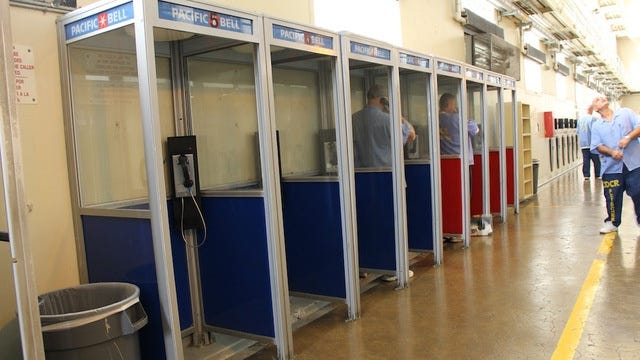
Skip has another reason for being in his cell. It is the only chance he has to speak with family members from the bank of phones in the Block — 15-minute calls alongside six other inmates during approved hours….
Identified by CDCR # AN0094, the author was formally known as Wayne Boatwright. He is a fifth-generation Californian and inmate that served some 2,300 days of a 2,800-day sentence for gross negligent vehicular manslaughter. He still remembers being a husband, father, and church deacon before becoming the destroyer of LIFE and donning CDCR blue.


