avatarJohn Dean

Free AI web copilot to create summaries, insights and extended knowledge, download it at here

2100

Abstract

/guide/Roseate_Spoonbill">Cornell Lab</a>:</p><blockquote id="7e98"><p>The flamboyant Roseate Spoonbill looks like it came straight out of a Dr. Seuss book with its bright pink feathers, red eye staring out from a partly bald head, and giant spoon-shaped bill. Groups sweep their spoonbills through shallow fresh or salt waters snapping up crustaceans and fish.</p></blockquote><p id="c0bd">In my years of visiting Florida, I have usually seen the Spoonbills in the same place — a swamp off Estero Bay accessible by a long wooden walkway. On good days, usually after heavy rains, congregations of these wonderful birds can be found.</p><figure id="6d7e"><img src="https://cdn-images-1.readmedium.com/v2/resize:fit:800/1*ir43nbFmK9TcV0xee_t0ig.jpeg"><figcaption>Group of Roseate Spoonbills by J. Dean</figcaption></figure><figure id="48a2"><img src="https://cdn-images-1.readmedium.com/v2/resize:fit:800/1*4I9gz31A2f3sJ8Q7uuFqjQ.jpeg"><figcaption>Pair of Roseate Spoonbills by J. Dean</figcaption></figure><p id="1737">More common but sometimes equally rewarding are some of the more common birds — Ibises, Egrets, and Herons.</p><p id="acf9">Although I see them daily while in Florida, I never have tired of seeing Ibises. With their curved red bill, I always find them a welcome sight.</p><figure id="e839"><img src="https://cdn-images-1.readmedium.com/v2/resize:fit:800/1*xSp4dsV7TfqZZV-9btN_Qg.jpeg"><figcaption>Ibis by J. Dean</figcaption></figure><p id="bf5d">In the 1920s, before modern conservation enforcement ended the reckless hunting of all Florida birds, Ibises were even more common than they are today. That’s hard to imagine, but I’m sorry I missed the show.</p><figure id="d782"><img src="https://cdn-images-1.readmedium.com/v2/resize:fit:800/1*aUKYf793pL9iyctsxQbvUw.jpeg"><figcaption>Six Ibises in Bonita Springs, Florida by J. Dean</figcaption></figure><p id="0d9b">The <a href="https://www.allaboutbirds.org/guide/White_Ibis">Cornell Lab</a> reports:</p><blockquote id="2ffa"><p>At each step, their bright red legs move through the water and their curved red bill probes the muddy

Options

surface below. As adults, these striking wading birds are all white save for their black wingtips, but watch out for young birds that are brown above and white below</p></blockquote><p id="8657">Anhingas are another common bird in Southwest Florida. You see them everywhere. For some, they are easy to ignore. I am not in that crowd. When I see one, I stop to admire it. If I have my camera, I shoot a few pictures.</p><figure id="adfa"><img src="https://cdn-images-1.readmedium.com/v2/resize:fit:800/1*dl_Ijxr5Ma_5jdWX2ETWmg.jpeg"><figcaption>Anhinga in Bonita Sprngs, Florida by J. Dean</figcaption></figure><p id="8164">Like their friends, the Cormorant, the Anhinga likes to dry out after swimming by spreading its wings in the sun.</p><figure id="a4b7"><img src="https://cdn-images-1.readmedium.com/v2/resize:fit:800/1*CdkgnwEUNEGtCLvwRj1BBQ.jpeg"><figcaption>Anhinga spreads its wings by J. Dean</figcaption></figure><p id="618f">Cormorants can be indistinguishable from novice birders. I still sometimes mistake them for Anhingas, especially from a distance. Please notice the difference in the shape of the two birds’ bills.</p><figure id="1f14"><img src="https://cdn-images-1.readmedium.com/v2/resize:fit:800/1*zEIoR_KfDwgPRkT29d_Low.jpeg"><figcaption>Cormorant by J. Dean</figcaption></figure><p id="3744">One of my favorite pictures is one I took several years ago of a pair of Cormorants. I called it “Cormorant Couple” and entered it into a local photography contest. It didn’t win.</p><figure id="72b8"><img src="https://cdn-images-1.readmedium.com/v2/resize:fit:800/1*lL0OL4t8aRv_Z7dR9lDyYA.jpeg"><figcaption>Cormorant Couple by J. Dean</figcaption></figure><p id="1456">I will share additional pictures of Florida’s birds in a future article, including the Yellow Crowned Night Heron, the Green Heron, the Cattle Egret, and the Gallinule.</p><h2 id="cd6a">About the Photography</h2><p id="32a5">The photographs were taken on a variety of Nikon cameras starting in 2017 through 2021. These cameras included the Nikon Z7, Nikon D3100, Nikon AW100, and my iPhone 7.</p></article></body>

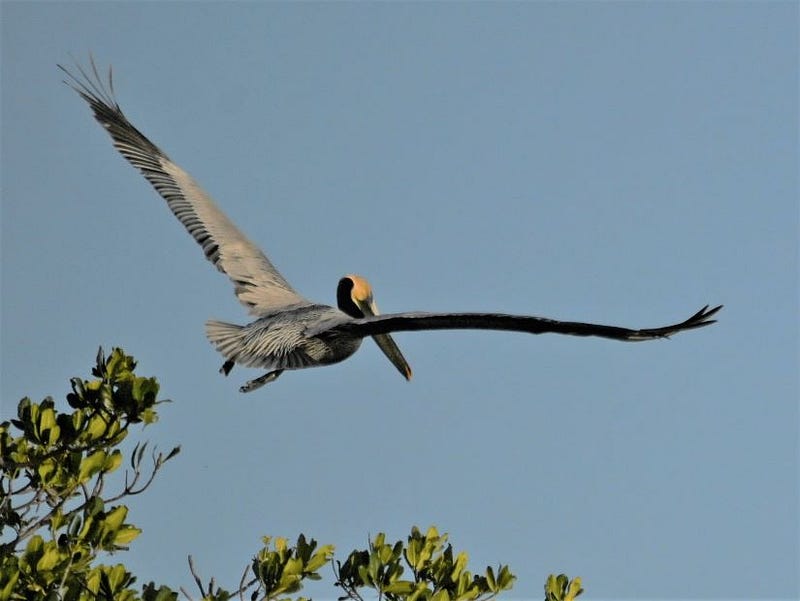
Pelican in Flight, Estero Bay, Florida by J. Dean

Feathered Friends from Florida

Astonishing birds in Southwest Florida

If you get the chance to visit Southwest Florida, take a camera and binoculars. The area offers extraordinary opportunities to see some of the most incredible birds in the world.

The birds range in size from tiny Hummingbirds to enormous Wood Storks, Eagles, and Pelicans. I enjoy them all.
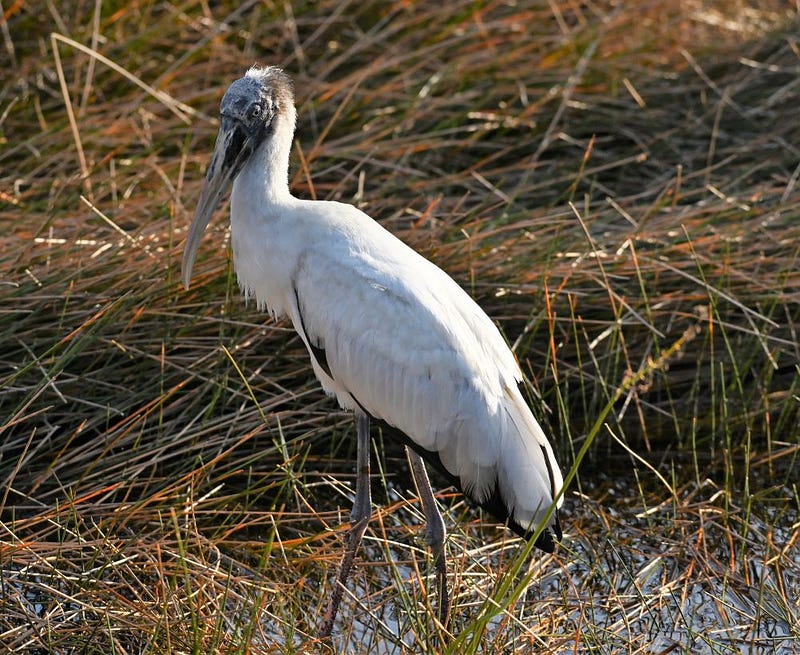
Wood stork by J. Dean

Wood storks are not often seen in the U.S. outside of Florida. According to the Cornell Lab on Ornithology:

This bald-headed wading bird stands just over 3 feet tall, towering above almost all other wetland birds. It slowly walks through wetlands with its long, hefty bill down in the water feeling for fish and crustaceans. This ungainly looking stork roosts and nests in colonies in trees above standing water.

I once stumbled across one standing immediately in the path in front of me. Although usually a bit skittish, this one stood his ground. He starred at me, waiting for me to turn around and leave his (or her) space.
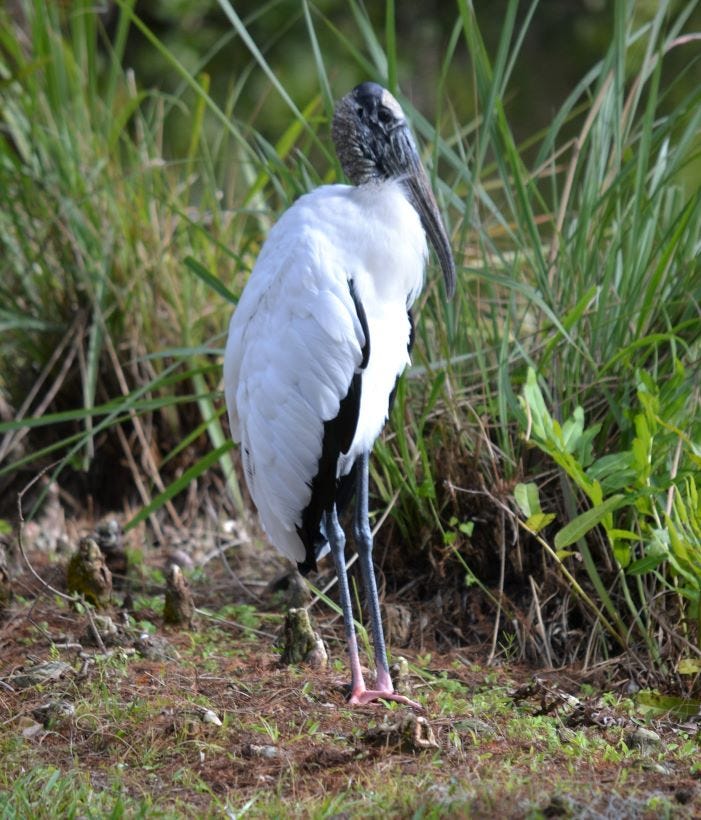
Wood stork by J. Dean

Even more exciting than the relatively rare privilege of encountering a wood stork is seeing a Roseate Spoonbill.
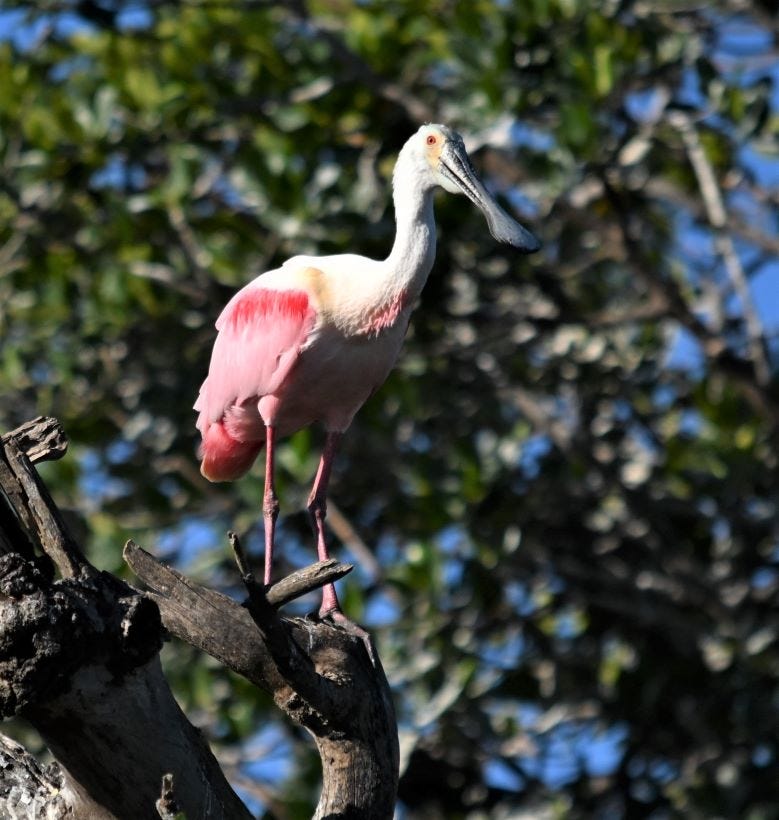
Roseate Spoonbill by J. Dean

Says the Cornell Lab:

The flamboyant Roseate Spoonbill looks like it came straight out of a Dr. Seuss book with its bright pink feathers, red eye staring out from a partly bald head, and giant spoon-shaped bill. Groups sweep their spoonbills through shallow fresh or salt waters snapping up crustaceans and fish.

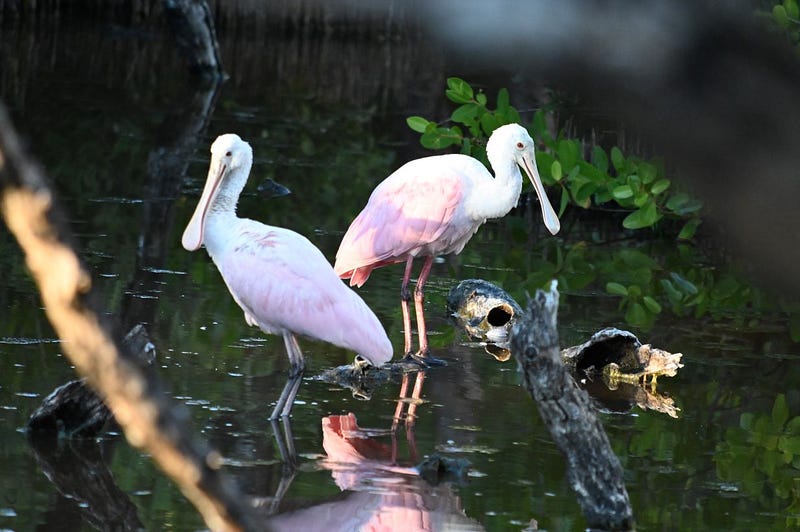
In my years of visiting Florida, I have usually seen the Spoonbills in the same place — a swamp off Estero Bay accessible by a long wooden walkway. On good days, usually after heavy rains, congregations of these wonderful birds can be found.
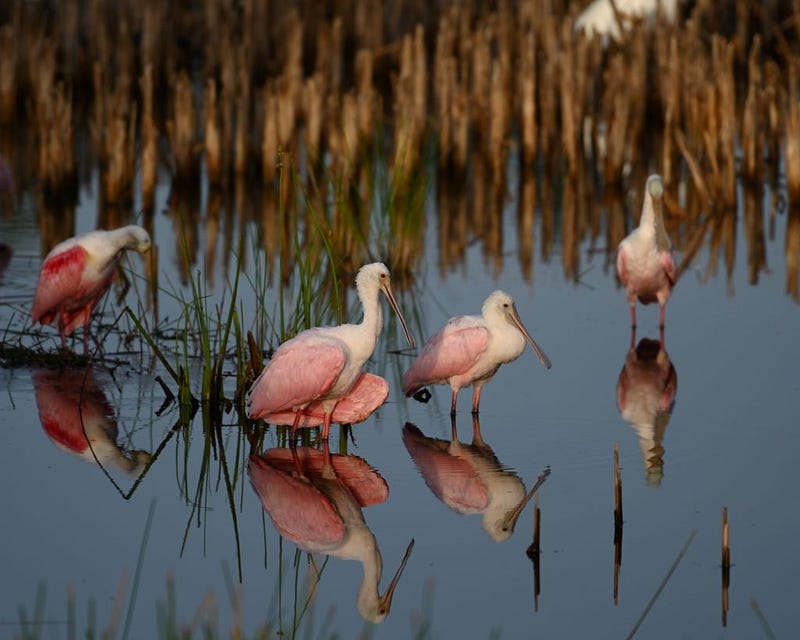
Group of Roseate Spoonbills by J. Dean
Pair of Roseate Spoonbills by J. Dean

More common but sometimes equally rewarding are some of the more common birds — Ibises, Egrets, and Herons.

Although I see them daily while in Florida, I never have tired of seeing Ibises. With their curved red bill, I always find them a welcome sight.
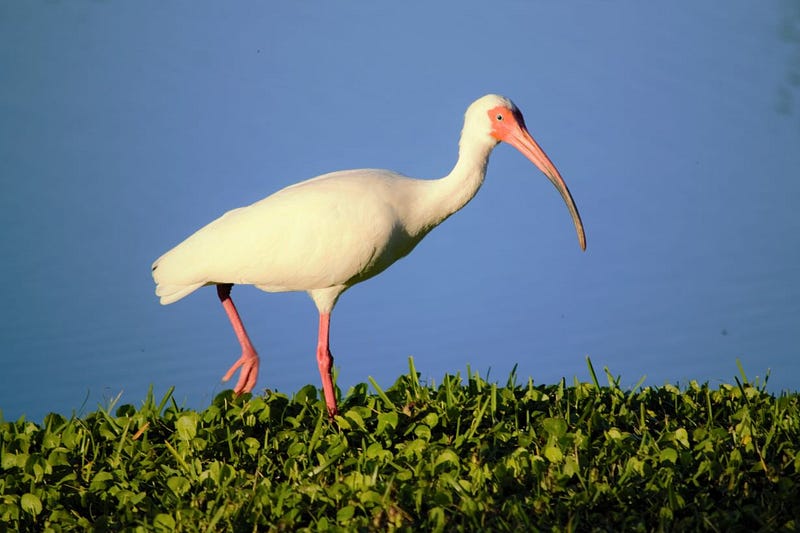
Ibis by J. Dean

In the 1920s, before modern conservation enforcement ended the reckless hunting of all Florida birds, Ibises were even more common than they are today. That’s hard to imagine, but I’m sorry I missed the show.
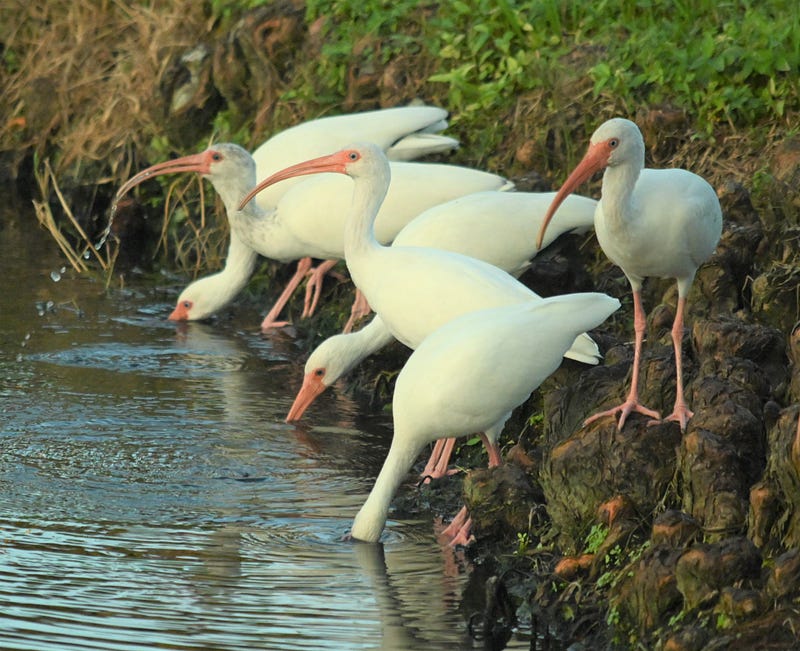
Six Ibises in Bonita Springs, Florida by J. Dean

The Cornell Lab reports:

At each step, their bright red legs move through the water and their curved red bill probes the muddy surface below. As adults, these striking wading birds are all white save for their black wingtips, but watch out for young birds that are brown above and white below

Anhingas are another common bird in Southwest Florida. You see them everywhere. For some, they are easy to ignore. I am not in that crowd. When I see one, I stop to admire it. If I have my camera, I shoot a few pictures.
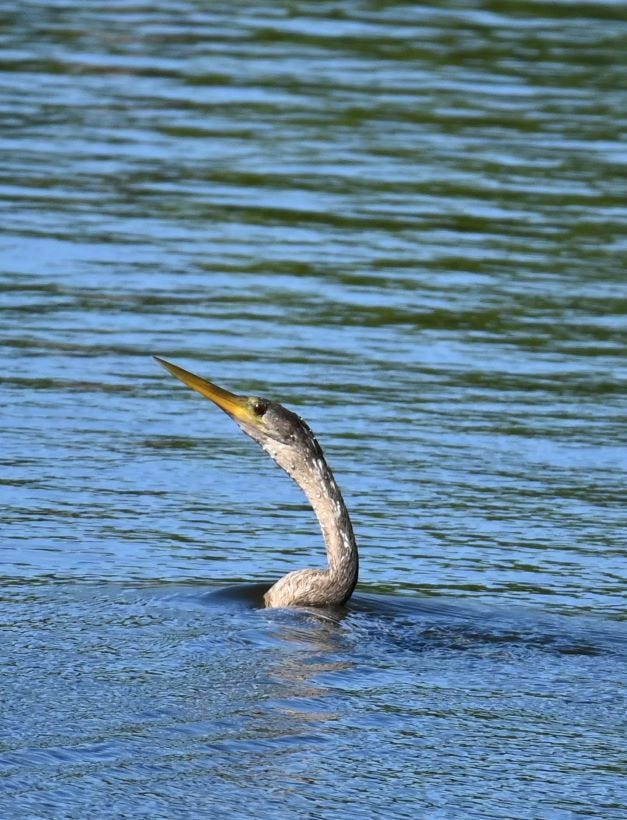
Anhinga in Bonita Sprngs, Florida by J. Dean

Like their friends, the Cormorant, the Anhinga likes to dry out after swimming by spreading its wings in the sun.
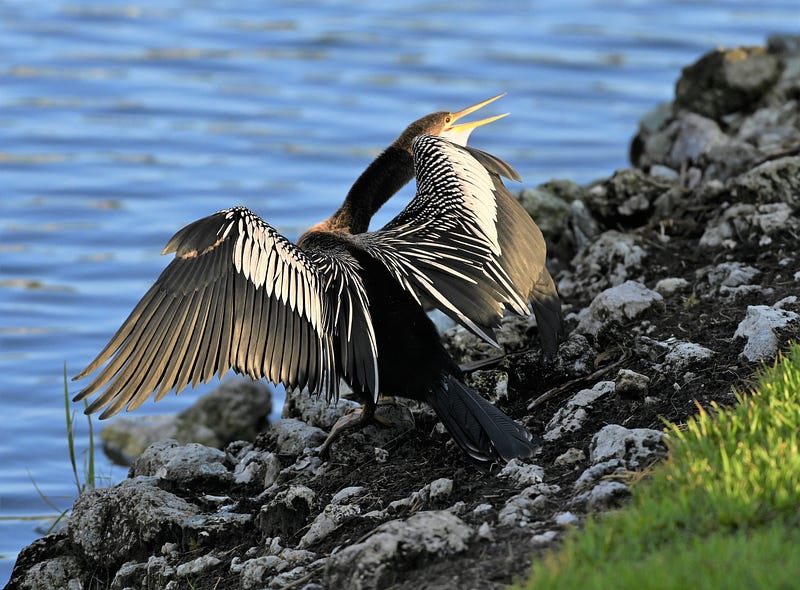
Anhinga spreads its wings by J. Dean

Cormorants can be indistinguishable from novice birders. I still sometimes mistake them for Anhingas, especially from a distance. Please notice the difference in the shape of the two birds’ bills.
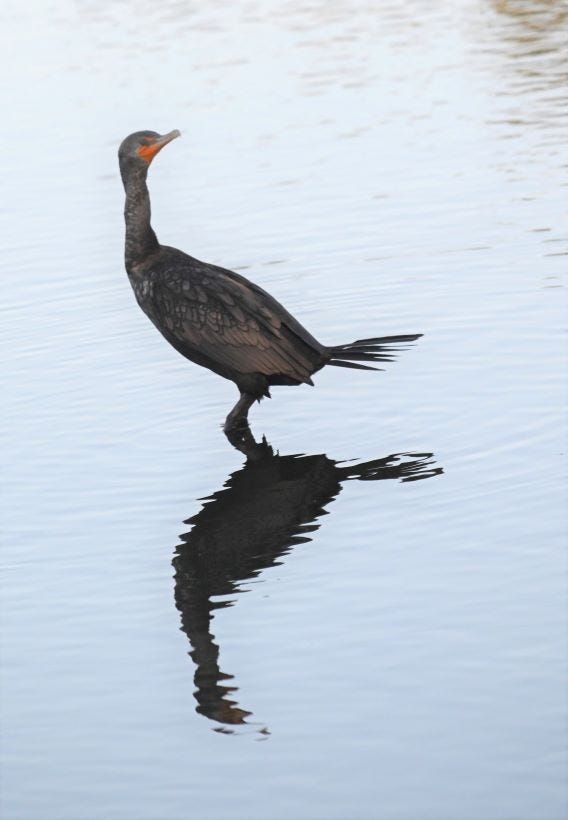
Cormorant by J. Dean

One of my favorite pictures is one I took several years ago of a pair of Cormorants. I called it “Cormorant Couple” and entered it into a local photography contest. It didn’t win.
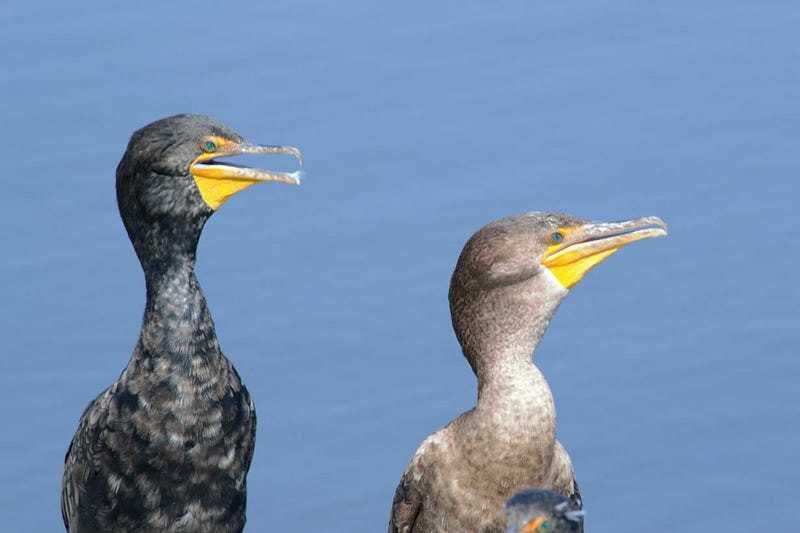
Cormorant Couple by J. Dean

I will share additional pictures of Florida’s birds in a future article, including the Yellow Crowned Night Heron, the Green Heron, the Cattle Egret, and the Gallinule.

About the Photography

The photographs were taken on a variety of Nikon cameras starting in 2017 through 2021. These cameras included the Nikon Z7, Nikon D3100, Nikon AW100, and my iPhone 7.

Photography
Nature
Birds
Wildlife
Florida
Recommended from ReadMedium