
Fear That Makes You Feel Sick Will Change Your Life If You Let It
My encounter with one of the most dangerous stretches of sea in the world — followed by a lesson you can use.
I am deathly afraid of certain parts of the ocean.
Stingrays, sharks and blowholes are my worst nightmare.
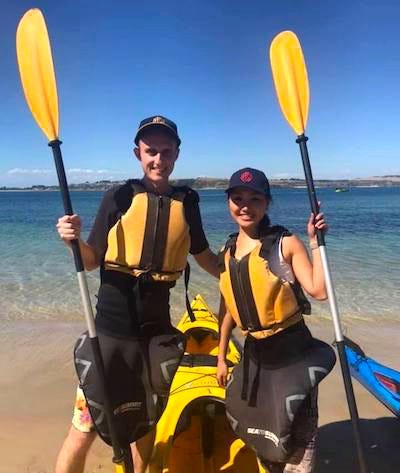
Yesterday I went on a kayaking tour with my girlfriend for three hours. I didn’t think much of the experience and expected it to be a light paddle close to the shore. We arrived at the beach early. The tour guide showed up thirty minutes late. We got dressed in our skirts and PFDs (kayak gear). The ocean was calm and the sun was shining. The guide showed us where we’d be paddling to.
I laughed it off. It was a few miles to the right of us. There were no obstacles, and chocolate biscuits and delicious apples were waiting for us.
Halfway through the trip I realized I was wrong.
We got near a giant sand dune only to be told it was a short rest, and we wouldn’t be going to shore. Apparently, we were heading into Bass Strait. For those who don’t know Bass Strait, it’s one of the most dangerous stretches of sea in the world. Bass Strait is the place where the famous Sydney to Hobart Yacht Race occurs.
We started to paddle away from the safe coastline. The water got rougher. We were paddling into the wind. For every paddle we appeared to go nowhere and be treading water. After a while my body started to feel exhausted.
We could begin to see what was beyond the sharp piece of land jutting out into the sea. It was a series of cliffs with a giant black opening. The opening was a blowhole (a huge dark cave where water flows into, and large volumes of water collect and form huge splashes). If you end up in a blowhole you’ll likely be dragged under by the current and drown.
As a midget kid, I was trained to be afraid of blowholes. One of our family’s regular holiday spots had a blowhole. It was a place many people had died trying to take a photo next to mother nature’s giant splash. My childhood friend also got sucked into a blowhole type cave which took his life.
So when I found out I was heading right into a blowhole you can see why I felt fearful and sick.
We got close to the blowhole without going in. I was proud and was celebrating victory already. My girlfriend wanted a photo by the blowhole. I wasn’t keen, but she couldn’t hear me. She started paddling towards the blowhole. The current sucked us into its opening. The tour guide encouraged us to take a photo to show our bravery. My whole body started to feel sicker and sicker.
What if this is it?!
I decided to give in to the fear. I had zero energy left to paddle or swim if anything went wrong. We now had a front row seat to the blowhole show. It looked like a monster. Huge waves entered its mouth. Whatever got sucked into the hole didn’t come out the same — water was beaten not stirred.
Then something strange started to happen.
Our kayak began to slow down. Underneath us was a miracle stretch of water. One lot of water was heading into the blowhole. The other lot of water was pushing out of the blowhole.
This multidirectional body of water stalled the kayak. It allowed the kayak to stay still without any paddling. This is the point where the tour guide took our photo. It turns out he knew about this magic trick by nature and wasn’t going to send us into the blowhole to die.
After the photo we headed home. The sickness in my stomach passed. The fear was replaced by a feeling of courage. Despite my body feeling incredible pain from all the paddling against one of the roughest seas on the planet, I found a second burst of energy. Courage rowed us home.
Fear created positive energy.
This moment of fear taught me a lot.
Letting fear change your life is a choice.
You can lean into your fear or forever avoid situations that might trigger it. While I had no idea I’d be going into the dangerous Bass Strait sea, I did know the ocean could do weird things with my brain because it hides many secrets.
Accepting some level of fear is a choice. You get to decide.
Unexpected fear is the best test.
Those moments where you make a split-second decision to accept your fear and see what happens can change your life. I feel different about the ocean now. I feel like I can do more in my life thanks to this unexpected experience.
Planned fear is different from unexpected fear.
How you react to extreme fear that hits you at 100 miles per hour in a matter of seconds will enable you to deploy instantaneous courage. Once you’ve deployed this level of courage a few times, you get good at it.
Get closer to your fear to master it.
If you can be around what makes you fearful you can learn to master it. The biggest mistake you make is you avoid fearful situations altogether.
This causes you to live in a safety bubble. You’ll never learn any level of courage from this place. Without courage you will lack one of the greatest tools to move your life forward and level up your former self.
You can practice microdoses of courage to build your courage muscle.
Celebrate your victory over fear.
The challenge I face is I don’t celebrate when I beat fear. I brush it off and play it down. But when you celebrate your ability to be courageous you feel good. It makes you want to do it again and see what else you can accomplish, that you previously thought was impossible.
You’re more courageous than you realize when you force yourself to notice and appreciate your wins over fear. Even if it’s a tiny win, it’s worth acknowledging it and banking the courage points for use later.
Maybe my fear of rough seas full of sharks and string-rays, and blowholes that look like boogie monsters, isn’t a big deal. Maybe I’m a pussy. I don’t care. We all have different situations we fear.
It doesn’t matter what your fear is. It matters whether you’re willing to look at her in the face, feel sick, be overwhelmed and let the fear in.
Before you know it you’ll be punching sharks in the face. Okay, I’m joking. But you will definitely get better with your version of fear.
You are way more courageous than you give yourself credit for. Give yourself permission to be around your fear to master it.


