
The Meaning Of “Man’s Search For Meaning” by Viktor Frankl
Viktor Frankl’s book, “Man’s Search For Meaning,” is an amazing tool for personal growth and transformation.
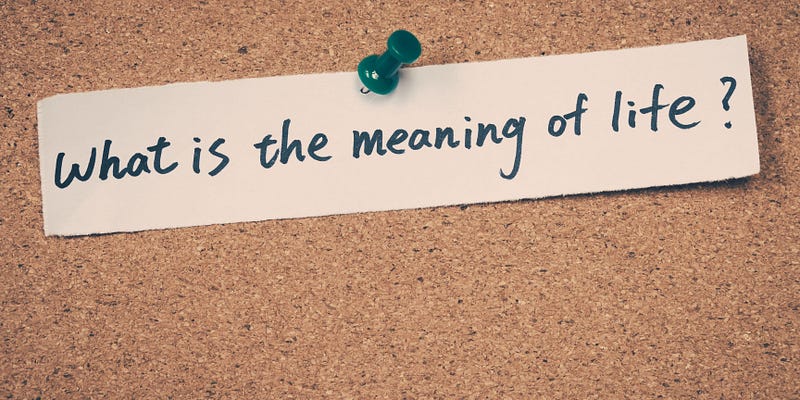
One of my absolute favorite books is Victor Frankl’s “Man’s Search For Meaning.” Dr. Viktor Frankl was a professor of neurology and psychiatry. The book chronicles his horrific experiences and observations in Auschwitz during the Holocaust.
His observations of the behavior of his fellow inmates led to him establishing a school of psychotherapy known as logotherapy. The premise is that what motivates all our behavior is our search for meaning in our lives.
Here are quotes and six key takeaways from his bestseller:
1. Happiness, success, and pleasure cannot be pursued.
“Don’t aim at success. The more you aim at it and make it a target, the more you are going to miss it. Success, like happiness, cannot be pursued; it must ensue…
Our society glorifies the pursuit of success and happiness. It is in the US declaration of independence!
We applaud people who work 100-hour weeks. We measure our happiness through socially -prescribed ideas of success, through the accumulation of possessions.
Frankls’ quote on happiness reminded me of Nathaniel Hawthorne’s poem on happiness:
“Happiness is like a butterfly which, when pursued, is always beyond our grasp, but, if you will sit down quietly, may alight upon you.”
2. Happiness ensues as a result of dedication to a cause greater than oneself.
… and it only does so as the unintended side effect of one’s personal dedication to a cause greater than oneself or as the by-product of one’s surrender to a person other than oneself.
Dr. Frankl observed that prisoners who comforted and shared their food with their fellow prisoners faired much better.
3. The main purpose of our lives is to seek meaning.
Those who have a ‘why’ to live, can bear with almost any ‘how’.
And that meaning can be found in our suffering.
“In some ways, suffering ceases to be suffering at the moment it finds a meaning, such as the meaning of a sacrifice.” Frankl found meaning in his suffering. Once you find meaning in what you are going through, then it is no longer suffering.
4. We grow through our challenges.
“What man actually needs is not a tensionless state but rather the striving and struggling for some goal worthy of him. What he needs is not the discharge of tension at any cost, but the call of a potential meaning waiting to be fulfilled by him.”
Viktor Frankl believed you could also find meaning in your suffering. And that we grow when we embrace these challenges. Life may not unfold as you had expected or hoped, but that doesn’t mean your life is not meaningful.
We often seek ease, but we find meaning by embracing challenges in our lives.
5. Loving another person gives us meaning.
“Love is the only way to grasp another human being in the innermost core of his personality. No one can become fully aware of the very essence of another human being unless he loves him.”
Dr. Frankl imagined his life beyond Auschwitz. He believed in keeping alive the memory of his wife while he was in Auschwitz was what kept him alive.
6. No matter what your circumstances, you always have a choice.
“Everything can be taken from a man but one thing: the last of the human freedoms — to choose one’s attitude in any given set of circumstances, to choose one’s own way.”
Dr. Frankl was the biggest proponent of tapping into your internal personal freedom. While you may not always have a choice in your circumstances, including imprisonment, you do have a choice in the way you respond to your circumstances.
A person may choose to remain brave, dignified, and unselfish even in a concentration camp. Or in the bitter fight for self-preservation, he may forget his human dignity and become no more than an animal.
Viktor Frankl observed that those prisoners that kept the highest level of integrity (not ratting on their fellow prisoners) lived longer than the ones who behaved in a self-preserving way.
Bringing it all together
Frankl believes that man’s primary motivation in life is to seek meaning, not pleasure and power. People settle for the pursuit of power and pleasure when they fail to find meaning.
We find meaning through love and devoting our lives to a cause greater than ourselves. Our growth comes from embracing life’s challenges, and once we find meaning even in our suffering, it no longer feels like suffering.
Dr. Viktor Frankl’s beliefs counter much of how our society works. We are bent on avoiding suffering at all costs. And instead, we are in constant pursuit of what we believe will bring us happiness and pleasure. So far, with dismal results! My favorite quote from Frankl’s book is:
“When we are no longer able to change a situation, we are challenged to change ourselves.”
Even in the most hopeless of situations, we can change our attitudes, and in transforming our perspectives, we would transform all other aspects of their lives. I encourage you to read his book for greater insight into your pursuit of a greater understanding of the meaning of life.
This article contains affiliate links.
Join Medium now for $5 a month and enjoy thousands of articles and get paid to write. Sign up HERE. This is a Medium revenue-sharing affiliate link. If you sign up using this link, you can support me and others as a fellow writer. I will receive a portion of your Partner Program membership fee for the referral; however, it will NOT increase the cost of your membership.


