
Farofa, Brazil’s Secret Side Dish

I looked at the package my sister brought from her trip to Brazil, it looked like a flour and the first thing I asked was, “Why did you bring a flour from Brazil?” soon after, she mixed it with some butter and it looked like sand, to be honest. As she didn’t tell me anything about it, I just tasted it and it tasted like corn, chips, potatos and heaven. I was so curious about this thing and soon after I learnt all about this amazing flour-like side dish.
Farofa is like a flour, but a bit different. It is made from corn flour and from the roots of Mandioca, which is a vegetable like a potato and grows in Tropical America. Farofa is usually cooked with butter, salt and for choice, with onions. You mix it for a few minutes until it looks a bit darker and crunchy. It is usually served with meat as a side dish and you put a spoon of Farofa on the meat and when you eat it you go to heaven. I think it tastes a bit like meat with corn chips but as soon as you eat it, you want to eat everything with it. It gives the food such a delightful taste that it takes you to the Brazil’s long beaches, so funny how a dish can represent the soul and the taste of the place that it belongs to. A different taste I never experienced before.
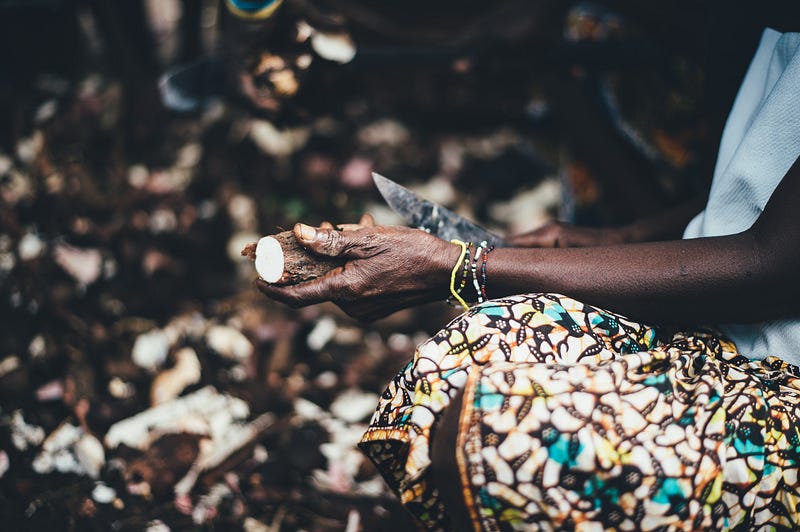
Farofa is also vegan friendly, in Brazil it is also eaten with rice and beans. It is said that Farofa, or “Mandioca flour”, has been an essential source of energy and an amazing ingredient for diet to Brazilian people, according to how you cook and eat it.
What is cooler is, that it has a legend behind it !
According to the Amazonian legend, the daughter of an indian chief became pregnant and was sent away because of her shame. She started living in an old hut isolated and as she gave birth to a child, she called her Mani. The villagers heard about the birth of Mani and asked the chief to forgive his daughter. The chief went to visit his daughter and as soon as he saw Mani, he forgave his daughter. But Mani died in a mysterious way. Mani’s mother buried her with grief and cried almost everyday on her grave. Soon after, a plant grew upon the grave of Mani and everyone around the village asked for them to taste the plant to honor the child. Since then, the plant, Mandioca became an important side dish in the Brazilian kitchen.
I’m not sure if it is sold anywhere else than Brazil but there is a high chance that you can find it under the name of “Cassava flour”, and if you are curious about tasting it too, here is a recipe for how to cook it.
1- Add butter in a pan, wait for it to melt and add small pieces of onion and a bit of garlic (for choice).
2- Add the Mandioca flour and season it with salt and pepper.
3-Keep mixing it and reduce the heat. Make sure you toast it evenly.
As soon as it looks golden and crunchy, it is ready to be served near the main dish. Bom apetite !