
Farmers are Forced to Dump Foods While Food Banks are Running Out
The farming industry is one of many that were disrupted by the 2020 crisis
The novel coronavirus has been ravishing through countries around the globe. It presented governments with endless problems of both financial and social nature. The report published on May 8, 2020, by the US Department of Labour indicates the unemployment rate has risen by 14.7%. Only 80.2% of Americans were able to cover rental payments in the first week of May 2020, and food banks are reporting an increase in demand of 40 to 50%. Evidently, a large number of American residents are requiring assistance paying for their essential needs during this crisis.
While food insecurity is a challenge, the news outlets are reporting a distinguishably different problem. The farmers all over the country are voicing their concern about food dumping. The unfortunate reality is, some people are going hungry, being unable to afford groceries, and farm proprietors are left with no choice but to dispose of extra food supplies.
The pandemic has disrupted several farming supply chains across the United States. For instance, Smithfield Foods, one of the largest companies dealing with pork, shut down three of their processing facilities due you to employees testing positively for COVID-19. The facility in Sioux Falls, South Dakota, was closed indefinitely, while two other ones — in Cudahy, Wisconsin, and Martin City, Missouri — expect to reopen in two weeks. Plants shutting down is not the only hardship, as the demand decreased due to closure of 30% small businesses, such as restaurants, bakeries and stores.
The pork processing sector is not the only one that fell victim to the coronavirus. On April 15, 2020, CNN reported that between 2.7 million and 3.7 million gallons of milk could potentially be dumped every day, as they are unable to supply those to processing plants. According to farmers, they don’t have an alternative. Reducing the herd size is not an option, because once the demand for milk goes back to what it used to be, they would need enough cows to produce milk. If they decrease the size of the herd, it can lead to dairy shortages down the road.
Milk dumping is only one example of destroying food. Some farms made the difficult decision off euthanizing chickens, while others had to kill their pigs. The news outlets reported a farmer listing his pigs on Craigslist as a desperate attempt to save the animal from rotting in the field.
But the farmers started struggling long before the pandemic. The United States lost 20,000 dairy farms in the last decade, which signifies a 30% drop. According to NBC News, the farmers were also facing a 40% drop in product prices over 6 years. It resulted from an excess of dairy products on the American market, the corporate farming growth, and an increase in alternative milk consumption, such as almond, soy and oat milk. The pandemic worsened this situation, as now the farmers are struggling to ration the milk supply to consumers.
Why can’t farmers simply donate the surplus to the food banks? It’s not as easy as you may think. The farm cannot send unprocessed foods to a food pantry. The product has to be appropriately registered, processed, prepared for distribution, and distributed through proper channels to the consumers. For instance, let’s review the animal supply chain:
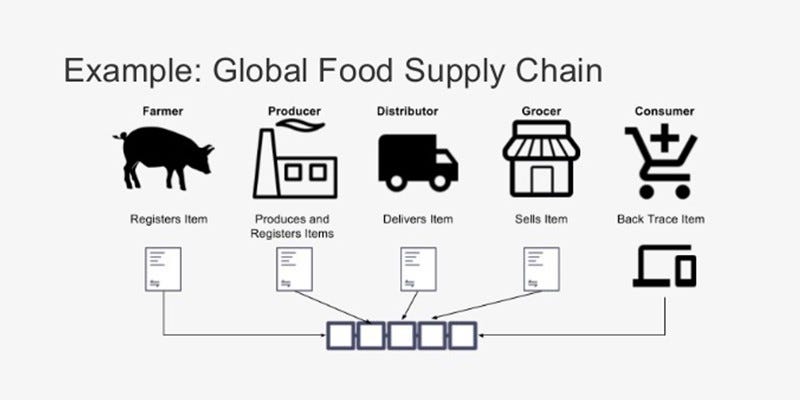
Pig farmers have to follow regulations set up for the farming industry. They cannot omit any steps in the designated supply chain. Milk serves as a prime example of why these requirements were implemented: a farmer cannot supply customers with unpasteurized milk, because it has to be processed first. Unless the milk is pasteurized, it contains bacteria, which can cause people to get sick. Not only potential customers are in danger of getting health issues, but the farmer may also be liable if someone is unwell after drinking their milk.
As a result of that, the food banks cannot accept donations from farmers. The foods need to be processed appropriately for the nation to consume; otherwise, it becomes a health hazard. Farmers in the United States are required to attain a high standard of food quality. But unless they can supply the products to the processing sites, neither the regular stores nor the food banks can get their hands on those foods.
The federal government pledged a $19 billion of support for American farmers on April 17, 2020:
Most of it is the amount of 16 billion is allocated to direct support to help cover the losses, while the remaining 3 billion will be spent on purchasing the produce from farmers. The National Milk Producers Federations thanked President Trump for the support but indicated it wouldn’t be sufficient to bail out the farmers. On May 18, 2020, the House of Representatives approved the HEROES Act, which includes the promised assistance for the struggling farms. It’s unclear how many farms will be saved, and there is a good chance some of them end up closing their doors.
What Can We Do?
Farmers destroying food, while regular people are risking going hungry, is unacceptable. Something has to change, and by “something,” I mean the supply chain. Here’s what you can do:
- Educate yourself and the people around you on the issue.
- Use social media to spread the word and attract more attention to this problem.
- Use social media to help farmers get their voices heard.
- Start a petition asking the government to provide help and support to the farmers.
- Create another petition motivating the government to implement changes in the supply chain, to ensure this won’t happen again in the future.
- Reach out to your local government officials and ask them to take action.
The pandemic is teaching us a lot of things. An imperfect and flawed supply chain is undoubtedly one of them.
The Takeaway
We need better supply chains, and food banks support to eliminate the possibility of hunger and food waste. Although the current situation is unique and unprecedented, we should use it as an opportunity to make changes. This way, we won’t have to face such hardships in the future.


