
Why I Don’t Do High-Fantasy Anymore
Epic-Fantasy is too damn Eurocentric to meaningfully get into
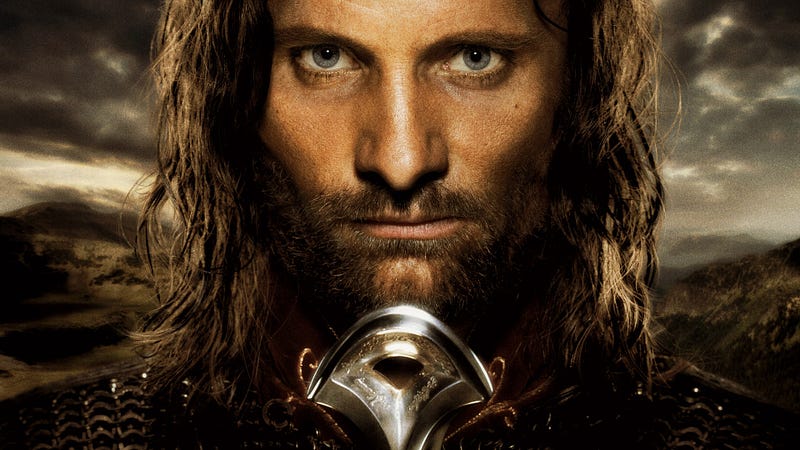
Tolkienism
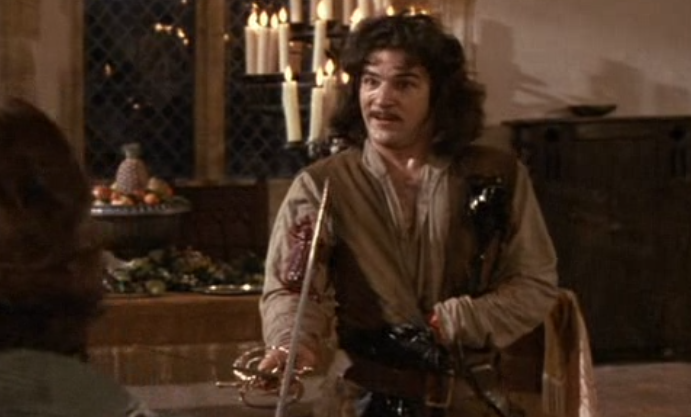
Growing up in America as an Afro-American child is fascinating, looking back on it all as an adult. In the eighties, we had movies like The NeverEnding Story and The Princess Bride. Honestly, these two movies are awesome, epic, and any attempt to rehash or reboot them would be, wait for it — inconceivable. Sure, who doesn’t love following Westley on his quest to, technically, save the Princess? Who doesn’t love following Atreyu through those deadly statues? What about the Indigo Montoya?
“My name is Inigo Montoya. You killed my father. Prepare to die.” ~ Indigo Montoya, The Princess Bride (1987)
Fantasy — epic-fantasy as a genre — has always been a vast reservoir to pull fictional works from. Television shows, books, movies, and of course, video games have all reached into the epic-fantasy genre.
Epic-fantasy as a genre has even branched off to define other fictional works, such as Star Wars — a sci-fi fantasy different from the regular sci-fi work. Another example would be pseudo-futuristic settings, such as what’s found in video games like Final Fantasy VII.
Don’t get me wrong here, I love epic-fantasy like any other American nerd. Trust me when I tell you that I’ll still watch these movies and play those video games when I have time. But the new stuff? I can’t get into it anymore. Being that I’m sort of trained at analyzing and assessing society, I do not enjoy epic-fantasy movies. There’s too much white supremacy placed in fictional content.
I’m tired of people asking me if I watch Game of Thrones because I don’t. It’s almost like I refuse to watch it, because I’m tired of it. I never cared about Lord of the Rings either. Actually, a friend of mine tried to get me into it. He told me that it’s technically parallel to Star Wars on how epic the saga is. Sure, I gave it a try. I fell asleep in his living room. It doesn’t grasp anymore.
Fantasy While Black
The problem with fantasy works lies in its relatability to a non-white person. As an American, it’s almost like you are given a white identity by way of how mainstream entertainment works, and you don’t realize you’re not white until you get your wake-up call. You never really question these things, such as why are all the knights-in-shining-armor were white. You never ask these things until you, as a child playing, are informed that you can never be Westley, Atreyu, Cloud Strife, Link, or whoever that white guy hero was because you are black and they are white. You never really question these things until you are attempting to write epic-fantasy fiction yourself, and in doing so, you try to make the heroes look like yourself.
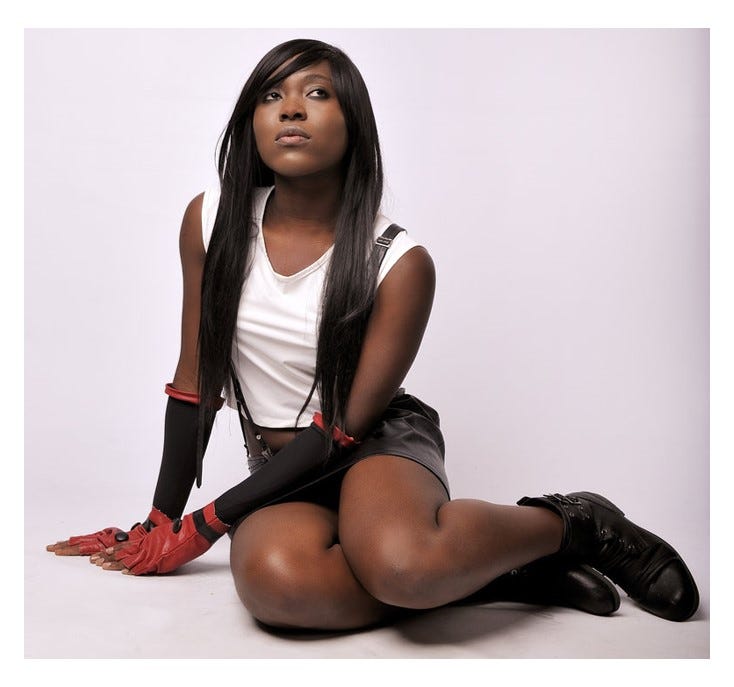
It gets worse when you factor in the pain that black cosplayers go through.
Black cosplayers are infinitely told that they cannot model as these fictional characters because of their skin color. The black model here is cosplaying as Tifa Lockhart off of Final Fantasy VII. Long hair, red gloves, black shorts, white shirt, that’s Tifa.
Cosplay models are very similar to fantasy writers. Where the fantasy writers seek to bring characters to life through written work, cosplayers seek to bring these characters to life, into our own visual reality. The amount of black and non-white cosplayers is enormous.
One factor of the number of non-white cosplayers is that much of cosplay deals with representing video game characters, which are written by mostly Asian (and thus non-white) people. The other factor as to why there are so many black cosplayers is more profound: it’s easier to represent these characters on your own versus being signed to play them in a television show or movie. There is a demand for black fantasy characters. We really want to see ourselves in fantasy work. How our black cosplayers are received today still points to the problem of the lack of diversity in fantasy.
It’s almost like, you are given a profound load of European identity matter by how Eurocentric and white supremacist our society is, only to have it viciously pulled from you, like, “Silly Rabbit, Trix are for kids!” But it’s more like, “Silly negro, whites are for whites!”
Is this how white people view the world?
I find a strange irony in how something in “fantasy” can be so realistic. The racism in the fantasy realm is pretty strong; why do elves, dwarves (and any other fantasy race) always exist with their own pre-existing stereotypes? For example, dwarves as a race are usually loud and boisterous and good with their hands. Elves, on the other hand, are generally serene and are good with nature and magic. Why? Ogres are usually chaotically evil. Why? Dark Elves always cheat and lie. For what? Why? And in all of this, it’s the “human” race (read: white race) who has the full spectrum of emotionality and behavioral traits. Why?

I wonder if there’s more reality in fantasy fiction than intended. Do white people see the world — see reality — just like they construct the fantasy world? In my racism/diversity studies, this assessment is looking painfully accurate. White people seem to look at people of color as if we are elves (Asian people?), dwarves (Latino people?), dark elves (black people?), and orcs (Muslims?). Epic-fantasy’s racial attributes tend to dangerously reflect an individual’s moral and ethical behaviors within their race. This means that, within fantasy worlds, an individual’s goodness or evil is predetermined by their race. And I’m not okay with that.

In observing epic fantasy, I really begin to believe white people view the world like this. White people see themselves as the norm/default and see everyone else in tropes and stereotypes.
In the fantasy world, terms of good and evil tend to be affixed to the races within that fantasy work, and that’s inherently flawed. The most dangerous group identity on the planet is the group that thinks they are infinitely the good guys. The most dangerous group of people are those who engage in “us versus them” thought, group-naturalized morality, versus behavior/action based morality.
“Of course, the major race that isn’t associated with rigid moral attributes, that is allowed ethical ambiguity and individual alignment, is human. And human, in most fantasy worlds, isn’t much more than shorthand for “white.” White is seen as the default in storytelling, but it is especially typical of fantasy to create various nations of diverse white people, including other humans and their countries and cultures as background noise or obstacles for the white protagonists to overcome. The attribution of rigid racial characteristics is especially problematic given the freedom humans have to be good, evil, or neutral as they will.” ~ Joanna, Geekalitarian: Women of Geek Culture
What’s worse with epic-fantasy is how European-centralized it is. We, for example, know all about European-type epic fantasy. But what about Asian fantasy? African fantasy? What do these things look like?
In absorbing so many Eurocentric fantasy worlds, we already know what the dragon looks like: big, relatively fat, may or may not fly, breathes fire. We also know that the dragons look radically different in east-Asian culture, being more slender like a decorated snake with small legs. But we never heard of an epic tale of a Chinese kid having to slay a dragon to save a princess. I have no idea what African dragons look like. I have no idea what the epic saga of an African kid dealing with swords and shields, maybe with a little magic, looks like. Being that fantasy is made up, there’s no reason why this doesn’t exist in America.
When it comes to diverse representation, the epic-fantasy genre is not good at it. When these movies and television shows are casting roles, it looks like one giant excuse to cast nothing but white people. The problem I have, is the fringe logic behind it: how is it acceptable to add fictional races for “false diversity” but not real ones (for real diversity)? So in this fantasy world, elves and dwarves exist, but African and Asian people don’t? Why?
You can make a clan of hobbits or a clan of giants, which means that their imaginations accounted for height differences, but they continue to fail to account for real-world skin tone differences? How does this work?

I’ve always pointed out the flaw of this liberalism called “colorblindness”. When white people say they are colorblind, that will end up meaning that they only see, and thus only envision white people existing. In an attempt to never mention race, they exclude everyone except whites, which becomes an even more racist standpoint. The side effect in epic-fantasy is that the fantasy races end up running parallel to racism in reality.
For example, it seems that the classic “ogre/orc” type of fantasy race is very similar to the hyper-exaggerated black caricatures whites invented of black people to further deny black people of their humanity rationalize their racism. This is further highlighted when the darker-toned ogre/orcs come from the “south” of where the more Eurocentric, decidedly white people are located (alluding to Africa’s geographic relationship to Europe).
Fixing Modern Fantasy
I think it was Chris Rock who pointed out that technically, if acting was just acting, then a black guy can be cast as George Washington. While casting a black person as George Washington may break the viewers’ suspension of belief, this logic works perfectly in the fantasy realm.
The thing that irks me the most about modern works of fantasy is that it does not have to be profoundly eurocentric. In the strictest definition of the term, epic fantasy should literally be built as a fantasy where it’s a very diverse set of people in the story, and it doesn’t even have to be explained. An example of this would be this movie called Last Knights, where you had Morgan Freeman and Clive Owen in a medieval sword-and-shield setting.
Morgan Freeman’s character was a Lord/King type, with Clive Owen as his top commanding knight. The movie had numerous black, Asian, Latino people in it on top of your standard-issue whites, and it was amazing. The ultimate villain had an Asian commanding knight, and NONE of this diversity was explained or even lampshaded.
That’s precisely what fantasy — or at least modern fantasy — should look like.

Marvel Cinematic Universe displays another superb example of this with their Thor movies. Instead of making everyone in Asgard white, there’s racial diversity with those Nordic gods’ race/ethnicities. It’s awesome.
That’s what fantasy should look like. The best thing about how the Thor movies did this is how everyone can appear of any race or ethnicity, and it’s not even mentioned why. They just exist as is. Many video games are also catching on. The Suikoden video game series, which ran from 1995 to 2012, is a role-playing game (RPG) that always boasts 108 characters per game, and they always had a racially diverse set of characters. The Final Fantasy series tend to have a diverse group of characters as well, especially with their pseudo-futuristic themed settings. Everyone doesn’t have to be white in fictional work.
Black, white, Asian, Polynesian, Amerindian, Middle Eastern, South Asian, Latino, the list goes on. In a fantasy setting, anyone should be able to be cast as anyone, literally. We cannot change the old work, the old epic fantasy sagas. But we can build the new ones.
Tomorrow may yield better better times
In short, I guess I’m going to continue to have this general disdain for the epic-fantasy genre. With movies like Last Knights, and Marvel Cinematic Universe making great strides in correcting this outstanding flaw, maybe the best is yet to come. Today, however, is not that day.
The real world revolves around whiteness, and through fictional work, one can at least partially eradicate white privilege. Instead, most choose to simulate it, and to an extent, reflect white supremacy in imaginary worlds even. Maybe one day, these things will change.


