
mental health poetry | mental health awareness
Fantasy Against Reality
Hyperphantasia vs. Aphantasia
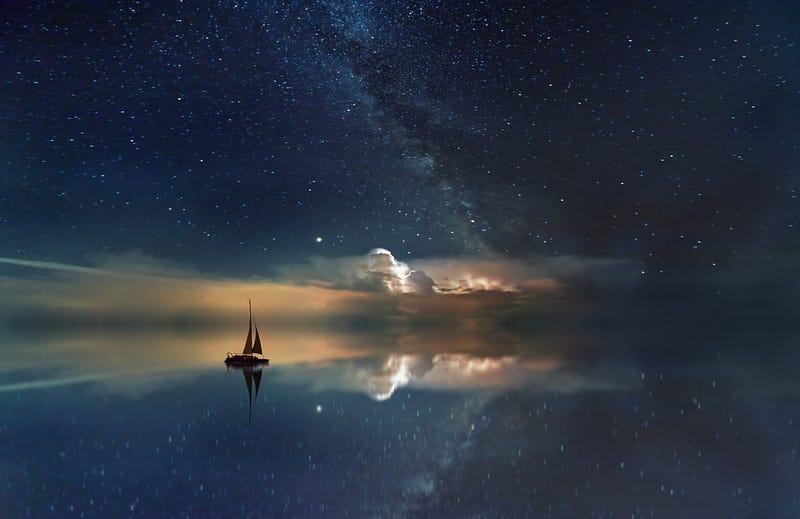
A picture is worth a thousand words Nothing compares to getting lost in fantasy worlds Places where everything is magical And nothing is bound to the realm of the logical
Without expectations of truthfulness Embarking on the waters of a soul so luminous All else fades away, as dreams in a cool breeze sway Until the dirty hand of reality touches the precious fabric
The soul aches and cries for what is suddenly at risk The most beautiful picture, polluted by constraints The fantasy screams and withers away from the cruelty of restraints It tries to go back to the land where all is possible
Fantasy and reality clash, the forces are unstoppable Doomed to experience futility and constant frustration When nothing comes close to the pleasures of the imagination The mind can either split or accept the situation
What if the opposite occurred What imagery would the brain be able to procure Very little or none at all A strange way to break the fall
The mind’s eye might be blind But there’s rarely a picture it can’t find Using words, logic, and skill So it can enjoy a good thrill
Wandering in darkness, the words echoing against the walls They thrust their way to manifestation but no one hears their calls The pictures end up a long string of words and cognitive constructions In that way it’s certain that there will be no obstructions
Hyperphantasia and aphantasia are the two opposite ends of the spectrum of visual imagery. The former means having very vivid mental imagery (like seeing a photograph), while the latter signifies the absence of mental imagery.
These conditions can be either present at birth or acquired later in life as a result of an accident, a disease, or drug use. Research has suggested that there are also possible links with psychological trauma in childhood. It is estimated that hyperphantasia is more common in prevalence.
Why is it important to know about these conditions?
Most people go through life thinking that everyone perceives the world in a similar way. Having the ability to form intensely vivid mental imagery can be as psychologically painful as being unable to form any mental imagery.
People with hyperphantasia often report feeling disappointed from reality. Also, it appears that there is a connection with proneness to anxiety, depression, drug use, and psychosis. Moreover, those who go through trauma find it more difficult to resolve their PTSD due to the intensity of their memories.
On the other end, people with aphantasia have a harder time recognizing faces (prosopagnosia) and visualizing their future goals. This often makes them struggle in interpersonal relationships.
Personally, I think I’m quite close to hyperphantasia and I had to learn how to not be disappointed when reality didn’t meet my expectations. This was especially important for my intimate relationships. Another issue I’m still learning to deal with is how to cope with the vividness of unpleasant memories.
However, I enjoy being able to visualize the imagery while reading a story or listening to a song. I also appreciate the fact that I can recall vividly all my good memories!
Do you know someone who is on either end of the spectrum? Do you think that you have a vivid mental imagery or not?