
Fans as Armor: Russia’s Novel Approach to Tank Protection in Ukraine
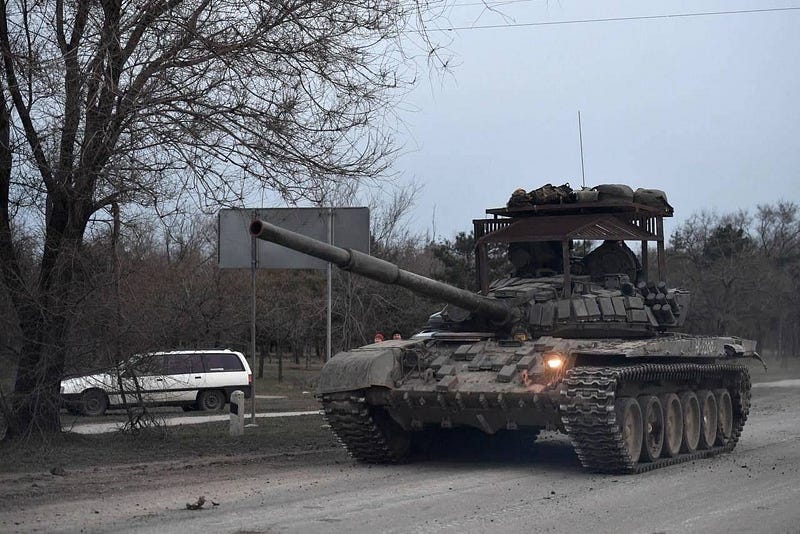
In a modern warfare landscape, marked by rapid technological advancements and shifting battlefield dynamics, the ongoing conflict between Ukraine and Russia offers a vivid tableau of military innovation and adaptation. Central to this evolving narrative is the struggle to protect armored vehicles, particularly tanks, from the increasingly sophisticated array of anti-tank weapons employed by Ukrainian forces.
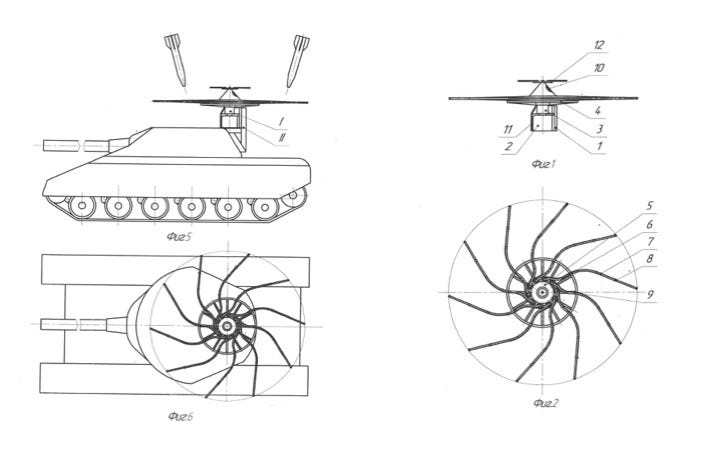
The Russian military’s response to this challenge has been notably unorthodox. Recently, drawings surfaced online, showcasing Russian engineers’ designs to shield their tanks using an unconventional method: a “fan” mounted on the tank’s turret. This device, powered by the tank’s electrical system, spins steel cables to create a protective barrier, theoretically designed to detonate incoming drones at a safe distance. This approach, while creative, underscores a desperation to adapt to the new realities of drone warfare.
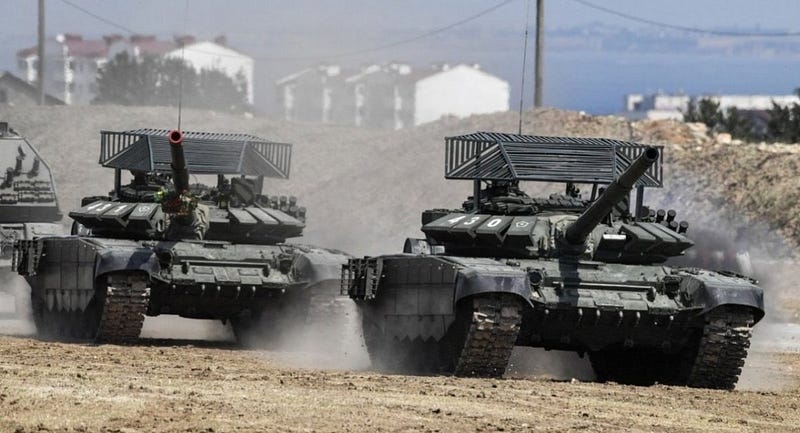
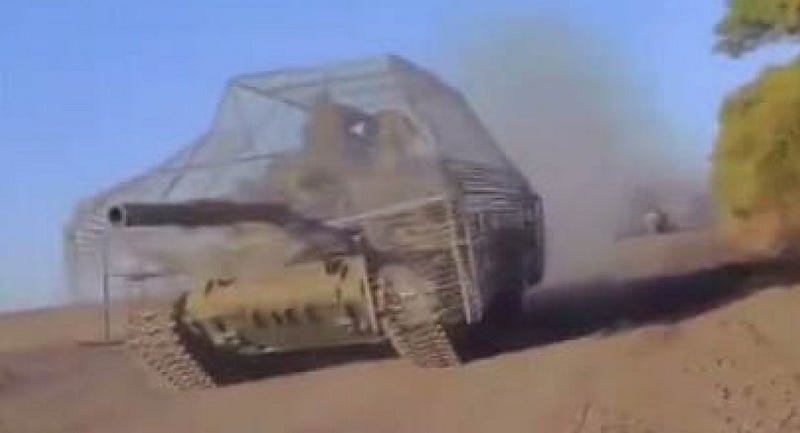
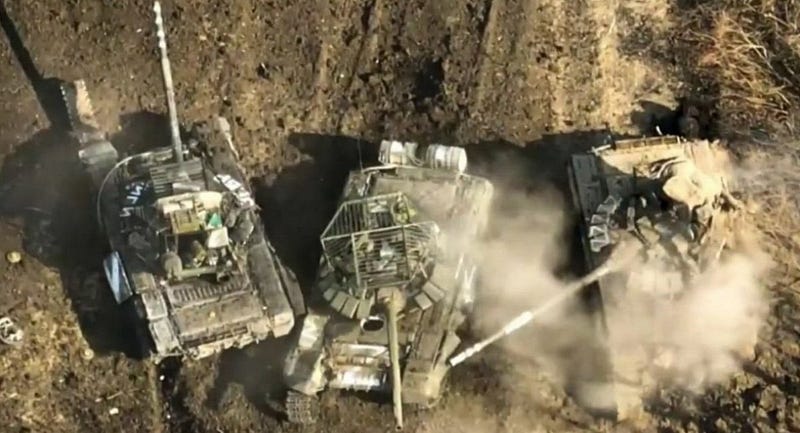
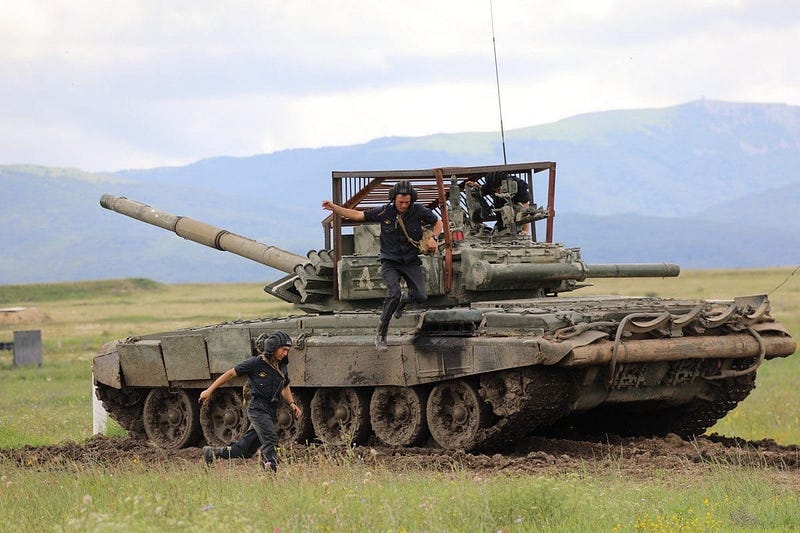
This is not Russia’s first attempt at improvising tank defenses. As early as 2021, they began affixing “grills” to their tanks, purportedly to defend against Javelin anti-tank guided missiles (ATGMs) and Bayraktar TB2 drones. However, these modifications proved problematic, hindering crew mobility and access, complicating maintenance, and, in some cases, transforming tanks into traps for their crews.
Such improvisations are symptomatic of a larger issue within the Russian military: the inability to effectively counter modern warfare tactics and technology. The so-called “barbecue grills,” a makeshift solution, have done little to improve survivability on the battlefield. In fact, they have been found to obstruct essential functions of the tank, including crew movement and machine gun operation, while providing dubious protective value.
A quick heads-up: Medium’s been tweaking its algorithms and it’s getting trickier for my stories to land in your feed. So, if you enjoy my work, please make some noise! Hit that clap button, light up the highlights, or drop a comment. Every interaction helps keep the stories flowing. Thanks for your support!
The use of T-62M tanks, equipped with these grills, by the “Don volunteer brigade” further illustrates the Russian military’s reliance on outdated and ineffective equipment. These tanks, initially designed to withstand the threats of a bygone era, are now being retrofitted in a desperate attempt to make them relevant on a modern battlefield.
In contrast, the Ukrainian military’s approach to armored warfare is notably more sophisticated and effective. Russian tank commander Captain Alexei Ukhachev, in a posthumous interview, highlighted the superiority of Ukrainian tactics, specifically their integration of drones and ground correctors with artillery units. This combination allows for precise targeting and coordination, a stark contrast to the Russian army’s chaotic and improvised methods.
The ingenuity of the Ukrainian forces is further evidenced by their use of civilian technology, such as tablets and smartphones, for reconnaissance and targeting. This innovative approach has enabled them to effectively utilize their resources, turning the tide against a seemingly more formidable adversary.
The struggle to protect tanks in the Ukraine-Russia war is a microcosm of the broader conflict. It reveals the stark contrast between the Ukrainian forces’ adaptability and innovative spirit, and the Russian military’s reliance on outdated tactics and equipment. This disparity has significant implications for the outcome of the conflict and the future of warfare.
The contrast between the Ukrainian and Russian approaches to armored warfare extends beyond tactical adaptations. It reflects deeper systemic issues within the Russian military-industrial complex and highlights the resilience and resourcefulness of the Ukrainian defense.
The evidence of the Russian military’s shortcomings is not only visible in their improvised tank modifications but also in their overall strategy and operational conduct. The reliance on antiquated T-62M tanks, a vestige of Cold War-era design, betrays a certain desperation. The adaptation of these tanks with makeshift “barbecue grills” symbolizes a cargo-cult-like approach to modern warfare – a superficial imitation of effective defense that fails to address the underlying deficiencies of their armored vehicles.
This situation is compounded by anecdotal evidence from Russian tank operators, like Captain Ukhachev, who pointed out the significant disadvantages of these modifications. The grills, while intended to provide protection, actually hampered communication, limited mobility, and increased the vulnerability of the crew. Ukhachev’s revelation that the Ukrainian military’s technological and tactical superiority outmatched the Russian forces is a damning indictment of the state of Russian armored warfare.
Furthermore, the adaptability of the Ukrainian forces in leveraging civilian technologies for military purposes is remarkable. Using tablets and smartphones for target acquisition and coordination, Ukrainian forces have demonstrated an ability to optimize their resources efficiently. This ingenuity stands in stark contrast to the Russian army’s struggles with basic communication and coordination on the battlefield, as evidenced by the chaotic behavior of Russian tank units.
The Ukrainian civilian population’s role in the conflict also deserves mention. Their efforts in documenting and sharing information about Russian military movements have become an invaluable asset. This grassroots intelligence gathering, facilitated by widespread smartphone usage, has effectively turned the civilian population into a vast network of reconnaissance agents, significantly aiding the Ukrainian military’s efforts.
This dichotomy between the Ukrainian and Russian approaches to warfare is not just a matter of technology or tactics. It is reflective of a broader cultural and organizational divide. The Ukrainian military’s adaptability and innovative use of technology contrast sharply with the Russian army’s reliance on outdated methods and equipment. This disparity has been a decisive factor in the conflict, undermining the Russian military’s effectiveness and bolstering the Ukrainian defense.
As the war progresses, it is becoming increasingly clear that the outcome will be determined not just by brute force or sheer numbers, but by the ability to adapt, innovate, and effectively utilize available resources. In this regard, the Ukrainian forces have demonstrated a remarkable proficiency, turning their apparent disadvantages into strengths.
The Ukraine-Russia war, with its stark contrast in military strategies and tactics, offers profound lessons for modern warfare. It underscores the necessity of adaptability, technological integration, and tactical innovation in contemporary conflicts.
Ukraine’s ability to effectively counter Russian armor with a combination of advanced anti-tank weapons, like Javelins and TB2 drones, and innovative tactics has been crucial. The Ukrainian military’s use of technology, particularly the integration of civilian technology into military operations, exemplifies a forward-thinking approach. Their use of tablets and smartphones for target acquisition and coordination has not only been effective but also cost-efficient, showcasing a savvy utilization of available resources.
Conversely, Russia’s reliance on outdated tactics and technology, as evidenced by their improvised tank modifications, highlights a rigid and outdated military doctrine. The failure of these ad hoc solutions, such as the “barbecue grills” and the proposed “fan” defenses, reflects a broader inability to adapt to modern warfare’s evolving landscape.
This conflict has also brought to light the vital role of civilian participation in modern warfare. The active engagement of the Ukrainian populace, using smartphones to gather and share intelligence, has added a new dimension to the concept of a national defense. This grassroots approach has effectively augmented the Ukrainian military’s capabilities, turning civilian observers into a crucial component of the national defense strategy.
The revelations from Russian tank operators, like Captain Ukhachev, further emphasize the disparity between the two sides. His acknowledgment of Ukrainian superiority in terms of technology and tactics is a clear indicator of the effectiveness of Ukraine’s military strategy. It also reveals the significant morale and perception challenges within the Russian forces, further weakening their combat effectiveness.
The Ukrainian military’s success against a numerically superior adversary underscores the diminishing relevance of traditional military paradigms in favor of more agile, technologically integrated approaches. The lessons from this war will undoubtedly influence future military strategies and doctrines worldwide. It highlights the necessity for continuous adaptation and innovation in response to evolving threats and technologies.
In closing, the Ukraine-Russia war is a vivid illustration of the changing face of warfare in the 21st century. The resilience, ingenuity, and adaptability of the Ukrainian forces stand as a testament to the power of innovation in the face of adversity. As observers and analysts, it is our duty to learn from these developments and continually adapt our understanding of modern military conflicts.
Your engagement with these insights is vital. Clap for this article if you find it insightful and contribute your thoughts in the comments. Sharing your perspectives enriches the conversation and helps us all gain a deeper understanding of these complex geopolitical dynamics.


