
Fanon’s Philosophy: What Does the Black Man Want?
I shall say that a Black is not a man.
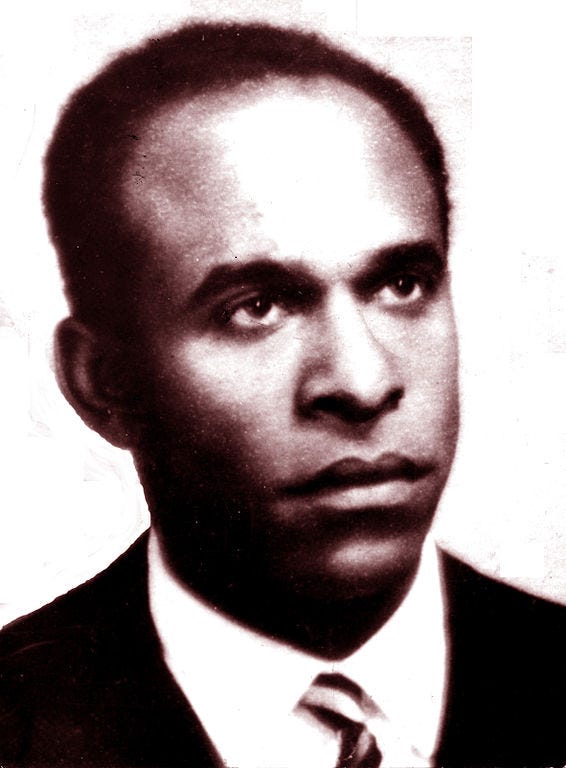
Early Life & Biography
Because the Antillean does not think of himself as a black man; he thinks of himself as an Antillean. The Negro lives in Africa, subjectively, intellectually, the Antillean conducts himself like a white man.
Born in Martinique (a French island colony, part of the Antilles islands in the Caribbean) in 1925, Frantz Fanon grew up in a middle-class family.
His early education was focused on French assimilation: French culture, language, literature, and history was promoted. Martinican children were expected to act French. As such, Africans from Africa were looked down upon. Whenever Fanon misbehaved, he was told from his mother to,
Stop acting like a nigger
As a child, Fanon attended the most prestigious high school in Martinique, studying under the famous poet and writer Aimé Césaire. After France fell to the Nazis in WWII, Martinique became under control of the Vichy France government, where Fanon experienced colonial racism and alienation.
Later, at 18 years old, Fanon left Martinique and joined the Free French Forces to fight against the Vichy regime. But during the war, Fanon experienced more intense European racism, which would later influence his works.
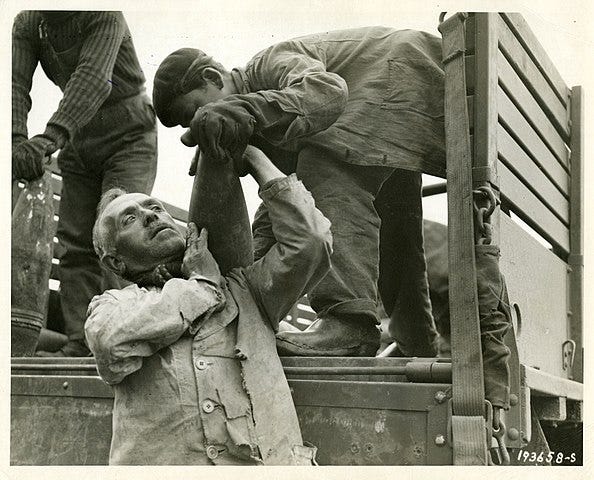
One particular incident is when Fanon and his black unit liberated a group of white European women from the Italians. But instead of dancing with the blacks, the women chose to dance with the Italian prisoners. Surprisingly, he also experienced Arab racism, writing
Some ten years ago I was astonished to learn that North Africans despised men of colour. It was absolutely impossible for me to make any contact with the local population.
After the war, Fanon returned to Martinique, supporting his mentor Aimé Césaire’s communist campaign for parliament while finishing his bachelor’s degree.
After his bachelor’s degree, Fanon went to Lyon, France where he studied medicine and psychiatry along with literature, drama, and philosophy. He qualified as a psychiatrist in 1951. During Fanon’s time, there was a global upheaval in culture due to World War II. As such, many people began to lose their religious faith.

People began to turn to the sciences-like psychoanalysis-to explain human behavior instead, creating the backdrop for Fanon’s first book Black Skin, White Masks.
Black Skin, White Masks: What Being Black Means
In France, they say “to speak like a book.”
In Martinique, they say “to speak like the white man.”
In 1954, during Fanon’s medical residency, he published his first book Black Skin, White Masks. He examines colonialism’s impact on both the colonized, the blacks, and the colonizers, the whites. From his studies in psychology, Fanon realizes that science focuses on the white experience. As such, white people cannot understand the black experience, which are the feelings of isolation.
Fanon focuses on the blacks’ feelings of alienation due to colonization. He argues colonization’s effects causes blacks to lose their sense of identity, considering they were robbed of their ancestral African cultures. At the same time, the blacks are severed from their blood brothers in Africa.
As a result, blacks-without their sense of ancestral culture-are forced in comparison to their white colonizers. Blacks try to prove themselves to be “less black” and prove themselves as “white.” The blacks begin to internalize the racist beliefs about themselves, isolating themselves from their black bodies.
A feeling of inferiority? No, a feeling of not existing.
Fanon writes about this in his daily life studying in France, where he’s constantly reminded of his “blackness.” He’s not just “a student.” But a “black student.” A “black doctor.” Never French. Yet Fanon reminds the reader black people has as much right as anyone else to the French culture, history, literature, and civilization.
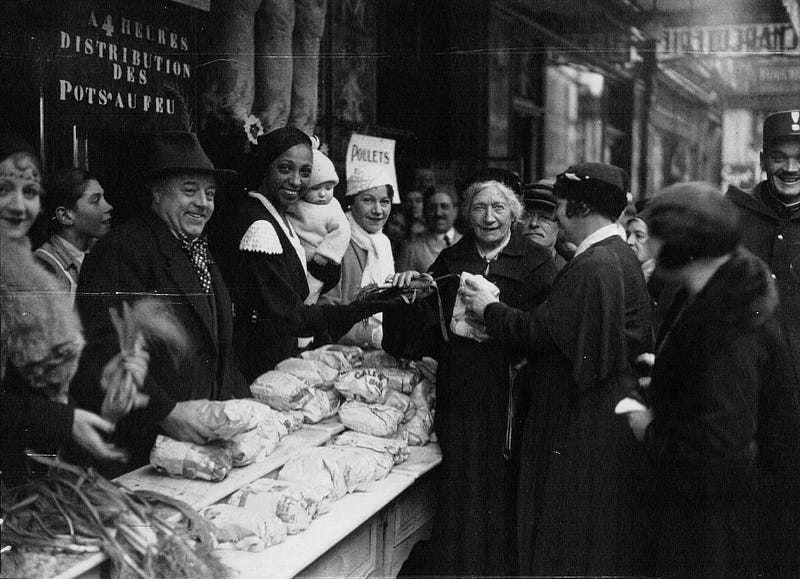
Though racism affects black people, it unknowingly affects the whites. He discusses white people’s desires for black people — shown in the fetishization of black males and white men’s fears about black men’s supposed sexual superiority.
These feelings — sexual desire and competitiveness — causes white people to suppress the blacks, out of their fear and ignorance. Thus, these irrational beliefs also affect the whites’ unconscious psyche.
Fanon accounts a case study in France where a nineteen-year-old French girl developed involuntary tics. The girl dreams about half-naked black people beating drums, waiting to burn a white man.
During her treatment, it’s revealed the girl’s father was a veteran in the French colonial army, where he listened to “black music.” As such, she became afraid of this music and its association with black men. Fanon concludes the girl’s mental instability revolves around her fear of black men.
As a result, colonialism and racism affects both parties of people — and not just one as most would believe. Fanon would advocate for the Third World’s colonized peoples to look for a new way of thinking in his magnum opus The Wretched of the Earth.
Fanon’s Masterpiece: The Wretched of the Earth
Let us try to create the whole man, whom Europe has been incapable of bringing to triumphant birth.
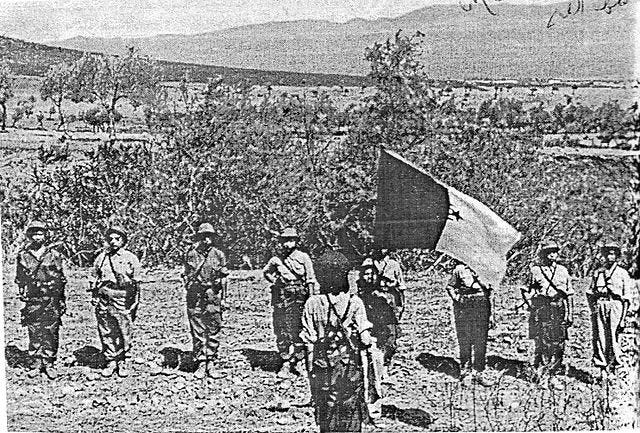
After publishing Black Skin, White Masks, Fanon grew disillusioned with Europe and France. Angered by France’s hypocrisy in its values, Fanon would relocate to Algeria in 1953, working as a psychiatrist. In Algeria, Fanon became sympathetic to Algeria’s fight for independence against France.
As in Martinique, Fanon saw the colonized Algerians have become alienated from themselves due to colonialism. As such, in 1954, Fanon himself joined the Algerians for their fight for freedom. His experiences in Algeria would lead to his masterpiece The Wretched of the Earth.
National liberation, national reawakening, restoration of the nation to the people of the Commonwealth, whatever the named used, whatever the latest expression, decolonization is always a violent event.
In The Wretched of the Earth’s beginning, Fanon argues the act of decolonization will always use violence. It cannot simply end in “a gentleman’s agreement.” He portrays the colonial world as “light” and “dark,” using the concept of Manicheanism, a Persian religion which portrays the world into light (good) and dark (evil) forces.
The colonist is portrayed as the light (good); the colonized is the dark (evil). This causes the white colonizers to believe the dark Africans are evil, causing racism in colonial society. As such, in this white and black worldview, the colonial rulers constantly use violence to suppress the colonized peoples, which Fanon states,
[the colonial situation] was colored by violence and their cohabitation — or rather the exploitation of the colonized by the colonizer — continued at the point of the bayonet and under canon fire.
Since the colonial system is founded on violence, Fanon believes peaceful means cannot rid the colonized from their rulers. The only option would be to use violence. By doing so, the colonized will rid themselves of their “inferiority complex.”
Mental illnesses such as the “inferiority complex” were prevalent throughout the war. As a psychiatrist during the Algerian War of Independence, Fanon documents cases of mental illness on both parties of the war. He notes various illness are “psychotic reactions-” directly related to colonialism’s stresses.
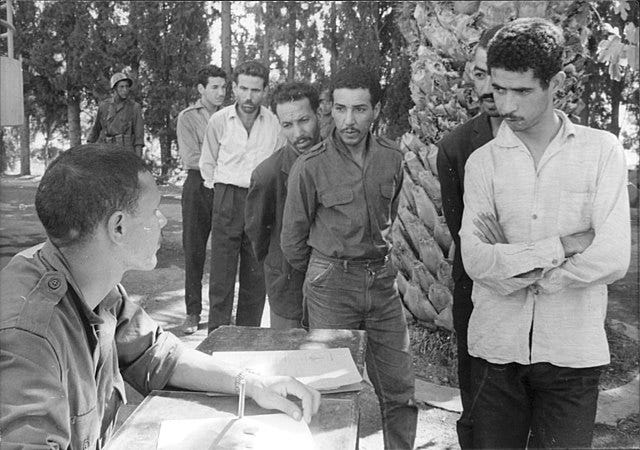
Fanon describes his patient an Algerian man, who is treated for impotence, migraines, and anorexia after his wife was raped by a French soldier. His symptoms are directly related to colonialism’s stresses.
But at the same time, Fanon documents another case where colonial soldiers are treated for negative psychological effects. He notes a young European police officer treated for depression and anxiety, after torturing Algerians for the colonial police.
Fanon advocates for colonialism’s end, calling it,
sows seeds of decay here and there must be mercilessly rooted out from our land and from our minds
After decolonization happens, Fanon argues for proving the existence of one’s culture. But he argues against the existence of one widespread “Negro” culture. He realizes the black experience is different to each nation — the United States, Algeria, etc. — so, the negritude movement for a universal black culture is impossible.
One unifying African culture can’t sum up all African’s and people of African descent’s culture around the world. Doing so would be counterproductive to decolonization. To Fanon, culture is built on the national level, not on a continental scale. He concludes,
Culture is the expression of national consciousness.
After completing The Wretched of the Earth in 1961, Fanon would die from leukemia at just 36 years old, but his legacy would live on.
Fanon: A Forgotten Legacy
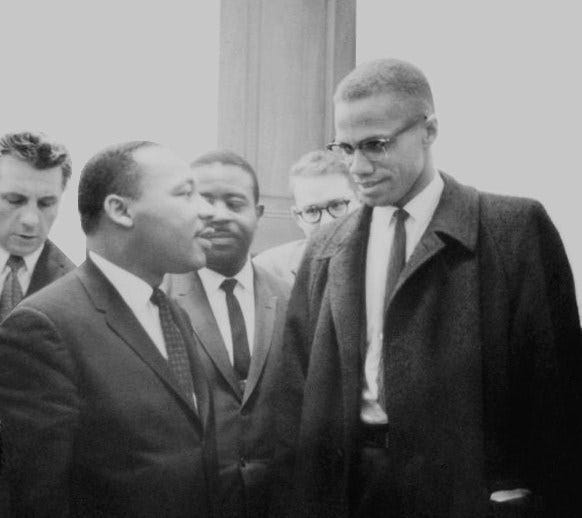
A theorist of violence, perhaps, but even more of action. By hatred of talkativeness. By hatred of compromise. By hatred of cowardliness. No one was more respectful of thought than he, and more responsible in face of his own thought, nor more exacting towards life, which he could not imagine in terms of other than of thought transformed into action
Aimé Césaire on Frantz Fanon
Fanon would become an enormous influence on anti-colonial and national liberation movements. His Wretched of the Earth would influence Steve Biko in South Africa, Malcolm X in the United States, and Che Guevara in Cuba.
And his work would become especially influential with the The Black Power Movement in the United States, influencing leaders Bobby Seale and Huey P. Newton.
Through his work, Fanon has continued to influence African culture, thought, and literature today.
Sources:
Fanon, F., Philcox, R., Sartre, J., & Bhabha, H. K. (2017). The wretched of the earth. Cape Town: Kwela Books.
Fanon, F. (2020). Black skin, white masks. London: Penguin Classics.


