
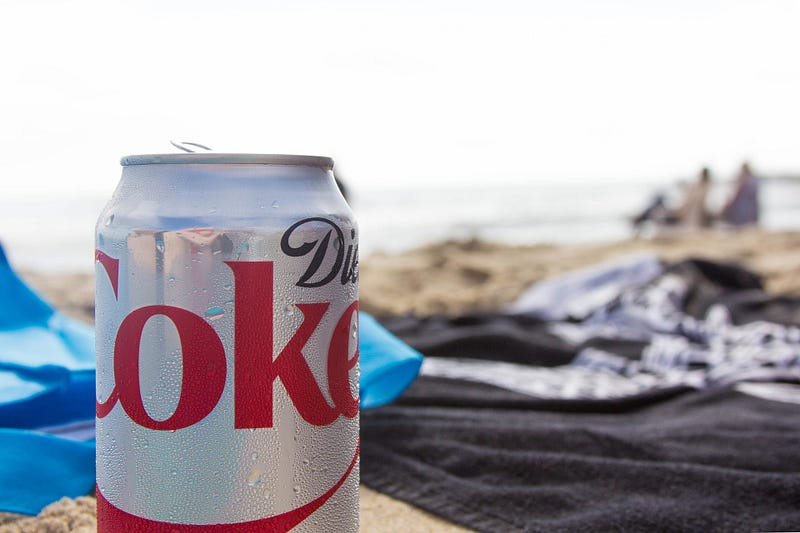
Fake Sugar Makes You Eat Worse!
And women may be even more sensitive to sweeteners
U.S. sales of diet soda are down, and that’s good.
University of Sydney researchers found a brain pathway that may explain why sugar substitutes make us eat more. According to a recent article in Mother Jones, fruit flies will eat 30% more calories after consuming Splenda (sucralose) when given access to sugary food. The brain reward centers of these flies respond to the sweet taste of sucralose by expecting calories.
The theory is artificial sweeteners, which have no calories, prompt flies to eat calories not delivered by sugar substitutes. Researchers attributed this to the pleasure response to sucralose. That makes the brain think it’s starving — or at least not getting the calories it thinks it should have.
The overeating reversed once the flies were taken off sucralose.
Mice did the same thing on sucralose. They ate more food, but the article didn’t specify whether it was more sugary food or just any food offered.
The Overeating Is Familiar
In a 2008 study, rats fed artificially sweetened yogurt ate more food over 14 days than rats eating sugar-sweetened yogurt. They also gained more weight and body fat — and showed a decrease in core body temp, suggesting a metabolic slow-down.
Years ago, the New York Times Magazine ran an article linking artificial sweeteners with increased appetite. Just as sugar triggers insulin release, ‘fake sugar’ can trigger insulin in susceptible people. That causes glucose to drop and causes hunger for the calories they didn’t get from the diet soda or what-have-you.
Why might the food selection go toward sugar? I’ll go to my brain chem research.
Like sugar, artificial sweeteners promote the release of endorphins (beta-endorphin) in animals and humans. The endorphins do 2 things.
They block satiety in the brain — the feeling that we’ve had enough food and don’t need to start another meal for a while.
They change food preferences — toward foods that promote more endorphins. Foods high in sugar, fat, or both.
So, whether it’s the expectation of a calorie blast, or reduced satiety plus a preference for sugar and fat — either way, we’re likely to eat more after using artificial sweeteners.
More Bad News About Fake Sugar
According to Mother Jones, people who drink diet soda regularly have increased risk of stroke, heart attacks, and type 2 diabetes.
Diet sodas can also change gut microbes, the bacteria in the intestines.
In fact, the change in gut microbes may be the way the diseases develop. A 2014 study on mice at the Weitzmann Institute of Science, showed that artificial sweeteners led to glucose intolerance. That’s a first step toward type-2 diabetes and other metabolic disorders.
This appeared to be due to changes in the microbiome linked with obesity and diabetes.
When the changed microbes were transferred to mice not exposed to sweeteners, the glucose intolerance was fully transmitted, as well.
Doesn’t Matter If You’re Man or Mouse

Human volunteers who don’t eat artificial sweeteners were given sweeteners for a week. Many began developing glucose intolerance after just that one week.
Researchers’ theory: the bacteria that brought on glucose intolerance had provoked inflammation. Inflammation, a complex subject, is currently recognized as a root cause of most, if not all, chronic disease.
In 2013, researchers studied 17 participants who were obese but not diabetic, and had normal insulin sensitivity. Two tests occurred one week apart. In Test 1, participants drank only water before a glucose tolerance test. In Test 2, participants drank water plus the amount of sucralose in a 12-ounce diet soda.
The sucralose in Test 2 provoked these changes: • 12% higher peak blood glucose levels • 20% higher total insulin secretion • 22% faster insulin secretion rate • 7% slower clearing rate of insulin from the blood.
Those changes may lead to insulin resistance, which in turn can lead to diabetes.
Worse for Women?

Women may be even more sensitive to sweeteners. For example, artificial sweeteners may bring on menstruation at an earlier age in girls.
Researchers at NIH and George Washington U. found that sweeteners show up in breast milk, even in women who don’t drink diet beverages. That may be due to sweeteners in foods labelled reduced-sugar, reduced-calorie, or “light.”
Sweeteners are even in toothpaste, so read labels!
The American Journal of Clinical Nutrition published a 14-year study of over 66,000 women. Results showed that artificial sweeteners seem to be more addictive than sugar. Diet soda drinkers tend to consume twice as much soda as regular soda users.
I had a weight-loss client many years ago who was addicted to aspartame. She couldn’t stay away from it, then kept binge eating and not losing weight.
Another client ate a food bar that she thought was “safe” because it had no sugar. Sucralose was the last and least plentiful (by weight) ingredient on the label. After one bar, she couldn’t stop and kept going back for more.
What to Do? Take the Hint!
Avoid artificial sweeteners. If that sounds like a perfect excuse to eat sugar, it’s not meant to be.
Sugar’s terrible — for many reasons listed above. But sugar substitutes are just as bad, and in some cases worse.
Start getting away from sweet foods and sweet tastes. If you must have something sweet, have 1-2 servings of fruit per day.
Don’t do what a client of mine did! He ate 3 quarts of watermelon at a barbecue because the Food Guide Pyramid suggested 2 to 4 servings of fruit a day.
He didn’t realize how small a serving is: half a cup of berries or 1 medium-size fruit.
Be cautious with fruit. It’s addictive for some people, and contains fructose, an unhealthful sugar. (That’s a topic for its own article!) If you’re sugar-sensitive, the vitamins, minerals and phytonutrients in fruit will not override the fructose horrors.
Bottom Line
Train yourself not to expect sweet food. Yes, it’s easier said than done, but there’s help. And the freedom you’ll achieve is worth it.
Want to get away from the negative effects of sugar or sweeteners? Perfect, because that’s what I do! Just visit www.LastResortNutrition.com and grab your free Empowered Eating Consult. Find out how easy it is to shift your moods, your energy, your health so you feel fantastic every day. You got this!
Brought to you by Dr. Joan Kent, best-selling author of Stronger Than Sugar: 7 Simple Steps to Defeat Sugar Addiction, Lift Your Mood, and Transform Your Health.


