
Mature Flâneur
Fairytale Medieval Villages of Burgundy
Captivated by Noyers’ 15th-century charm
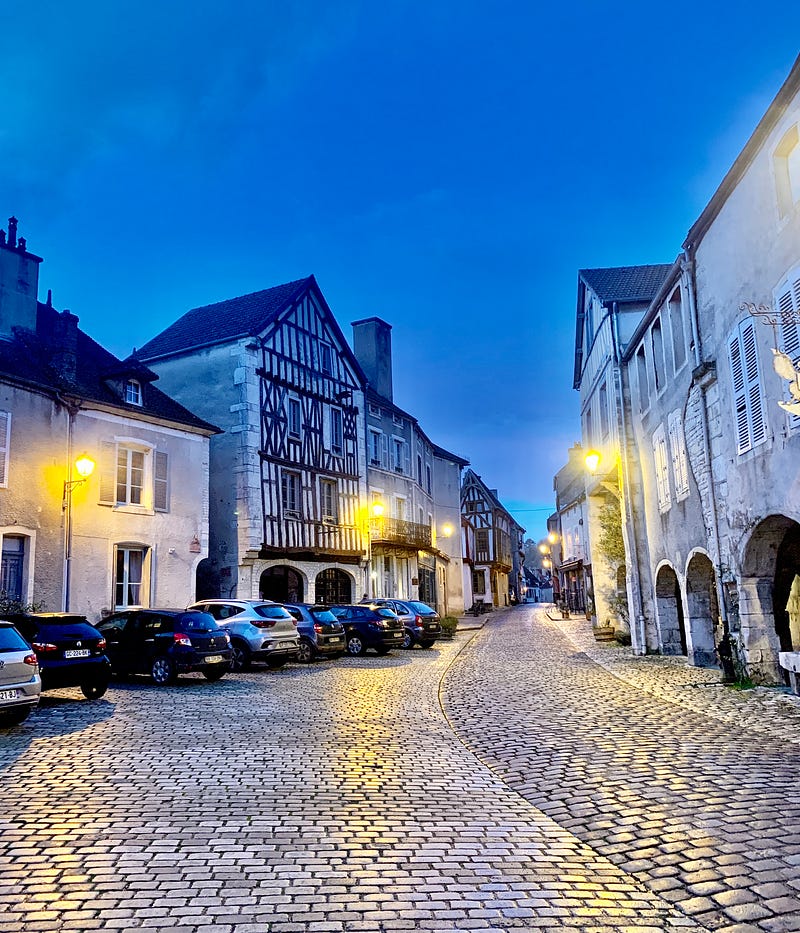
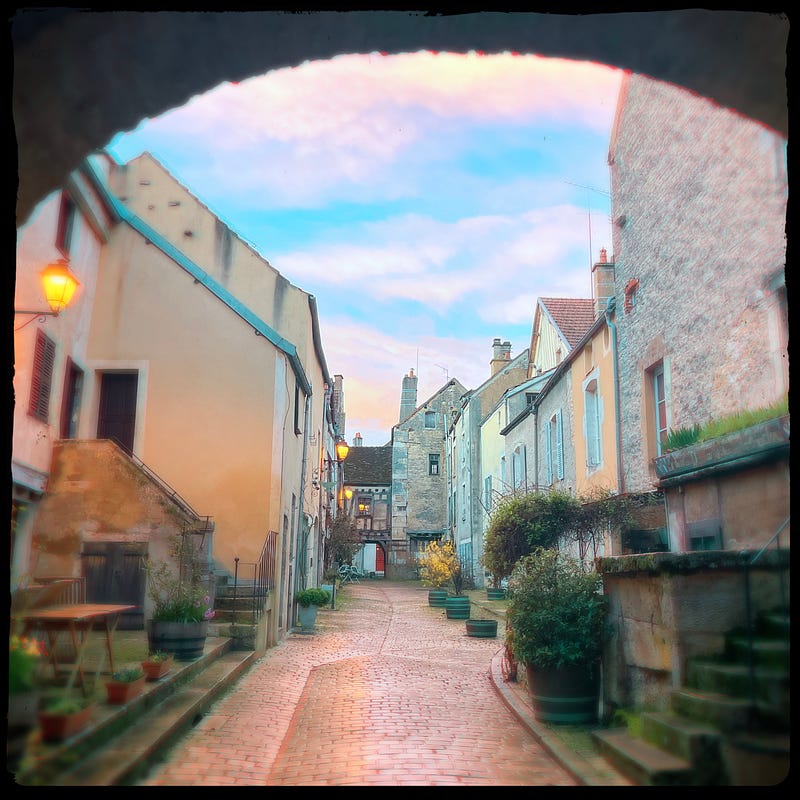
A two-hour drive from Paris, we passed over a stone bridge, under a stone arch, and into a forgotten world — a world of tilted tile roofs, dark-timbered houses and antique amber streetlamps. We had entered the village of the medieval town of Noyers-sur-Serein. Once the bastion of Burgundy — literally at the border where the Burgundian Dukes faced the often-hostile Kingdom of France — Noyers was one of the most powerful and resplendent towns of the duchy. That was five hundred years ago…
Teresa (my beloved spouse) and I were just starting our exploration of Burgundy, with plans to meander slowly from north to south through this land of rolling farmlands, vineyards, historic towns, castles and cathedrals. Teresa had chosen Noyers as our first stop. And yet, as we strolled through the village at dusk that first evening, she told me she feared she had made a mistake with this decision.
“I’m afraid Noyers might be the very best Burgundy has to offer…What if it’s all downhill from here?”
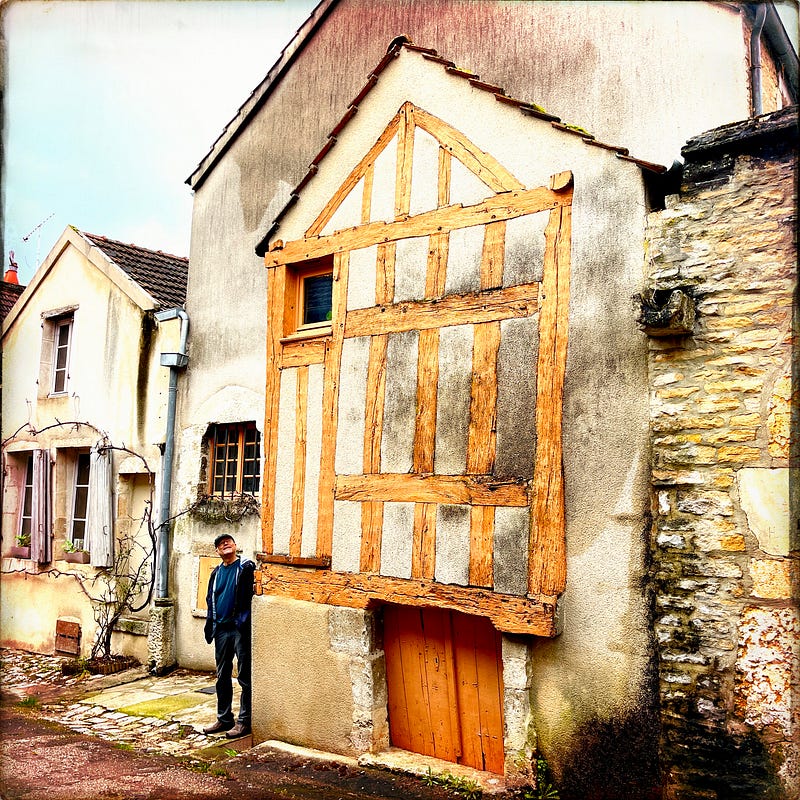
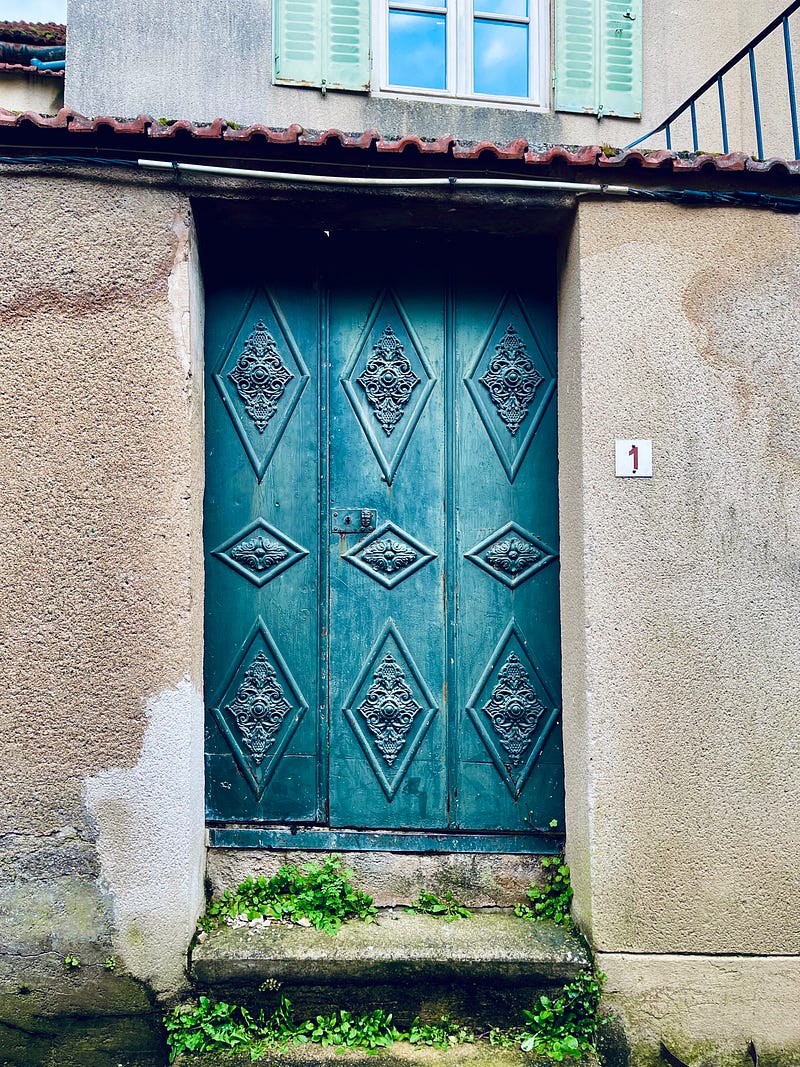
Indeed, the sheer medieval cute-osity of the town is overwhelming:
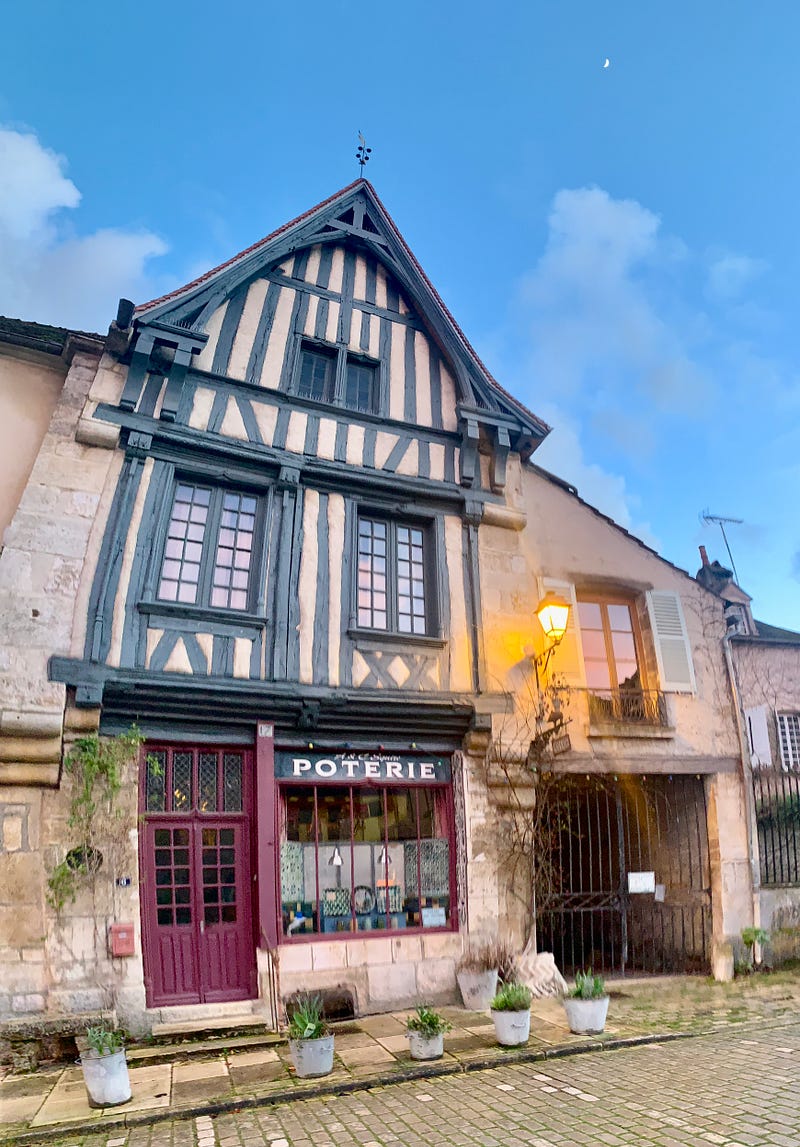
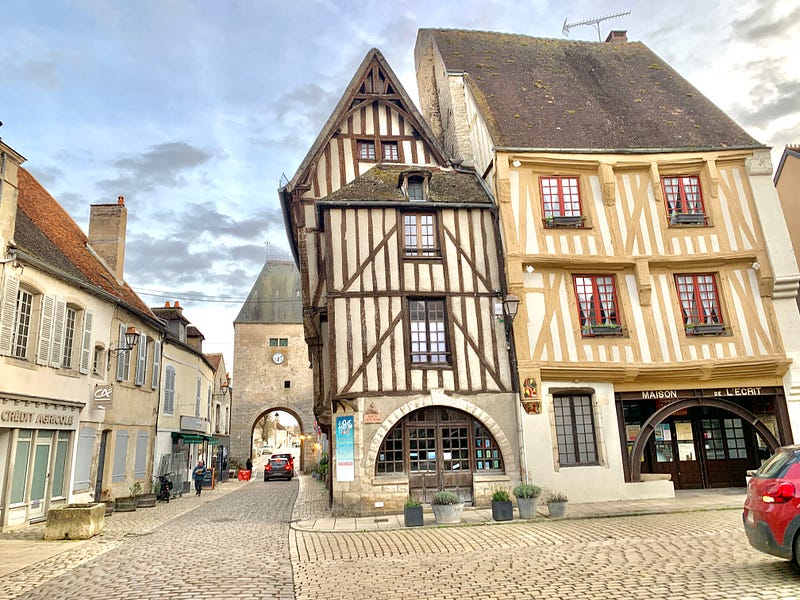
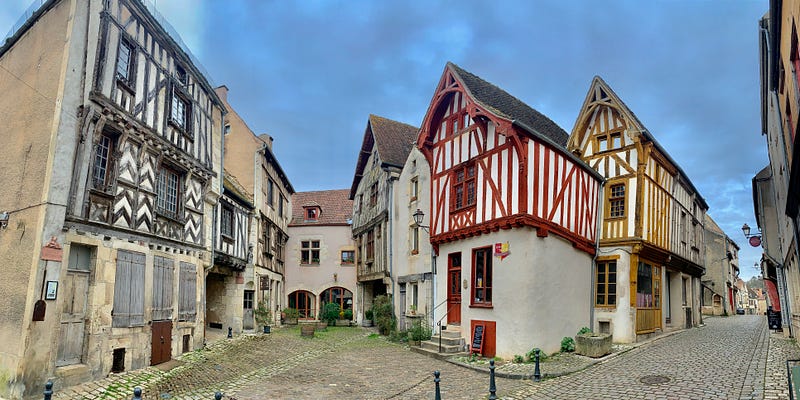
Teresa had booked us into an indescribably charming B&B called La Maison des Corporations, run by two local Burgundians, Gilles and Fabienne. They told us all about the history of the house, which was the headquarters of a corporation of trade guilds — cobblers, leatherworkers, metalworkers, and the like — in the 15th century. The beams on the outer walls are decorated with wooden statues representing the members’ professions.
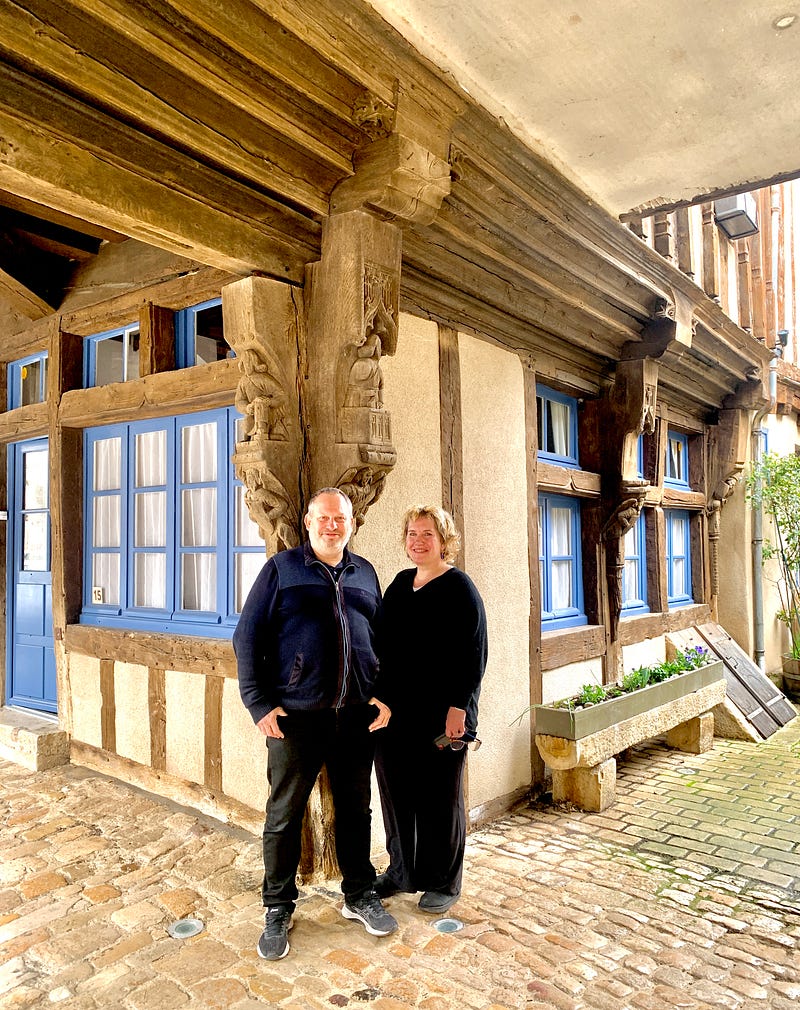
It took Gilles and Fabienne three years to restore the house after they bought it. Gilles explained that the rules in France for restoring historic properties are exacting. Nothing of the original structure or building materials could be modified. Each beam of wood needed to be removed, cleaned and put back where it was. Even the panes of glass could only be replaced with panes manufactured with the same techniques used in the 16th century — and today only four companies in the whole world can do it.
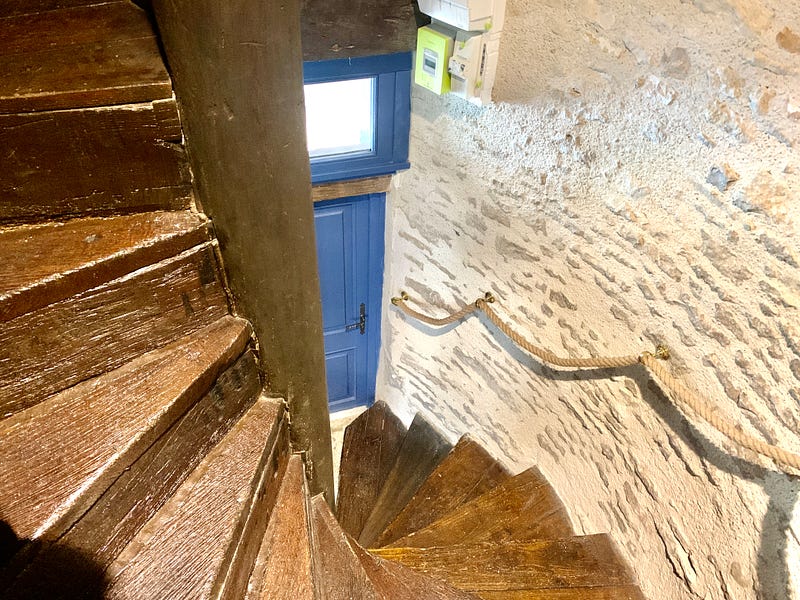
Needless to say, our room was exquisite. We walked up a ancient spiral staircase into a spacious azure-painted chamber of thick ceiling beams and antique wooden furniture — including a massive armoire that Gilles said had to be dismantled, carried up the spiral steps and then reassembled in the room! The bathroom, blessedly, was not at all medieval, and Gilles assured us the mattress was not from the 16th century.
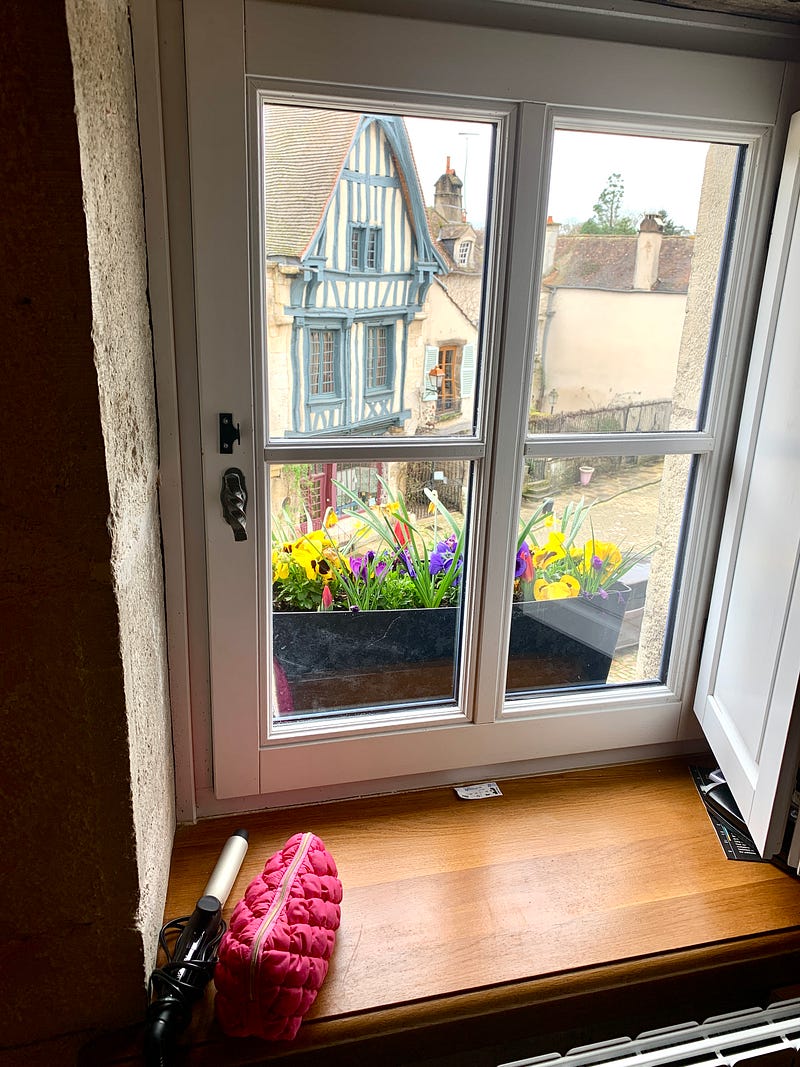
The B&B’s breakfasts featured fresh bread from the local boulangerie, fresh cheeses from the local fromagerie, and locally-harvested apricot and peach jams from the, um, local jammerie, I suppose? (Nope…it’s an epicerie).
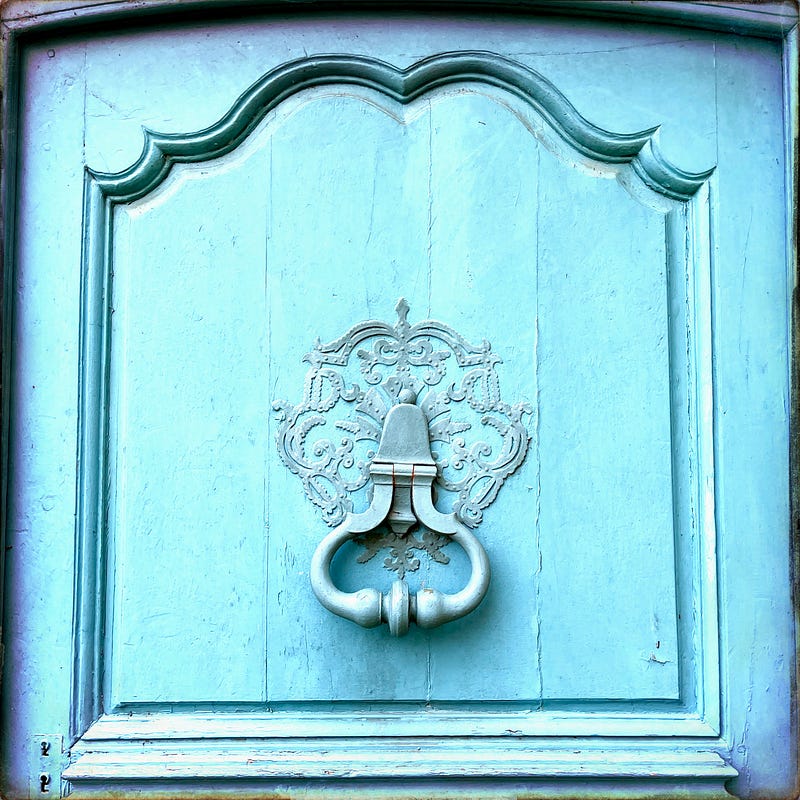
We strolled around town almost giddy. On each excursion we discovered new treasures: an antique door knocker, the giant bust of a greco-roman statue in a garden, a spring welling up at the foot of an old stone tower.
During our days’ wanderings, we did of course visit many other medieval villages in the north part of Burgundy. But none seemed so completely preserved as Noyers. Why was this? The village itself is constrained by the Serein River that encircles about nine-tenths of it as it loops around the edge of a limestone ridge above town — effectively sealing off the entire village from further growth. So, no encroaching suburbs. But the river also made Noyers a perfect place for a defensive stronghold, which is why it became an important town in the first place.
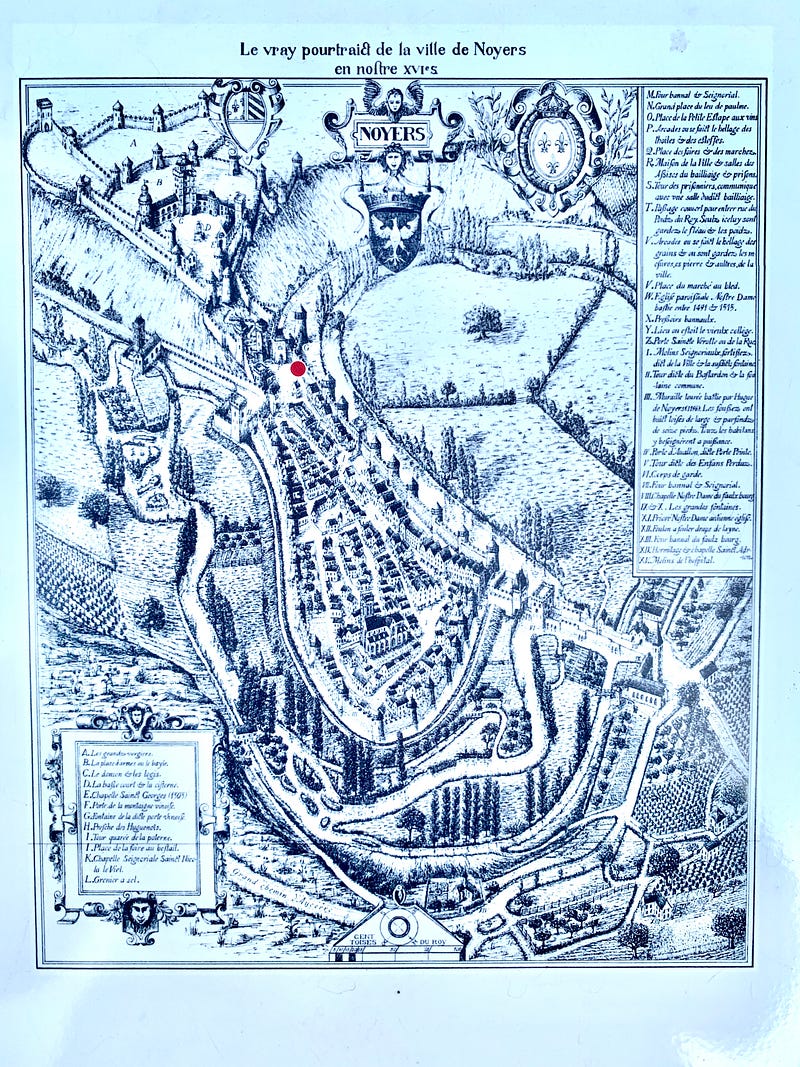
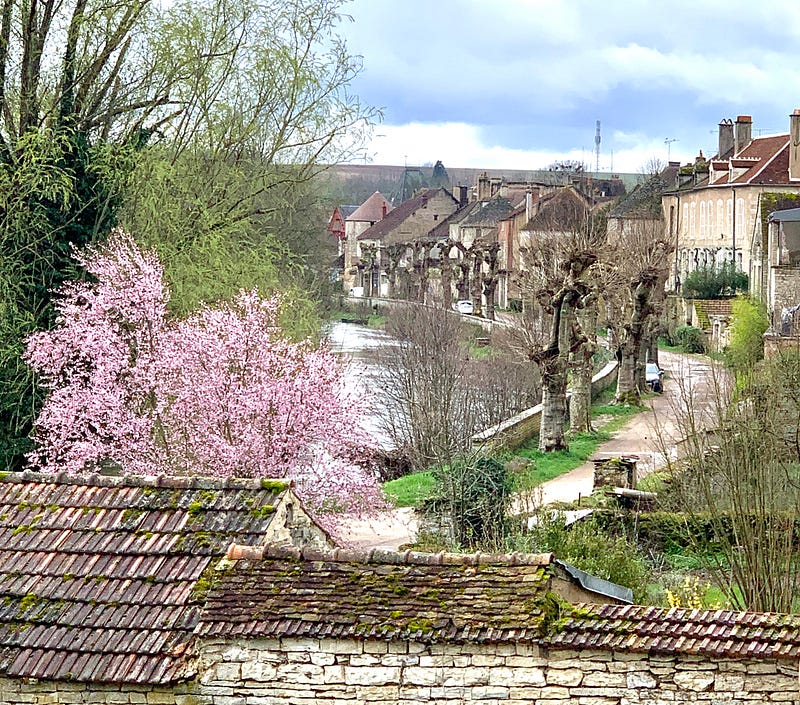
In fact, archeological digs show Noyers has had defensive barricades since 1000 B.C. In medieval times, such defenses were most important here at the northern frontier of Burgundy. They were essential for keeping the French Kingdom at bay, and projecting an aura of strength to the surrounding duchies. A grand castle fortress was built on the hilltop, which became one of the most powerful and prosperous in the region. The town flourished, and the citizens knew they had a place of protection and refuge in case of attack.
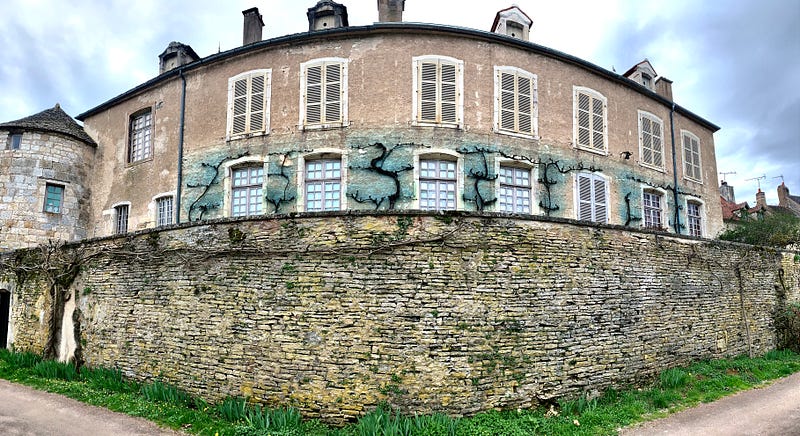
Noyers was so powerful in fact, that when the Duke of Burgundy was ultimately forced to sell off this part of his lands to the king of France, one of the first things the new owner of the castle did was have it dismantled! King Henri IV was taking no chances that one day it might once again become the stronghold of a rival power. It may seem strange, but the citizens themselves apparently joined in with relish, prying off blocks of limestone and carting them down the hill for their own uses. Apparently, the last lord to rule on the hill was rather harsh, and the townspeople were glad to be rid of him.
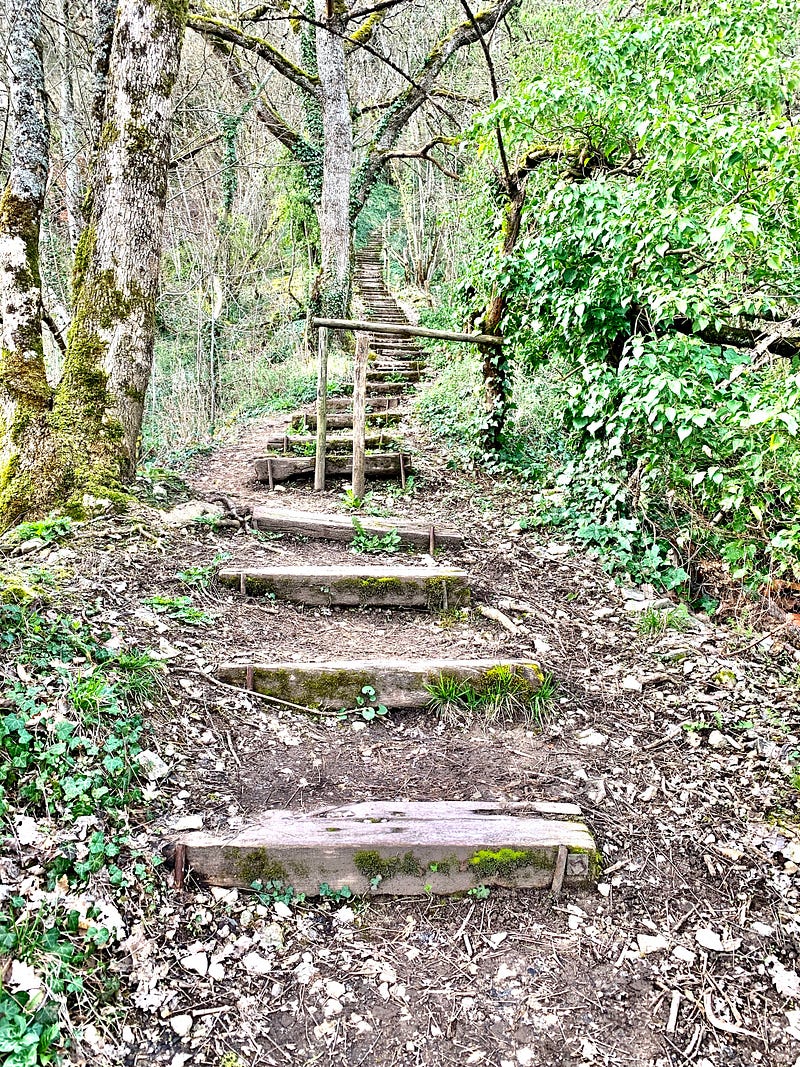
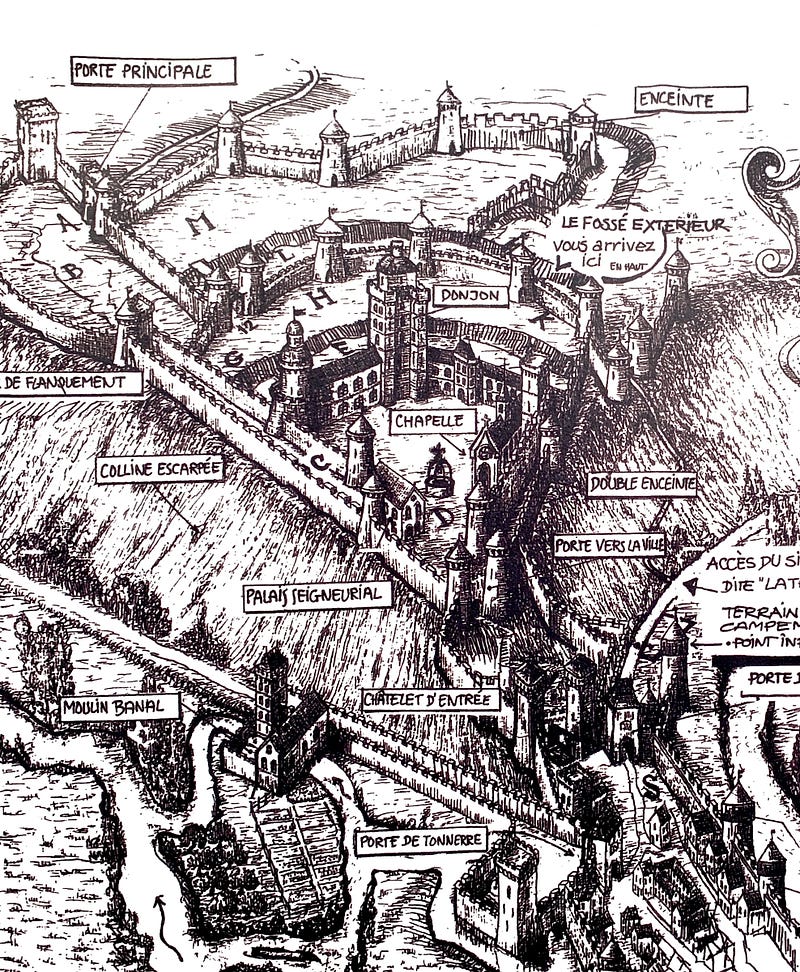
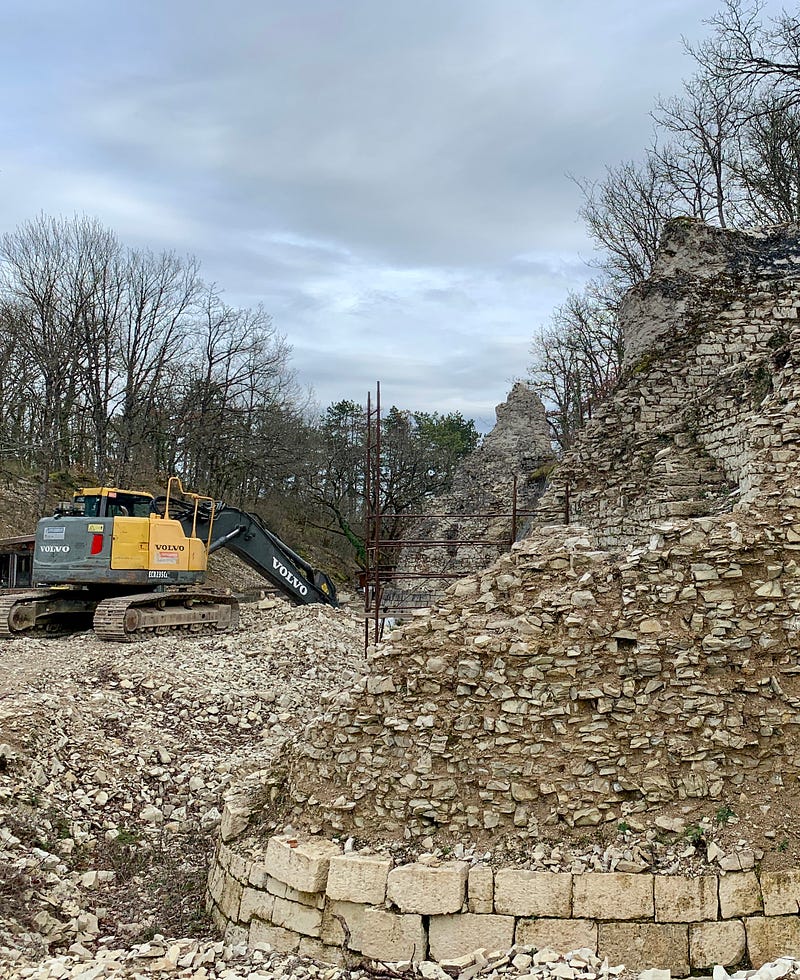
The hilltop was used for farming in the centuries to follow, then abandoned for the forest to reclaim. Only in 1998 was there sufficient interest by the townspeople in recovering their hilltop heritage. Today, a historical walkway takes one through what remains of the ruins, where one can wander through the woods and imagine the life of knights and noble ladies for whom the castle-home was one of the finest in the land. Work is also underway to restore some of the castle walls.
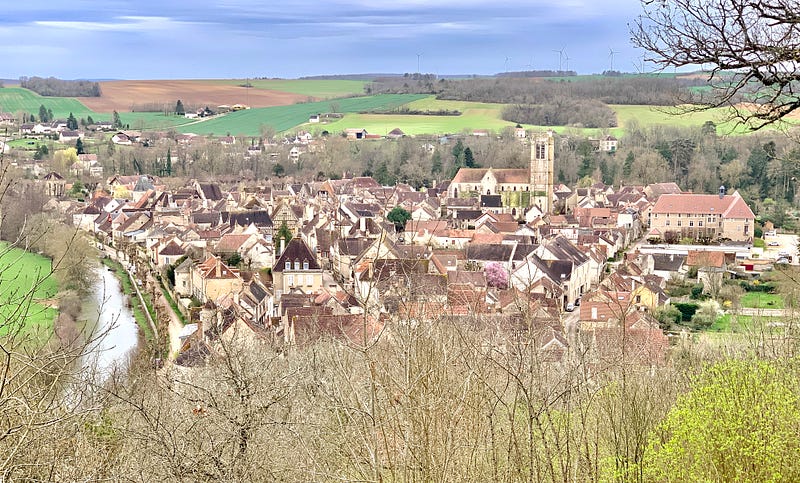
Noyers has not, unlike so many quaint historic towns in Europe, become a disneyfied version of itself. There’s a tourist bureau, yes, but no kiosks hawking Burgundian kitsch, no Best Westerns plonked on the perimeter, no massive parking lot for tour buses.
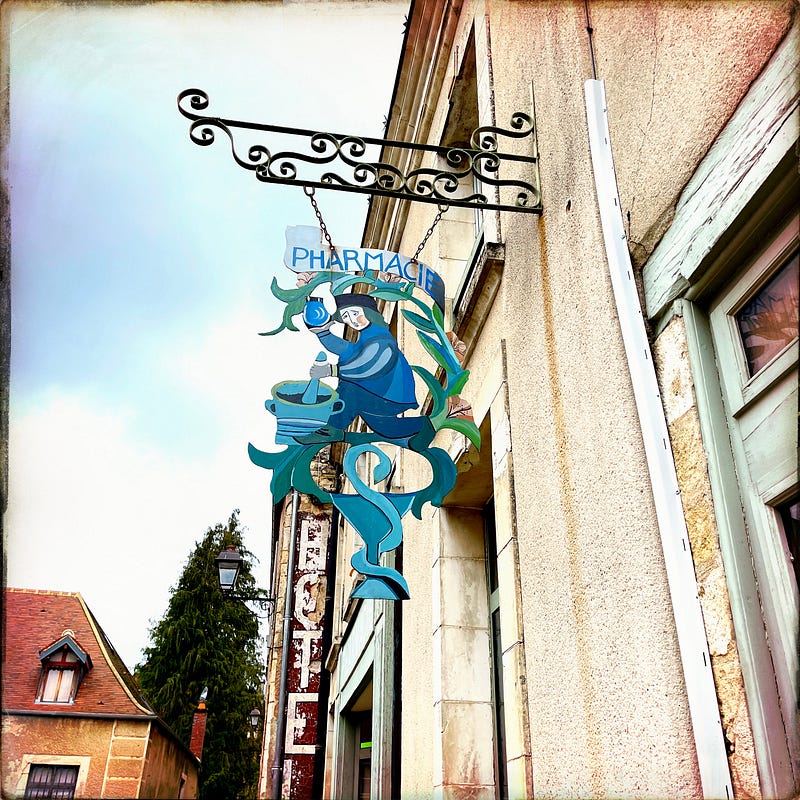
Our host Gilles told us the town’s charm actually has attracted a whole new generation of residents from over 30 different countries, and not just Europeans, but folks from Australia, New Zealand, even China. They want to live in the old, preserved houses, and to keep the town’s medieval character intact. There’s also a doctor, a pharmacist, a baker, four very good restaurants, a grocery store, and fresh produce from the surrounding farmland. It’s everything you need for a sweet life.
As Teresa and I strolled through the old streets on our last evening in Noyers, we talked about the magical feeling that filled us just from being here. It occurred to me that perhaps this is because in our childhoods we read picture-book fairytales set in medieval villages just like Noyers. These old-timbered houses and cobbled streets already existed in our subconscious minds. To see them in front of us is like stepping inside our own fairy tale: a forgotten world, brought vividly back to life.
***
Tim Ward is the author of Mature Flâneur: Slow Travels through Portugal, France, Italy and Norway


