avatarSimon Whaley - Author | Writer | Photographer

Free AI web copilot to create summaries, insights and extended knowledge, download it at here

4661

Abstract

r several hours. The French soldiers saw this continuous parade of marching uniformed women and mistook them for English militia, arriving in their thousands. It convinced them to surrender, two days later, on 24th February 1797, for which a thankful British government awarded Jemima an annual pension of £50.</p><figure id="fdc8"><img src="https://cdn-images-1.readmedium.com/v2/resize:fit:800/1*xPkWgt3NRbILUvL0lWlw8Q.jpeg"><figcaption>Jemima’s memorial © Simon Whaley</figcaption></figure><p id="7d79">Continuing my journey into Fishguard, instead of taking the main road like my new French friends, I follow the coast path, which is quieter and offers wonderful views of this Pembrokeshire coastline. Near Saddle Point, I spy the old harbour, or Lower Town as it is now known, and across the bay, I can just make out the old Fishguard Fort. A few shots were fired at the French ships from here, but the fort was originally built to protect the town from pirates.</p><figure id="26fd"><img src="https://cdn-images-1.readmedium.com/v2/resize:fit:800/1*ZOPeMWfygL3Sbu9k1BkUUA.jpeg"><figcaption>Lower Fishguard © Simon Whaley</figcaption></figure><p id="ebea">In 1779 Fishguard’s main town was bombarded by a pirate ship when the townsfolk refused to pay a £1,000 ransom. Luckily, a local smuggler with one cannon on his ship came to the town’s rescue and was so accurate with his shots the pirate ship soon fled. The fort was built to prevent the townsfolk from falling victim to such pirates again.</p><figure id="eaef"><img src="https://cdn-images-1.readmedium.com/v2/resize:fit:800/1*AVJW1uPecbzabubdyoSRPg.jpeg"><figcaption>Fishguard Fort © Simon Whaley</figcaption></figure><p id="fc60">In fact, all along the coast path there are several cannon pointing out to sea. Anyone approaching Fishguard in anger from the Irish Sea today should be prepared for a bombardment. Mind you, the only bombardment I’m worried about is from the screeching herring gulls swooping in the sky above!</p><p id="d8b9">There’s a shortcut from the coast path into Fishguard, and soon I’m in the town’s heart, on the main square. On my left stands the Royal Oak. It’s here, on 24th February 1797, where two French officers met with and offered to surrender to Lord Cawdor, Commander in Chief of all the local volunteer soldiers who’d come to defend the town. Not only had the French been fooled into thinking a vast army of British militia was ready to attack them, thanks to Jemima’s efforts, but some of their troops were still drunk from the wine they’d snaffled!</p><figure id="2a06"><img src="https://cdn-images-1.readmedium.com/v2/resize:fit:800/1*lUrB_BUQloo1Y4FKPS4waw.jpeg"><figcaption>Fishguard’s Royal Oak © Simon Whaley</figcaption></figure><p id="0308">From here I see St Mary’s Church, where Jemima locked up her captive soldiers. There’s a proud memorial to the town’s Welsh heroine in the grounds, marking her death in 1832 at the age of 82.</p><p id="bda8">Across the road is the Town Hall, home to the Last Invasion Tapestry. Inside I spot my French friends from earlier, busy studying the traditional Welsh costume, like the one worn by Jemima Nicholas.</p><p id="2b7a">Inspired by the Bayeux Tapestry depicting the Norman Invasion of 1066 at the Battle of Hastings, the Last Invasion Tapestry recounts the full story of the three-day French attack. It’s exactly the same length as the Bayeux Tapestry, at 30.4 metres long, and 53cm deep, and was commissioned to commemorate the 200th anniversary of the event in 1997. Seventy-seven local people used 178 different shades of crewel wool to create the embroidered masterpiece over a four-year period. That’s a lot of needlework!</p><figure id="2a34"><img src="https://cdn-images-1.readmedium.com/v2/resize:fit:800/1*2Mz1gZs98jbR1X4Esw9z3Q.jpeg"><figcaption>The Fishguard Tapestry © Simon Whaley</figcaption></figure><p id="c26d">Scrutinising the Last Invasion Tapestry I soon spot the embroiderers’ sense of humour. There’s a lovely section illustrating a chicken attacking someone’s leg, and another of Jemima Nicholas with her pitchfork gripping the shoulder of one of her prisoners!</p><figure id="1278"><img src="https://cdn-images-1.readmedium.com/v2/resize:fit:800/1*4heNX9wKYDFwlVzZSltROQ.jpeg"><figcaption>Jemima depicted on the tapestry © Simon Whaley</figcaption></figure><p id="aa0f">As I wander along the tapestry, marvelling at the intricate needlework, and in awe of its design, I wonder how different life could have been, had the French been better organised.</p><p id="509f">“Bonjour,” says the French tourist, recognising me again. “It is amazing, is it not?” He points at the tapestry.</p><p

Options

id="2680">“As good as Bayeux?” I enquire.</p><p id="68cc">“Oui.” He winks.</p><p id="ab03">Thankfully, Anglo-French relations are much better 220 years on.</p><p id="87f2">From the Town Hall, it’s a short walk down a steeply curved road to the original Fishguard community of Lower Town. Squashed between the quayside and the cliffs behind, a row of cottages lines the banks of the River Gwaun, where it meets the sea. The tide is out, so the armada of sailing and fish boats lie abandoned on dry land, with only the wind rattling around their masts.</p><p id="50f2">I’m confronted by a sculpture. A shoal of herring are suspended high above my head, in a sea of blue sky. It’s a reminder of this port’s main industry many years ago. Over fifty vessels regularly landed herring here, which were then sent to Bristol, Liverpool, Ireland and even the Mediterranean.</p><figure id="80db"><img src="https://cdn-images-1.readmedium.com/v2/resize:fit:800/1*ORmAjLfdvoLZQe17VyVhqQ.jpeg"><figcaption>Herring sculpture at Lower Fishguard © Simon Whaley</figcaption></figure><p id="a62c">I spot another plaque commemorating a different invasion, back in 1971, when Hollywood took over the town. A star-studded cast, including Richard Burton, Elizabeth Taylor, Peter O’Toole, Siân Phillips, Victor Spinetti, Ruth Madog and David Jason, came here to make a film adaptation of Dylan Thomas’s radio play <i>Under Milk Wood</i>. Fishguard’s Lower Town was used as the setting for the fictional town of Llareggub.</p><p id="f4c7">When not on set, the cast stayed at the Fishguard Bay Hotel, back round the coast at Goodwick. Richard Burton stayed in rooms 123 and 124, although he wasn’t the first actor to reside in these particular rooms. Fifteen years earlier, Gregory Peck used them when he was in town filming <i>Moby Dick</i>.</p><figure id="643a"><img src="https://cdn-images-1.readmedium.com/v2/resize:fit:800/1*q9lswAOVFq2L2DZGJYRIxg.jpeg"><figcaption>The Sun Worshipper at Lower Fishguard © Simon Whaley</figcaption></figure><p id="80c7">At the end of the quay is another sculpture called <i>The Sun Worshipper</i>, perfectly placed to enhance his existing golden tan. I sit down on the rocks beside him, and spy the Fishguard Bay Hotel across the bay at Goodwick. Suddenly, the tones of a deep-throated horn echo round the cliffs, announcing the afternoon arrival of the ferry from Ireland. Another invasion force has arrived. I’m sure they come in peace, though. And because it’s so peaceful here, I might just rest my eyelids for a moment and enjoy the sunshine and sea air. Everyone who comes to fabulous Fishguard falls for its delights in one way or another.</p><h2 id="78d8">For more of my travels around Britain, check out:</h2><div id="284b" class="link-block"> <a href="https://simonwhaley.medium.com/list/0bb49100d307"> <div> <div> <h2>British Travel</h2> <div><h3>Learn more about the places you knew, and discover the surprises of the places you didn't know.</h3></div> <div><p>simonwhaley.medium.com</p></div> </div> <div> <div style="background-image: url(https://miro.readmedium.com/v2/resize:fit:320/0*f349b74ca60972394e0dfc03bc2fb9b5edf9dbc0.jpeg)"></div> </div> </div> </a> </div><div id="b902" class="link-block"> <a href="https://medium.com/the-slow-journeyman"> <div> <div> <h2>The Slow Journeyman</h2> <div><h3>To truly experience a place, you should savour it slowly. Take time to observe and you will be rewarded with sights and…</h3></div> <div><p>medium.com</p></div> </div> <div> <div style="background-image: url(https://miro.readmedium.com/v2/resize:fit:320/1*l3KAg04pmKzD44dh9Fchcw.jpeg)"></div> </div> </div> </a> </div><div id="27da" class="link-block"> <a href="https://simonwhaley.medium.com/membership"> <div> <div> <h2>Join Medium with my referral link - Simon Whaley</h2> <div><h3>Read every story from Simon Whaley (and thousands of other writers on Medium). Your membership fee directly supports…</h3></div> <div><p>simonwhaley.medium.com</p></div> </div> <div> <div style="background-image: url(https://miro.readmedium.com/v2/resize:fit:320/0*DxeTtT8CJ57IDB2s)"></div> </div> </div> </a> </div></article></body>

Fabulous Fishguard

Before you board a ferry to Ireland, take a look around this wonderful Welsh town first …
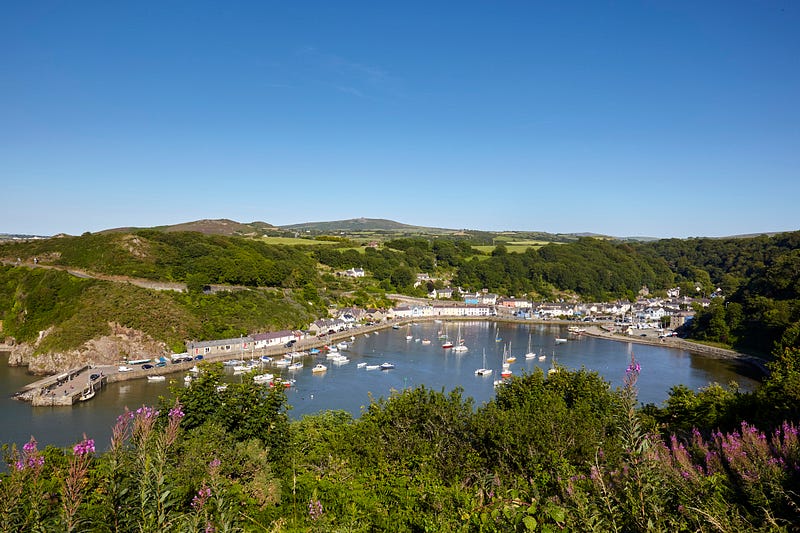
Lower Fishguard © Simon Whaley

“Bonjour,” interrupts a young Frenchman and his wife. “Is this the right way to the invasion tapestry?”

I nod and point along Goodwick’s intriguing promenade. “Yes. Follow the main road.”

“Merci.” They wave, and continue on their way.

I return my gaze to the marvellous mosaics on the promenade along Goodwick Sands. They paint a picture of Fishguard’s surprisingly colourful history, which I’m discovering more about on my short seaside saunter. One thing is clear, the people of Fishguard are adept at handling invasions.
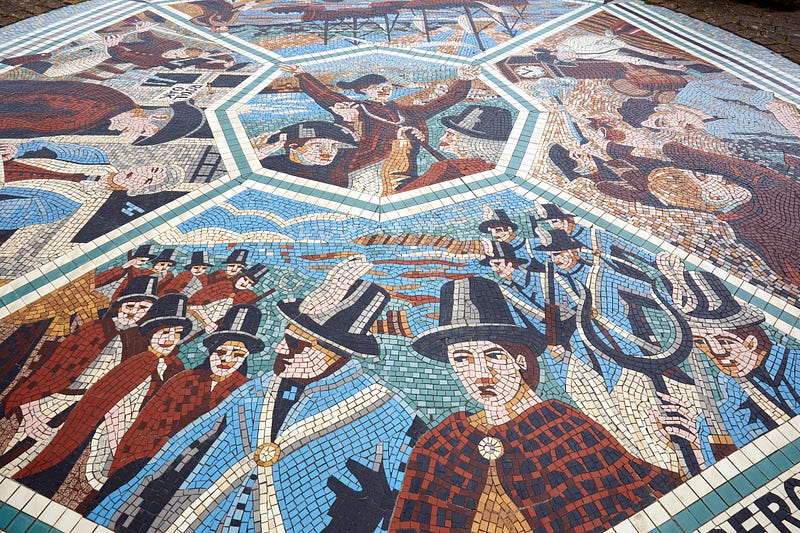
Mosaics at Fishguard © Simon Whaley

My friendly French tourists come in peace, but over 220 years ago, on 22nd February 1797, nearly 1,400 French troops arrived in the Irish Sea with grand plans to conquer the British. It became known as the Last Invasion of Britain, and had it succeeded we might all be speaking French today. The fact we don’t might be down to some illicit alcohol, and a feisty Welsh woman called Jemima Nicholas!

The last French invasion has given me a great excuse to explore the Celtic coastline around Pembrokeshire’s Fishguard, in West Wales. I bumped into today’s French invaders as they were overlooking Fishguard’s modern harbour, which is actually located in neighbouring Goodwick, where the sea is deep enough for the large ferry serving the twice-daily crossings to Ireland’s Rosslare.
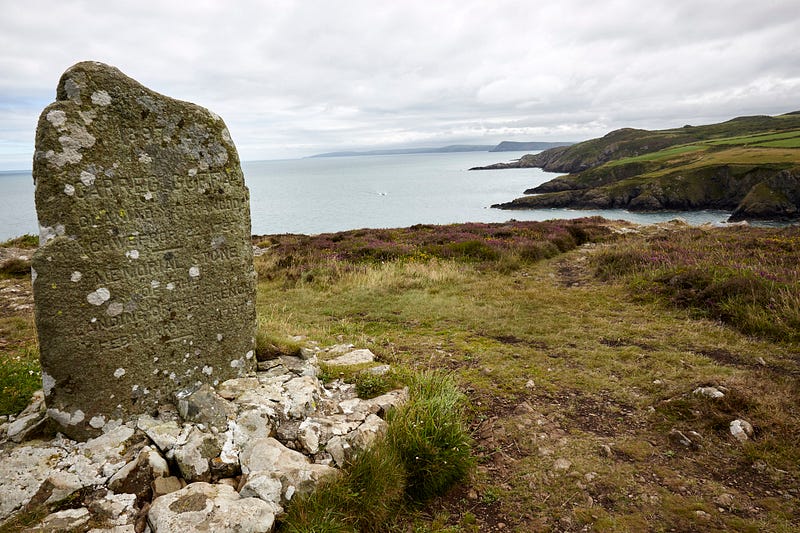
Carregwastad Point, where the French invaded © Simon Whaley

The 18th century invasion began two miles further along the coast on a rocky promontory called Carregwastad Point. The French initially landed a couple of hundred troops on this isolated peninsula between Goodwick and Strumble Head, which is now marked with a stone monument.

This wasn’t their planned invasion spot, though. Originally, they were to sail up the Severn Estuary to Bristol, but easterly winds forced them to abandon this. Instead, they sailed around the Welsh coastline into Cardigan Bay where they dropped anchor just off Carregwastad Point. They raised the British colours on their ships to disguise their true motives.

At 5 pm on 22nd February 1797, under the darkening evening sky, seventeen boatloads of French troops climbed up the rocky cliffs, onto the remote headland, and began attacking and ransacking any isolated farmhouses they came across.

They must have thought it was their lucky evening when they stumbled across one farmhouse in the middle of some wedding celebrations. A recent shipwrecking had led to a surfeit of alcohol washing ashore, which locals had cannily captured and saved for this special occasion. The soldiers helped themselves, along with the food, and spent the rest of the evening in a drunken stupor. The locals raised the alarm but didn’t wait for help to arrive. Instead, they took matters into their own hands.
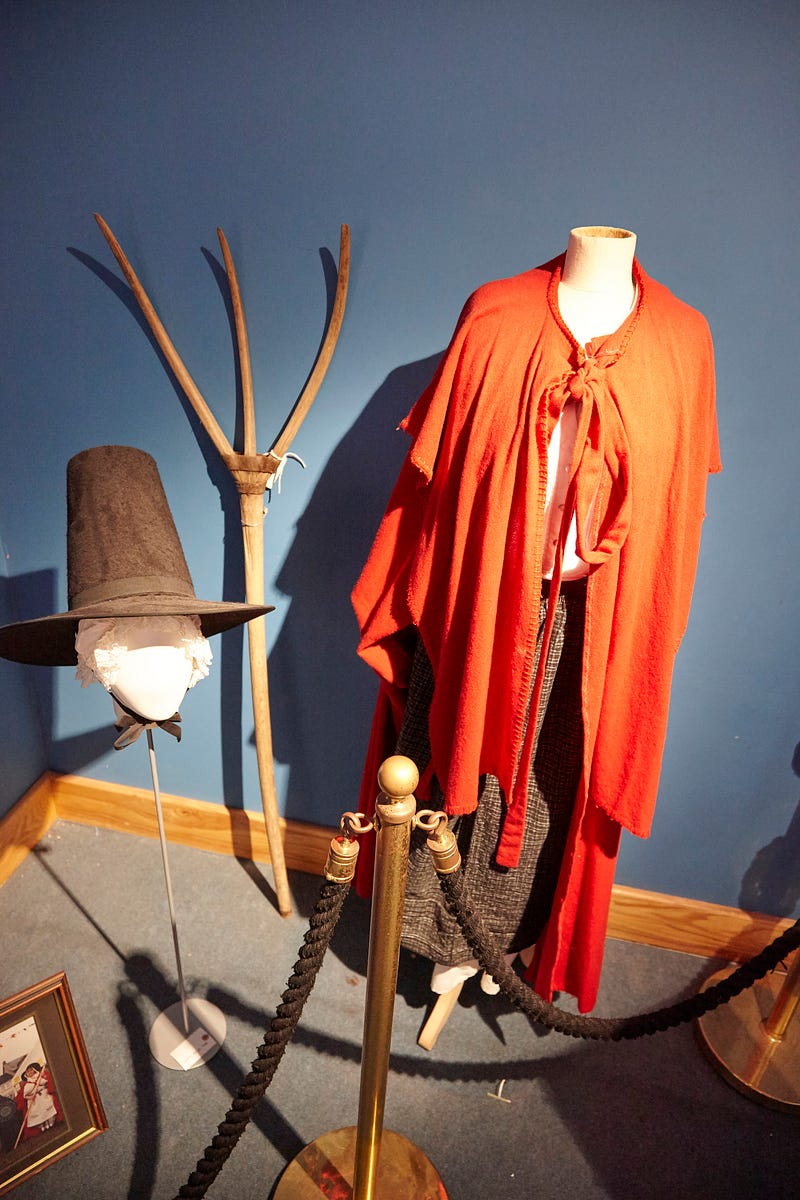
The traditional Welsh costume Jemima Nicholas wore © Simon Whaley

One local woman, Jemima Nicholas, dressed in her traditional Welsh costume of a large red cloak and black hat and armed with a pitchfork, went out and rounded up 12 French soldiers, whom she promptly marched into Fishguard and locked up in St Mary’s Church!

One of the mosaics on the promenade at Goodwick Sands tells the story of the invasion in a series of scenes, and the centre panel depicts Jemima threatening a frightened French soldier with a pitchfork. I wonder what they thought of her!
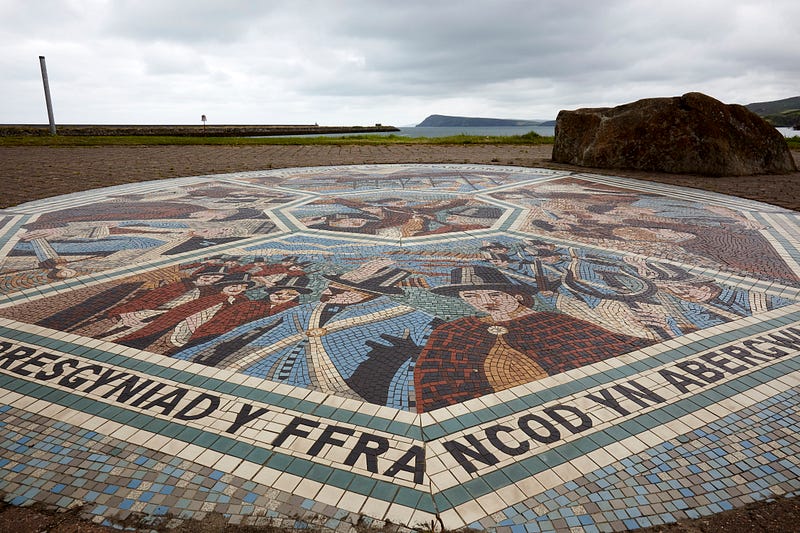
Mosaic at Fishguard © Simon Whaley

Local folklore tells how, two days later, Jemima gathered together some 400 local women in their traditional red cloaks, and marched them around Fishguard’s Bigney Hill for several hours. The French soldiers saw this continuous parade of marching uniformed women and mistook them for English militia, arriving in their thousands. It convinced them to surrender, two days later, on 24th February 1797, for which a thankful British government awarded Jemima an annual pension of £50.
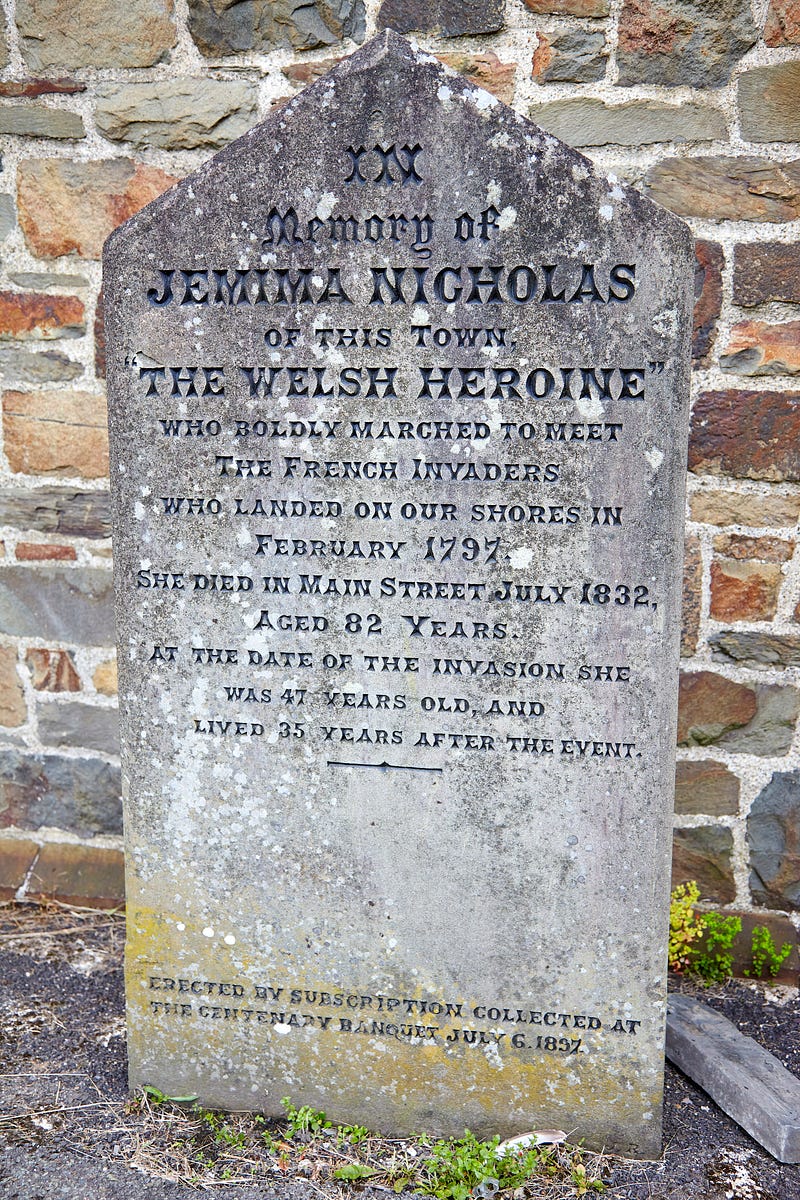
Jemima’s memorial © Simon Whaley

Continuing my journey into Fishguard, instead of taking the main road like my new French friends, I follow the coast path, which is quieter and offers wonderful views of this Pembrokeshire coastline. Near Saddle Point, I spy the old harbour, or Lower Town as it is now known, and across the bay, I can just make out the old Fishguard Fort. A few shots were fired at the French ships from here, but the fort was originally built to protect the town from pirates.
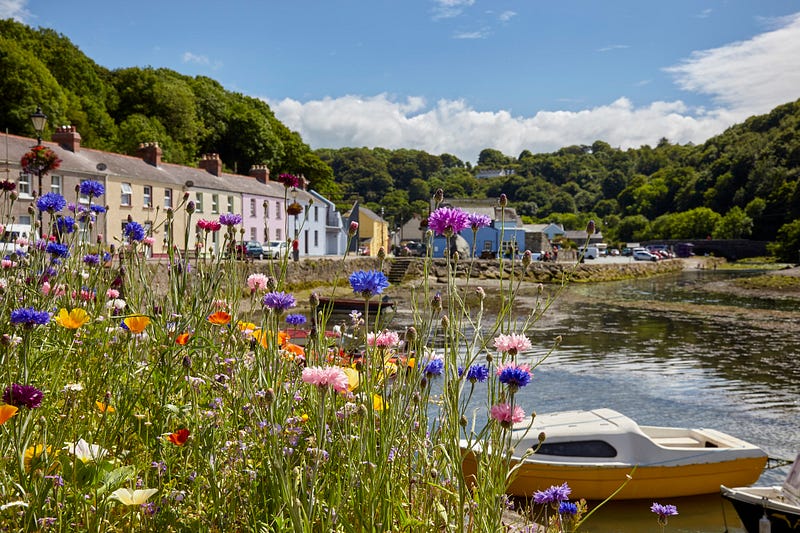
Lower Fishguard © Simon Whaley

In 1779 Fishguard’s main town was bombarded by a pirate ship when the townsfolk refused to pay a £1,000 ransom. Luckily, a local smuggler with one cannon on his ship came to the town’s rescue and was so accurate with his shots the pirate ship soon fled. The fort was built to prevent the townsfolk from falling victim to such pirates again.
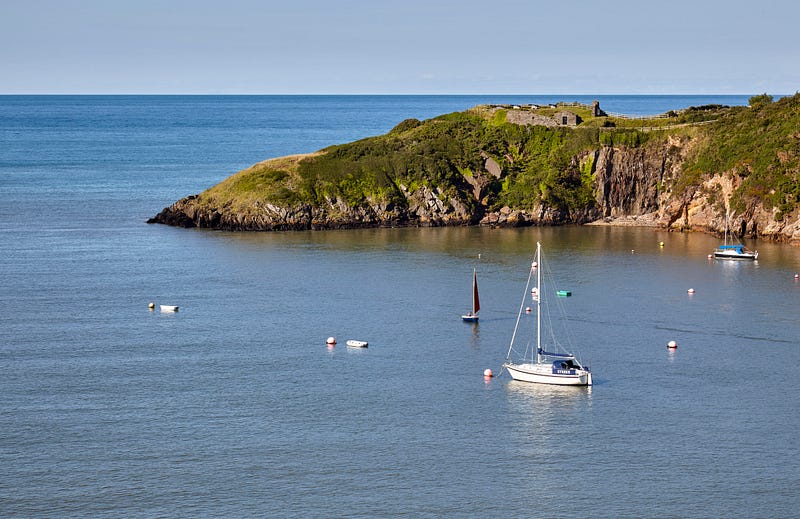
Fishguard Fort © Simon Whaley

In fact, all along the coast path there are several cannon pointing out to sea. Anyone approaching Fishguard in anger from the Irish Sea today should be prepared for a bombardment. Mind you, the only bombardment I’m worried about is from the screeching herring gulls swooping in the sky above!

There’s a shortcut from the coast path into Fishguard, and soon I’m in the town’s heart, on the main square. On my left stands the Royal Oak. It’s here, on 24th February 1797, where two French officers met with and offered to surrender to Lord Cawdor, Commander in Chief of all the local volunteer soldiers who’d come to defend the town. Not only had the French been fooled into thinking a vast army of British militia was ready to attack them, thanks to Jemima’s efforts, but some of their troops were still drunk from the wine they’d snaffled!
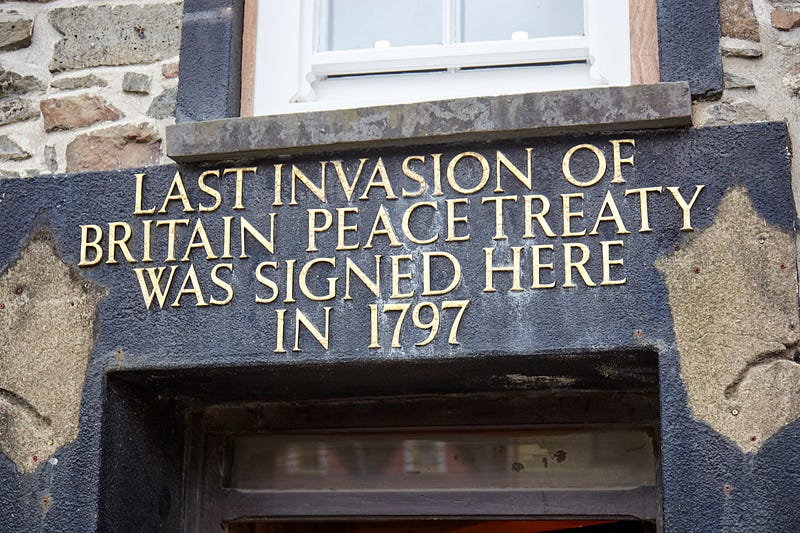
Fishguard’s Royal Oak © Simon Whaley

From here I see St Mary’s Church, where Jemima locked up her captive soldiers. There’s a proud memorial to the town’s Welsh heroine in the grounds, marking her death in 1832 at the age of 82.

Across the road is the Town Hall, home to the Last Invasion Tapestry. Inside I spot my French friends from earlier, busy studying the traditional Welsh costume, like the one worn by Jemima Nicholas.

Inspired by the Bayeux Tapestry depicting the Norman Invasion of 1066 at the Battle of Hastings, the Last Invasion Tapestry recounts the full story of the three-day French attack. It’s exactly the same length as the Bayeux Tapestry, at 30.4 metres long, and 53cm deep, and was commissioned to commemorate the 200th anniversary of the event in 1997. Seventy-seven local people used 178 different shades of crewel wool to create the embroidered masterpiece over a four-year period. That’s a lot of needlework!
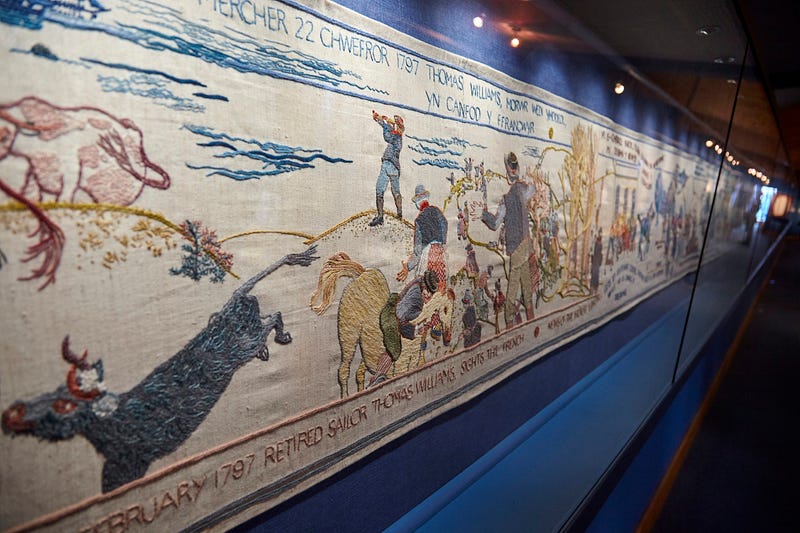
The Fishguard Tapestry © Simon Whaley

Scrutinising the Last Invasion Tapestry I soon spot the embroiderers’ sense of humour. There’s a lovely section illustrating a chicken attacking someone’s leg, and another of Jemima Nicholas with her pitchfork gripping the shoulder of one of her prisoners!
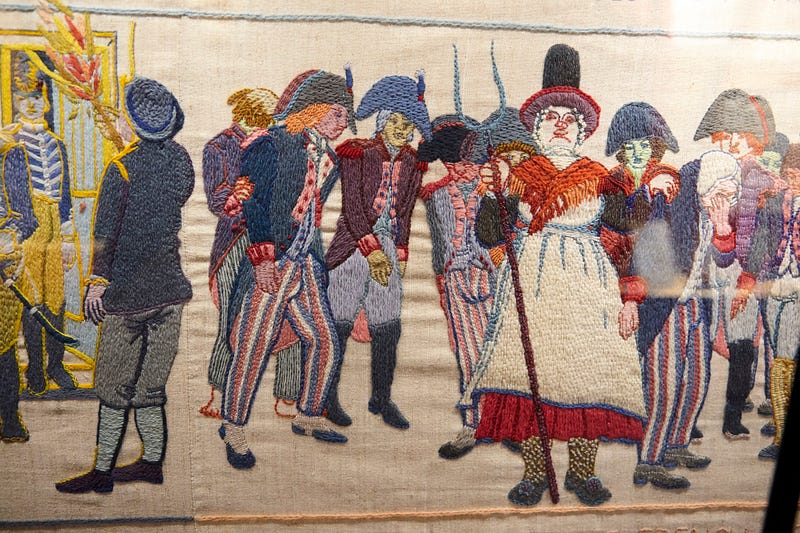
Jemima depicted on the tapestry © Simon Whaley

As I wander along the tapestry, marvelling at the intricate needlework, and in awe of its design, I wonder how different life could have been, had the French been better organised.

“Bonjour,” says the French tourist, recognising me again. “It is amazing, is it not?” He points at the tapestry.

“As good as Bayeux?” I enquire.

“Oui.” He winks.

Thankfully, Anglo-French relations are much better 220 years on.

From the Town Hall, it’s a short walk down a steeply curved road to the original Fishguard community of Lower Town. Squashed between the quayside and the cliffs behind, a row of cottages lines the banks of the River Gwaun, where it meets the sea. The tide is out, so the armada of sailing and fish boats lie abandoned on dry land, with only the wind rattling around their masts.

I’m confronted by a sculpture. A shoal of herring are suspended high above my head, in a sea of blue sky. It’s a reminder of this port’s main industry many years ago. Over fifty vessels regularly landed herring here, which were then sent to Bristol, Liverpool, Ireland and even the Mediterranean.
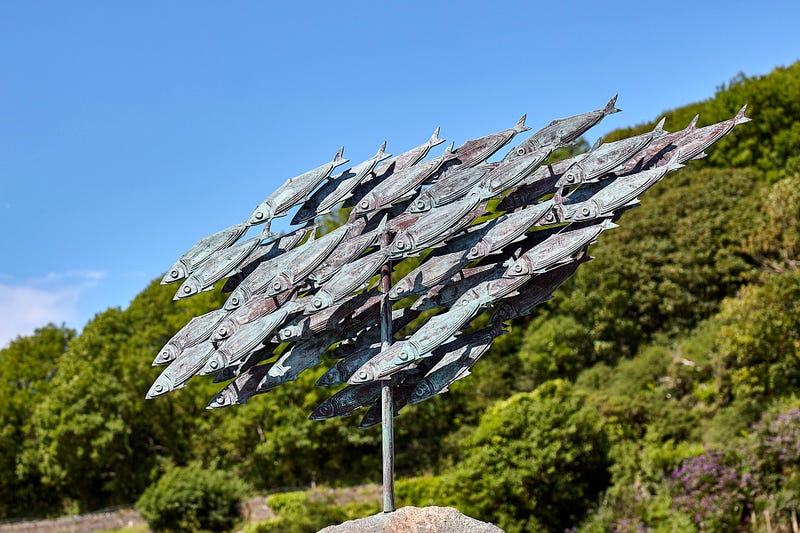
Herring sculpture at Lower Fishguard © Simon Whaley

I spot another plaque commemorating a different invasion, back in 1971, when Hollywood took over the town. A star-studded cast, including Richard Burton, Elizabeth Taylor, Peter O’Toole, Siân Phillips, Victor Spinetti, Ruth Madog and David Jason, came here to make a film adaptation of Dylan Thomas’s radio play Under Milk Wood. Fishguard’s Lower Town was used as the setting for the fictional town of Llareggub.

When not on set, the cast stayed at the Fishguard Bay Hotel, back round the coast at Goodwick. Richard Burton stayed in rooms 123 and 124, although he wasn’t the first actor to reside in these particular rooms. Fifteen years earlier, Gregory Peck used them when he was in town filming Moby Dick.
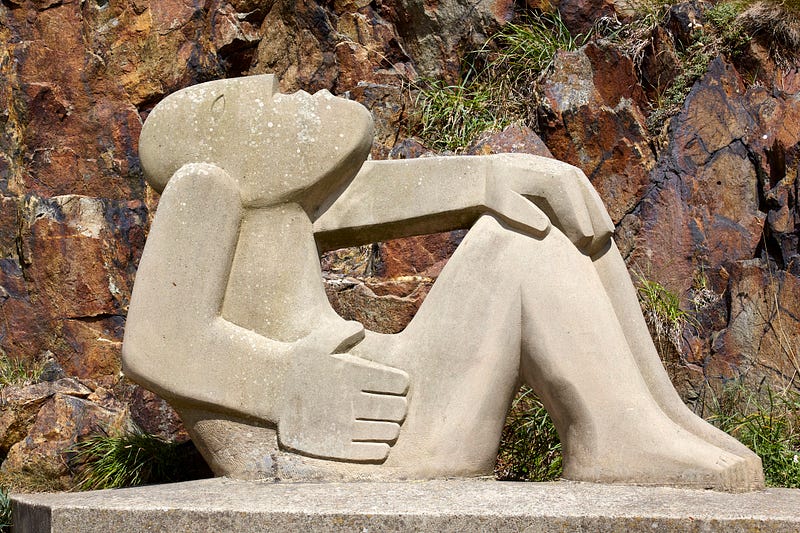
The Sun Worshipper at Lower Fishguard © Simon Whaley

At the end of the quay is another sculpture called The Sun Worshipper, perfectly placed to enhance his existing golden tan. I sit down on the rocks beside him, and spy the Fishguard Bay Hotel across the bay at Goodwick. Suddenly, the tones of a deep-throated horn echo round the cliffs, announcing the afternoon arrival of the ferry from Ireland. Another invasion force has arrived. I’m sure they come in peace, though. And because it’s so peaceful here, I might just rest my eyelids for a moment and enjoy the sunshine and sea air. Everyone who comes to fabulous Fishguard falls for its delights in one way or another.

For more of my travels around Britain, check out:

Fishguard
Wales
UK
Travel
Traveling
Recommended from ReadMedium