
Fabulous Feathered Friends
My favorite photos of birds and fun facts about them
I have always enjoyed watching birds. Although I’m not a bird expert and don’t own binoculars or a camera with a telephoto lens, I love to walk through parks and other places where I am likely to encounter birds.
The camera on my iPhone has enabled me to photograph some of my favorites. I hope you enjoy these photos and the opportunity to learn a few fascinating facts about the birds pictured here.
Peacocks
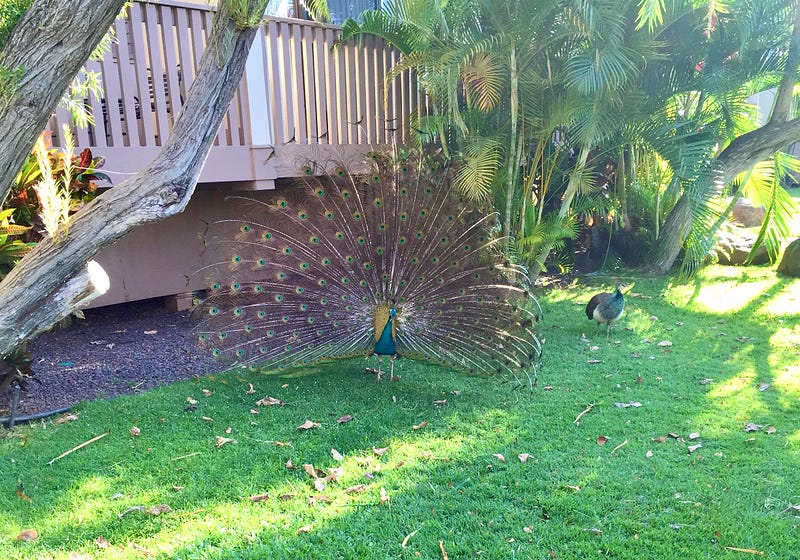
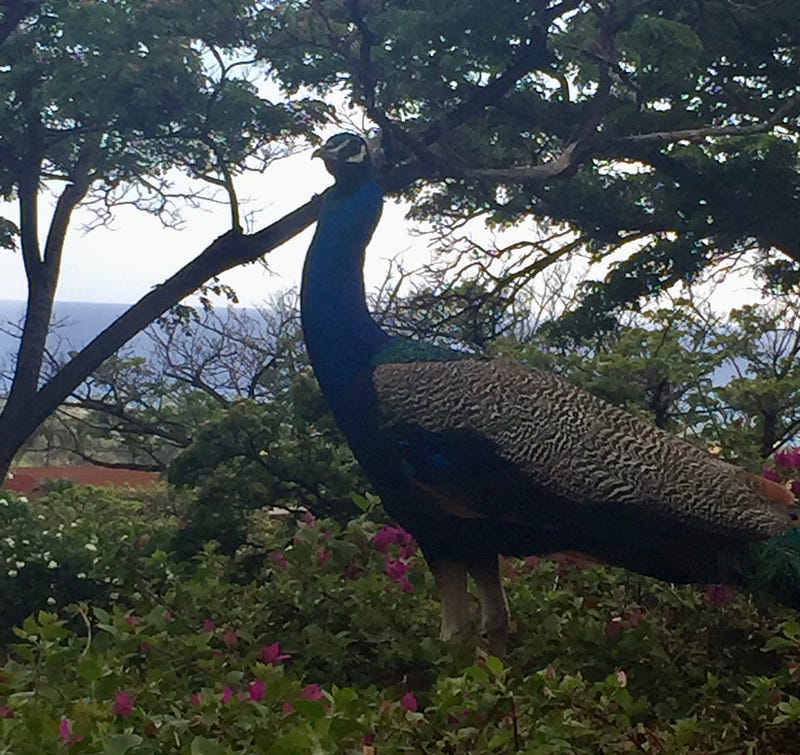
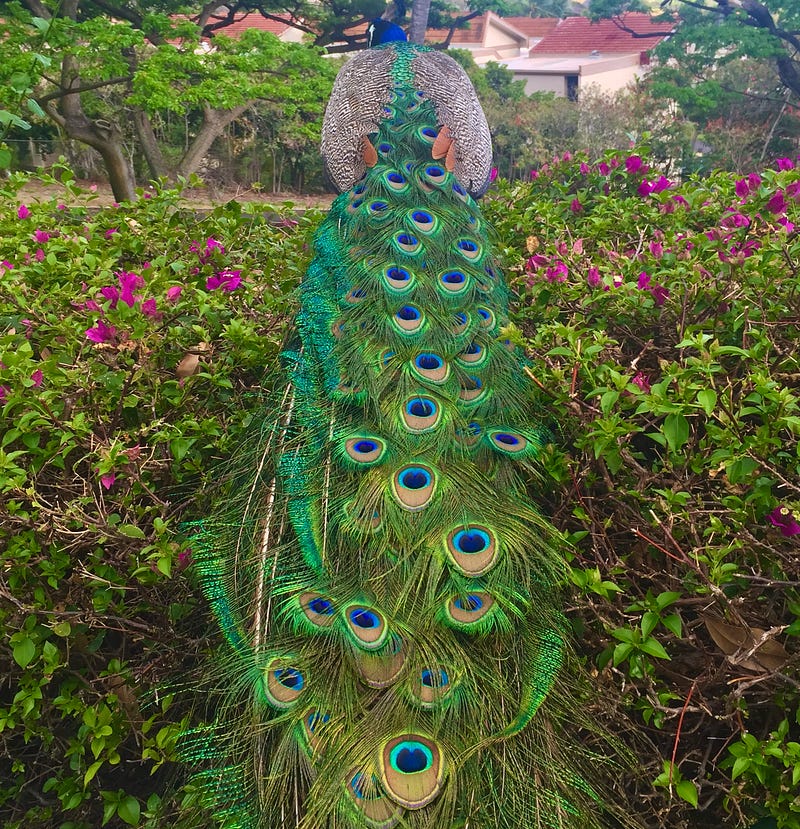
Peacocks can be seen on all of Hawaii’s main islands. When my husband and I lived on Oahu, our apartment complex had feral peacocks that freely roamed its grounds.
These majestic birds lived on the vacant land next door, so I saw them on a daily basis. The two photos on the right, along with the title image, were taken on the grounds of that apartment complex in Makaha, Hawaii.
My close proximity to those peacocks taught me two surprising facts about them.
First, peacocks can fly. I was shocked the first time I watched one fly past me, since I had assumed these birds were too large to be capable of flight. I soon discovered that peacocks also fly up to tree branches to sleep each night. Roosting in trees keeps them safe from predators on the ground.
The second thing I learned about peacocks is how loud they are. This website notes that “their call is called a scream for good reason as they can be heard from a mile away,” and includes a video so you can hear for yourself.
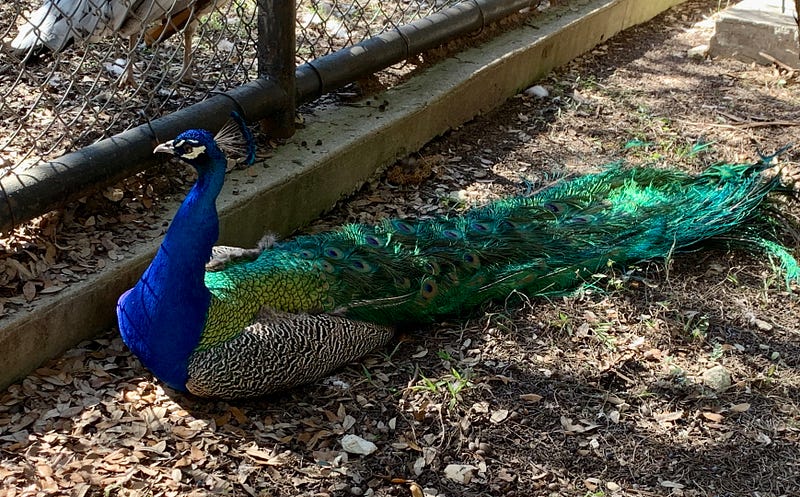
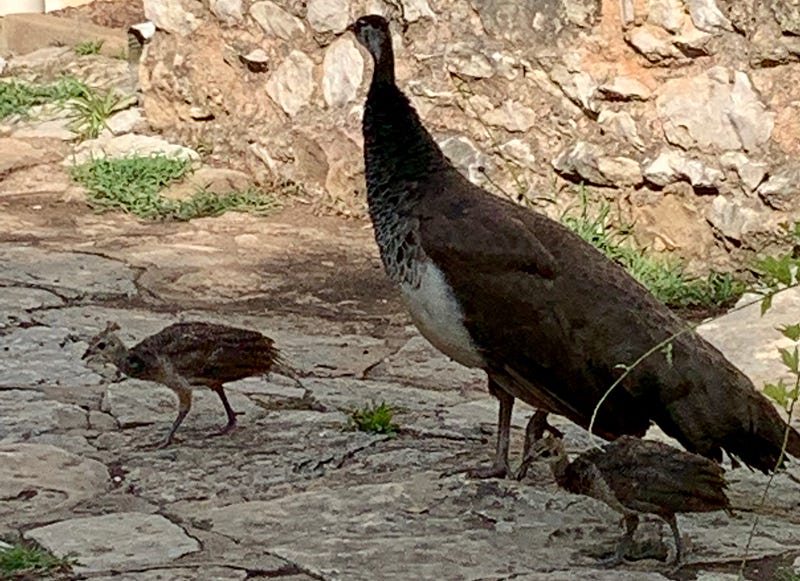
The two photos of peacocks on the left were taken at Mayfield Park in Austin, TX. As you can see in the lower photo, peahens (the correct term for females, though they are often called peacocks too) and peachicks do not have the vibrant blue and green coloring and long tail feathers that make the adult males so beautiful.
Peacocks fan out their gorgeous tail feathers mainly to impress peahens, but also to intimidate predators and communicate with other peafowl. The birds molt every year, which means every feather is shed and new ones grow in before the next mating season.
For more fascinating facts about peacocks and their tail feathers, see this article.
Herons
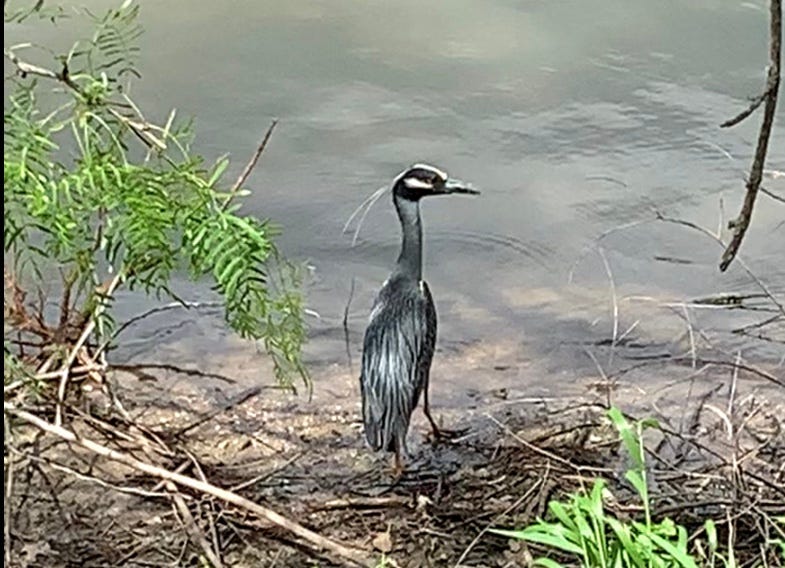
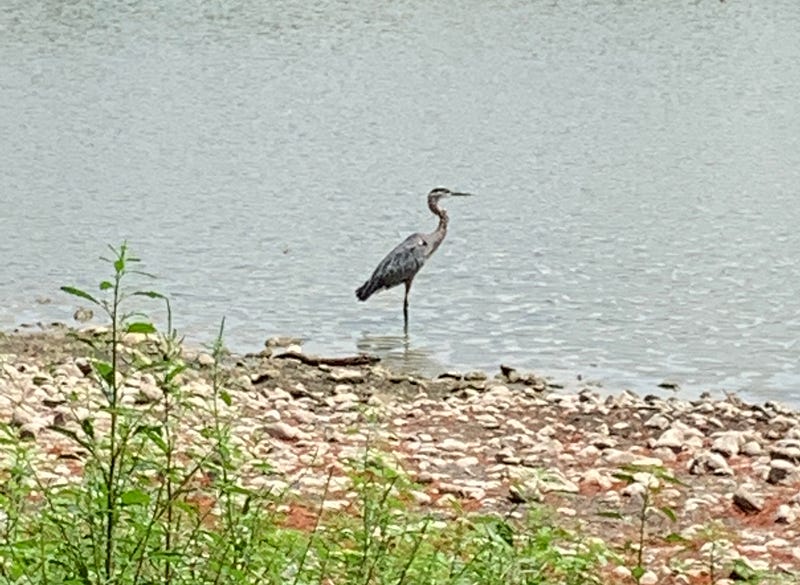
The bird on the left is a golden-crested night heron; a great blue heron is on the right. Both photos were taken at Mills Pond, a park in Austin, TX.
Herons use their long legs to wade through shallow water to find food. These birds use their sharp bills to stab fish and other small animals, which they swallow whole.
I was fortunate enough to watch as the golden-crested night heron caught and ate a fish. I captured the event on video, which I included in a previous article about three keys to success the heron demonstrated that can also help humans succeed.
Most heron species, including golden-crested night herons, are monogamous. Males and females build a nest together, and I got to watch one pair of herons as they flew back and forth gathering twigs and placing them together on a tree branch. Unfortunately, the branch was too high for me to photograph or video the birds as they worked.
Both parents then take turns incubating the eggs, and feeding regurgitated food to their newly-hatched chicks. See this website for more fun facts about these birds.
Along with their physical beauty, herons also have spiritual significance in some cultures. According to this website,
In Greek mythology, the heron has been represented as a messenger of the gods, including deities like Athene and Aphrodite.
In Chinese symbolism, the heron represents strength, purity, patience, and long life.
In Africa, herons were thought to communicate with the gods.
Some Native American tribes focused on the heron’s inquisitiveness, curiosity and determination. This is why the heron was viewed as a symbol of wisdom.
Raptors
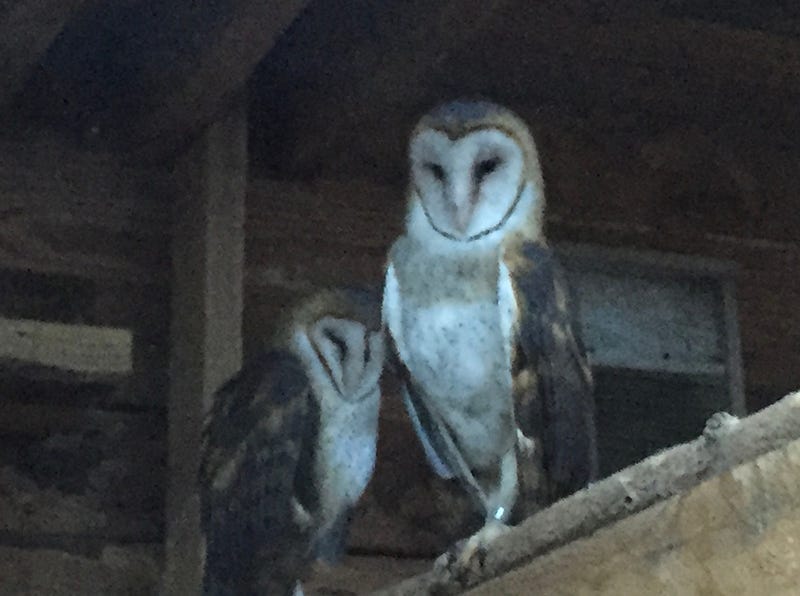
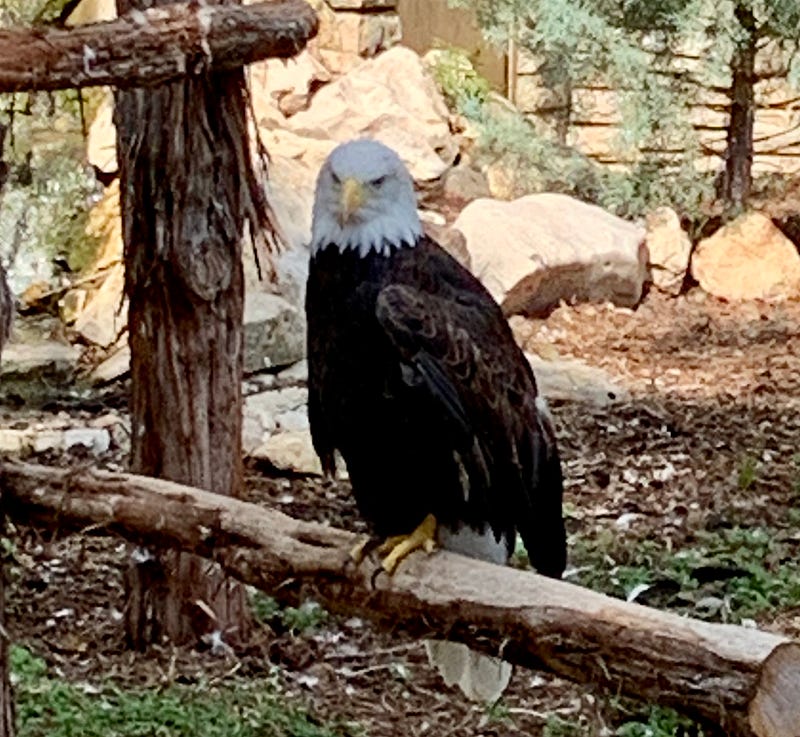
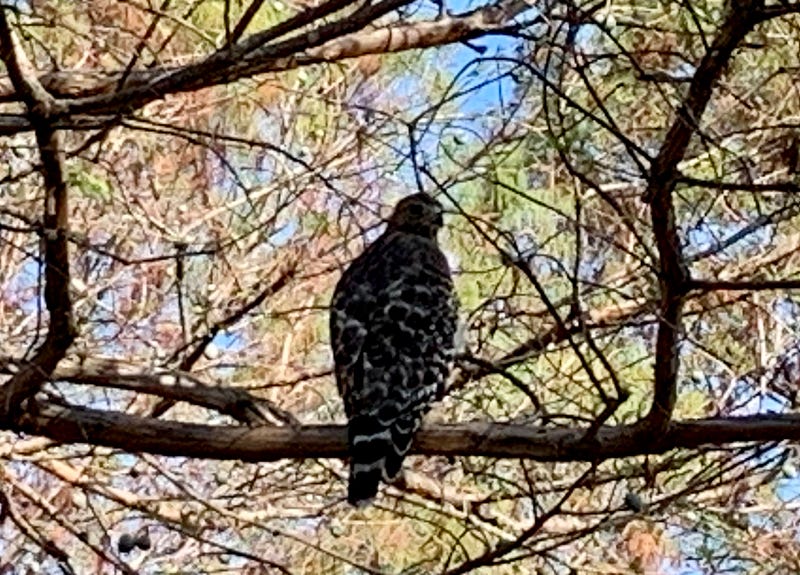
Like the eagle in the center photo and the hawk on the right (and some other bird species), the barn owls in the left photo are raptors. That means they use their hooked beaks, sharp talons, and exceptionally good vision to locate, grab, and kill other animals.
This website explains how these birds of prey came to be called raptors: “The word raptor has its roots in the Latin language from the word rapere which refers to taking an object by force.”
The same site lists other fascinating facts about eagles and owls. Here are a few that I found especially interesting:
- Multiple countries use an eagle as a national symbol. (For a complete list of each country’s symbols, go here.)
- Owls have binocular vision and binaural hearing.
- Owls also have unique feathers that enable them to fly silently.
Another website shared these fun facts about hawks:
- When they dive, some hawks fly faster than 150 miles per hour.
- Female hawks are larger than males and weigh up to twice as much.
- Hawks usually mate for life and use the same nesting area every year.
Woodpeckers
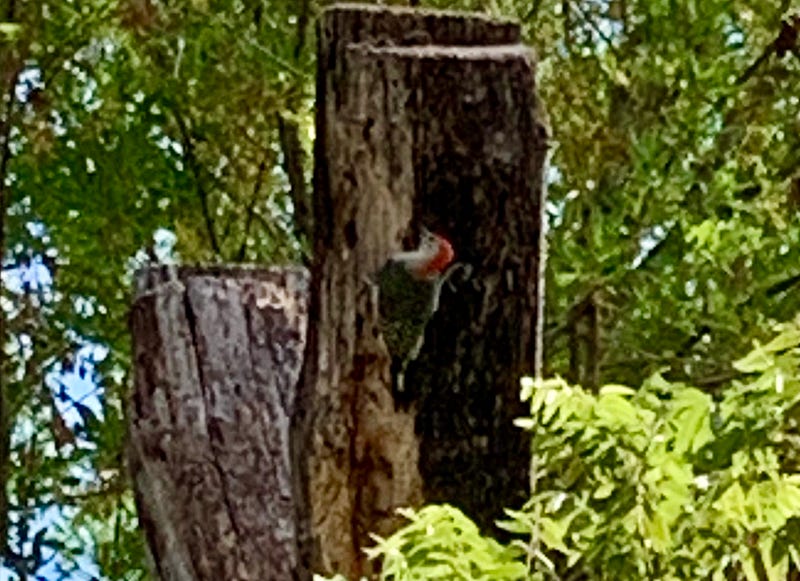
The red-bellied woodpecker in the photo above is one of more than a dozen woodpecker species found in Texas. I took this photo at the same park where I saw the herons.
My favorite of several fascinating facts about red-bellied woodpeckers I learned here is this one:
A red-bellied woodpecker can stick out its tongue nearly 2 inches past the end of its beak. The tip is barbed and the bird’s spit is sticky, making it easier to snatch prey from deep crevices.
Cardinals
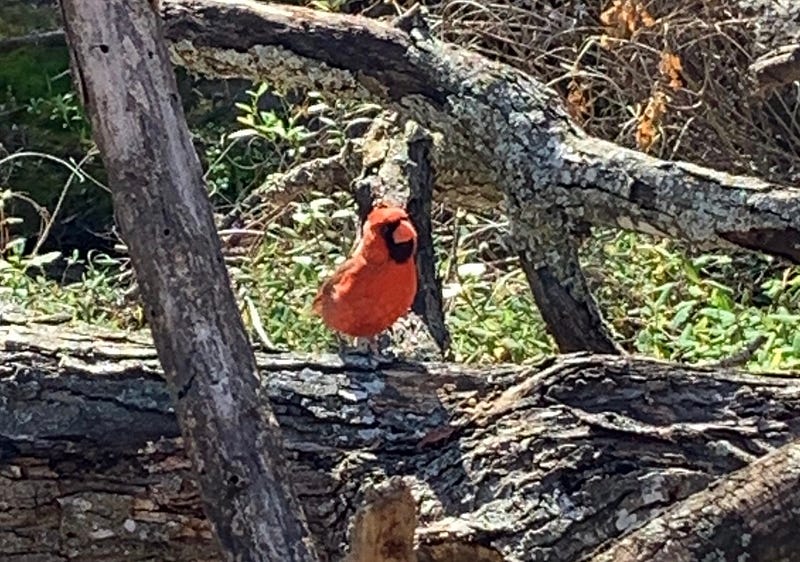
The bright red birds many people easily recognize as cardinals are the males; females are mostly brown. The bird pictured above is a northern cardinal.
Since cardinals do not molt or migrate, bird watchers can see them year-round. Male cardinals are especially beautiful on snow-covered branches in the winter months.
Fun facts about these birds I found on this website include:
- Cardinals attack their own reflections, which they see as intruders.
- Seven states have chosen the northern cardinal as their state bird.
- Few female North American songbirds sing, but female cardinals do.
Thanks for reading about some of my fabulous feathered friends. I hope you enjoyed my photos of these beautiful birds.
If you liked this story, here are two from other writers I think you’ll appreciate. The first one is from Mia Verita, and it’s unique because she interviews various birds to narrate her story. The photos are awesome, too!
This one is from Dr. Preeti Singh, who always provides wonderful nature prompts for us to write about and shares her own experiences:


