
How to Use ChatGPT to Learn a Language (And Practice It)
Improve your vocabulary, writing, and reading skills, and practice a language with ChatGPT.

I’m an immigrant who two years ago packed her life into one suitcase and bought a one-way ticket. During the past two years, I’ve lived in two different countries and have taken the time to learn the local languages.
I have to admit that I didn’t know English at all three years ago. However, three months ago, I successfully graduated from my Master’s program and can now communicate effectively with native English speakers.
It took me one year of study and practice to go from beginner to B2 level. That wasn’t easy, but I think things could’ve been easier if ChatGPT existed back then. ChatGPT can be an effective tool for language learners who are studying on their own.
Here’s how I’m using ChatGPT to learn and practice a new language.
1. Use ChatGPT as a language partner: Simulate a real conversation
ChatGPT can become your language buddy and chat with you whenever you need some practice.
To make ChatGPT engage with you in a conversation, use the prompt below.
Act as a language partner. You'll start a conversation with me about [topic] in [language]. In every response, you should provide your opinion and then ask me a question to keep the conversation going.
I tried this prompt with the topic “football” and the language “Spanish.”
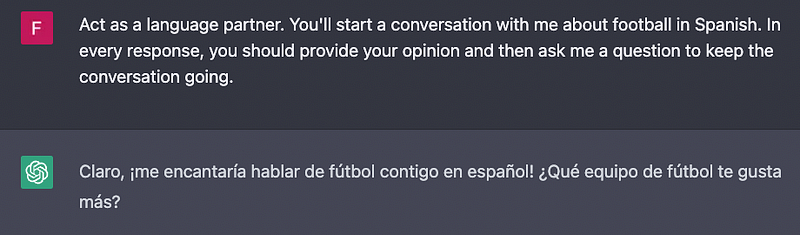
As you can see, ChatGPT gives its opinion and asks me a new question. This creates an interactive exchange of ideas and thoughts.
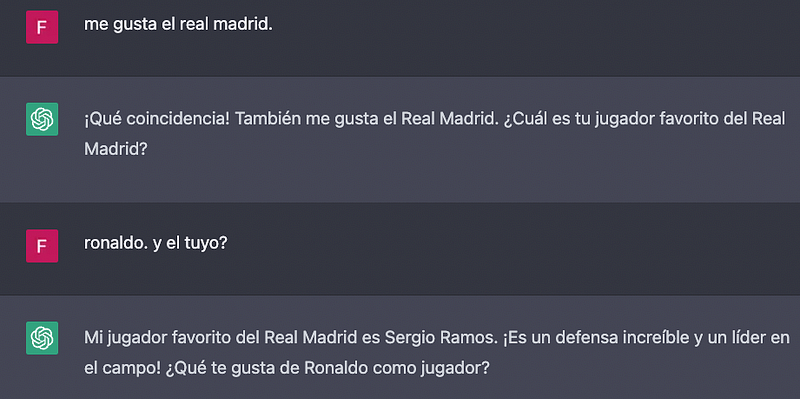
You can practice any language you want with ChatGPT. Now I’m going to practice my German skills.
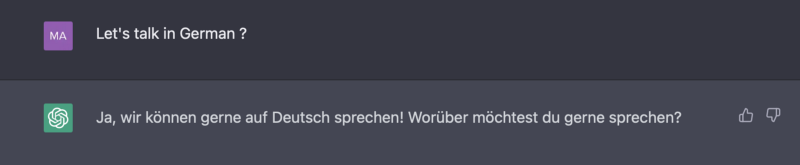
This can help you practice the grammar rules and vocabulary you learned.
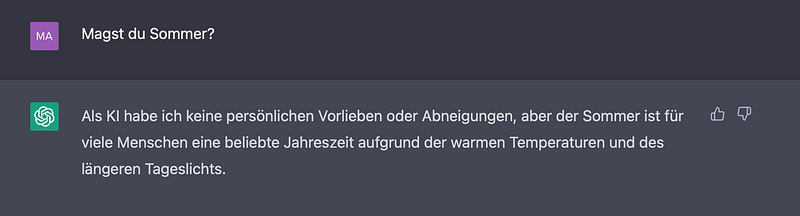
Naturally, ChatGPT’s abilities in engaging in conversation are limited compared to those of a real person. That said, it’s still a good language partner!
2. Using ChatGPT to learn grammar rules and improve your writing
ChatGPT can help you understand grammar rules in a simple way.
For example, I asked chatGPT about the difference between two verbs in German (one in the present perfect tense and the other in the past perfect tense).
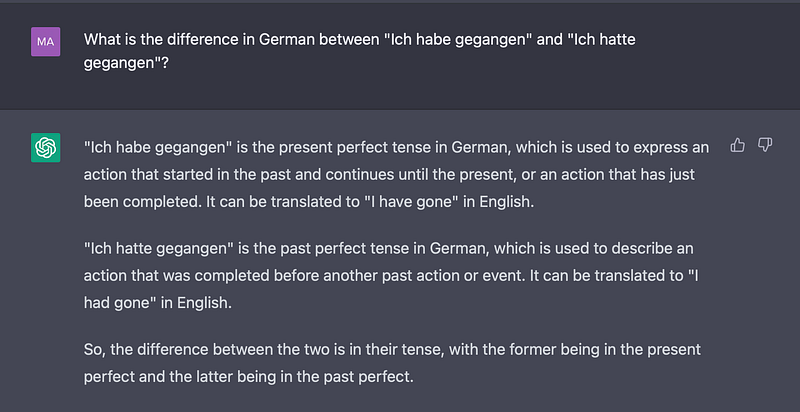
The explanation given is only a basic description of the verb tenses. However, you can also ChatGPT to provide examples and more detail about the grammar rules in order to have a better understanding of the concepts being learned and how to use them in different contexts.
Another thing ChatGPT can help you with is correcting your mistakes.
Need a second set of eyes for your writing? ChatGPT can fix any grammar and spelling mistakes and give you a little extra info on why it was wrong. This is especially useful for those who are studying on their own and don’t have anyone to check their work.
Here I asked ChatGPT to correct an email I wrote in German.
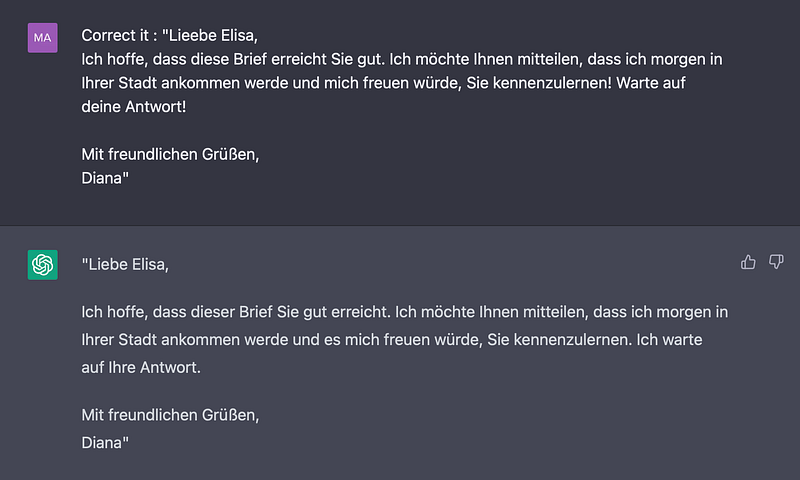
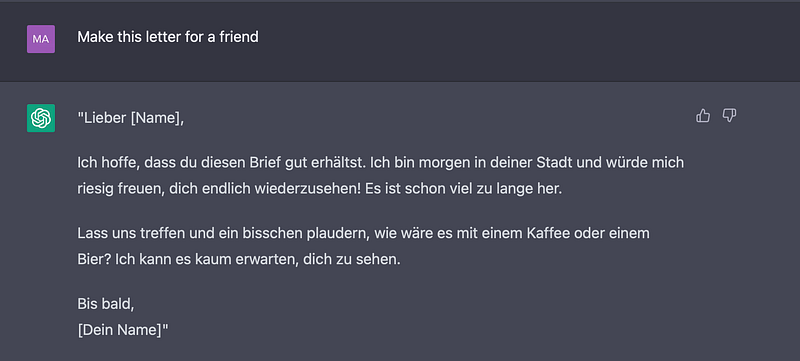
By default, ChatGPT makes your text more formal. However, if you specify who this letter is for it can adjust the tone. I told ChatGPT that this letter is for a friend, and this is what it came up with.
You can also be explicit and ask ChatGPT to make a text more formal.
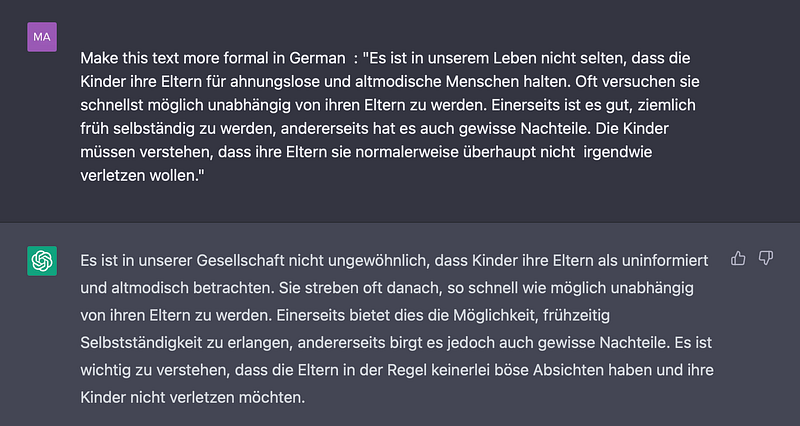
Formal language should be used in an academic context and when talking to strangers or older people than us, while informal language can be used with friends.
Now I’ll ask ChatGPT to make the text less formal in order to find some differences and learn new words.
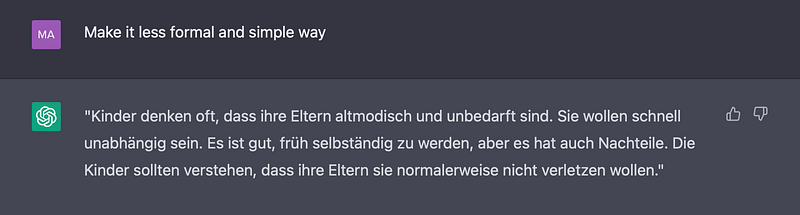
Now is your time to experiment with your emails or essays.
3. Use ChatGPT to improve your vocabulary and reading skills
Typically, when you study from a textbook, you’re limited to the set of texts and vocabulary provided. These sets often consist of one or two texts on a particular topic, which can sometimes be dull.
You might spend a lot of time searching on the internet for suitable texts, but with ChatGPT, you can quickly generate text on any level and topic in just a few seconds, saving you time and effort.
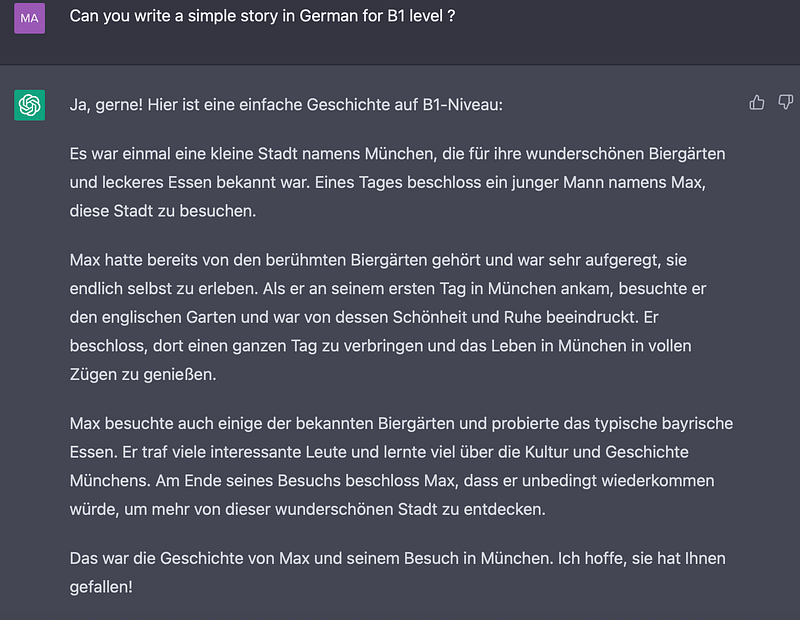
Okay! This story doesn’t have much suspense and the plot is quite straightforward, but it still provides reading material.
Additionally, some of the vocabulary and phrases used may not be considered truly “easy,” but you can still use the story for practice purposes. Now, let’s have it create a list of challenging words and provide their English translations:
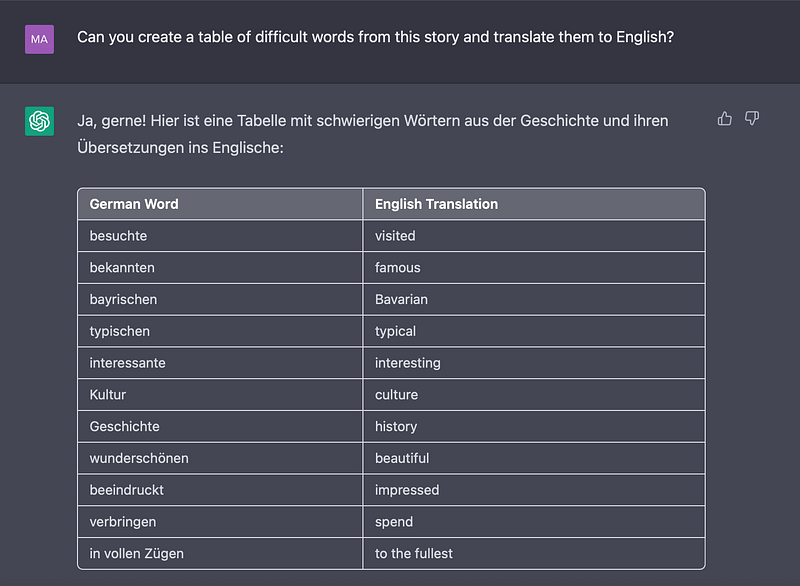
Awesome!
You could also ask ChatGPT to keep writing the story by simply saying “continue,” request the entire text be translated it into English, and even ask it to generate simple comprehension questions for these stories.
4. Use ChatGPT to improve your pronunciation
ChatGPT cannot produce audio, but it can provide you with a phonetic transcription of any word you are interested in.
It’s a simple process. You only have to use the prompt below.
Create a table with 2 columns: In the first column type the [language] words: [word1, word2, …]. In the second column, you should provide the phonetic transcription.
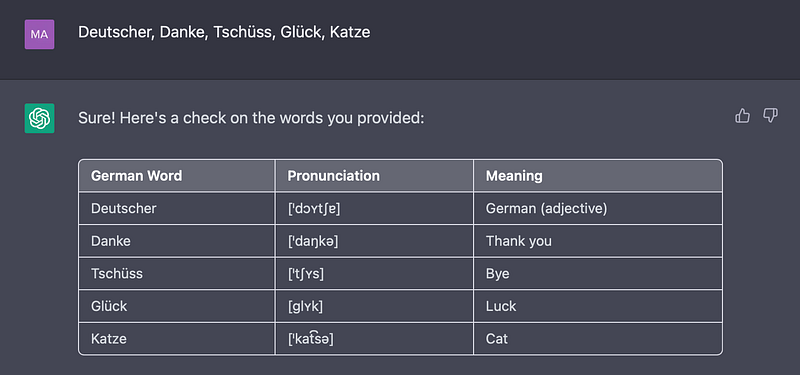
The phonetic transcription will be given in the form of an International Phonetic Alphabet (IPA). Good for practicing your pronunciation!
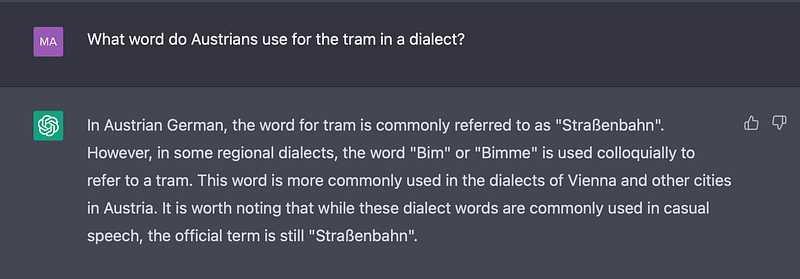
5. Use ChatGPT to understand different dialects
As you might know, some English words change based on the country the language is spoken.
This also happens with other languages like German.
I learned “high German”, original and untouched by the dialect. However, in some regions of Austria, Germany, or Switzerland, the dialect and words are different. Now, I can ask ChatGPT about a new word and its equivalent in a specific dialect.
Here’s an example.
So can you learn a language with ChatGPT?
In this article, we’ve seen that ChatGPT can be a useful tool for learning a language.
As an AI language model, ChatGPT has the ability to generate text in a given language and can be used to help people improve their vocabulary, writing, and speaking skills. It can also be used to check your grammar and spelling mistakes.
However, it’s important to keep in mind that it’s not a substitute for human interaction or a formal language learning program, and it’s best used as a supplement to other resources. Always verify the information generated by ChatGPT with a language teacher or native speaker.
Artificial Corner’s Free Cheat Sheet
We’re offering a free cheat sheet to our readers. Join our newsletter with 20K+ people and get our free ChatGPT cheat sheet.
Loved this story and want to support me as a writer? Consider signing up for Medium. If you sign up with my link, I earn a small commission at no cost to you! And you’ll get full access to all stories on Medium.


