
Insight into Sight
Eyeglasses, History, Invention, and Gratitude
A New Perspective
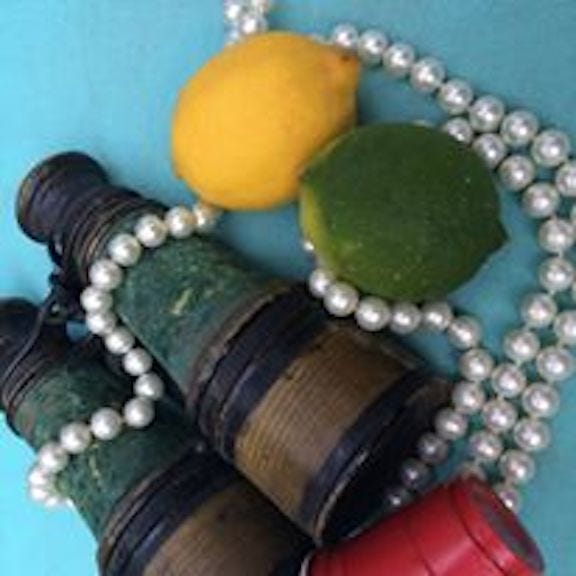
My eyes hold my memories of life between the iris and the lids. I am fortunate to be living in this time where I have the opportunity to see my life and appreciate the earth and all of its glory. People that have preceded me on this planet have not always had this luxury. With gratitude, I embrace this wondrous sense and hope to instill a source of grace in those who read this piece. We are the fortunate ones. Live and Perceive in gratitude.
History
Ancient artwork in the time 2700 BC depicts Eqyptians with the ability to grind and polish glass. This fascinating technique was years away from the use of magnification. In theory, the production of lenses was available since Egyptians did have the basic knowledge of optics. Apparently, they even knew the laws of light reflection. Magnification, however, is caused by light refraction which at that time was not yet known.
Historians have reported that during the middle ages glass spheres were used as magnifying glasses to read. Roman Statesman Seneca is believed to have implemented a glass-type globe of water that magnified “all the books of Rome”. Venetian glass blowers of the 13th century were known to have reading stones that were made of solid glass, hand-held in a single lens-type framework made of horn or wood. The similarities to hand-held magnifying glasses of today are uncanny. In the years between 1285 and 1289, many historians believe that craftsmen or monks in Italy ( probably Pisa or Venice) formed the first known eyeglasses. These first eyepieces were set into bone, metal, or leather and balanced on the bridge of the nose.
The first artistic representation of these spectacles was Tommaso DaModena’s painting in 1352. The artwork details monks reading and writing a variety of manuscripts. One monk wore glasses perched on his nose, another used a magnifying glass. These original glasses could only be used to assist in rectifying hyperopia and presbyopia. The glasses for myopia did not appear until around the 1400s.
Types of Historical Eyepieces
The Reading Stone initially was a sphere made of glass that was placed on reading material with the sole purpose being the magnification of letters. Very quickly this new piece spread throughout Europe.
Salvino D’Armarte is credited with the first wearable eyeglass from around 1284 in Italy.
Sunglasses, as we know them today, were not developed until 1929 by Sam Foster. He was the first inventor to use polarizing filters and sell them openly to the public. These initial sunglasses were first made available through Woolworths retail store located in Atlantic City, New Jersey!
By the 17th Century, individuals were aware of both convex and concave lenses. Concave glass is used to correct nearsightedness. Light rays are converged with this element. Cylindrical lenses were invented by Sir George Ary in 1825 and used to correct astigmatism. Bi-focal lenses were used to treat nearsightedness and presbyopia. These were first conceived by Ben Franklin in 1784 by the divergence of rays of light. Eyeglasses after that time could be used for multifocal points to correct both distance and reading or single lenses for distance vision or close proximity.
Perfecting the Frames
Eyeglass frames themselves were made by Spanish Craftsmen in the 1600s. Interestingly enough they were fixed strings or ribbons attached to frames with a loop used over an individual’s ears. Italian missionaries and Spanish explorers carried these new inventions to China. The Chinese perfected the eyeglasses by placing tiny metal weights on the ribbons and/or strings. In 1730, Edward Scarlett, an optician developed rigid temple holders to be used over the ears.
Lens materials for glasses include plastic, polycarbonate, or glass The greatest optical clarity is glass, but the heaviness of larger lenses makes it prohibitive at times. Although plastic lenses are much lighter than glass, they are prone to scratching. The lightest and thinnest type of lens is CR-39 also named polycarbonate.
Amazing Fact
Even though contact lenses appear to be a recent development, the famous Italian architect, mathematician, and inventor Leonardo da Vinci (1452–1519) produced the first known sketches (in 1508) that suggested the optics of the human eye could be altered by placing the cornea directly in contact with water.
Historians believe that it took over 350 years for da Vinci’s ideas to lead to the development of contact lenses.
Whether you wear glasses for need, protection, or style, value all we do have within our current culture. It is far too easy to take our lives for granted. To date, it is believed that 166.5 million- 64% of the American Adult population wear some sort of eyeglasses. Time moves swiftly- appreciate and look around you. Wishing you peace and wise perception in this new year and always.
If you choose to you may — Buy me a coffee?
Newsbreak is really cool and free. Read, write and earn. Join below.