
Dental Implants
Extraction & Dental Implant — Traumatic Expectations, Serene Reality
What the procedure was really like with high-level details. Fascinating what a dentist can do.
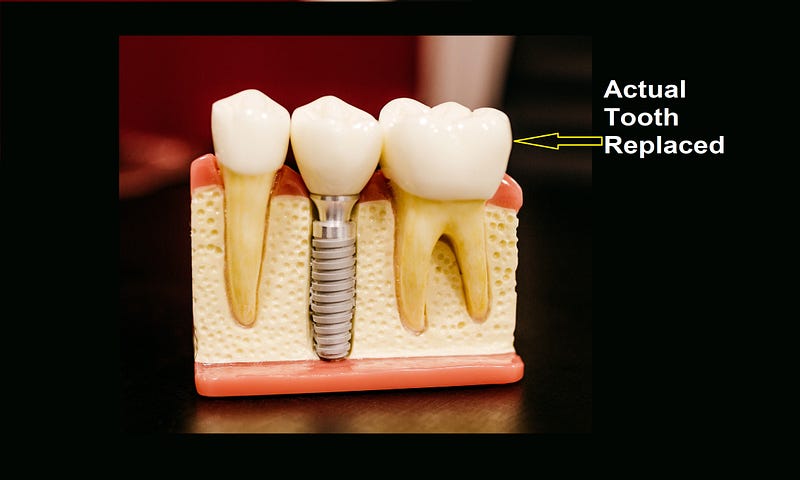
Synopsis
My lifetime goal was never to have a tooth pulled. However, after being bothered by tooth #30, a back lower molar, for almost 40 years, I finally had to face the inevitable. Alternative treatments posed future problems and were still temporary.
So, I chose the extraction and implant. It was a wise decision and, surprisingly, not nearly as bad as I expected. The day the implant was installed, I could chew on it, it felt like a normal tooth to my tongue, and it worked with my electric toothbrush the same as every other tooth.
The implant feels no different than any natural tooth.
Here, I’ll describe the error made with the original crown years ago, why the antibiotics wouldn’t work, problems finding a good dentist over the last 4 years, treatment options, and the implant process itself.
Dentists
Like all professions, some people are much better at their jobs than others. It may be training, experience, invalid assumptions, or something else. We went to three dentists and one specialist over the last 4 years.
- The first operated under the assumption that all old fillings were bad and needed to be replaced, usually with expensive crowns. My first replacement crown did not fit quite right. My wife had the same problem. He refused to fix them, so we moved.
- The second dentist office checked the depth of the gap between the tooth and gum, using a pike with 7 rings. If the gaps are too deep, they recommend an expensive Root-Planing procedure to clean the roots. They measured a 7 on one tooth and recommended the procedure. I didn’t believe it since I had the procedure done about a year ago and had no symptoms of recurring problems.
- A month later, the hygienist for Dr. Agrawal, our third dentist, measured 2 for the same tooth, which required no advanced treatment. Over two years, they’ve never recommended an expensive, unnecessary procedure.
- The specialist recommended by the first dentist did as good a job as possible with the retreat of tooth #30. He discovered that the original root canal treated 3 of the 4 roots. That 4th untreated root had caused most of the problems over the years. He fixed that and refilled one of the other roots but couldn’t fix the other two. He said I would eventually need root-tip surgery.
How I reached that point
In the 1970s, I had a low-paying job with no dental insurance, so I went a long time without getting it filled. By the time I changed to a much better job, it needed a root canal. The dentist never got it numb with 3 regular shots, plus 4 more into the top of the tooth.
I got to see what dentistry was like before Novocain!
Over the years, it hurt every once in a while. I took antibiotics and the pain left. It finally got to the point where I had to do something about a year ago.
Finally, Dr. Agrawal recommended that the tooth be removed and replaced with an implant. My gum had become infected and swollen. I could see the changes around the root between the current and prior year’s x-ray.
I asked if we could try antibiotics to stop the infection. He said that they wouldn’t work but prescribed one round anyway just to convince me. I expected them to work like they always did with sinus infections, but they had no impact.
Finally, we discussed the procedure. First, he said that if the specialist could guarantee that the root-tip procedure would last 5 years, it would be worthwhile. However, he doubted that it would last a year. Then the next step would be to remove most of the roots. Eventually, it would still need to be pulled.
Options
- Do nothing. It was the worst ever. I could see the progression on the x-rays. Things were not going to get better, only worse. It was now or later.
- Specialist recommendation. Root-tip surgery now. Root surgery next year. Extraction the following year and implant - IF there was enough bone left to handle one.
- Extraction only. That would leave a gap with its own problems.
- Extraction and implant. The bone was in the best shape it would ever be for an implant.
In all cases, it was now or later, and I didn’t know what misery I would go through by waiting. The other options, though cheaper, had continuing and future problems. So, I chose “now”.
The implant process:
The tooth extraction itself is not part of the process. The extraction can be done at the same time, like mine with the first step, or could have been done 10 years ago. In my case, the extraction had a direct connection to the implant.
- Remove the tooth, prepare the area, and insert the implant. The gum grew over the implant while it was connecting with the bone.
- Expose the implant, remove the cap covering the interior screw threads, add the abutment.
- Attach the new tooth to the abutment.
Implant step 1 (August):
The extraction went a lot different than I expected! I envisioned the dentist putting his knee on my chest, pulling out a huge pair of channel-lock pliers, and a lot of pulling and tugging. They might have to strap my head down. It wasn’t like that at all.
I’d been watching too many cartoons!
They swabbed a painkiller on the gums, then used hypodermic needles to numb the area deeply when it took effect.
After a while, the dentist came in, did a few things with his pike device for a couple of minutes, then said, “I just removed the fourth root.” When did he remove the first 3 roots? I didn’t feel a thing and never did see a pair of pliers!
He then started preparing the area for the implant. He first had to remove the infection that was around the root. It was solid, like mortar on a brick. He scraped most of it off of the bone but had to use the drill for some. No wonder the amoxicillin didn’t work! It goes through the bloodstream and works on soft tissue areas. There was no way it could reach this infection.
Finally, he inserted the implant. He didn’t say at the time, but his biggest concern was that the implant would not take because of the infection.
They sent me home with an antibiotic prescription and a page of instructions. Unfortunately, there were two problems:
First, they did not include a prescription for a painkiller. I am allergic to NSAIDs (like aspirin). The staff interpreted that to mean all painkillers without consulting the dentist. My wife had to call and explain that there are other types of painkillers. I wound up with Tylenol-3, the same one the hospital gave me for my heart surgery.
Second, the instructions were one long narrative, not split into sections for each step. It was easy to get confused. Fortunately, I called and asked if I was really supposed to brush the gum. No, that was for the abutment that would be added a few months later.
It’s always better to call with seemingly silly questions than not call and make a mistake with your health
Recovery was fairly quick. I was able to do karaoke the next week as usual. I didn’t miss a session.
Implant step 2 (January):
The dentist said he was surprised at how well the bone grew around the insert since much of the bone had disappeared around the roots. That’s one type of surprise I always want to hear from a doctor or dentist.
This visit turned out to be much less stressful than having a tooth filled or even a routine cleaning. However, they still had to numb the area. He quickly exposed the implant under the gum, removed the cap covering the interior screw threads, and added the abutment.
I don’t even remember the visit except that I went.
Implant step 3 (February):
I didn’t even need to be numbed. All they did was remove the abutment and replace it with the artificial tooth. It fit perfectly and feels like a natural tooth. I care for it just like all of the other teeth and could chew on it as usual for lunch.
However, it is opposite the tooth with the crown from the first dentist in this article. I evidently had not been chewing with those teeth due to the problem with the bottom tooth. I can bite strawberries just fine, but pain shot through the top tooth when I bit on a hard peanut. That did not happen when I bit a peanut with any other pair.
I suspect that the first dentist left a nerve exposed under that crown. I’ll have to consult Dr. Agrawal to see what needs to be done, if anything. Still, it’s nice to be able to chew on both sides even if I do have to be a little careful with rare hard objects.
Summary
The entire procedure turned out to be about as pleasant as any dental procedure could be. It was not traumatic at all. Still, I prefer not to do it again, but if I had to, I would go to Dr. Agrawal.
Disclaimer: This article is my analysis of my experience and is not intended as medical advice. Every patient is different and may not have the same results. Consult your own dentist for your options.
References
- Office of Dr. Agrawal
- Everything you want to know about dental implants
- Procedure done by the first dental office
- Recommended again by the second dental office a short time later
- Not necessary per Prime Dentistry