
Express Your Emotions — But Only If You’re A Man
The double standards of talking about feelings
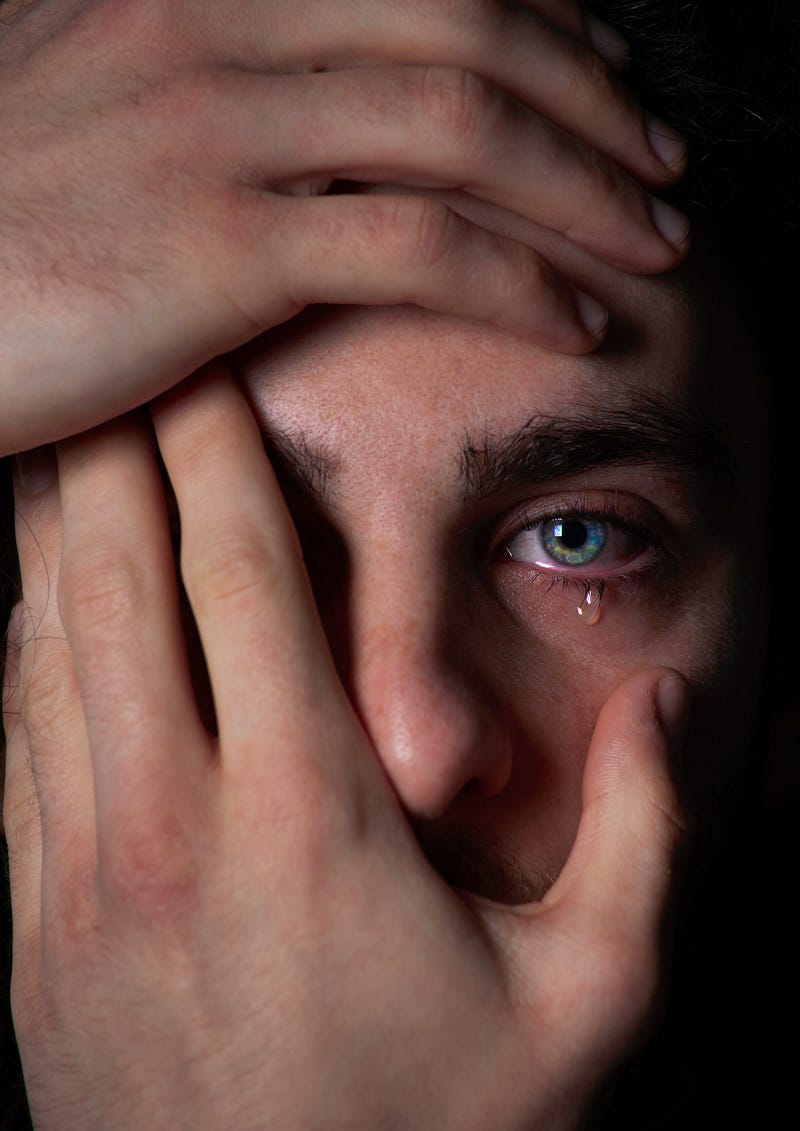
We’re currently hearing that men are sad, lonely, depressed and so on. Books are launched and training delivered to encourage us all to talk about men’s feelings, show their emotions and not resort to anger so readily. Can’t really argue with any of that, and some good guys are doing sterling work towards this.
I won’t reinvent the wheel on the subject, so here are some stats on the state of things for men. There’s a lot of work to do, and we must acknowledge the issue. Until men work on themselves, violence against women won’t go away.
Amid all this enlightenment, however, two questions arise—
- Why are women’s feelings still being dismissed? Sometimes even by men claiming to be allies or supporting men in voicing their emotions. Surely, if we’re validating emotions, it can’t be only for the guys.
- Why are we encouraging emotions in men yet still seeing ‘emotional’ women as weak, irrational and unreliable? Studies show that men and women are equally emotional, yet women are negatively pegged with the label. The study’s author, Adriene Beltz, stated:
For instance, a man whose emotions fluctuate during a sporting event is described as “passionate.” But a woman whose emotions change due to any event, even if provoked, is considered “irrational,”
On social media last week alone, I read:
“Cat-calling is not abusive”. — The statistics vary, but an astonishing number of girls and women have experienced Public Sexual Harassment, often starting in childhood. (Yes, childhood — no matter how ‘mature’ some girls look, when they’re 12, they’re children.)
Despite evidence like this, where scores of women express their annoyance at PSH, men will jump on threads to redefine it and insist it’s not abuse; it’s not as bad as we’re making it out to be. Back in the real world, it’s so bad that in 2020, Plan International UK launched the #CrimeNotCompliment Campaign with Our Streets Now, asking the UK government to make it a criminal offence. It took two years for the government to launch a consultation, but a Bill is now (hopefully) on its way to becoming law.
Whether men are pissed that we’re calling PSH out, annoyed that other men are giving them all a bad name, or something in between, their feelings allow them to dismiss our definition as extreme.
“Maybe take a slightly different view the next time … someone catcalls you?” — There are so many examples in this piece of dismissal, tone-deafness and the urgent need of a dictionary I almost highlighted the whole thing. Here, the guy tells women how to feel about PSH. He gets cat-called because of his bright clothing, don’tcha know— which, of course, is the same as a woman’s experience. He doesn’t mind; it opens doors for him. “Conversations ensue. Relationships are formed. Business is done. Friendships form.”
Let’s pause and remember what’s said when a woman uses her appearance to get business done. “Slept her way to the top” comes to mind. Apparently, “there is good and bad” in PSH, ladies; you just need to look closely.
“It’s sad women feel this way, but the world isn’t as bad as portrayed.” — This comes up in almost every discussion on women’s safety. First, if it’s not “as bad”, why could I write a piece on the billion-dollar industry that exists because of it? Second, although abductions are rare, violence against women generally, isn’t. Third, the message here is not to talk about it for fear of making you sad. Nope. Your experience as a man is entirely different from ours; your sadness doesn’t trump our concern and fear, and you don’t get to tell us how to react to reality.
“It’s just satire.” — Incidentally, have you noticed that “satire” is the new “joke”? As if that changes anything. (More dictionaries over here, please.) This gem was posted on Facebook shortly after the FIFA World Cup and featured members of the England team. If you share the post &/or criticize it, they block you, btw. Gotta love a screen grab.
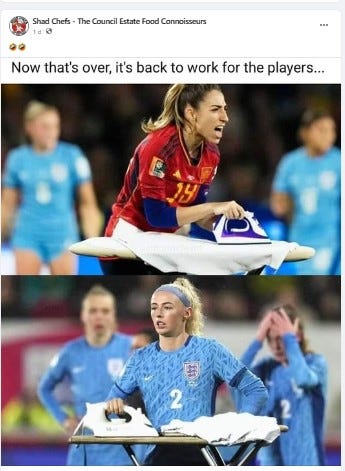
They even anticipated the reaction, making fun of the “Karens” who would comment and insulting us for not agreeing with the hilarity. Since their amusement is an emotion, their view is they’re allowed that, but women aren’t allowed to feel annoyed or belittled.
And speaking of women’s football/soccer, perhaps the most outstanding example of men’s feelings trumping women’s is the aftermath of the kiss that was seen around the world. As the Spanish women’s team celebrated winning the 2023 FIFA World Cup against England, Luis Rubiales, the president of the Spanish Football Federation, hugged and kissed the players. When it came to Jenni Hermoso, though, he took the ‘celebration’ one step further, grabbing her head with both hands and kissing her fully on the lips.
She later said that she didn’t enjoy it, and her union has formally complained on her behalf. In true victim form, though, Rubiales talked about “false feminism” and threatened to sue her. Yup, despite it all being on live TV and forever captured, he’s the wronged one. He’s both furious (NOT resigning) and injured at the time of writing. His mother and several men defended his actions because he “got carried away with the celebrations”. Rubiales said the kiss was “spontaneous, mutual, euphoric and with consent”. (The consent is denied by Hermoso and not visible on any footage.) In other words, he was happy, so she had to put up with how he expressed that, and her feelings didn’t count.
Note also that in the fallout, Rubiales has been freely expressing anger, denouncing Hermoso’s feelings and those of anyone supporting her. In true narcissistic fashion, he’s made it all about his emotions and image rather than the other person’s or the state of Spanish football.
Here’s one thing men’s emotional supporters can do to help. When discussing men and emotions, let’s emphasize that emotions are healthy and positive for everyone. Remind men that emotional women rarely put their fists through walls or kill their exes and children so that ‘no one else can have them’. Remind them of the double double-standards regarding emotions:
You can’t call women “crazy”, “hysterical,” or any other damaging trope while many men routinely display extreme anger.
You can’t work on expressing emotions while telling women how they should feel.