
Exploring the World of Classical Music
Composers like Beethoven, Bach, Mozart, Brahms, and Chopin come to mind when people talk about classical music. But who or what else comes to mind?
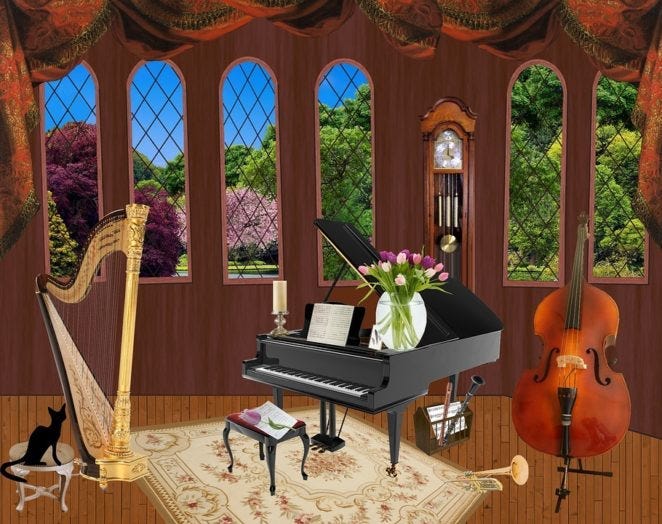
Most people (and that means people from West to East) know the classical music composers. In other words, if you mention the names Beethoven, Bach, Mozart, Brahms, Chopin, and such like … most people can tell you their favorite classical composition. Moonlight Sonata, Für Elise, etc. Right?
I have asked this question in my various social circles but nobody really had an answer for me. So I have been diligently searching and researching to see what I could find.
The question I have asked is: Who are the time-honored non-European classical composers?
I suppose to answer the questions one would have to define what type of music goes under the umbrella of “classical music” and then think of some composers who are not European who created music pieces that would be considered classical. Right?
I suppose people found it difficult to answer the question because our definition of “classical music” is Western or Westernized or more specifically, based on a European definition for classical music.
Nevertheless, I managed to find various discussions.
There is a discussion thread on Quora where commenters supplied names of people from Australia, America, Canada, Mexico, Japan, etc. Quite a mix huh?
There is another discussion thread in an anime forum where one of the commenters said there’s “no such thing as non-European classical music”. It was a response which, as you would expect, totally frustrated the person who asked the question and I totally empathize with their reaction.
Then, of course, there is the matter of equal opportunity. There was an article that discusses black composers who deserved to be acknowledged for their skill as musicians and musical composers but they were not. It’s a really interesting article. There’s even a woman in the mix.
10 black composers who changed the course of classical music history -Classic FM
Moving on … there is an article that talks about a generation of composers who seek to totally redefine “classical music”.
10 Young Composers Who Are Redefining Classical Music
In the end, my persistence in researching and finding the answer to MY question was finally rewarded. I did find information about this topic that allowed for further exploration. Whew!
One article provides a contrast and comparison:
Western Classical Music versus Indian Classical Music
Another article goes further in the discussion of “non-Western classical music” and points me in the direction of:
Classical music traditions of Southeast Asia, North India, Iran, and other non-Western parts of the world.
Why MY interest in this subject?
Music is present in every culture anywhere on planet Earth. It is this commonality that usually contributes to opening a door to developing an understanding and acceptance of other people. OK … I’ll stretch it … it could help with peacemaking or peacekeeping endeavors. If you want to establish a dialogue with people you don’t know … music is a really good ice-breaker or conversation starter.
Don’t you think so?
Why classical music? I think classical music is sort of universal as opposed to the other music genres. I said … I THINK.
What do you think?
♫ ♫ ♫ ♫ ♫ ♫
Other Classical Musics argues that there are at least 15 musical traditions around the world worthy of the title “classical music” … Con’t reading: 15 classical music traditions, compared
♫ ♫ ♫ ♫ ♫ ♫
Voyages of discovery (economist.com)
♫ ♫ ♫ ♫ ♫ ♫
7 Rock Stars Who Also Write Classical Music: Paul McCartney, Frank Zappa, And More
♫ ♫ ♫ ♫ ♫ ♫
The Music of the Harp Should Always Be Appreciated
♫ ♫ ♫ ♫ ♫ ♫
Declassified: An Insider’s Guide to Classical Music
Music can be used to build a bridge for cultures to cross over and meet each other on a common ground. Agree or Disagree?
♫ ♫ ♫ ♫ ♫ ♫
Thanks for reading.


