
How Going Outside Can Make You a Better Writer
What new research is discovering about the power of Nature
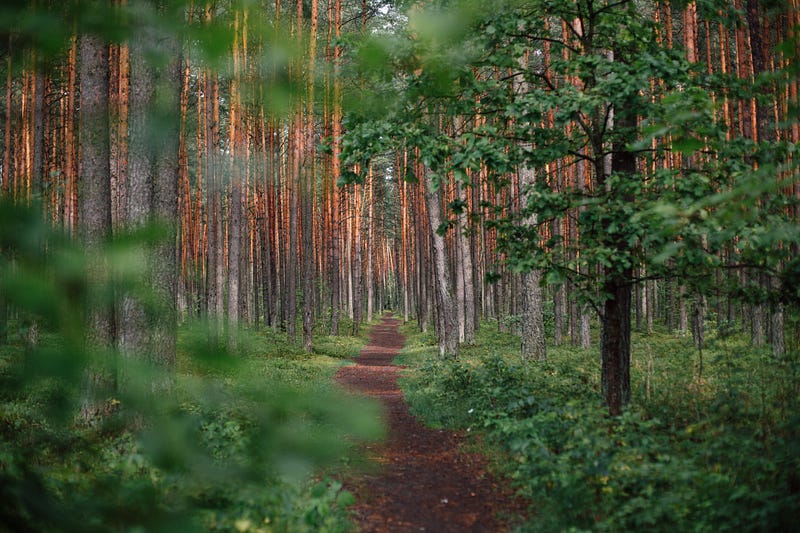
Writing hasn’t been coming as easy for me. For the past few weeks, I sit at my desk every day, and I procrastinate. I’m spending more time staring at the tree outside my window than writing. I’m starting to consider if bird watching may be a better use of my time.
Then something happened, and it happened in the most unexpected situation-on a morning run. I was up early, got to the trailhead, ready for a leisurely 5k, and realized I hadn’t loaded up a podcast or audiobook.
If you’re looking for tips on improving your listening comprehension. See my article.
So, I listened to music. It was a mix I made years ago. It’s music I’ve heard 1000s of times, and after a few minutes, my brain tuned it out. With that simple act, my mind wasn’t focusing on a podcast or a narrator in an audiobook. It didn’t have to pay attention, and it started wandering, taking in the outdoors as I ran: trees, fields, streams, and ponds.
After about a mile, I felt myself getting into “flow.” It’s the point when you’re so into what you are doing that you forget about time and surroundings. You are one with the activity.
That’s when an idea occurred to me. A section of the book I’m writing had me stumped, and the notion of introducing a new character appeared. I both literally and figuratively ran with the idea. I played with it in my head, and in no time, I had a solution.
By the third mile, I’d formulated two ideas for future articles and decided on what was for dinner that evening. The latter being one of the most challenging decisions my family makes.
Returning home, I made notes of my breakthrough. But I wasn’t satisfied; the logical part of me wanted to explore what had occurred. Why had so many ideas come from this one running session?
Several days of research later, I kept coming upon two simple themes in what I read. I will talk about the first and save the second for another article.
Is nature the best medicine
In her book “The Nature Fix,” author Florence Williams discusses neuroscientist Professor David Strayer’s suggestion to look at spending three days, a long weekend, outside. This so-called “three-day effect” can change your mental state for days and even weeks to come. Strayer often leads students on outings where they study the effects of nature. It’s not shocking what they have discovered during these trips-namely, that the constant stream of information we get these days takes its toll, and we need to refresh ourselves periodically.
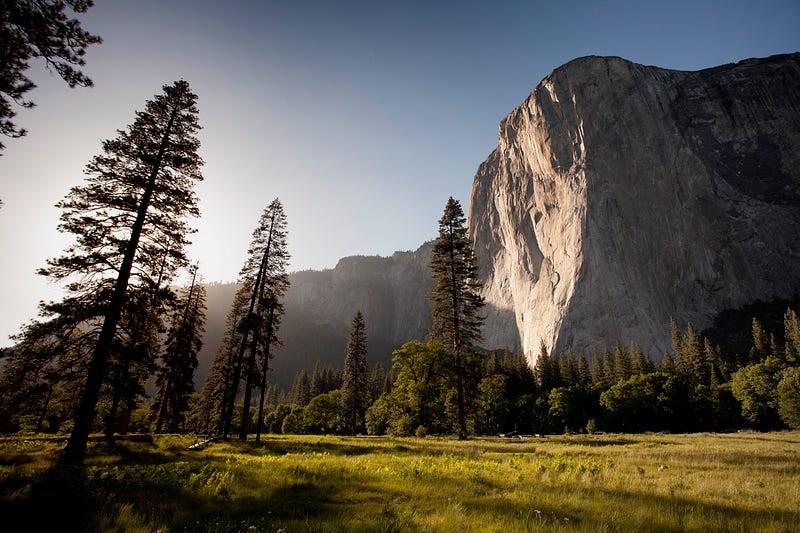
Reading this reminded me of something similar that happened on a trip to Yosemite with friends last year. We spent a week camping and hiking in the park. On the third day, I recall I hadn’t felt as burdened as if my problems took a back seat to my surroundings. I wrote several pages of notes that morning, and it was from those notes the book I mentioned before initially took shape.
Prolonged exposure to nature made sense, but I was interested in looking at the day to day effects it can have.
Williams goes on to discuss that getting outside daily into green spaces can increase your health, creativity, and productivity. It can energize and engage your mind. In as little as two hours a week, just a few minutes a day can go a long way to help your mental well-being.
Experiment
With the memory of my recent run fresh before me, I decided to do some informal “testing.” My goal was to understand if being out in nature was effective for me, and if so, how could I optimize the experience. I kept a daily calendar of how I felt after each activity and how my productivity was for the day.
After four weeks, here is what I discovered.
- My most productive days are ones where I start with a workout outdoors.
- I’m in a secluded area, such as the park or a nature trail.
- The activity I’m doing doesn’t matter. I stick to walking, running, or hiking.
- I’m listening to music that doesn’t require much concentration.
If I include these elements, I increase my chances of being more productive that day.
How can this help you
Obviously, this isn’t an exact science. We are each different and all want to feel more productive. There isn’t a magic formula that can provide it every single day. But there are things we can do to improve our odds to increase productivity. It’s a matter of taking some time and experimenting with what works best for you.
- My suggestion would be to start with a walk in a green space. It could be a nature trail or your local park.
- Make sure it’s somewhere that you can minimize distractions.
- Take a fifteen-minute walk and let yourself experience the outdoors.
- Don’t be afraid to add some variety into the mix and see how you feel.
While I can still procrastinate with the best of them, my morning routine has helped to improve my concentration and productivity. I feel I’m giving myself the best chance to succeed each day, and now I do my bird watching outside where it belongs.