

Exploring the Empire of Death
The Catacombs of Paris
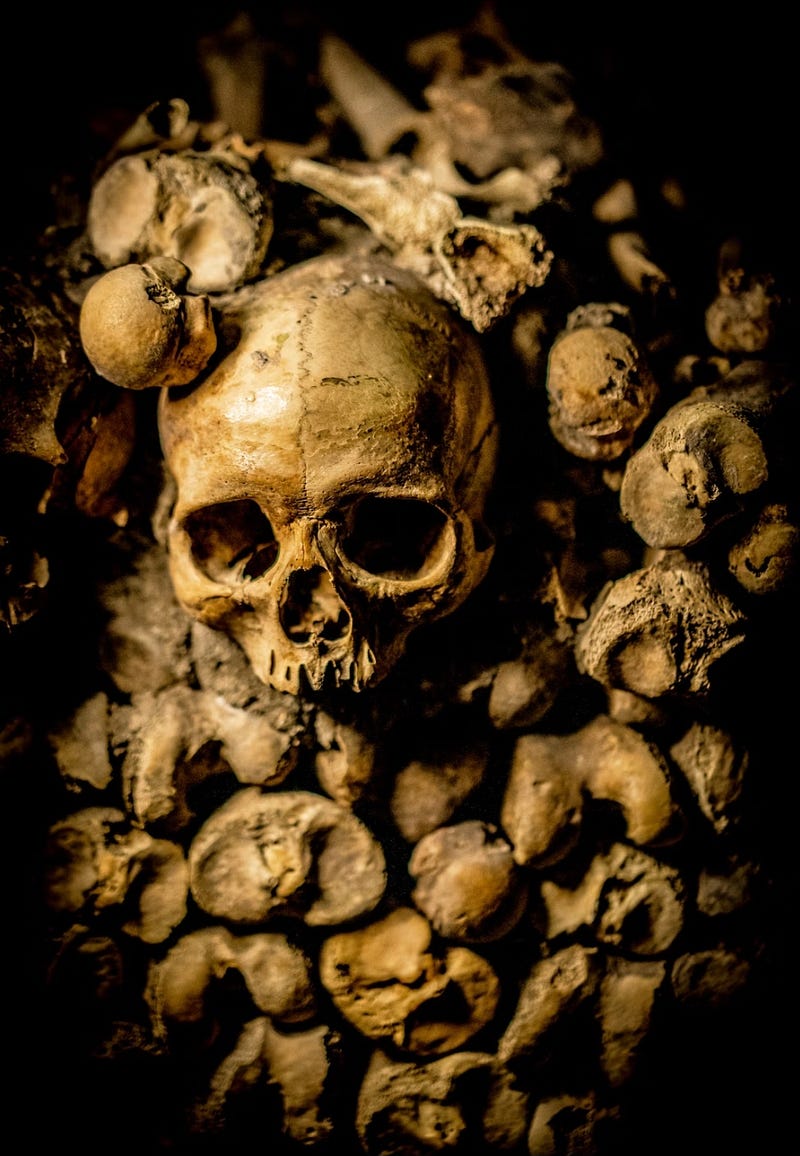
When I went to Paris, I didn't have the guts to visit the catacombs. I have always been fascinated by the stories and legends about them, but I was too scared to go underground and see the bones of millions of people. So I decided to write about them instead, and share with you what I learned and imagined.
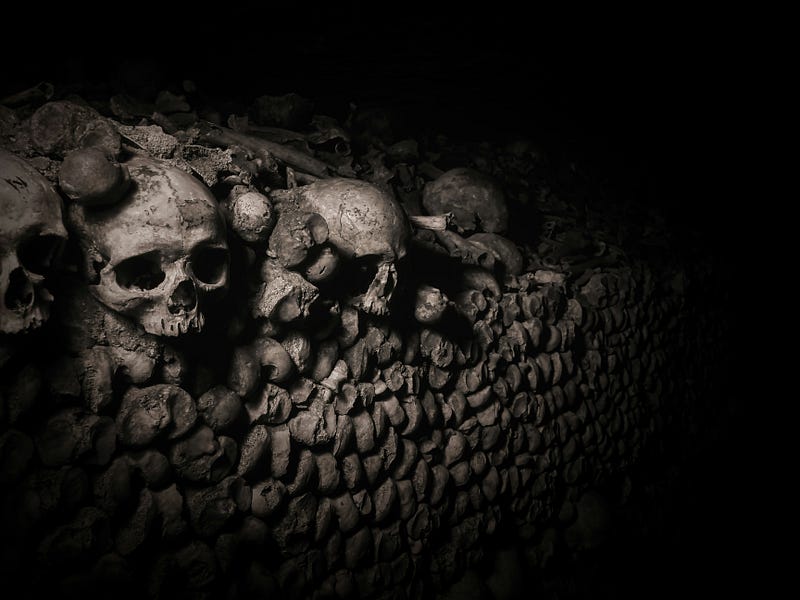
The catacombs are a network of tunnels and chambers that hold the remains of over six million people. They were created in the late 1700s, when Paris had a problem of overcrowded cemeteries and public health issues. The authorities moved the bones from different graveyards to the old quarries that had been there since the Roman times.
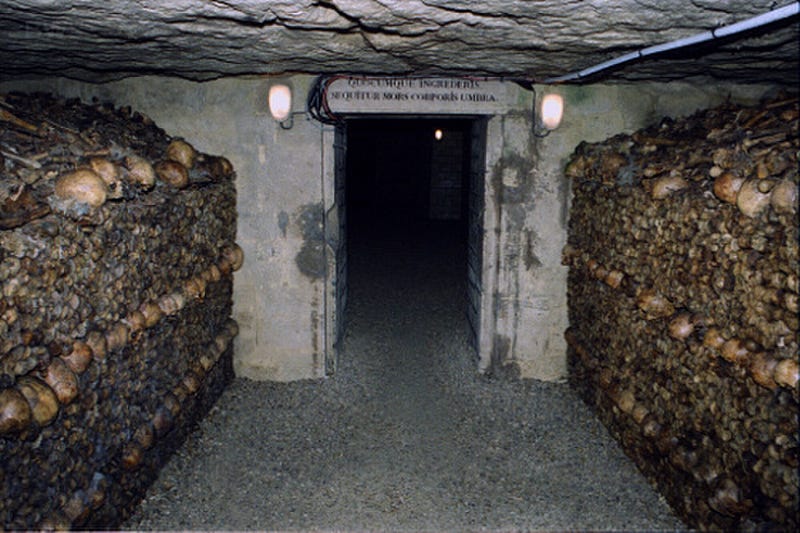
They moved the bones from 1786 to 1814. They arranged them in different ways, making a creepy but cool sight. Some of the bones had dates, names, and messages on them. The catacombs also had sculptures, monuments, and artworks made by the people who worked there or visited over the years.
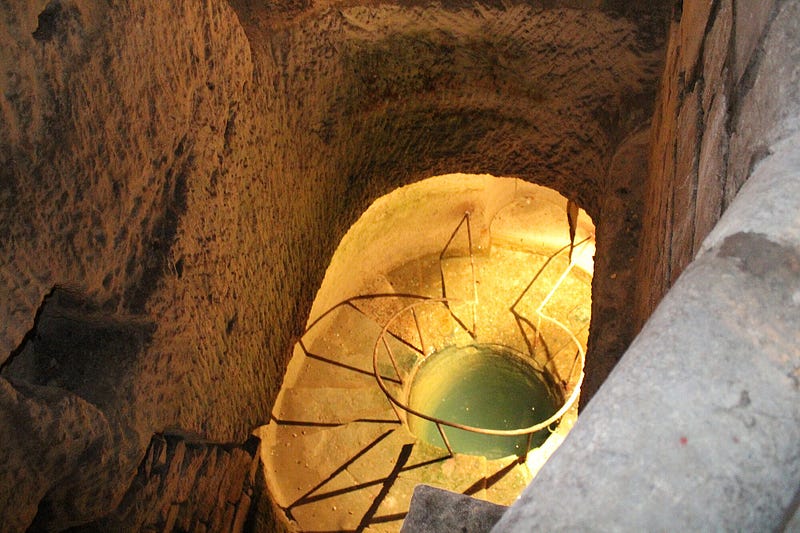
The catacombs have been open to the public since 1809, but only a small part of the 300 km of tunnels is accessible. To get there, you have to go down a spiral staircase of 131 steps, and then walk for about 2 km in a dark and damp place. The temperature is around 14°C, so you need a jacket. You also need a flashlight, a map, and a good sense of direction, because the catacombs can be confusing and even dangerous.
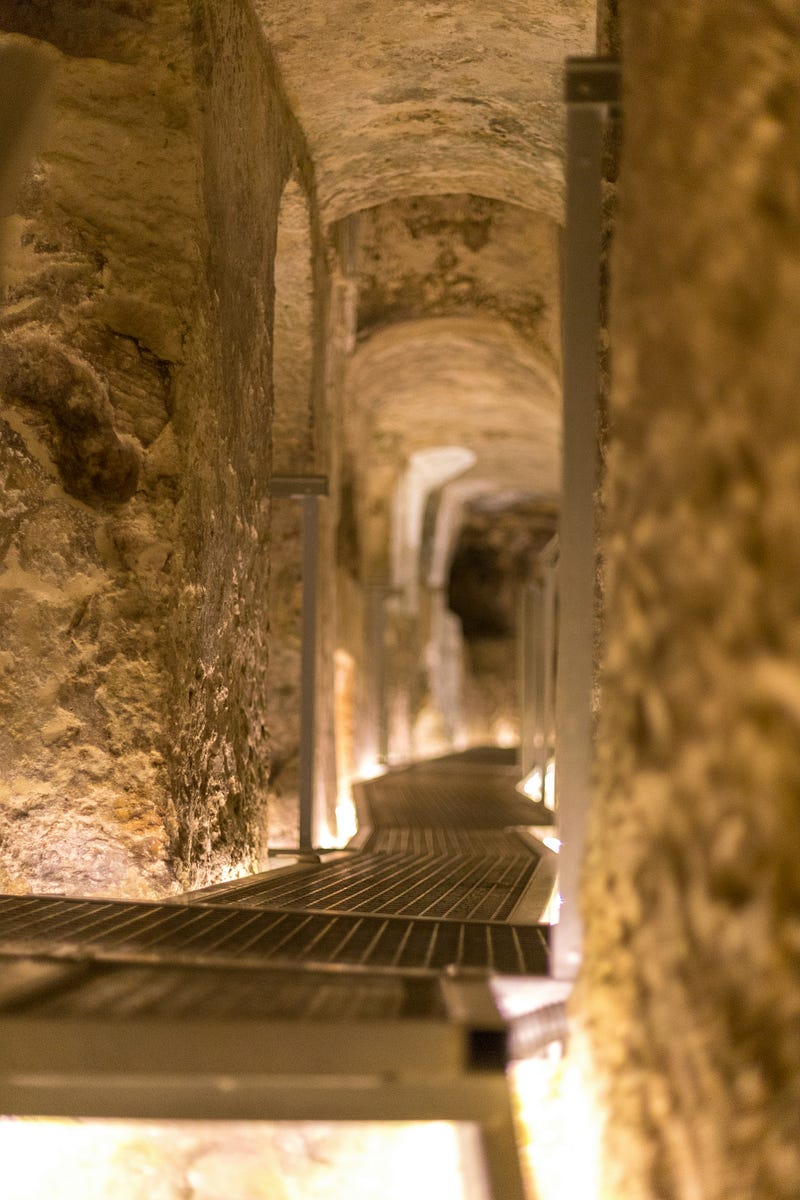
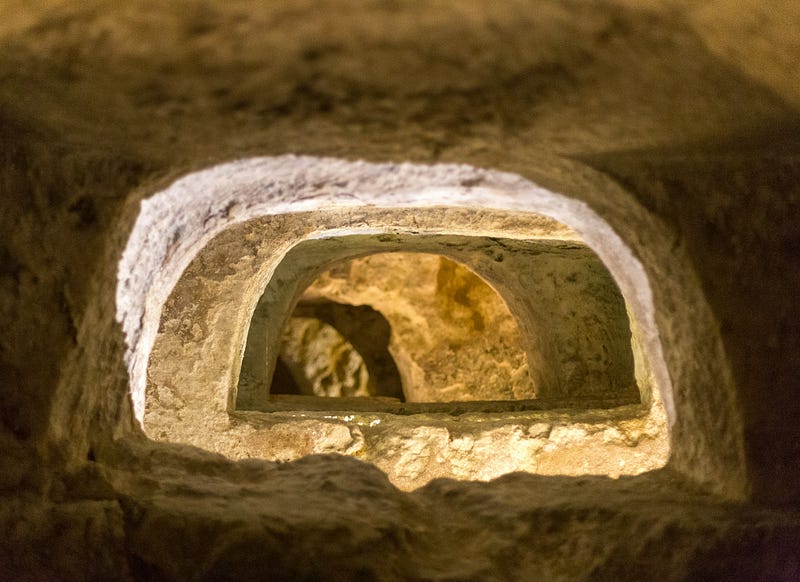
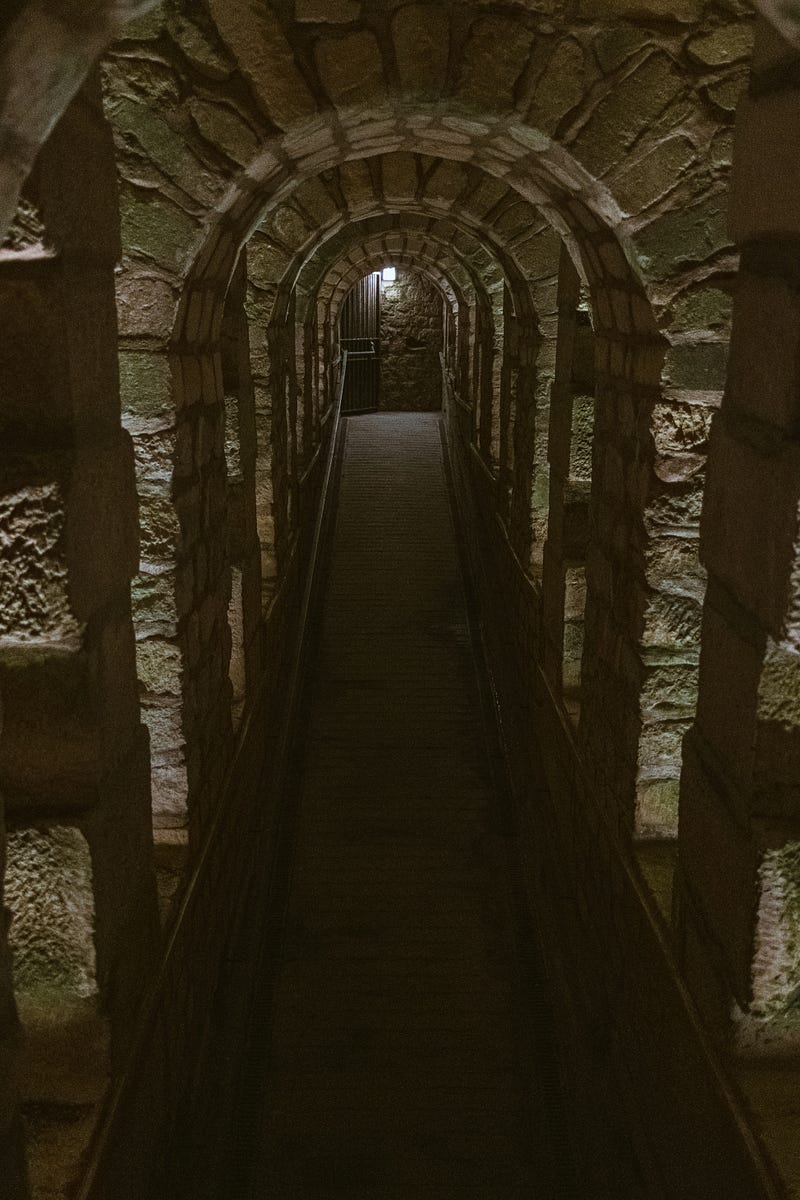
The catacombs are not for the faint of heart, but they offer a unique and unforgettable experience for those who dare to go. They show you the history, culture, and mortality of Paris, and make you think about the fragility of life. As the sign at the entrance says: "Stop! This is the empire of death!"
I couldn’t find open source images of everything I wanted to share from some of the videos I’ve watched, so I’ll share what I can.
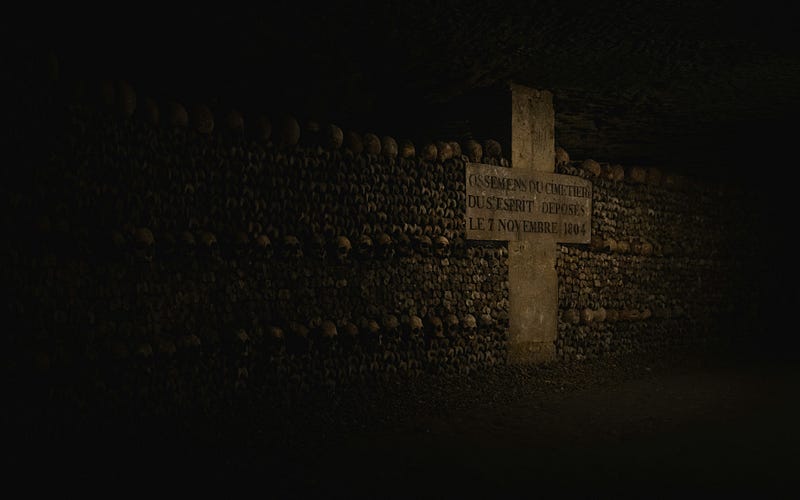
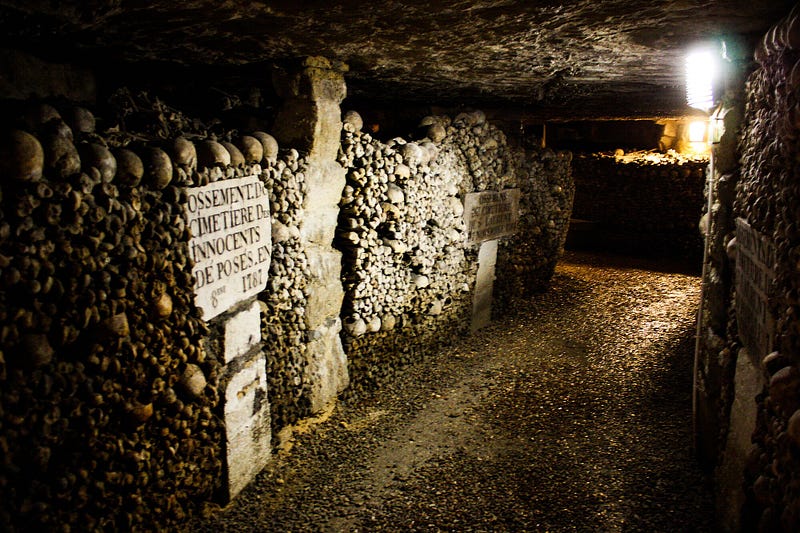
But what can you see in the catacombs? I was amazed by some of the things I saw in the pictures and videos I watched. One of the first things that caught my eye was the Crypt of the Passion, where a cross made of bones and a plaque marked dark the entrance to the ossuary. That’s where the bones of the cemetery of the Innocents are, moved in 1786.
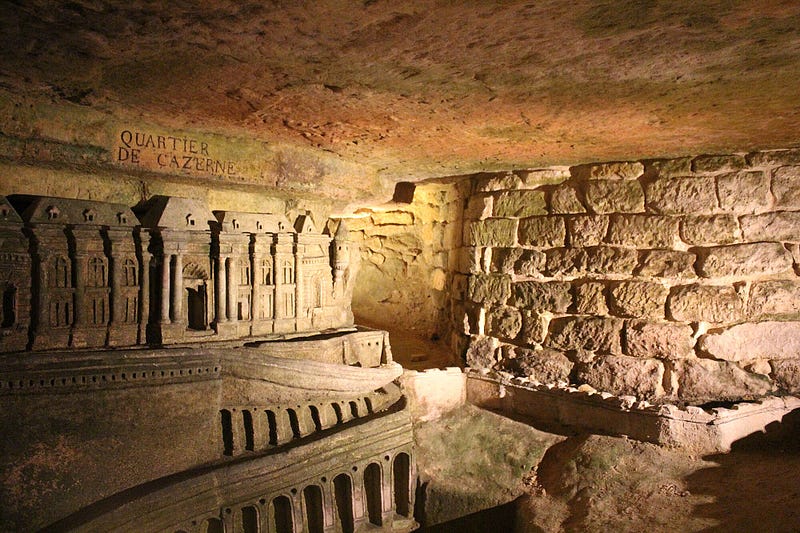
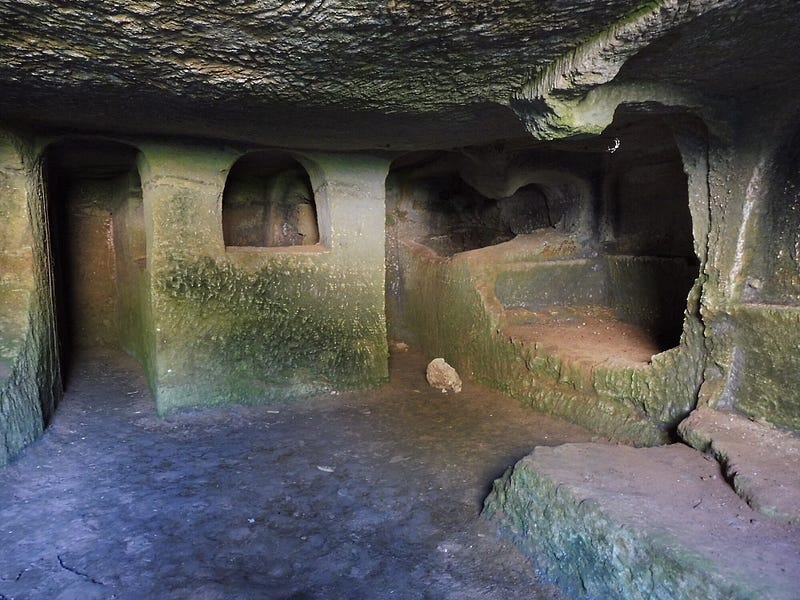
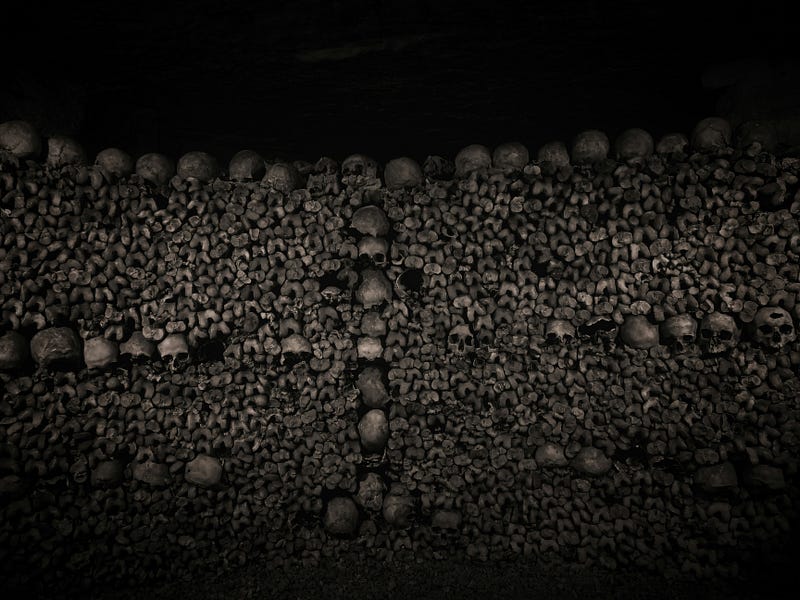
Below I have included an image of some of the original architecture with no bones, then an image of some of the 40,000 people that have been carefully stacked in parts, to hold the ceiling of the catacombs up.
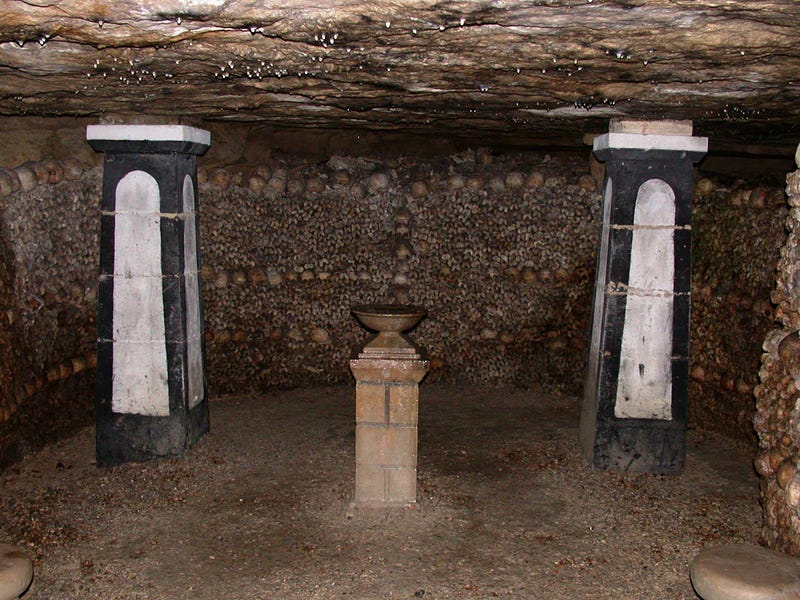
Another interesting thing I saw was the Sepulchral Lamp, a lamp that apparently burns forever in a hall of bones. It was installed in 1810 by the inspector Héricart de Thury, who was in charge of the decoration and organization of the catacombs. The lamp symbolizes the eternal vigilance of the dead.
I’m confused to why it’s not burning in the image 🤔
If you're looking for some art, you can admire the Quarryman's Footbath, a small pool of water that the workers used to wash their feet after a hard day's work. It's in the Port Mahon Gallery, where you can also see some of the sculptures made by a worker named Décure, who copied scenes from his home island of Minorca.
The only tomb that I found online in the catacombs belongs to François Gilbert, a doorkeeper who died in 1793. His tombstone reads: "He lived calm and virtuous, and died as a philosopher."
To be honest, I don’t think I’ll ever have the courage to visit the catacombs in person. I’ve been to Paris several times, but I’ve never wanted to go there. Maybe someday I’ll change my mind, but for now, I’m happy to write about it from a safe distance.
LunarLunguist