Exploring the Depths of the Gospel of Thomas
Delving into Sayings Seven and Eight

The Gospel of Thomas is a remarkable and unique text within early Christian literature, primarily known for its collection of 114 sayings attributed to Jesus Christ. Discovered in 1945 among other early Christian writings near Nag Hammadi in Egypt, it stands apart from the canonical Gospels of the New Testament in both form and content.
Unlike the Gospels of Matthew, Mark, Luke, and John, the Gospel of Thomas does not offer a narrative of Jesus’ life, death, and resurrection. Instead, it presents a series of standalone sayings, some of which are familiar from the New Testament, while others are completely unique.
As frequent readers of this series are aware, I employ a specific methodology when exploring the sayings from the Gospel of Thomas. I examine the sayings two at a time and in reverse sequential order. I use this method for various reasons, the biggest one being that it works. Also, I believe that the text was designed to be read in such a manner.
Let’s take a look at the first of this article’s two sayings.
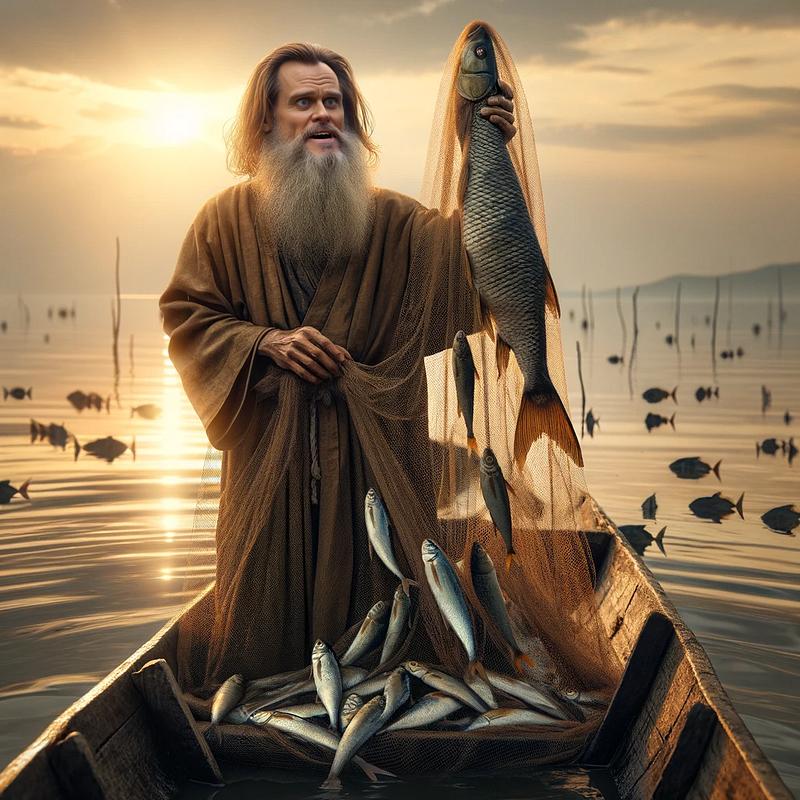
He said, “Man is like an intelligent fisherman who cast a net into the sea and drew it up from the sea full of little fish. Among them the intelligent fisherman found a fine large fish and cast all the little fish back down into the sea, easily choosing the large fish. Anyone who has ears to hear should hear!” (Gospel of Thomas Saying 8)
Let’s break down the analysis into the various components:
The Fisherman
Represents the seeker, discerning and selective in the pursuit of truth.
The Sea
Symbolizes the vastness of human experience and consciousness.
The Net
A metaphor for the methods or tools used in the search for enlightenment.
Selection of the Large Fish
The choice to focus on profound truths over superficial knowledge.
The Call to Hear:
The concluding phrase, “Anyone who has ears to hear should hear,” is a common biblical refrain that indicates that the so-marked text contains a hidden meaning.
This saying provides a clear metaphor for discernment in spiritual or intellectual pursuits.
Let’s examine the other saying in the pair.
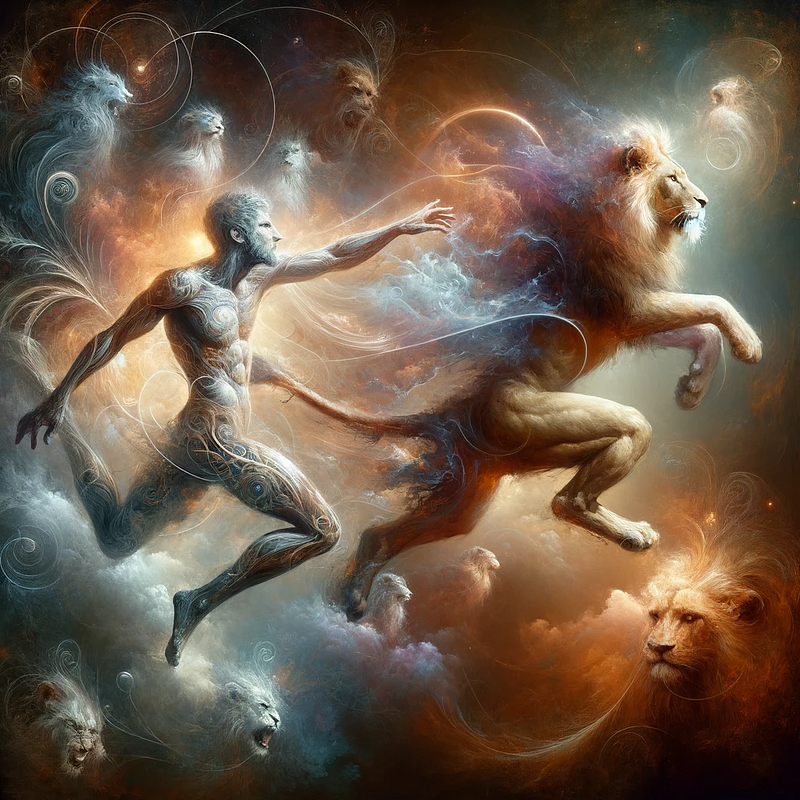
Jesus said, “Blessed is the lion that’s eaten by man and then becomes man, but cursed is the man who is eaten by a lion, and the lion becomes man.” (Gospel of Thomas Saying 7)
This is a mysterious statement. Let’s explore some of its possible meanings:
Transformation and Assimilation
On a symbolic level, the saying can be interpreted as a metaphor for transformation and assimilation. The lion being eaten by a human and becoming human could symbolize the process of integrating animalistic or primal instincts into human consciousness, leading to a form of enlightenment or higher understanding. Conversely, the human being consumed by the lion and transforming into a lion could represent the loss of humanity or regression to a more primal state.
Psychological Interpretation
Psychologically, this could be seen as a representation of integrating the shadow self. The lion, a symbol of power and ferocity, when ‘consumed’ or acknowledged by the human self, leads to a more complete, integrated personality. Conversely, being consumed by one’s shadow (the lion eating the human) could lead to a disintegration of the self.
The Power of Consumption
There’s also a theme of consumption and its transformative power. The act of eating in both scenarios leads to a profound change, suggesting that what we consume (literally or metaphorically) has the power to change us fundamentally.
The fisherman’s discernment in Saying Eight can be seen as a controlled, conscious choice in the vast sea of experiences. In contrast, Saying Seven offers a more dramatic and existential exploration of how these experiences (or what we consume) can fundamentally change us.
Both sayings offer insight into the journey of self-discovery, although from different perspectives, one more grounded in discernment, the other in the transformative experiences that shape our very nature.
There we go, that’s these two sayings examined and their surface meanings explored. Now I just want to read them, one after the other, in reverse order.
He said, “Man is like an intelligent fisherman who cast a net into the sea and drew it up from the sea full of little fish. Among them the intelligent fisherman found a fine large fish and cast all the little fish back down into the sea, easily choosing the large fish. Anyone who has ears to hear should hear!” (Gospel of Thomas Saying 8)
And
Jesus said, “Blessed is the lion that’s eaten by man and then becomes man, but cursed is the man who is eaten by a lion, and the lion becomes man.” (Gospel of Thomas Saying 7)
After reading these two together, I wonder what happens when a fish eats a man. The saying even emphasizes that there was a big fish.
That’s what I try to do, to merge the two sayings into one. The idea of a hunter trapping many lions and only keeping the largest while releasing the others just doesn’t work, while a metaphor about consuming or being consumed by fish does.
Jesus said, “Blessed is the fish that’s eaten by man and then becomes man, but cursed is the man who is eaten by a fish, and the fish becomes man.”
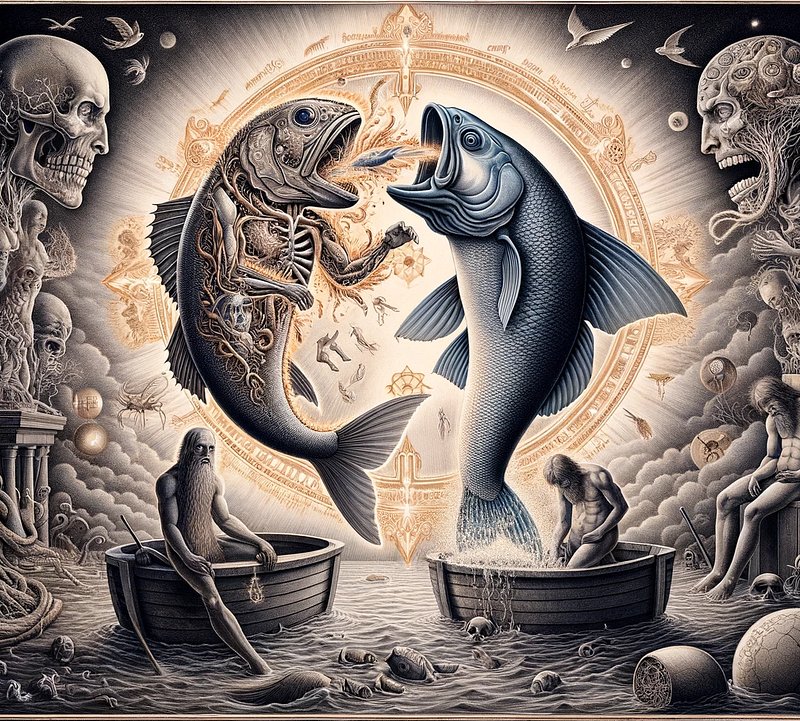
This naturally leads me to consider the story of Jonah, the prophet who was eaten by a giant fish.
The story of Jonah in the Hebrew Bible is divided into four chapters, each encompassing a distinct part of the narrative:
Jonah 1
Jonah’s Flight and the Storm
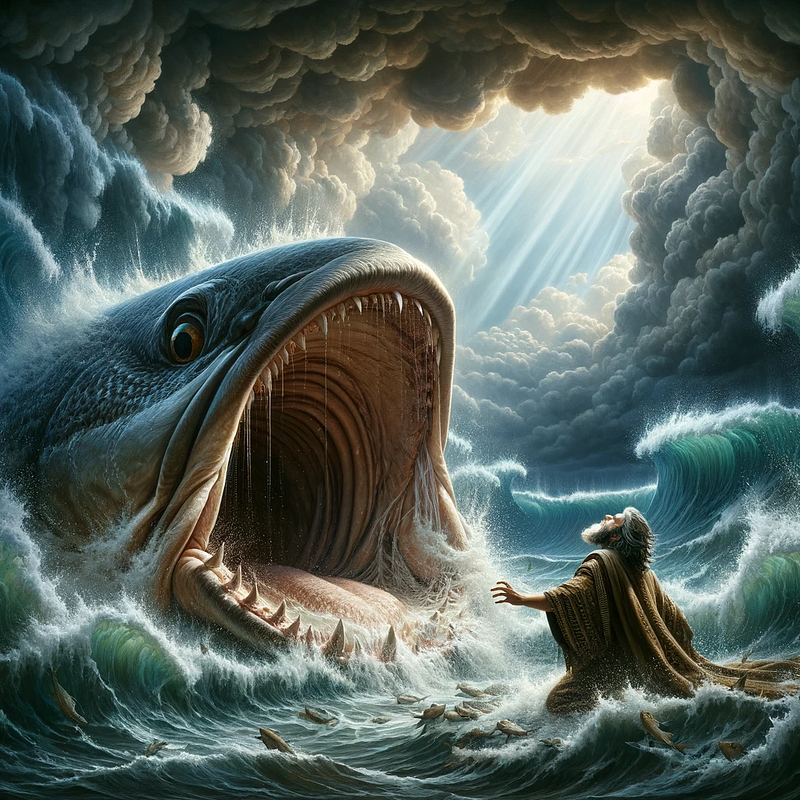
God commands Jonah to go to Nineveh, but Jonah flees to Tarshish, boarding a ship. A great storm arises, and the sailors, realizing Jonah’s disobedience to God is causing the storm, throw him overboard.
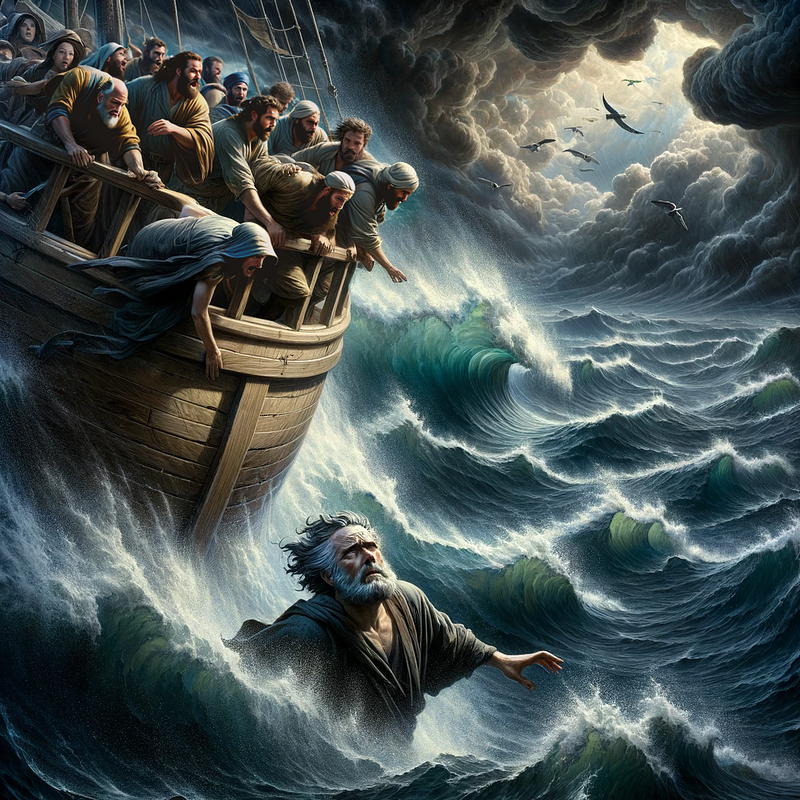
A large fish swallows Jonah.
Jonah 2
Jonah’s Prayer
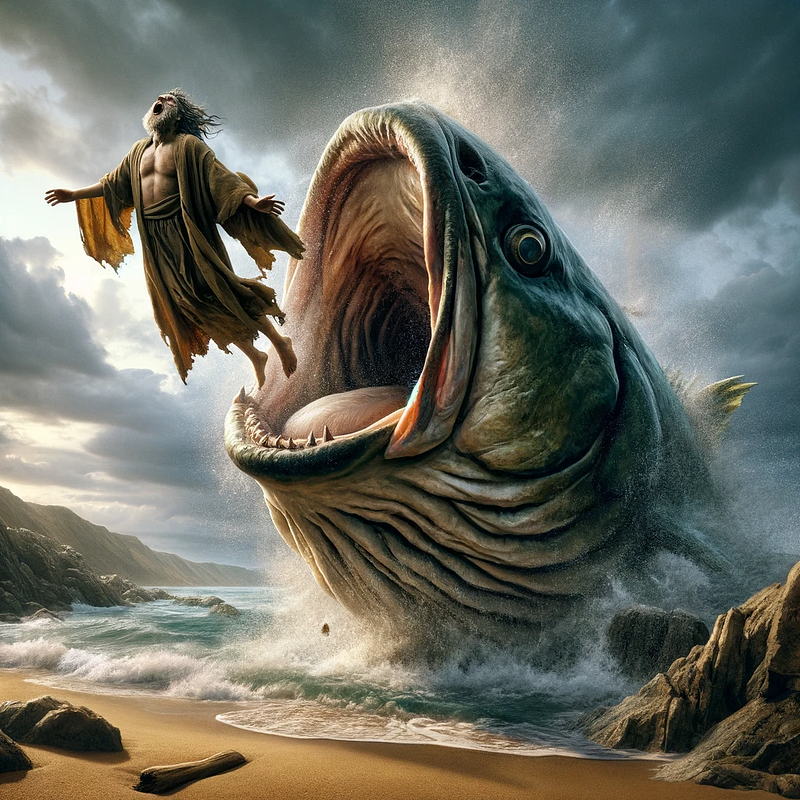
Inside the fish, Jonah prays to God, expressing repentance and thanksgiving. God commands the fish, and it vomits Jonah onto dry land.
Jonah 3
Jonah in Nineveh
God again tells Jonah to go to Nineveh. This time, Jonah obeys and enters the city, proclaiming God’s message that Nineveh will be overthrown. The people of Nineveh, from the king to the commoners, believe God’s warning and repent, fasting and wearing sackcloth.
Jonah 4
Jonah’s Anger and God’s Lesson
Jonah is displeased and angry at God’s mercy towards Nineveh. God causes a plant to grow to give Jonah shade, then allows it to wither, teaching Jonah a lesson about compassion and mercy, concluding the story with a question about the value of human life and God’s mercy.
That’s the story in broad strokes. Still what I am interested in is the curse. Did Jonah become cursed by the fish eating him? Did the fish become Jonah?
To understand its significance, we need to examine the story's chapters in reverse order.
Jonah 4
So we begin at the end. Jonah is angry because God has decided not to destroy Nineveh. Jonah builds himself a little shelter and waits to see what is going to happen to the city. God then has a vine grow to provide Jonah with some shade.
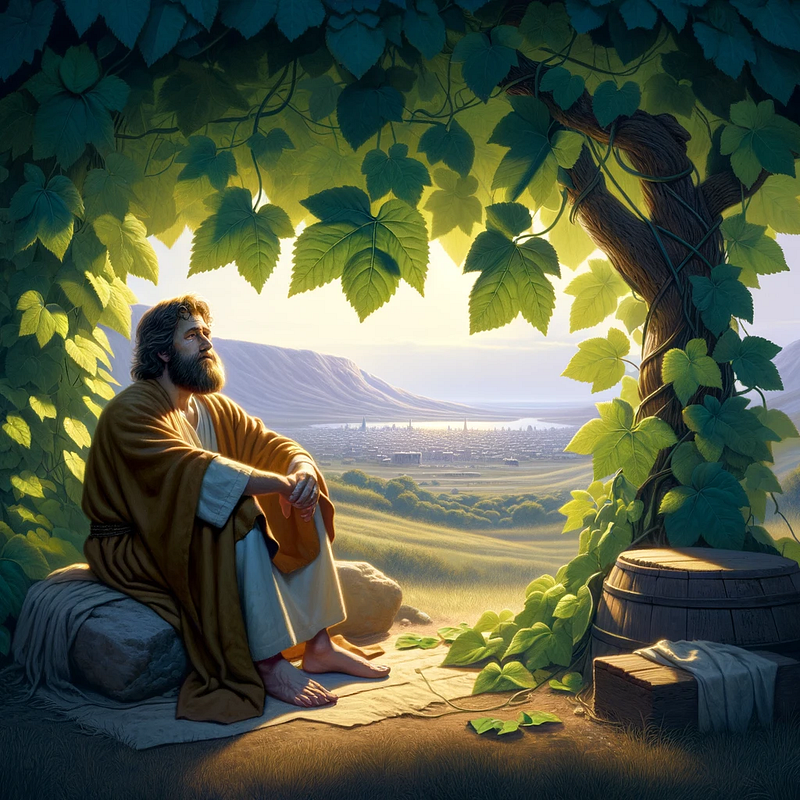
That night, God had a worm attack the vine. When the Sun rose, God blew a hot wind and Jonah nearly passed out. He told God that he wanted to die.
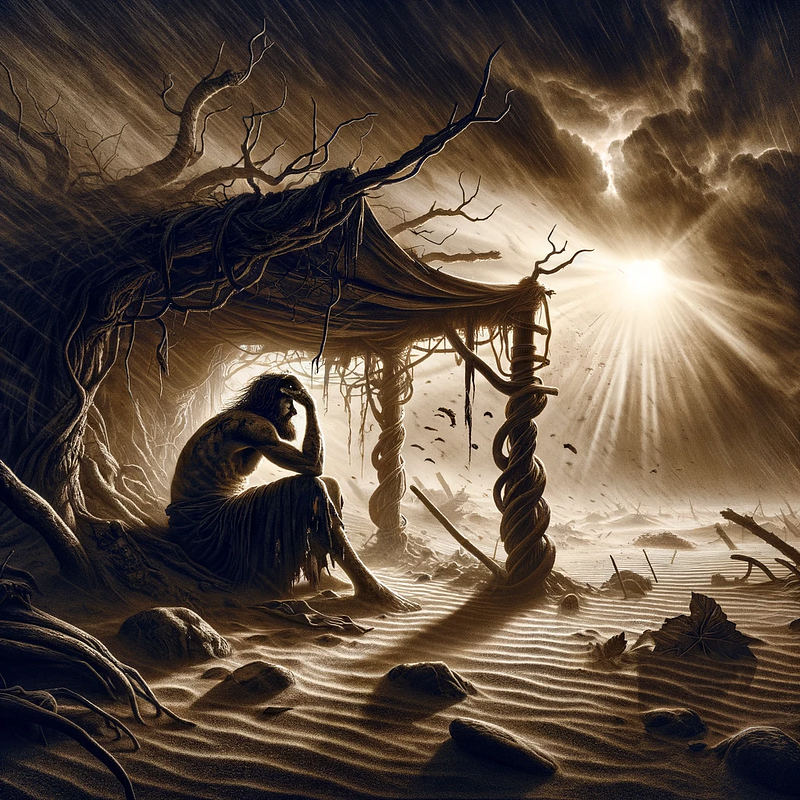
9 But God said to Jonah, “Do you have a right to be angry about the vine?” “I do,” he said. “I am angry enough to die.” 10 But the LORD said, “You have been concerned about this vine, though you did not tend it or make it grow. It sprang up overnight and died overnight. 11 But Nineveh has more than a hundred and twenty thousand people who cannot tell their right hand from their left, and many cattle as well. Should I not be concerned about that great city?” (Jon 4:9–11 NIV)
The first thing I want to draw attention to is the number of inhabitants of Nineveh: 120,000. For me, the key figure in that is the number twelve. As in the twelve tribes of Israel or the twelve signs of the zodiac.
The vine is another important aspect. According to the biblical narrative, the third day of creation involved God forming dry land and plants. Now, if we take Sunday, when God created light, as the first day of the week, then the third day corresponds to Tuesday.
Tuesday is named after Týr, a Norse god associated with combat and heroic glory, much like the Roman Mars. In Spanish, Tuesday is ‘Martes,’ and in French, it’s ‘Mardi,’ both directly referencing Mars.
Astrologically Mars rules the signs Aries and Scorpio. In the Biblical creation account, on the third day, God creates dry land and plants. This account leaves out the insects and arthropods that began their development on dry land simultaneously with plants. The astrological portion of the system makes up for that deficiency.
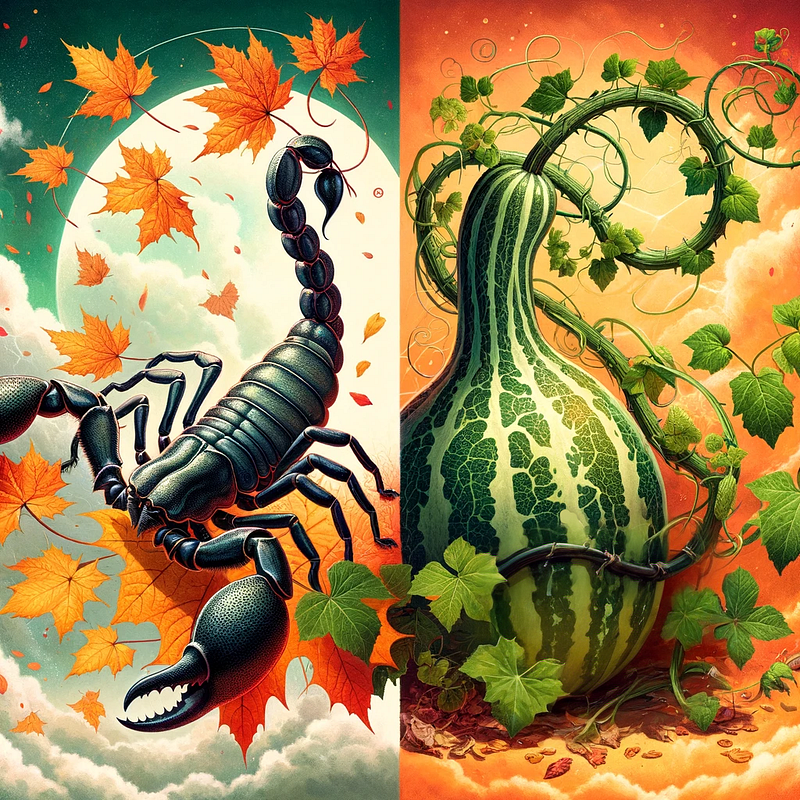
Mars rules Aries, which the Bible identifies as dry land plants, and Scorpio, or scorpions which are dry land arthropods, a phylum that includes insects.
The vine that shields Jonah from the sun represents Aries, the astrological age before Pisces. Aries was ruled by Mars, a jealous and vengeful god, while Pisces was ruled by Jupiter, a compassionate and merciful god.

Jonah wanted to serve Mars. However, after the ages changed, he found himself in the service of Jupiter.
Jonah 3
In chapter three, Jonah went to Nineveh and prophesized the city’s destruction, which caused everyone to wear sackcloth and repent, from the king on down. So God decided not to destroy the city.
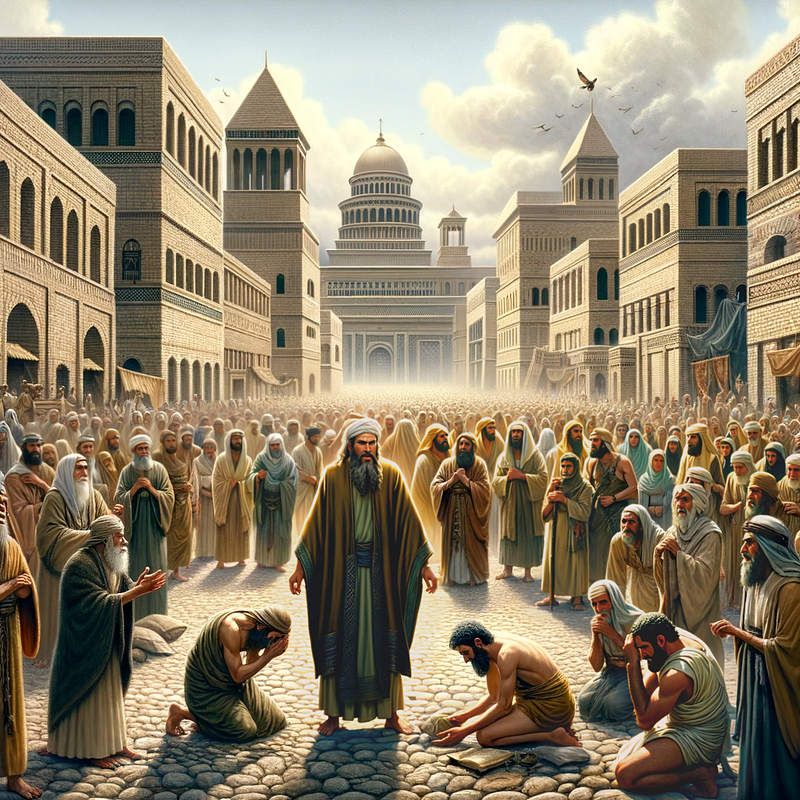
Jesus directly refers to this event in the Gospels.
29 As the crowds increased, Jesus said, “This is a wicked generation. It asks for a miraculous sign, but none will be given it except the sign of Jonah. 30 For as Jonah was a sign to the Ninevites, so also will the Son of Man be to this generation. (Luk 11:29–30 NIV)
Jonah 2
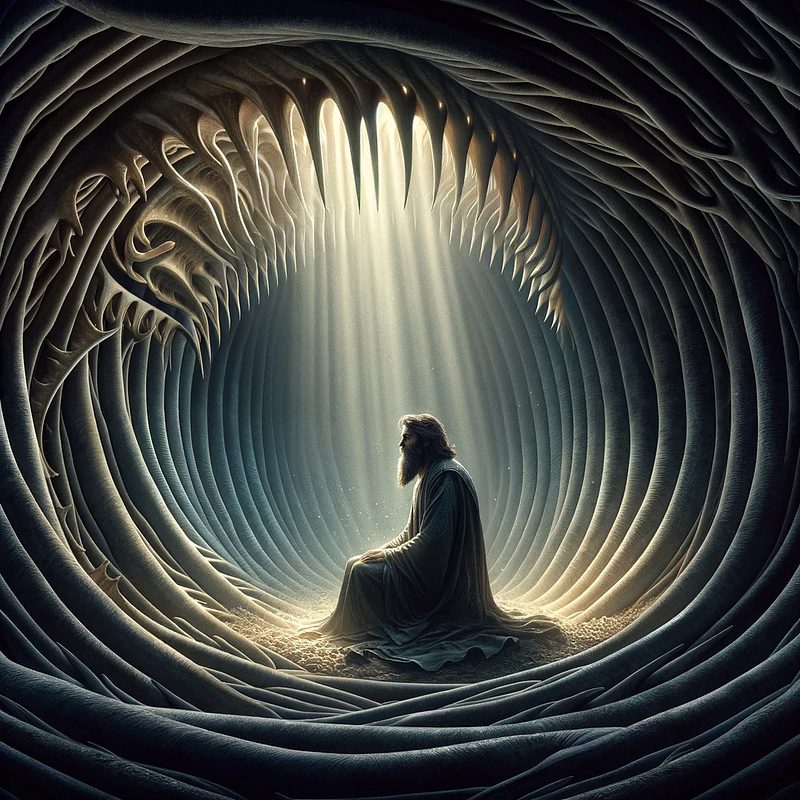
In this section, Jonah is trapped in the fish for three days and nights during which time he prays to God. The fish then vomits Jonah onto land.
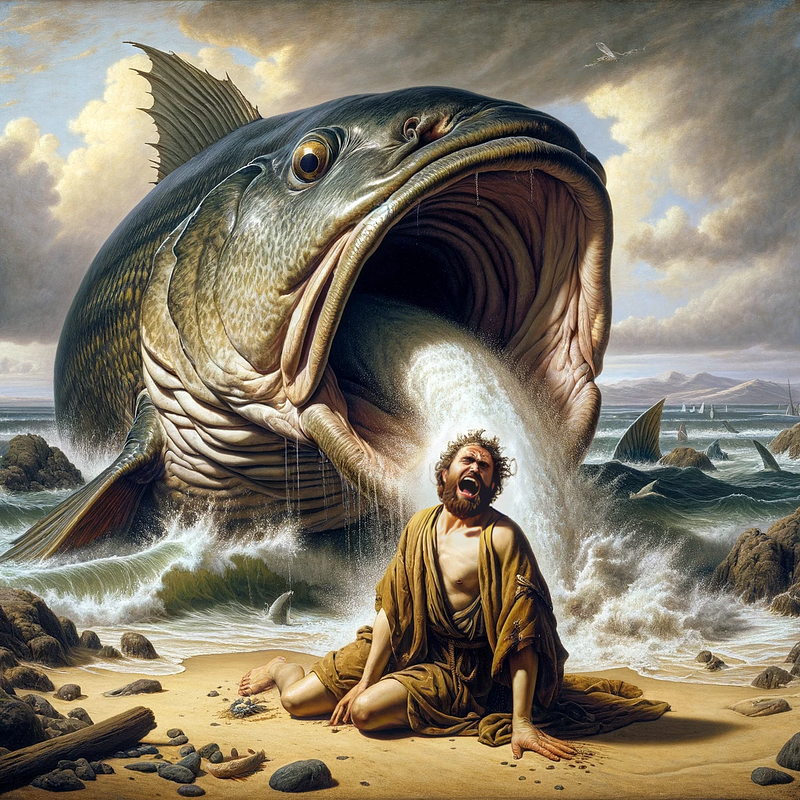
Jesus also refers to this portion of the story and relates it to a future event in his own life.
38 Then some of the Pharisees and teachers of the law said to him, “Teacher, we want to see a miraculous sign from you.” 39 He answered, “A wicked and adulterous generation asks for a miraculous sign! But none will be given it except the sign of the prophet Jonah. 40 For as Jonah was three days and three nights in the belly of a huge fish, so the Son of Man will be three days and three nights in the heart of the earth. (Mat 12:38–40 NIV)
Jonah 1
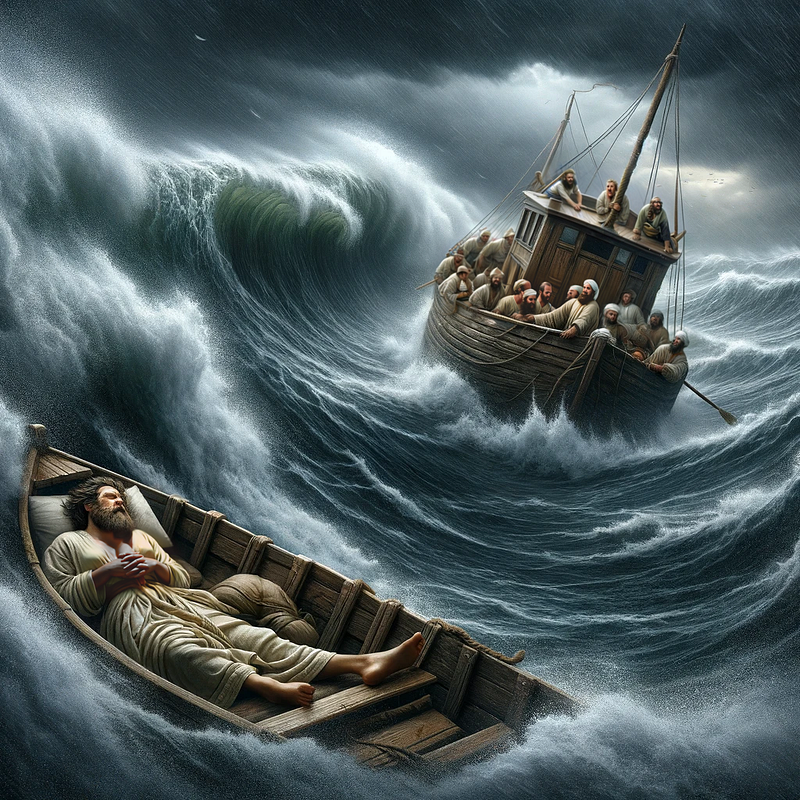
In Jonah 1, we find Jonah in Joppa, where God commands him to prophesy to Nineveh. Instead of heading east-northeast to Nineveh, which is about 900 kilometers (600 miles) overland from Joppa, Jonah chooses a drastically different path. He boards a ship bound for Tarshish, located in the opposite direction, possibly identified as the island of Sardinia in the Mediterranean Sea, roughly 2,100 kilometers (about 1,300 miles) from Joppa.
Jonah really didn’t want to go to Nineveh. Then, once he found passage on the boat bound for Tarshish, this happens:
4 Then the LORD sent a great wind on the sea, and such a violent storm arose that the ship threatened to break up. 5 All the sailors were afraid and each cried out to his own god. And they threw the cargo into the sea to lighten the ship. But Jonah had gone below deck, where he lay down and fell into a deep sleep. 6 The captain went to him and said, “How can you sleep? Get up and call on your god! Maybe he will take notice of us, and we will not perish.” (Jon 1:4–6 NIV)
This narrative bears a striking resemblance to the events described in the synoptic Gospels.
37 A furious squall came up, and the waves broke over the boat, so that it was nearly swamped. 38 Jesus was in the stern, sleeping on a cushion. The disciples woke him and said to him, “Teacher, don’t you care if we drown?” (Mar 4:37–38 NIV)
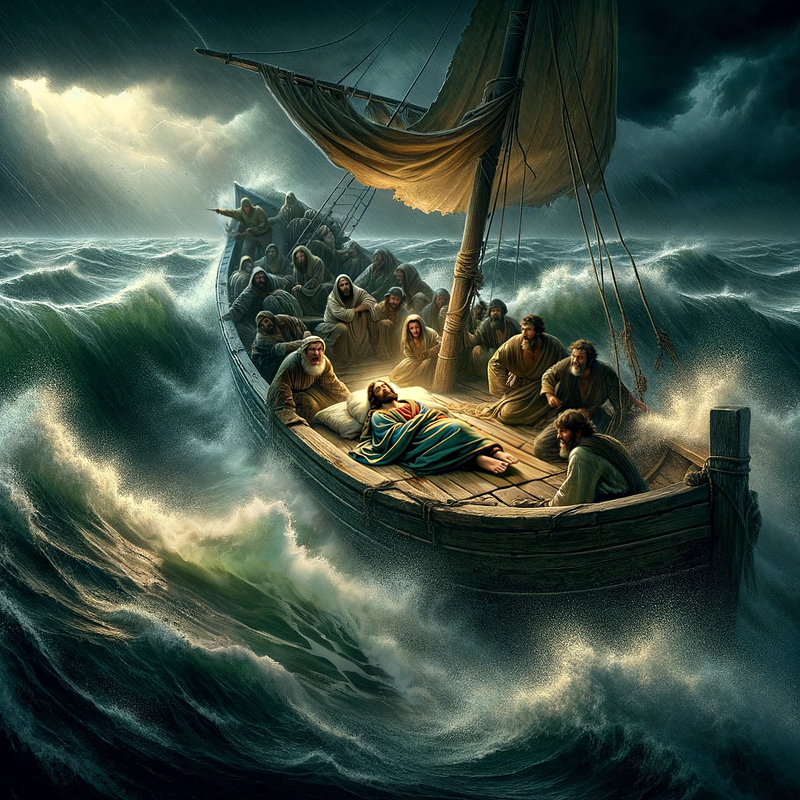
The passage above, repeated in Matthew 8:24–25 and Luke 8:23–24, shows Jesus reenacting a key event from Jonah’s story. By this action, he is identifying himself as an embodiment of Jonah.
What are the authors of the synoptic Gospels doing in these passages? In Luke, Jesus says that he came in the ‘sign of Jonah’. In Matthew, he explains that the ‘sign of Jonah’ means that just as Jonah spent three days in a fish’s stomach, Jesus would spend three days in a tomb.
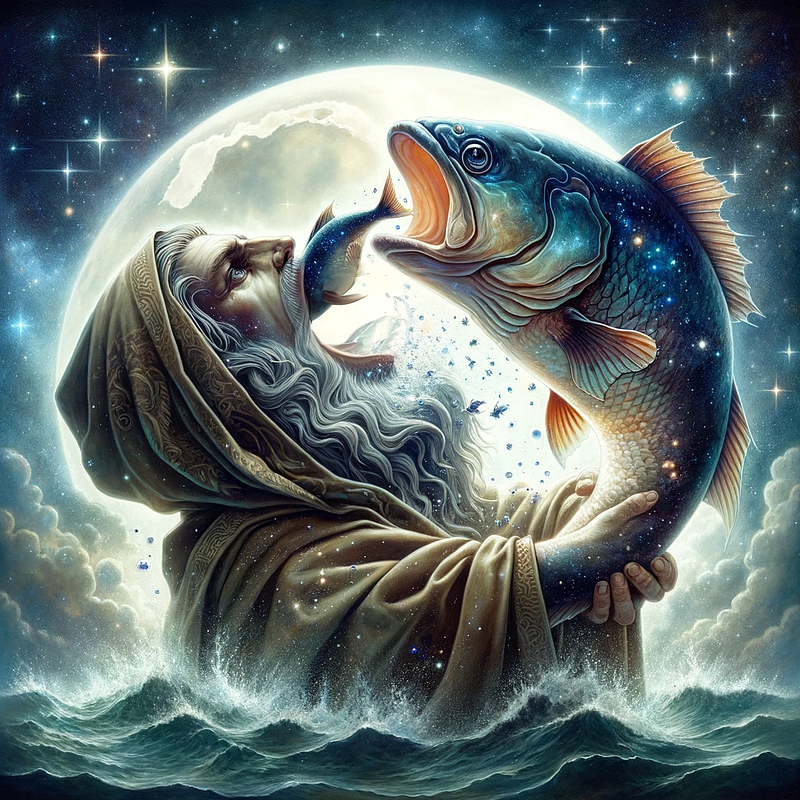
But I propose that the sign of Jonah is more than a prefiguration of Jesus’ burial and resurrection. It is the fish itself, symbolizing the age of Pisces, an era marked by the rise of Christianity. In this light, Jesus can be seen as Jonah reborn, not just in his actions but in his symbolic essence. Just as Jonah was unafraid during the storm, knowing that God’s plan for him was not yet fulfilled, Jesus too rests in fearless assurance of his divine mission.
Jonah’s story becomes inextricably linked with the symbol of the fish, a motif that carries significant weight in Christian symbolism. The fish, known as the Ichthys in Greek, emerges as an early Christian symbol representing Jesus Christ. This acronym stands for ‘Iēsous Christos, Theou Yios, Sōtēr,’ translating to ‘Jesus Christ, Son of God, Savior.’ The symbol served as a discreet sign among early Christians, especially during times of persecution.

In the age of Pisces, with fishermen as his companions, Jesus embodies the prophetic lineage of Jonah. Yet, unlike Jonah, who initially shunned the call to preach to Nineveh and yearned for the justice of a god such as Mars, Jesus embraces the compassionate and loving nature of the God he represents. Ultimately, Jonah, through his reluctant journey in the belly of a fish, becomes part of a larger narrative. He is swallowed and ‘cursed,’ as it were, with his story being absorbed and transformed by the fish, symbolically intertwining his fate with the emergence of Christianity, marked by the fish that became its symbol.
In my next article in this series, we will examine Sayings Nine and Ten:
Jesus said, “Look, a sower went out, took a handful of seeds, and scattered them. Some fell on the roadside; the birds came and gathered them. Others fell on the rock; they didn’t take root in the soil and ears of grain didn’t rise toward heaven. Yet others fell on thorns; they choked the seeds and worms ate them. Finally, others fell on good soil; it produced fruit up toward heaven, some sixty times as much and some a hundred and twenty.” (Gospel of Thomas Saying 9)
And
Jesus said, “I’ve cast fire on the world, and look, I’m watching over it until it ablaze.” (Gospel of Thomas Saying 10)
A Sincere Tribute to My Devoted Readers:
Graham Pemberton, ✅ Doc Samurai Sam 🍿, gab1930s, Martin Cabina, Dr Nick Stafford, Peter Sahota, Andrew Martin, Jonathan Poletti, ❤️ Never Give Up ❤️, 🌅🌅 Mindful Zen Garden 🌅🌅