
Exploring The Best Things to Collect from Your Travels
It’s not just souvenirs
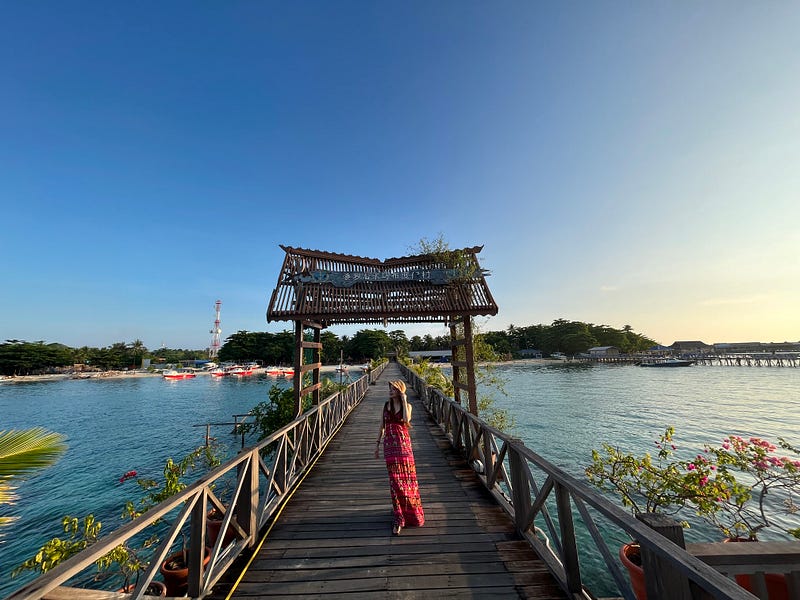
Over a decade ago, I started travelling ferociously.
The travel bug had bitten me, and it bit me hard.
I was saving every penny I had to explore the world. It didn’t matter that I had to live like a pauper the rest of the time, as long as I could buy that flight ticket to my next destination.
I loved collecting items from my travels, for various reasons.
It brought back feelings of liberty, curiosity and wonder, in a tiny little package, to live at home with me.
It allowed me to reminisce on the great memories, people, food, and sights I encountered on my trips.
Here’s a list of some of the collectable items that I’ve gathered over the years from my trips across the globe.
Souvenirs
When I first started travelling, I used to collect souvenirs.
The usual items were tea towels, spoons, mugs, fridge magnets, knickknacks and keychains.
I was so into souvenir shopping that I would accommodate one day in my itinerary just to shop for souvenirs!
But after a while, I’ve accumulated too many souvenirs that have little purpose, except for being a master of collecting dust. The souvenirs rest in a display cabinet at home, which honestly, almost nobody looks at.
To make matters worse, most of the souvenirs are not even made in the country of visit! It usually comes from China / Bangladesh / Pakistan or any other country with a cheap and abundant labor market.
When I was browsing through souvenirs in Europe, I found it hilarious that it was made in Asia, where I am from. I could probably get it from Asia for a third of the price.
So I’ve come to realise the wastefulness of it all and stopped collecting souvenirs.
Except for the occasional fridge magnet that fills the entire fridge at my parent’s place.
Postcards
I soon moved on to collecting postcards.
I like collecting postcards because they give me a visual reminder of the landmarks I’ve visited.
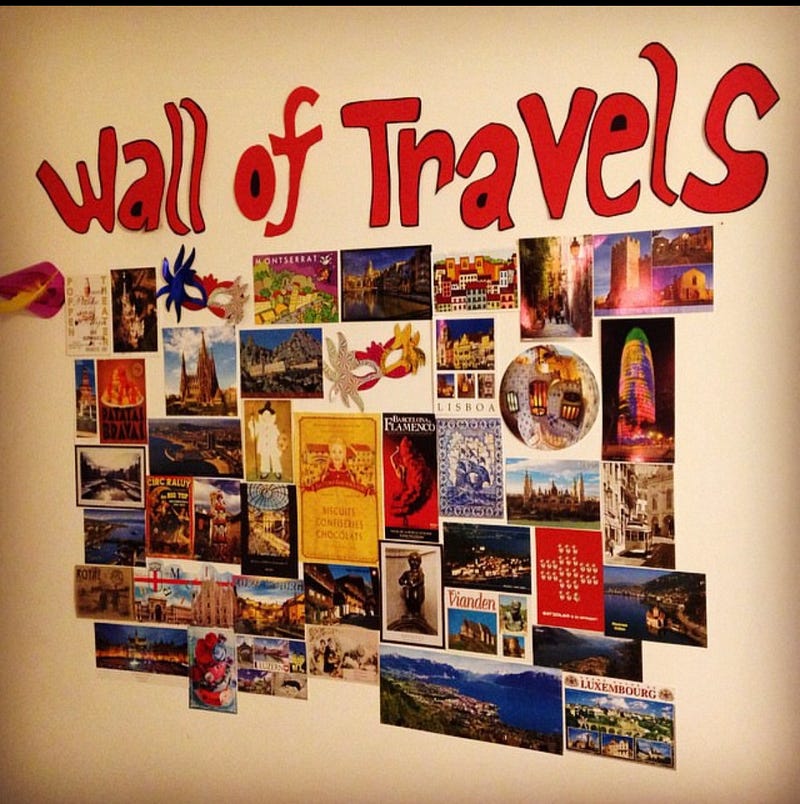
The postcards were on display in a ‘Wall of Travel’ in my room. Each of them bore a story of the places I’ve visited.
Looking at Casa Battlo’s postcard from Barcelona made me reminisce about the six months I was living there. Devouring delicious tapas and vino rojo, cycling on the cobblestoned pavements after a night of sangria and lying on the Mediterranean beaches soaking up the sun.
But there was just one tiny problem. After a while, I was running out of wall space to display my postcards.
As I got older, my interior design style evolved from Eclectic Boho to Boho Chic. Postcards on my wall might have gone well with the Eclectic Boho style, but less so with Boho Chic. It was a bit too messy and distracting.
So off my wall and into a box they went.
Art Pieces
I waited a while to collect this.
As a broke college kid travelling on a student budget, art pieces weren’t something I could afford. But I still went window shopping for it nonetheless.
Gradually, as I became a working woman and started to earn a decent living, I allowed myself to splurge a little on local art pieces.
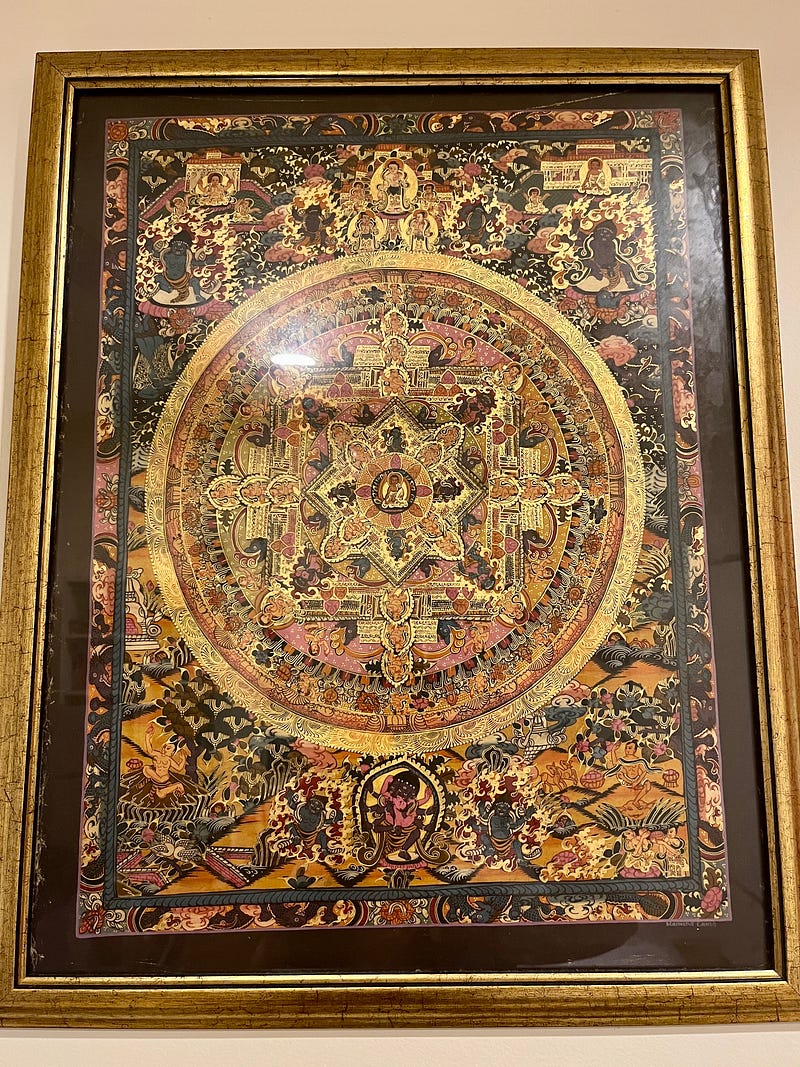
I collect local fabric, tapestry, traditional clothing, jewellery, paintings and sculptures.
I find the process of shopping for art pieces as an opportunity to do a deep dive into the local culture.
Have you tried talking to the artisans about the process of making their artwork? They are usually extremely passionate and very happy to share their process. I’ve chatted with some of them for hours — even those who do not share a common language!
Collecting art pieces from less developed countries is also a way to support artists who usually find it hard to make a living. I avoid big galleries for this reason because they usually display works of artists that have already ‘made it’.
Instead, I will go to local markets and find self-owned gallerias. The small, quaint ones are where the hidden gems lie.
Photographs
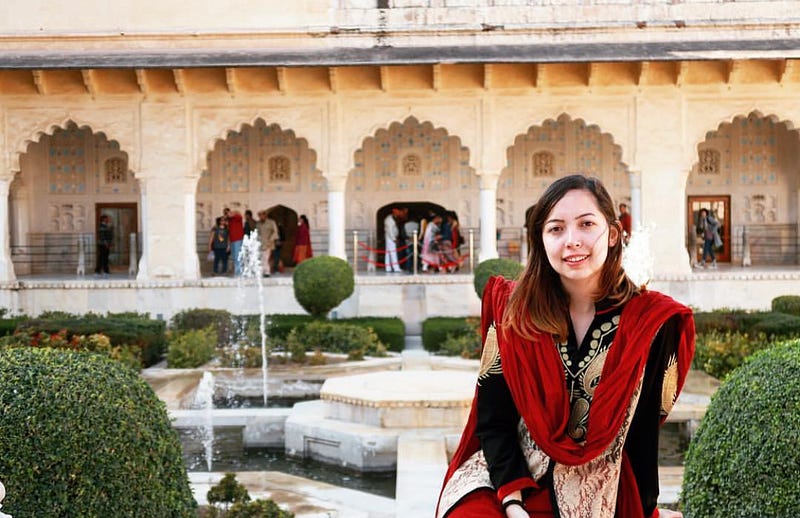
This is something that everyone can afford to collect.
With the advent of cameras on smartphones, anyone can take photographs of the places they visit.
Some will print their photographs, especially those with professional camera equipment. To print high-quality images, you need to capture items in High Definition. Otherwise, the photos will come out all blurry when printed.
Unfortunately, most people will not end up printing the thousands of photos they took in their travels. It will end up sitting in their photo library, never to be looked at again.
Or it will make its way on social media, for friends and connections to get jealous over. And for Facebook to remind them; “Hey, look what you did last year!”.
Local Currency
I honestly didn’t realise that this was a collectable item.
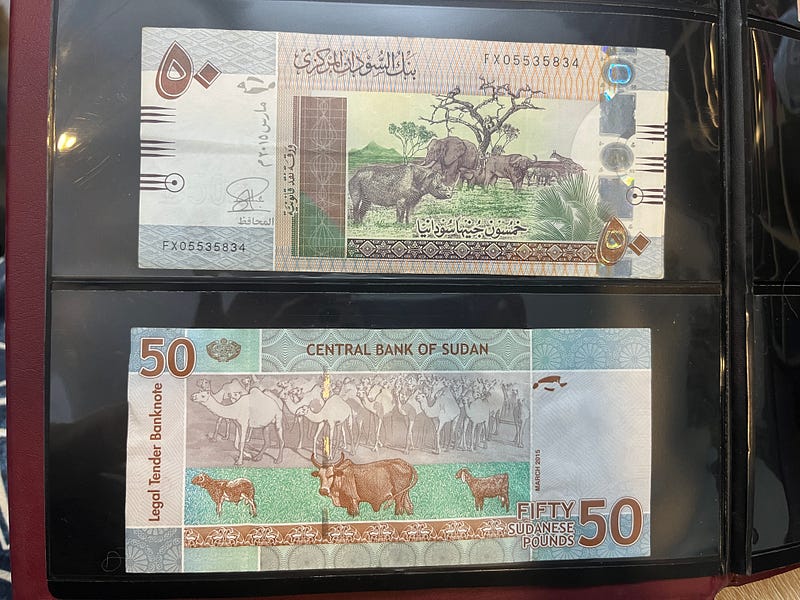
Not until I went to Sudan.
I had a friend whose parents were diplomats stationed in the capital, Khartoum.
It was impossible to obtain the Sudanese currency from where I was living (or anywhere else). So instead, I brought some US Dollars to exchange there.
I thought I could walk up to a money exchanger, whip out my USD, and get Sudanese pounds in return. My friend chuckled at my naivete, and said;
“Changing money at the official money exchangers is a rip-off.”
I stared at him blankly. He proceeded to explain further;
“The official exchange rate at the money exchangers are at least 20 times higher than what you can get at the black market.”
So he called a guy he knew — Mohammad, or Mo for short. We drove our black-tinted windowed car into a dodgy alleyway. Mo entered the car carrying a black trash bag.
We handed him a few thousand US Dollars, and he handed us the whole trash bag. I opened it up and to my surprise, found a mountain of Sudanese pounds.
Mo asked us to count the money, to ‘legitimize’ the deal. We divided the cash between the four of us. We counted quietly, in the dark, just in case the police were watching.
The lengths we went to just to obtain the local currency, is one of my favourite memories from my travels.
Sadly, Sudan has since fallen into a civil war and is on the verge of collapsing. The latest war started in April 2023, and the capital of Khartoum has been bombed to bits. Many people have fled the country, either to neighbouring countries like Chad or to Western countries accepting refugees.
If the economy eventually collapses, the Sudanese pound might even be a thing of the past.
Since that trip to Sudan, I have started collecting currencies from the countries I’ve visited. Especially if they are war-torn countries that are on the verge of disappearing. It might be one of the few remaining artifacts of a nation wiped out by history.
Best thing about collecting currencies? It barely weighs anything and takes up very little space!
Do you have any collectable items you gather from your travels? I would love to hear what they are, and why you love collecting them!
If you would like to keep in touch, feel free to follow me on LinkedIn or Instagram ❤


