Exploring Taoism: A Guide to the Fundamentals
Taoism, also known as Daoism, is an ancient spiritual, philosophical, and religious tradition from China that has shaped the culture and history of East Asia for over two millennia. Central to its ethos is living in harmony with the Tao, a term meaning “the Way” or “the Path.” As a philosophical and religious system, it offers a unique way to perceive and navigate the world.
While it may seem complex to beginners, understanding the basics of Taoism can provide deep insights into a holistic way of life and a serene way of being. This article will introduce the principles, key concepts, and practices of Taoism. Let’s embark on this enlightening journey together.
The Origins of Taoism
Taoism traces its roots back to the late 4th century BCE in China, originating from the works of Lao Tzu, an ancient Chinese philosopher who is traditionally considered the author of the Tao Te Ching. This book, along with Zhuangzi’s self-titled work, forms the foundational texts of Taoist philosophy. Later, as it developed, Taoism absorbed elements of Buddhism and Confucianism, leading to its transformation into a complete religious system with its deities, rituals, and temples.
The Tao: The Central Concept
At the core of Taoism lies the concept of Tao. Tao is an unfathomable, pervasive, and essential force that underlies the universe and everything in it. It is described as “the way” — the eternal, changing, and flowing path of the universe, intrinsic to nature and life itself. Although it’s ultimately beyond human comprehension, it’s possible to align ourselves with its flow and live in harmony with it.
Yin and Yang
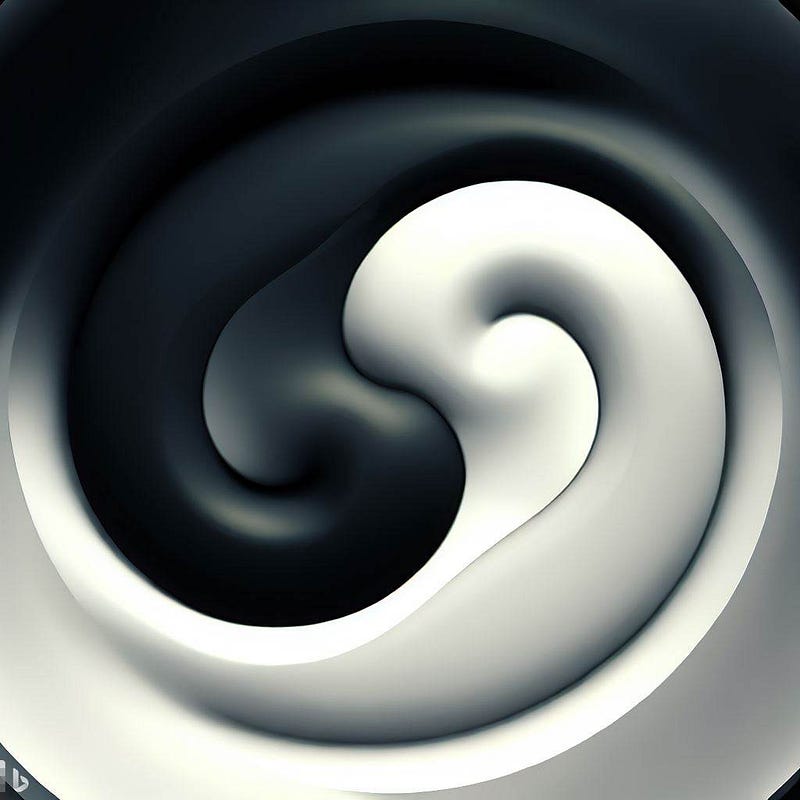
Yin and Yang, two opposing yet complementary forces, form another central Taoist concept. In Taoist thought, the universe functions through the dynamic interaction of these two polarities. Yin represents the receptive, dark, and passive aspects, while Yang symbolizes the active, light, and aggressive aspects. Understanding the interaction between Yin and Yang is crucial to understanding the world and the human condition from a Taoist perspective.
Wu Wei: The Art of Non-Doing
Taoism introduces the concept of ‘Wu Wei,’ which translates to ‘non-doing’ or ‘effortless action.’ It’s not about inaction but about aligning oneself with the flow of the Tao, taking actions that are natural, spontaneous, and not forced. It encourages letting go of resistance and allowing things to happen as they naturally would. By practicing Wu Wei, Taoists believe we can achieve harmony with the Tao and thereby, a state of tranquility and peace.
Pantheism and Immortality
In religious Taoism, there’s a pantheon of gods and goddesses who are personifications of cosmic principles. It also upholds the concept of immortality, not necessarily in the sense of an eternal physical life, but as an ultimate, transcendent state of existence. Practices like meditation, martial arts, and Qigong have been employed in the pursuit of longevity and immortality.
The Five Elements
Another core Taoist concept is the theory of the five elements, which postulates that wood, fire, earth, metal, and water are fundamental elements of the physical universe. Each element is associated with different characteristics and correlates to different aspects of human health and behavior.
The Impact and Influence of Taoism
Taoism has significantly influenced Chinese art, literature, philosophy, medicine, politics, and lifestyle. Its principles are embedded in the practice of Traditional Chinese Medicine and arts like Tai Chi. Beyond China, its impact is seen in Western spirituality, New Age movements, and various art forms globally.
Conclusion
Taoism offers a rich, multifaceted approach to life, embracing complexity and paradox. At its core, it encourages living in harmony with the natural world and the intrinsic patterns of the universe. While the philosophical depth and cultural richness of Taoism cannot be fully encapsulated in a single article, it’s our hope that this overview provides a stepping stone for your exploration of this profound tradition.
Remember, understanding Taoism is not just about intellectual comprehension. It’s about experiencing and embodying its principles in your daily life. As the Tao Te Ching states, “The Tao that can be told is not the eternal Tao.” Only through lived experience can we genuinely start to grasp the essence of the Tao.