
Exploring Paddle-OCR: Performance on Diverse Data Formats and Multilingual Text
This blog stems from my curiosity to research the performance of Paddle-OCR, a robust and versatile optical character recognition (OCR) toolkit. Paddle-OCR offers an array of features and capabilities for extracting text from images and documents, and I was eager to explore its capabilities and limitations.
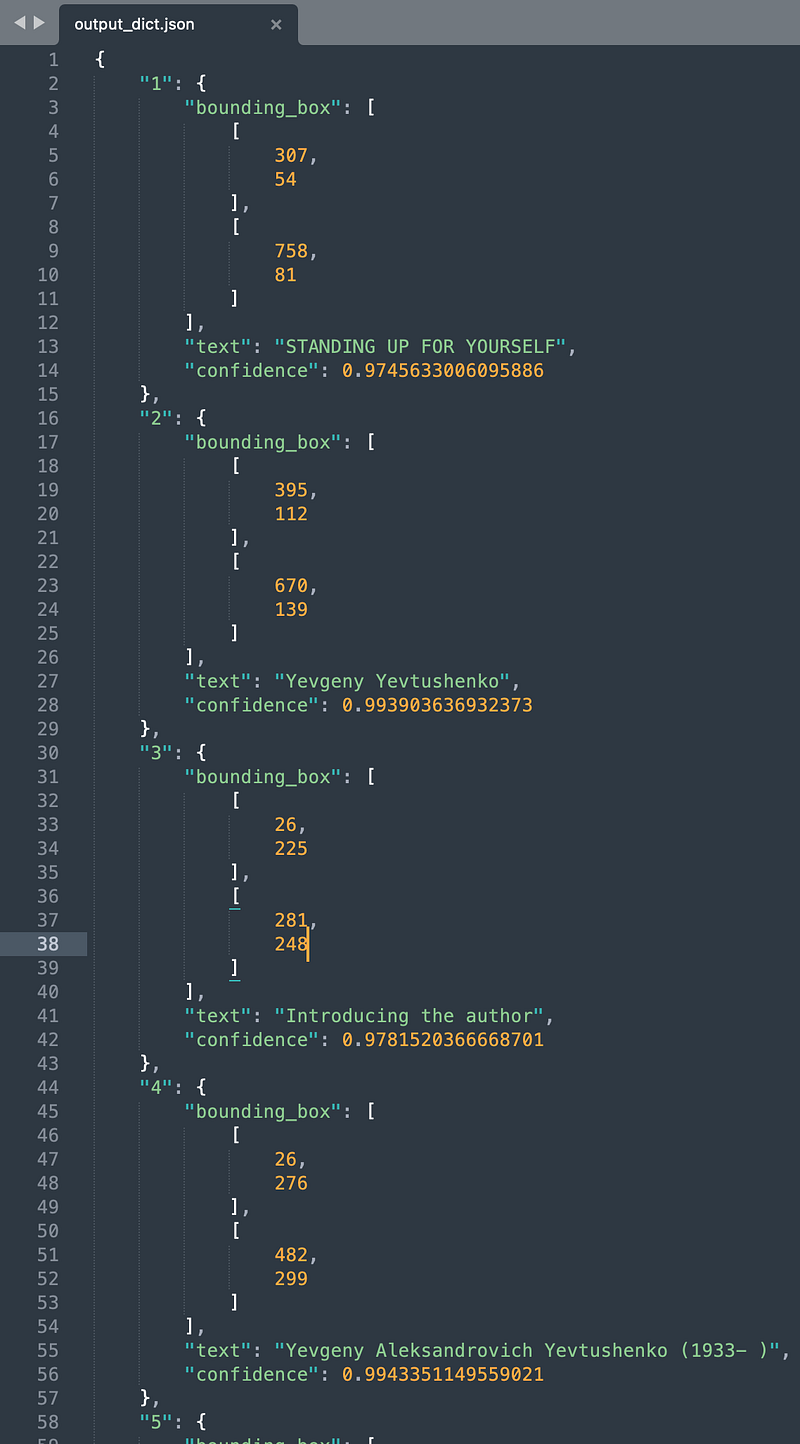
config_dict = {
    "alpha": 1.0,
    "benchmark": False,
    "beta": 1.0,
    "cls_batch_num": 6,
    "cls_image_shape": '3, 48, 192',
    "cls_model_dir": '/Users/prajendr/.paddleocr/whl/cls/ch_ppocr_mobile_v2.0_cls_infer',
    "cls_thresh": 0.9,
    "cpu_threads": 10,
    "crop_res_save_dir": './output',
    "det": True,
    "det_algorithm": 'DB',
    "det_box_type": 'quad',
    "det_db_box_thresh": 0.6,
    "det_db_score_mode": 'fast',
    "det_db_thresh": 0.3,
    "det_db_unclip_ratio": 1.5,
    "det_east_cover_thresh": 0.1,
    "det_east_nms_thresh": 0.2,
    "det_east_score_thresh": 0.8,
    "det_limit_side_len": 960,
    "det_limit_type": 'max',
    "det_model_dir": '/Users/prajendr/.paddleocr/whl/det/en/en_PP-OCRv3_det_infer',
    "det_pse_box_thresh": 0.85,
    "det_pse_min_area": 16,
    "det_pse_scale": 1,
    "det_pse_thresh": 0,
    "det_sast_nms_thresh": 0.2,
    "det_sast_score_thresh": 0.5,
    "draw_img_save_dir": './inference_results',
    "drop_score": 0.5,
    "e2e_algorithm": 'PGNet',
    "e2e_char_dict_path": './ppocr/utils/ic15_dict.txt',
    "e2e_limit_side_len": 768,
    "e2e_limit_type": 'max',
    "e2e_model_dir": None,
    "e2e_pgnet_mode": 'fast',
    "e2e_pgnet_score_thresh": 0.5,
    "e2e_pgnet_valid_set": 'totaltext',
    "enable_mkldnn": False,
    "fourier_degree": 5,
    "gpu_mem": 500,
    "help": '==SUPPRESS==',
    "image_dir": None,
    "image_orientation": False,
    "ir_optim": True,
    "kie_algorithm": 'LayoutXLM',
    "label_list": ['0', '180'],
    "lang": 'en',
    "layout": True,
    "layout_dict_path": None,
    "layout_model_dir": None,
    "layout_nms_threshold": 0.5,
    "layout_score_threshold": 0.5,
    "max_batch_size": 10,
    "max_text_length": 25,
    "merge_no_span_structure": True,
    "min_subgraph_size": 15,
    "mode": 'structure',
    "ocr": True,
    "ocr_order_method": None,
    "ocr_version": 'PP-OCRv3',
    "output": './output',
    "page_num": 0,
    "precision": 'fp32',
    "process_id": 0,
    "re_model_dir": None,
    "rec": True,
    "rec_algorithm": 'SVTR_LCNet',
    "rec_batch_num": 6,
    "rec_char_dict_path": '/Users/prajendr/opt/anaconda3/envs/paddle_env/lib/python3.8/site-packages/paddleocr/ppocr/utils/en_dict.txt',
    "rec_image_inverse": True,
    "rec_image_shape": '3, 48, 320',
    "rec_model_dir": '/Users/prajendr/.paddleocr/whl/rec/en/en_PP-OCRv3_rec_infer',
    "recovery": False,
    "save_crop_res": False,
    "save_log_path": './log_output/',
    "scales": [8, 16, 32],
    "ser_dict_path": '../train_data/XFUND/class_list_xfun.txt',
    "ser_model_dir": None,
    "show_log": True,
    "sr_batch_num": 1,
    "sr_image_shape": '3, 32, 128',
    "sr_model_dir": None,
    "structure_version": 'PP-StructureV2',
    "table": True,
    "table_algorithm": 'TableAttn',
    "table_char_dict_path": None,
    "table_max_len": 488,
    "table_model_dir": None,
    "total_process_num": 1,
    "type": 'ocr',
    "use_angle_cls": True,
    "use_dilation": False,
    "use_gpu": False,
    "use_mp": False,
    "use_npu": False,
    "use_onnx": False,
    "use_pdf2docx_api": False,
    "use_pdserving": False,
    "use_space_char": True,
    "use_tensorrt": False,
    "use_visual_backbone": True,
    "use_xpu": False,
    "vis_font_path": './doc/fonts/simfang.ttf',
    "warmup": False
}
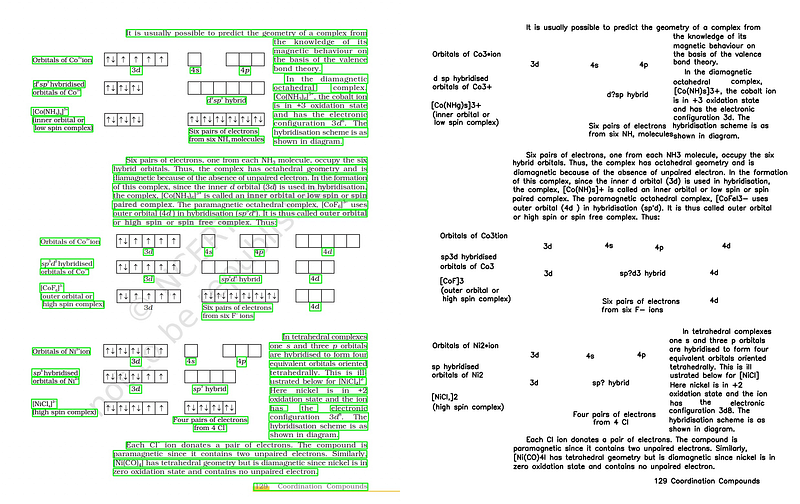
[
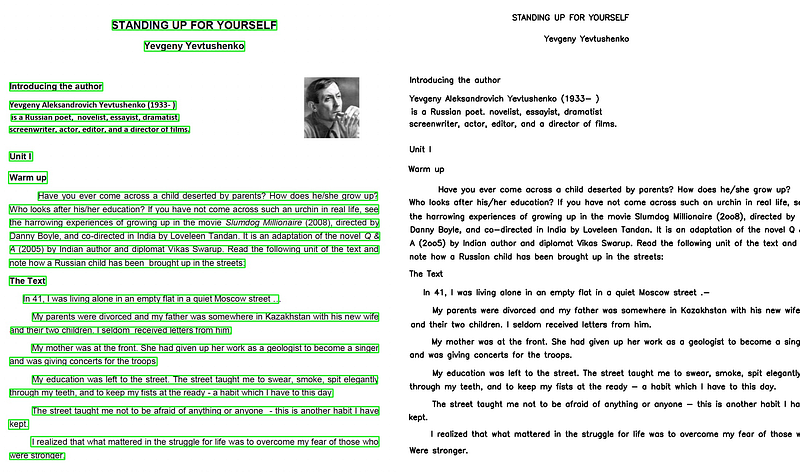
{"dt_boxes num": 26, "elapse": 0.5838239192962646},
{"cls num": 26, "elapse": 0.2507450580596924},
{"rec_res num": 26, "elapse": 8.794885873794556}
]
[
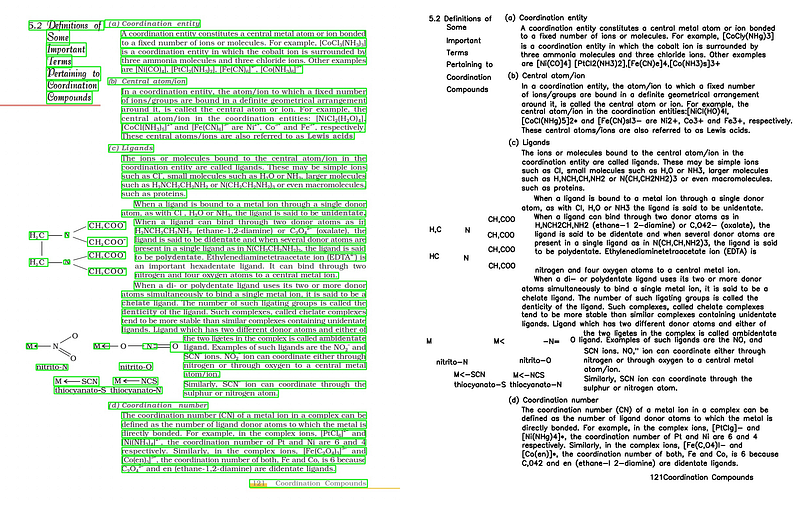
    {"dt_boxes num": 73, "elapse": 0.5404520034790039},
    {"cls num": 73, "elapse": 0.5514864921569824},
    {"rec_res num": 73, "elapse": 18.835140705108643}
]
[
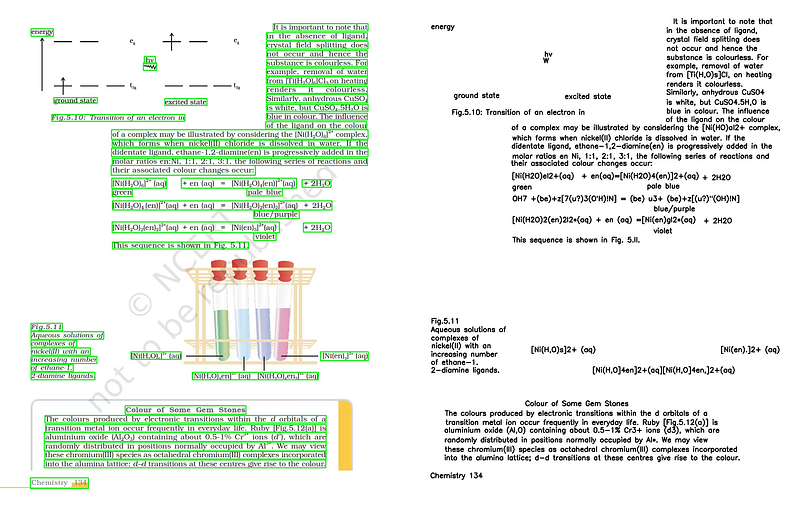
    {"dt_boxes num": 53, "elapse": 0.5971817970275879},
    {"cls num": 53, "elapse": 0.40938377380371094},
    {"rec_res num": 53, "elapse": 9.467683792114258}
]
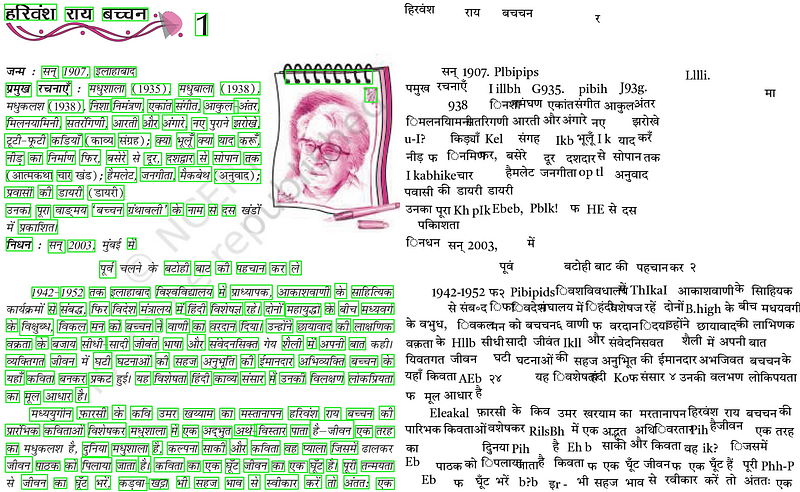
[
    {"dt_boxes num": 89, "elapse": 0.5390758514404297},
    {"cls num": 89, "elapse": 0.6855661869049072},
    {"rec_res num": 89, "elapse": 12.754459857940674}
]
List of languages supported by Paddle-ocr
languages_dict = {
    'ch': 'Chinese',
    'en': 'English',
    'korean': 'Korean',
    'japan': 'Japanese',
    'chinese_cht': 'Traditional Chinese',
    'ta': 'Tamil',
    'te': 'Telugu',
    'ka': 'Kannada',
    'latin': 'Latin',
    'arabic': 'Arabic',
    'cyrillic': 'Cyrillic',
    'devanagari': 'Devanagari',
    'hi': 'Hindi'
}
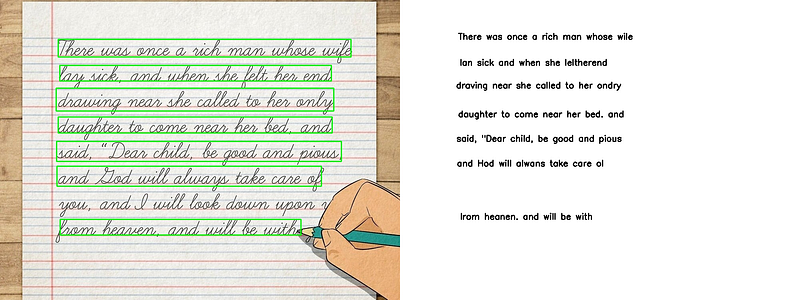
[
    {"dt_boxes num": 248, "elapse": 0.544651985168457},
    {"cls num": 248, "elapse": 1.7124524116516113},
    {"rec_res num": 248, "elapse": 16.015892028808594}
]
[
    {"dt_boxes num": 248, "elapse": 0.544651985168457},
    {"cls num": 248, "elapse": 1.7124524116516113},
    {"rec_res num": 248, "elapse": 16.015892028808594}
]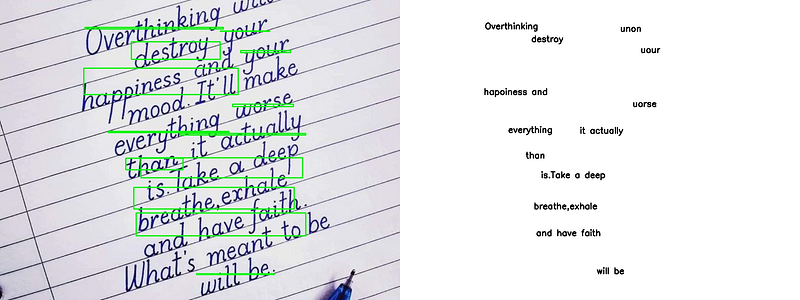
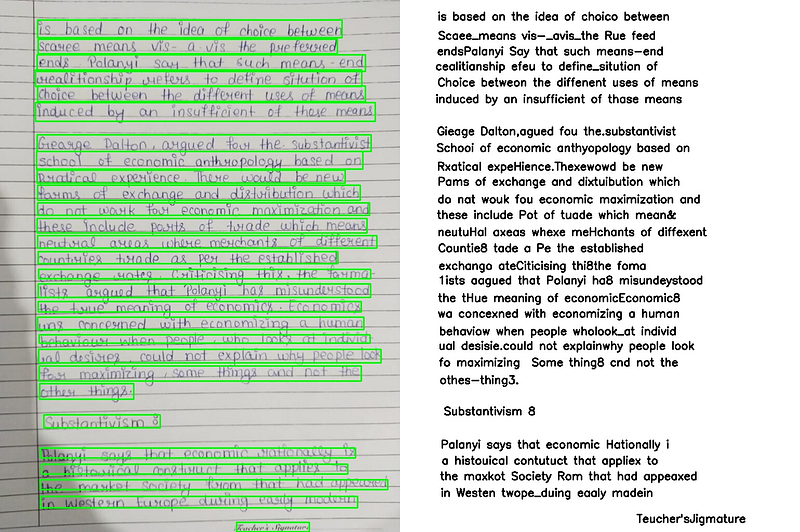
[
    {"dt_boxes num": 15, "elapse": 0.44008684158325195},
    {"cls num": 15, "elapse": 0.12907814979553223},
    {"rec_res num": 15, "elapse": 1.1196460723876953}
]
[
    {"dt_boxes num": 28, "elapse": 0.4684789180755615},
    {"cls num": 28, "elapse": 0.21653985977172852},
    {"rec_res num": 28, "elapse": 7.516796827316284}
]
A quick overview of py-tesseract performance in Figure 1
data = pytesseract.image_to_data(img, output_type=pytesseract.Output.DICT)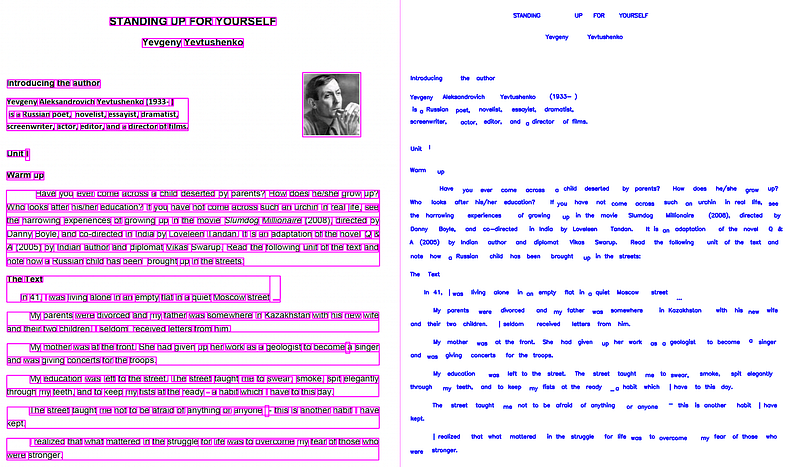
{"dt_bboxes_num":329}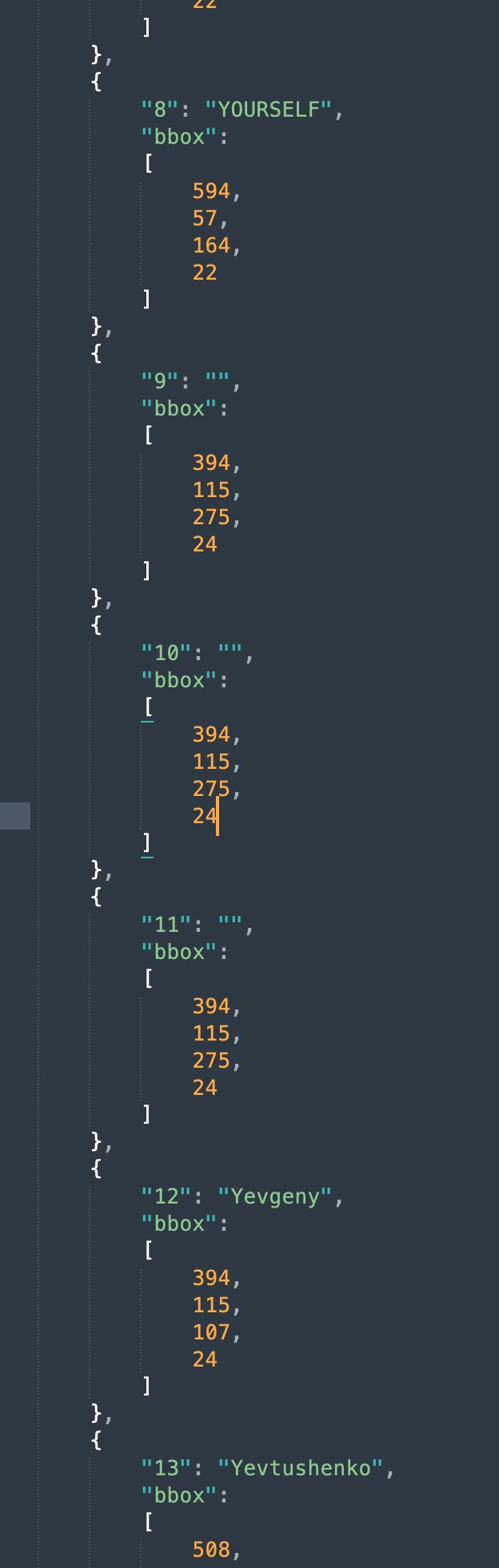
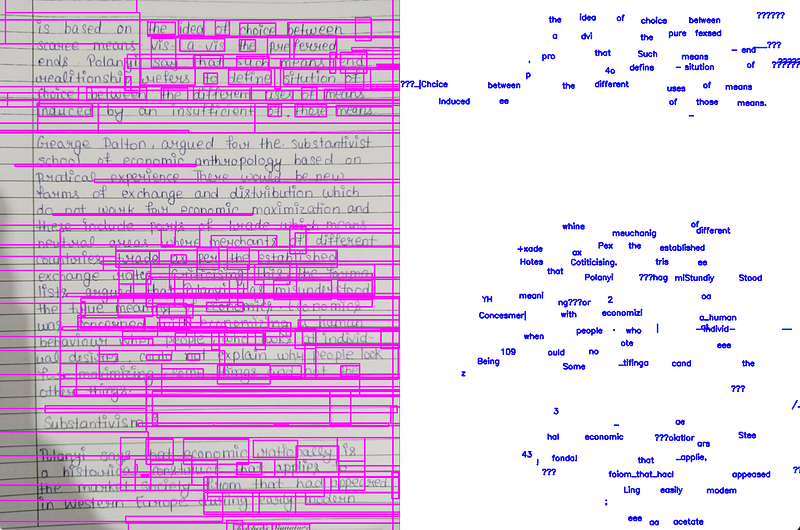
{"dt_bboxes_num":250}Conclusion :
I wanted to see how Paddle-OCR performs on different types of data. I have added a few academic documents in English and an academic document for a regional language Hindi. You may want to experience the fun I had while running all of these images through the PP-OCRv3 version of Paddle-OCR.
I have added two results from py-tesseract also for a fair comparison with their latest mode.
None of the above images were pre or post-processed.


