
Exploring Five Types of Mountains
And how they are formed
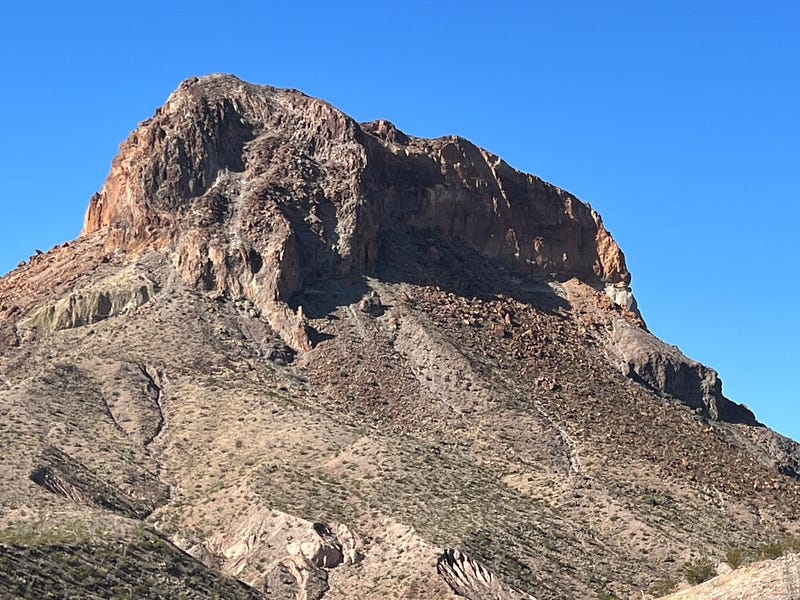
We have traveled from the state of Washington to Missouri to New York. We have traveled from New York to Ohio to Florida and now we are in Texas. As we drive from one state to another we drive through beautiful mountains. I wanted to learn more about them.
Here in southern Texas we have driven through several mountain chains. The Davis, Christmas, Bofecitos, and Chinati mountains are mostly volcanic. Although there have been no eruptions for millions of years.
The first three types of mountains to discuss are all Volcanic Mountains. Movements of tectonic plates create volcanoes along the plate boundaries, which erupt and form volcanic mountains (Earth, 2019). Stratovolcanoes, Shield Volcanoes and Guyots are three examples of Volcanic Mountains that are formed this way (Earth, 2019).
Stratovolcanoes
The first and most important type of volcanic mountains are composite cones or stratovolcanoes (Earth, 2019). Vesuvius, Kilimanjaro, and Mount Fuji are great examples of this kind of mountain (Earth, 2019).
Stratovolcanoes are tall conical mountains composed of layers of hardened lava, tephra and volcanic ash (Stratovolcano, 2019). They are formed when volcanoes erupt. They are characterized by their steep profile and periodic explosive eruptions (Stratovolcano, 2019). They have a steeply rising cone due to a high viscosity of lava material, and eruptions are usually more violent and happen less frequently than in shield volcanoes (Earth, 2019). Since the lava that flows from them is highly viscous, it cools and hardens before it can spread very far (Stratovolcano, 2019).
The source magma of composite stratovolcanoes is classified as acidic, or high in silica to intermediate (Stratovolcano, 2019). This is in contrast to the less viscous basic magma that forms our next type of mountain, the Shield Volcanoes (Stratovolcano, 2019). Other examples of stratovolcanoes include Mount Shasta, Mount Hood and Mount Rainier (Earth, 2019).
Many stratovolcanoes exceed a height of 2500 meters (Stratovolcano, 2019). Mount Rainier’s elevation is 14,411 meters. It was not formed in one great cataclysm, but by many years of volcanic activity (Mount, 2013). It is a famous composite stratovolcano made from sluggish, intermittent lava flows and explosive eruptions of ash and rock layered over time (Mount, 2013).
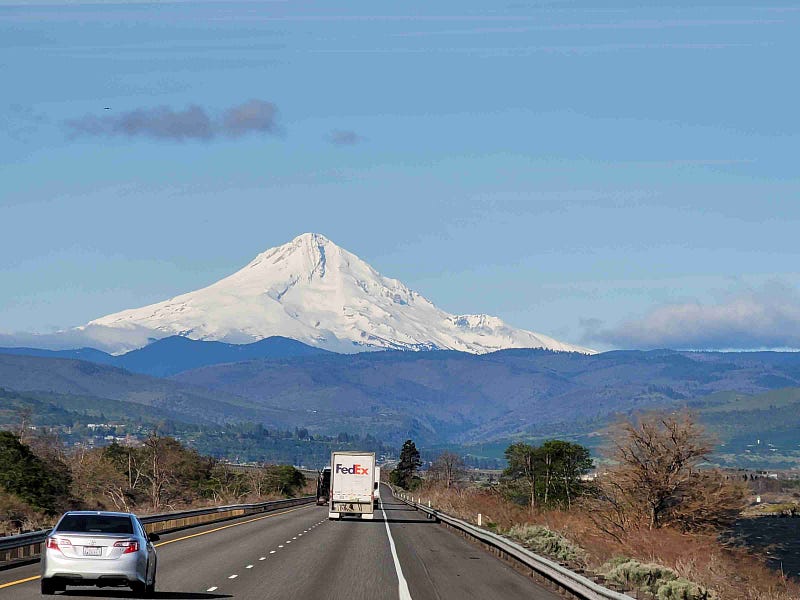
Mount Rainier is about 85 miles southeast of Seattle, Washington
Shield Volcanoes
The second most important type of volcanic mountains are Shield Volcanoes such as Mauna Loa on the Big Island of Hawaii (Earth, 2019). This is a hotspot volcano. It is one of the largest volcanoes on Earth (Shield, 2019). Hotspots are supplied by a magma source in the Earth’s mantle called a mantle plume (Earth, 2019). Mauna Loa has a gently sloping cone due to the low viscosity of the emitted lava material, which is primarily basalt (Earth, 2019).
Shield volcanoes are broad and wide with shallow sloping sides (Shield, 2019). These volcanic mountains are formed by easily flowing lava, so consequently, a volcanic mountain having a broad base profile is built up over time by flow after flow of relatively fluid basaltic lava issuing from vents or fissures on the surface (Shield, 2019). All the volcanoes in the Hawaiian Islands are Shield Volcanoes (Shield, 2019). There are also shield volcanoes in Washington, Oregon and the Galapagos Islands, as well as the Piton de la Fournaise on Reunion Island, which is one of the more active shield volcanoes on Earth, with one eruption per year on average (Shield, 2019).
Mauna Loa shares the properties of island arc volcanoes and has mainly effusive eruptions.
Guyots
A third type of volcanic mountain is a Guyot. This is an isolated underwater volcanic mountain also known as a Seamount, with a flat top more than 200 meters below the surface of the sea (Britannica, 2018). They are usually found in deep ocean basins but can be found chiefly in the Pacific Ocean (Britannica, 2018).
Guyots can form a chain of seamounts as the ocean plate moves slowly over a hot spot that remains stationary under the plate (Guyot, 2015). Their sides are slightly concave, like other submarine volcanoes and volcanic islands, and they rise gently from the surrounding deep-sea floor and steepen to about 20 degrees at their summit (Britannica, 2018).
Volcanic activity under the ocean is what forms guyots (Guyot, 2015). They originate as volcanic islands at the shallow crests of mid-ocean ridges, and then almost immediately after their formation, are truncated by wave erosion (Britannica, 2018). Seafloor spreading at the rate of several centimeters per year, causes them to become more deeply submerged with time (Britannica, 2018).
Guyot landform characteristics include being a volcanic mountain under the ocean, having a flat top at least 660 feet in diameter and standing at least 3,000 feet above the seafloor (Guyot, 2015). One of these is the Hawaiian-Emperor Seamount Chain that includes the Hawaiian Islands and many guyots.
The Meiji Seamount is a guyot from this chain and is considered to be the oldest of the seamounts that form the Hawaiian-Emperor Chain (Guyot, 2015). It is estimated to be about 82 million years old. It lies at the northeast end of the chain (Guyot, 2015).
Two other famous guyots are the Bowie Seamount from the Pratt-Welker/Kodiak-Bowie Seamount Chain in the Pacific Ocean, and the Great Meteor Seamount in the Atlantic Ocean (Guyot, 2015).
I don’t believe I will ever physically see a guyot mountain for myself.
Fold Mountains
Now that we have discussed three types of Volcanic Mountains, let’s talk about a fourth type of mountain known as Fold Mountains. When plates collide or undergo subduction the plates tend to buckle and fold, forming fold mountains (Earth, 2019). Most of the major continental mountain ranges are associated with thrusting and folding or orogenesis (Earth, 2019).
Examples of fold mountains are the Appalachian Mountains, the Jura and the Zagros Mountains (Earth, 2019). The Zagros fold and thrust belt was formed by the collision of two tectonic plates, the Eurasian plate and the Arabian plate (Zagros, 2019). The Zagros Mountains are continuing to grow as the process of collision continues to this day (Zagros, 2019).
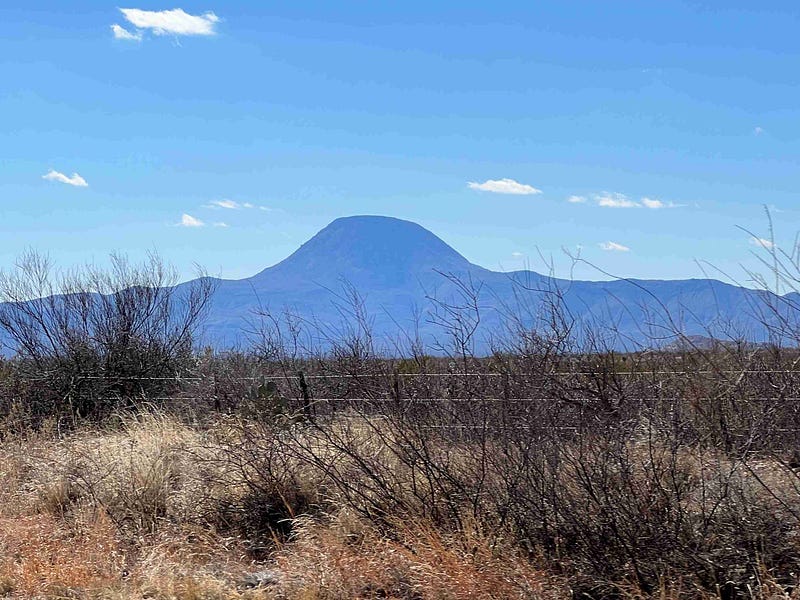
Just north of Big Bend National Park are folded mountains in the Quachita Fold Belt Range. These are comparable in age to the Appalachian Mountains. Santiago Peak sits at 6,521 feet high is a high flat-topped mountain that was once a mass of molten magma that cooled and hardened under the ground and was uncovered later by erosion.
These mountains are completely of sedimentary origin and are primarily made of limestone (Zagros, 2019). Stresses induced in the Earth’s crust by the collision caused extensive folding of the preexisting layered sedimentary rocks (Zagros, 2019). Zard-Kuh is a specific fold mountain within the Zagros Mountain Range in Iran (Earth, 2019). It stands at a little over 4200 meters in elevation. It is an ultra-prominent peak, or Ultra for short, which is a mountain summit with a topographic prominence of 1500 meters or more.
Block Mountains
Finally, a fifth type of mountain to discuss would be Block Mountains. Block Mountains or fault-block mountains form when a fault block is raised or tilted (Earth, 2019). A spreading apart of the surface causes tensional forces, and when these forces are strong enough to cause a plate to split apart, it does so such that a center block drops down relative to its flanking blocks (Earth, 2019). An example of this is the Sierra Nevada Range, where delamination created a block 650 km long and 80 km wide that consists of many individual portions tipped gently west, with east facing slips rising abruptly to produce the highest mountain front in the continental United States (Earth, 2019). It has long been recognized that the Sierra Nevada is an uplifted, tilted block of the Earth’s crust (James, 2019).
A major fault zone bounds the block on the east, and it was along this that the great mass was uplifted and tilted westward (James, 2019). Though the massive uplift began many millions of years ago, much of it occurred just in the past two million years (James, 2019).
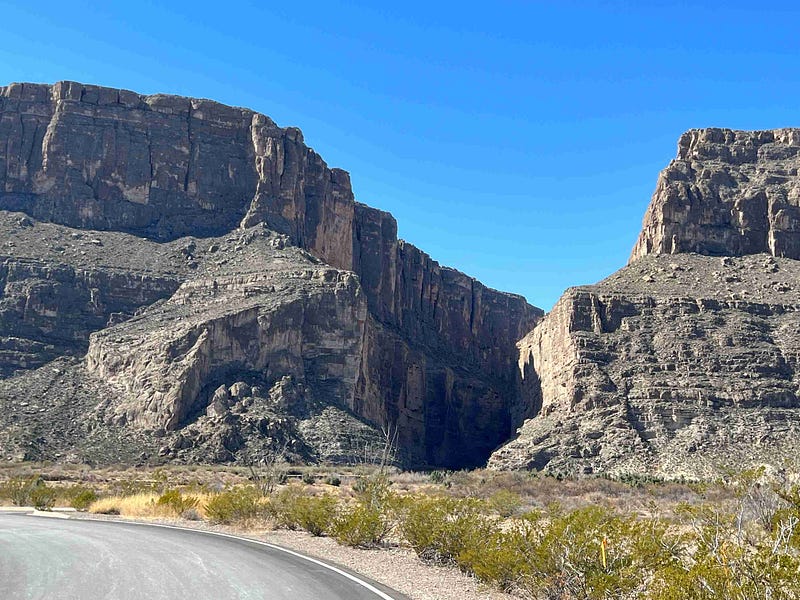
The Rio Grande River we are exploring this month did not carve out the canyons and valleys. Rather, the canyons and valleys appeared first. This “rift valley” is a separation in the earth’s crust caused by faulting and other earth movements when the North American and Pacific plates scraped against each other some twenty-nine million years ago (Tingley, 2021).
References
Britannica, T. E. (2018, October 26). Guyot. Retrieved June 18, 2019, from https://www.britannica.com/science/guyot
Earth Science, Lumen Learning, 2019, https://courses.lumenlearning.com/earthscience/
Guyot Landforms. (2015). Retrieved June 18, 2019, from http://worldlandforms.com/landforms/guyot/
James, J. W., & Eardley, A. J. (2019, February 21). Sierra Nevada. Retrieved June 18, 2019, from https://www.britannica.com/place/Sierra-Nevada-mountains
Mount Rainier National Park. (2013). Retrieved June 18, 2019, from http://www.ohranger.com/mt-rainier/mount-rainier-history
Shield Volcano. (2019). Retrieved June 18, 2019, from https://www.sciencedaily.com/terms/shield_volcano.htm
Stratovolcano. (2019). Retrieved June 18, 2019, from https://www.sciencedaily.com/terms/stratovolcano.htm
Tingley, P. W. (2021, January 16). The Rio Grande Gorge and the geology that formed it. Discover New Mexico. Retrieved February 9, 2023, from https://www.discovernewmexico.com/rio-grande-gorge-geology
Zagros Mountains. (2019, May 26). Retrieved June 18, 2019, from https://en.m.wikipedia.org/wiki/Zagros_Mountains
Photo Credits
Meiji Seamount — http://i.bnet.com/blogs/110609-google-seafloor.png


Mount Rainier — https://cdn.cnn.com/cnnnext/dam/assets/181026171456-mount-rainier-volcano-exlarge-169.jpeg

Sierra Nevada — https://www.mountainprofessor.com/images/xyosemite-valley2.jpg.pagespeed.ic.lk87BefZVk.jpg

Zard-Kuh — https://footage.framepool.com/shotimg/qf/594902878-zard-kuh-chelgard-zagros-mountains-kuhrang.jpg
