
Explore Exotic & Delicious Vegetables
We are missing out on 99.99% of edible crops.
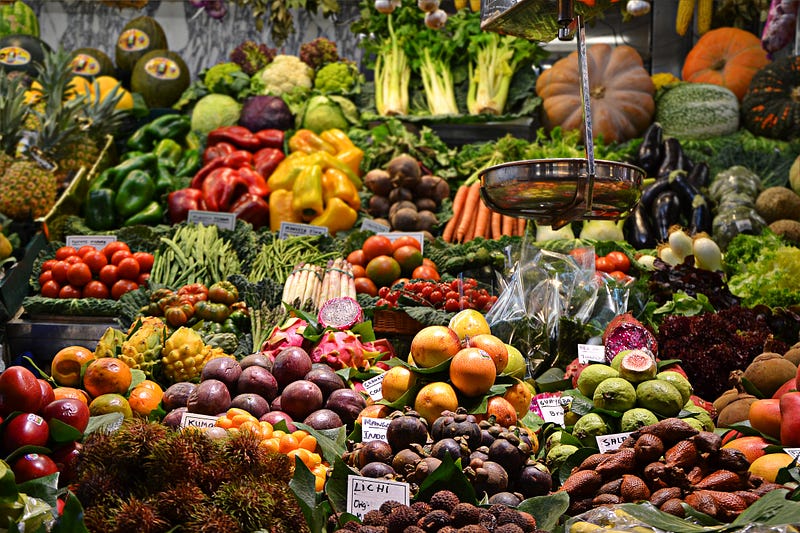
So many vegetables, so little time.
It’s been my frequent lament since I realized I was missing out on most of the vegetables in the world.
Just since the 1900s, experts estimate that the world has lost 75% of plant genetic diversity as farmers focus on the most popular and productive crops.
Young green luffas, orange Poona Kheera cucumbers, delicate winged beans.
No, I wasn’t lucky enough to have grown up eating these delicacies. It was not until I became an organic vegetable farmer that I realized I’d been missing out on the vast variety of produce.
On our farm, we were always eager to find new vegetables that would produce in the unique climate of Central Texas. It can drop to 15 degrees Fahrenheit in January and be 107 and humid in August, challenging to many plants.
Plants for the Future, a nonprofit that has over 8,000 plants in their database, estimates there are over 20,000 species of edible plants in the world. Yet only 20 species produce 90% of our food, leaving humans vulnerable to disruptions in supply.
A treasure trove of vegetables to sample.
What are some of these vegetables that are well known in Japan, India, Korea, the Philippines, China, and countries in Southeast Asia and mostly unfamiliar in the United States?
Filipino people look for hyacinth beans, bitter melons. Japanese cooks get frustrated at the lack of a steady supply of daikon radishes. Thai customers look for green eggplants and lemongrass. Bitter melons, and cuccuzi, and luffas. Did you know that the same luffas, which many of us know as bath sponges, are delicious while young?
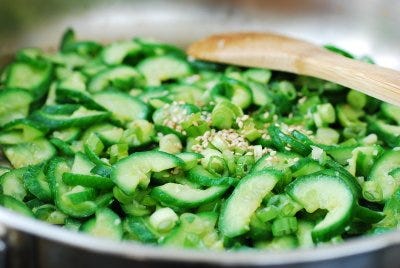
It’s 101 Fahrenheit here today, but the yard-long beans are producing well, and I’ll enjoy sauteed cucumbers for supper. I can’t resist sharing some unusual facts about cucumbers with you and the recipe for Korean Stir-fried Cucumbers (Oi Bokkeum).
The much-loved cucumber has been grown for over 3,000 years.
This makes it one of the oldest cultivated crops in the world. They are believed to originate in the northern sub-Himalayan plains of India and then spread to China, Korea, and beyond.
Cucumbers may be known as huang gua or huang kwa in China, kakri in India, boloo take in Indonesia, and hebi kuri in Japan. Sauteed, pickled, or eaten raw—it’s one of the most popular vegetable in Asia.
In the United States, we are most familiar with the familiar green cucumber eaten fresh or preserved into dill pickles. I was amazed at the many vegetables are called cucumbers even though they are not all cucurbits, some are melons and even gourds.
The thinned skinned suyo long and painted serpent cucumbers (Cucumis melo) were developed in Japanese breeding programs. Ordinary garden cucumbers (Cucumis sativus) were crossed with melons to produce sweeter fruits, and this also allows them to grow in our extreme summer heat.
Dosakayi is a small, round yellow cucumber with a mild sweet taste that I love for cooking. It is used extensively in the preparation of stews and curries, particularly during the summer season in southern parts of India and Sri Lanka.
A long, sweet cucumber that did very well in our hot, humid climate is Jibai Shimoshirazu, a slicer from Japan.
All of the cucumbers have similar cultural requirements.
They need better than average fertility and steady water. Plant seeds outside when the soil temperature averages 60 F or warmer. Nearly all cucumbers are strongly vining and can be trained to grow on a trellis or fence.
Traditional garden cucumbers tend to become bitter when the average temperature is over 85 F. In extremely hot climates, I recommend pickling cucumbers, some of the Japanese varieties, and the melon cucumbers such as painted serpent or Armenian varieties.
It’s too late in the northern hemisphere to order seeds, plant, and get a harvest this year. But take some time to visit the seed companies listed below, be adventurous, and try some new vegetable varieties next year. You’ll be glad you did.
Recipe from Korean Bapsun A Korean Mom’s Home Cooking
Stir-fried Cucumbers (Oi Bokkeum)
Quick and easy Korean cucumber side dish Servings: 4 Author: Hyosun
Ingredients
1 pound Persian cucumbers 1–1/2 teaspoons salt 2 teaspoons vegetable or canola oil 1/2 teaspoon minced garlic 1 scallion finely chopped 1 teaspoon sesame oil 1/2 teaspoon sesame seeds
Instructions
Cut the cucumbers in half lengthwise, and then thinly slice crosswise slightly diagonally. If the cucumbers are thin, you can simply cut into thin rounds.
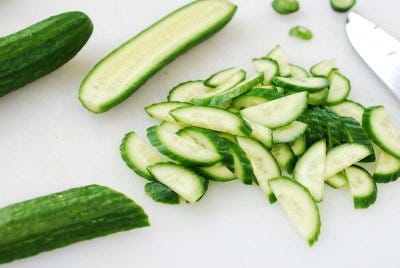
Toss the cucumber slices with one and a half teaspoons of salt to coat evenly. Let sit for 5 minutes.
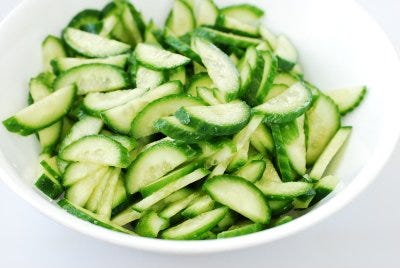
Squeeze as much water out from the cucumber slices as possible. Don’t worry about bruising them. They will recover when stir-fried.
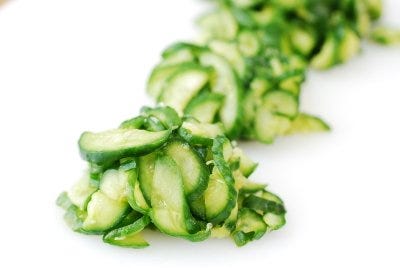
Heat a pan over high heat. Add 1/2 tablespoon of cooking oil. Quickly stir in the garlic. Add the cucumbers. Stir-fry for a minute until the cucumbers are slightly cooked. Turn off the heat. Toss well with the scallion, sesame oil, and sesame seeds.
A few suggested seed sources:
Baker Creek Heirloom Seeds http://www.rareseeds.com
B & T World Seeds A fantastic list of over 45,000 species and varieties. http://b-and-t-world-seeds.com/
Seed Savers Exchange http://www.seedsavers.org
Kitazawa Seed Company is the oldest seed company in America specializing in Asian vegetable seeds. https://www.kitazawaseed.com/all_seeds.html
All of these cucumbers have similar cultural requirements. They need better than average fertility and steady water. Plant seeds outside when the soil temperature averages 60 F or warmer. Nearly all cucumbers are strongly vining and can be trained to grow on a trellis or fence.
Traditional garden cucumbers tend to become bitter when the average temperature is over 85 F, so in very hot climates, I recommend either pickling cucumbers or the melon cucumbers such as painted serpent or Armenian varieties.
It’s too late in the northern hemisphere to order seeds, plant, and get a harvest this year. But take some time to visit the seed companies listed below, be adventurous, and try some new vegetable varieties next year. You’ll be glad you did.


