
Explaining American Racism to My Romanian Friends
My European friends are asking difficult questions about what’s happening back in the States
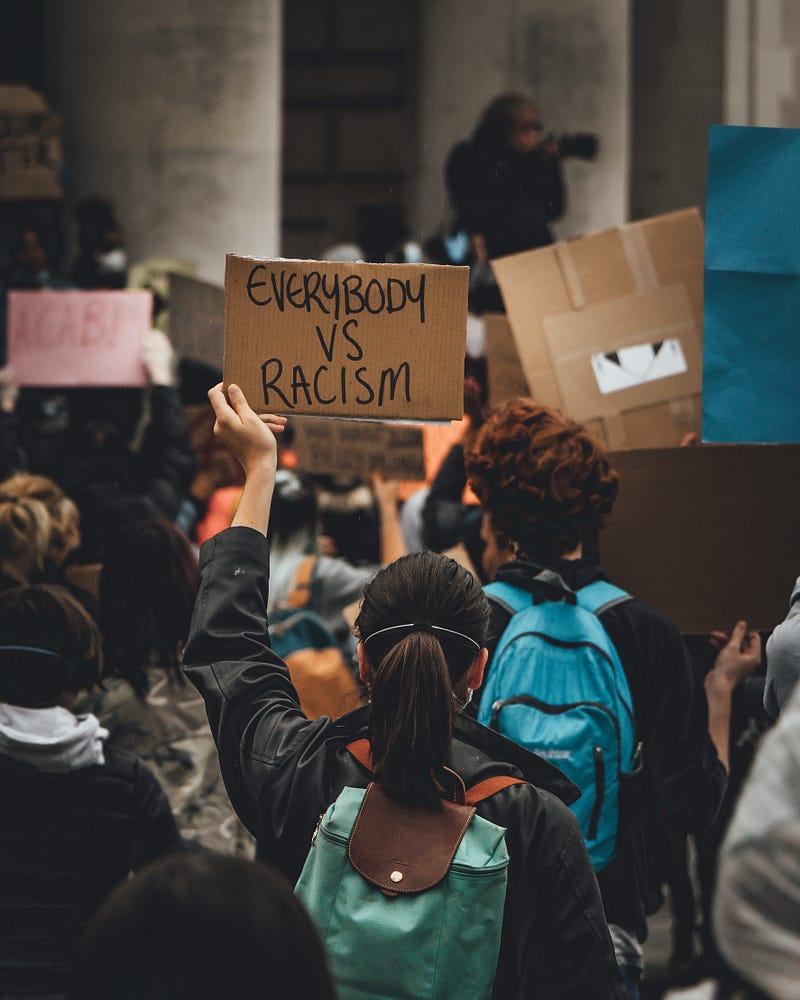
It’s nearing the end of summer and I’m sitting at a coffee shop off Ştefan cel Mare in Iași with my friend, Adrian. We’re chatting when he shifts the topic to the protests in the US and the BLM movement. He sips his cappuccino and regards me thoughtfully, “Is America a racist country?”
As an American living abroad, I get this question often these days, but racism isn’t unique to the US. Anywhere you find people, you’ll find racism. Here in Romania, I most often hear it aimed at the Romani people, but I rarely hear racist vitriol aimed at other ethnic groups. In the US, with our melting pot of immigrants from all over, we put our unique twist on racism. To give you an idea of why Black Lives Matter is so prominent in the States, it’s important to understand the US’s long, pathetic recovery from slavery and segregation.
I grew up in Texas in the 1980s, where it wasn’t uncommon to hear a racist slur or joke. However, it wasn’t until university I witnessed how being black was a potential crime in America. Several times a week, I jogged through my university’s surrounding neighborhood of large, expensive homes. One day, my friend Harvey, a black student from Detroit, jogged with me. We finished our run and were walking back to campus when a police officer in his patrol car stopped us. He questioned what we were doing on the street. When I told him we were students at the university, he let us go. Before the officer left, I asked him why he stopped us. He said a neighbor reported suspicious men walking down the street.
I remarked to Harvey how strange it was since I often ran this same route. He laughed and asked if I ever ran it with a black man. I smiled but the truth was I hadn’t.
“Do you regret leaving Detroit and coming down to Texas?” I asked him.
He replied without thinking, “It’s easier living in Dallas than Detroit because up there, I never know if a white person is racist. Here in Texas, I assume all of you are.” His words stayed with me for 28 years.
The seed for Black Lives Matter was planted the moment the first slave set foot in the Americas in the 15th century. European colonial powers built economies on the backs of slave labor, and the American slave trade continued for almost four hundred years. In 1865, Congress passed the 13th Amendment, abolishing slavery in the United States. The freed slaves then seamlessly integrated into white society and everyone was happy, making America great for the first time. Except that didn’t happen.
“Okay,” Adrian says, “but you had Obama as president. With a black president, isn’t it time to move past slavery?”
Adrian has a point, but Obama was the one black man in a sea of white men, and no women, who’ve served as president. He had to be exceptional to achieve what he did because he didn’t possess a famous political name like Adams, Kennedy or Bush, nor did he benefit from a wealthy father, like Trump. He became the first black president of the Harvard Law Review while at law school, then served as both a state and US senator before becoming president.
In terms of moving past slavery, the US doesn’t make it easy. As an alumnus of Robert E. Lee High School, the general who led the southern Confederate states in the war against the US constitutional government, I assure you America clings to its antebellum past. Recently, we’ve seen monuments of Confederate leaders removed from public spaces, but not without protests. In 2020, some Americans are furious society decided it was time to stop honoring those who fought for the right to own slaves. Like these people, I was taught as a child we honored our southern heritage when we flew the battle flag of the Confederacy outside my school. I was taught we should remember the brave southern men and women who fought for states’ rights against the tyrannical north. All these teachings are wrong, but they put a romantic spin on the Civil War and made defending slavery palatable. This was the most effective PR campaign in US history.
And freedom from slavery didn’t mean equality for black people. We gave newly freed black men the right to vote in 1870, but poll taxes, literacy tests, and other discriminatory measures thwarted their ability to exercise that right until the Voting Rights Act of 1965 and a Supreme Court decision in 1966. It took almost 100 years for the US to ensure black men and women could vote, although new discriminatory practices arose to suppress minority voting.
Meanwhile, America denied blacks access to the same education, employment, housing, and opportunity enjoyed by white people until the Civil Rights Act ended the Jim Crow laws that legalized racial segregation. While the movement had concerted backlash, by 1968, blacks could eat at the same restaurants, move into the same neighborhoods, and attend the same schools as white people. Sort of.
Look at voting maps from 2016’s presidential election and you’ll see a pattern of cities voting Democrat (blue) and suburban and rural areas voting Republican (red). From 1950 to 1980, white Americans executed a mass exodus from cities to the suburbs. With black people in their schools, neighborhoods, and grocery stores, many white families left the cities for homes springing up beyond large population centers. They took jobs and economic opportunities with them. The boom in US suburbs wasn’t entirely about race, but safe, often gated, communities were a big selling point. You may have heard President Trump recently reference how scared suburban moms are at the prospect of a Joe Biden presidency. His clumsy appeal to his base said I’ll keep the suburbs safe and white.
Local property taxes fund the vast majority of our schools. If you live in the wealthier suburbs, you’ll likely have better-funded schools. As income inequality grows, the achievement gap between rich and poor schools increases, disproportionately affecting minorities.
These details are important for answering Adrian’s question about whether America is racist. It is one thing to say racism exists in a country, and another to say a country is racist. The latter implies racism is systemic, woven into the fabric of a nation beyond its populace. Systemic means the infrastructure of society continues to provide one race more opportunity than another, even if you remove all the people with conscious or unconscious racist tendencies.
In the US, the typical white family enjoys a 10X greater net worth than the typical black family. Poorer neighborhoods, underfunded schools, and fewer economic opportunities contribute to this gap for black families, but much of the wealth in the US is intergenerational. Parents pass down wealth to their children and grandchildren. Due to hundreds of years of institutional racism, blacks had less time to accumulate personal wealth, and according to recent economic studies, inheritance and familial gifts “account for more of the racial wealth gap than any other demographic and socioeconomic indicators.” With even white American workers earning less now than they did 40 years ago, intergenerational wealth is crucial to achieving the American dream. Being born black means you have less of a chance to achieve that dream.
Black Lives Matter isn’t just about the latest black person shot by police. It is about a long history of devaluing the lives and livelihoods of black people. Why is all this coming to a head now?
The Black Lives Matter movement began in the US in 2013 after a jury acquitted a man named George Zimmerman for killing a 17-year-old black boy named Trayvon Martin. Like what happened with my friend Harvey, a neighbor deemed Trayvon Martin ‘suspicious.’ That neighbor, George Zimmerman, was not a police officer, but he patrolled the neighborhood, engaged in a confrontation with Trayvon Martin, then shot the teenager. Zimmerman’s controversial acquittal sparked public outrage, and soon #blacklivesmatter appeared online.
The movement continues on, coming to national attention every time a killing of a black person makes major headlines:
- Eric Garner — Killed by NY police in 2014 on suspicion of illegally selling cigarettes.
- Michael Brown — Teenager killed in 2014 by police on suspicion of stealing cigars.
- Tamir Rice — 12-year-old boy killed by police while playing with a toy gun.
- Breonna Taylor — Killed by police when they broke down her apartment door in the middle of the night, executing a no-knock warrant, and shot her eight times.
Each of these killings sparked protests, especially as none of the officers involved were prosecuted for killing someone. On September 23, 2020, one officer involved in Breonna Taylor’s death was charged with wanton endangerment, but not manslaughter. He might be prosecuted for shooting a wall but not a human being. Of the 1,944 black people killed by police from 2013 to 2019, only 3% of the officers had charges brought against them. Courts convicted fewer than 1% of the officers involved. The US is a country where you are 3.23 times more likely to be killed by police if you are black and the killers will almost certainly go free.
Yet, I have friends back home telling me they want the protests to end. They insist the media focuses too much attention on police accountability. They complain NBA players, 3/4 of whom are black, should stop talking about racial inequality. They demand American football players who kneel in peaceful protest during the national anthem stop being a distraction. What kind of protest will white America tolerate? None, apparently. People opposing BLM insist all lives matter, but statistics suggest some lives matter less than others.
To this point, I’ve addressed Adrian’s question via the black American experience. There are entire columns to write about other appalling examples of racism: Asian internment camps, forced hysterectomies on immigrant women (including new allegations at immigration detention centers), Native American genocide. I didn’t get into how if you’re white and commit a crime, you’re more likely to have criminal charges dropped or reduced to a lesser sentence. I didn’t mention when President Trump said Haitians and Africans are from shithole countries, or when he referred to Mexican immigrants as criminals and rapists, or when he pandered to white nationalists by insisting their group includes “some very fine people.” I’ve yet to mention a president who makes racist remarks will probably receive at least 40% of the vote on November 3rd, and possibly be re-elected.
Yes, Adrian, the US is racist. From a distance, American racism might not seem so bad. It’s like an odd mole on your arm. On the surface it appears benign, but below there’s a toxic cancer spreading. We can ignore it and pretend it’s fine, because superficially it is manageable, or we can reconcile ourselves to an invasive procedure of truth and change. If the US is going to be the country we claim to be, we must address the inequality metastasizing beneath our shiny veneer. The protests, the people speaking out, the athletes kneeling, and the civil unrest are part of the treatment, and as long as all that continues there’s hope we can recover. It’s naive to think racism can be cured, but it can be put into remission. Then, the next time someone asks if the US is racist, I can say we were, but things are changing for the better.
A version of this article ran in VICE


