
Experimenting With Your Writing Is the Key to Creativity, Inspiration and Growth
Step outside your comfort zone and try new ways of expressing yourself to continue growing as a writer.

I love finding new ways to express myself, and new formats and forms I can use to do this. Often, this comes from reading other writer’s work. I’ve spoken before about the importance of reading. Not just skimming to get the main point, or glancing over the content to determine if you will like, clap, comment or whatever, really read to understand at a deeper level.
I’ve written about using what you read and the comments that your reading elicits as a starting place for generating new topics to write about and that’s important for those of us who do want to write frequently. But reading can also provide other benefits such as exposing you to writing styles, genres, and forms that you are not familiar with but which catch your attention.
Don’t be afraid to try something new and experiment with your writing. It may fall flat or simply fail altogether, to the point you don’t want to even put it out there. That’s okay.
I know many of us who are trying to make a career out of our writing, feel that if we put time and effort into a piece it needs to be able to be published. I definitely have that problem. When I try something new and feel it is not worth publishing I can get very frustrated which sabotages further writing efforts for hours or possibly the rest of the day.
Despite this negative effect on my productivity, often I will come back to it once my mood improves and take another look. This may reinforce the reality that the piece is unpublishable or I may see a new way to approach it and shape it into a piece that works.
Yet always, even when a piece fails and frustration prevents me from working for a while, I learn something from the effort. I may not see this immediately, but at some point I’ll realize I’ve incorporated a facet of something I tried in the past that strengthens a piece, makes it more interesting or opens up a new avenue of creativity for me.
I don’t like the frustration, and I’ll admit that when this happens I will frequently be filled with doubt, telling myself that I’m a failure and a fraud. I hope some day my body of work that has found some success will help prevent this and I can see the frustration for what it is without it torpedoing my self confidence. I think this is part of establishing a creative identity and I will keep moving toward this goal. In the meantime, I won’t let it prevent me from trying new things that might help me develop as a writer.
Trying Things Outside of Your Comfort Zone
Experimenting with things that are new can be exciting and challenging. The farther from our comfort zone and experience we move the greater the risk of our work falling flat. But the farther we are willing to venture from our comfort zone, the greater the potential for growth, expanded creativity, the discovery of new interests and skills, and the renewal of purpose and love of writing.
So try something you never have before and see where it takes you. Read everything you can and when something catches your attention, not just because of the topic, but because of the way it was presented, bookmark it and come back to it later to see what you might want to try that is new for you.
Experimenting With Poetry — Repeated Lines
This morning I started three different articles and ran out of steam somewhere in the first 300 words with all of them. Frustrated, I decided to take a break and do some reading, then remembered a poem I read yesterday. It was in an article written by Bill DuBay Jr. called My Writing Retreat Weekend. It caught my attention because it used repeated lines in a form I’d never heard of before. He called it a villanelle. I found the format and repetitions to be really striking and bookmarked the article to return to.
Looking up “villanelle,” it took me several readings to understand what it was. It nineteen lines made up of five tercets (stanzas with three lines) and a quatrain (stanza with four lines).
Now here’s where it gets hard. The first and third lines of the opening tercet are repeated alternately in the last lines of the succeeding stanzas. Still with me? In the last stanza, the refrain consisting of the first and third lines of the beginning tercet, serve as the poem’s two concluding lines.
My Experiment Fails
Okay, experimentation time. I start trying to construct a villanelle but find myself pulled toward the Haiku format. I fight this and finally create an actual villanelle. But when I read it out loud it seems forced and inelegant.
Let frustration reign. I waste 42 minutes with an episode of Person of Interest, and another 20 laying on my bed playing games on my phone. A latte is in order and so I jog down to the convenience store and pick one up with a granola bar for energy.
When I get back and see the time, I realize the day is passing and I still haven’t written anything I’m happy with. So I fall back on the strategy of just working on something small. A write a nice little Haiku. As I study it, it seems somehow incomplete. Then I have an “ah ha” moment.
Who says I have to follow the actual structure of the villanelle? It’s my experiment so I can transform it anyway I choose!
I had been pulled towards a Haiku format from the start, so why fight it? The part of the poem I had read that I liked was the line repetitions. That was before I Googled the type of poem and learned the actual structure of form.
Okay then, Haiku and repeated lines.
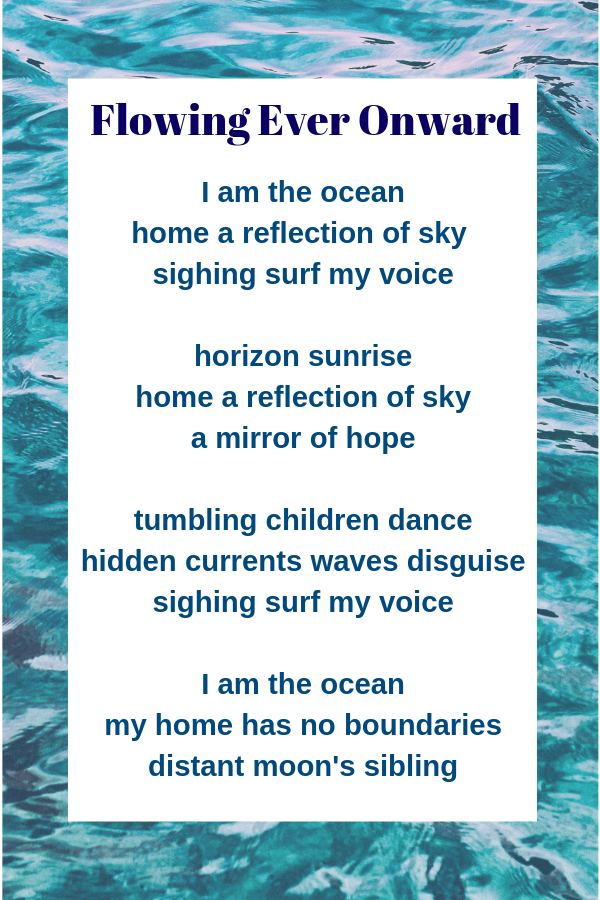
I settle on four stanzas.
- Stanza 1: Opening stanza, establish theme
- Stanza 2: Repeat the second line of the opening stanza
- Stanza 3: Repeat the third line of the opening stanza
- Stanza 4: Final stanza; Repeats line one of the first stanza, bringing everything full circle.
Here is the resulting poem, each stanza a complete Haiku.
Take Away
Set aside some time today to experiment. Read things you may not have been interested in before and think about what implications there are for your own writing. Find new forms of expression that you aren’t familiar with or just have resisted trying.
If you’ve always said you can’t write poetry or fiction, write a poem or a short story. If you’ve been intimidated by the idea of capturing another person’s words and presenting them in a way that is interesting, do an interview and write it up. If you normally dismiss research reports because you find them difficult to translate into a form that most people will understand search the news for new research and see what practical implications or message you can find within it.
Experimenting with unfamiliar ways of doing things may make us feel a bit like a fish out of water. Yet experimentation leads to growth, enhanced creativity, the chance to experience new things and to identify new places to take our writing. It can prevent us from getting in a rut or get us out of one if we’re already there. The willingness to try new things is what will keep the spice and excitement in our writing life and help us to discover the vast array of possibilities that exist for expressing ourselves in our writing.
Creative growth begins at the end of your comfort zone. Expanding your horizons is difficult at the beginning but gorgeous at the end. Break the rules you’ve set for yourself. Face what is holding you back from trying new things and dance with it until it joins with you, transforming your fear into positive energy that leaves you no choice but to move forward.
Natalie Frank (Taye Carrol) has had work featured in Haunted Waters Press, Weirdbook Magazine, Siren’s Call Publications, Lycan Valley Press and Zero Fiction among others. Her poetry has been featured in several anthologies. She is the Managing Editor for Novellas and Serials at LVP Publications.
If you enjoyed reading this poem, you might also enjoy these:
You can follow me and find links to all of the articles, essays, fiction and poetry I publish on Medium here. Thanks for reading and for supporting Mental Gecko!