
Experiences of the Nearly Dead, Part 2
Maybe it’s in your head
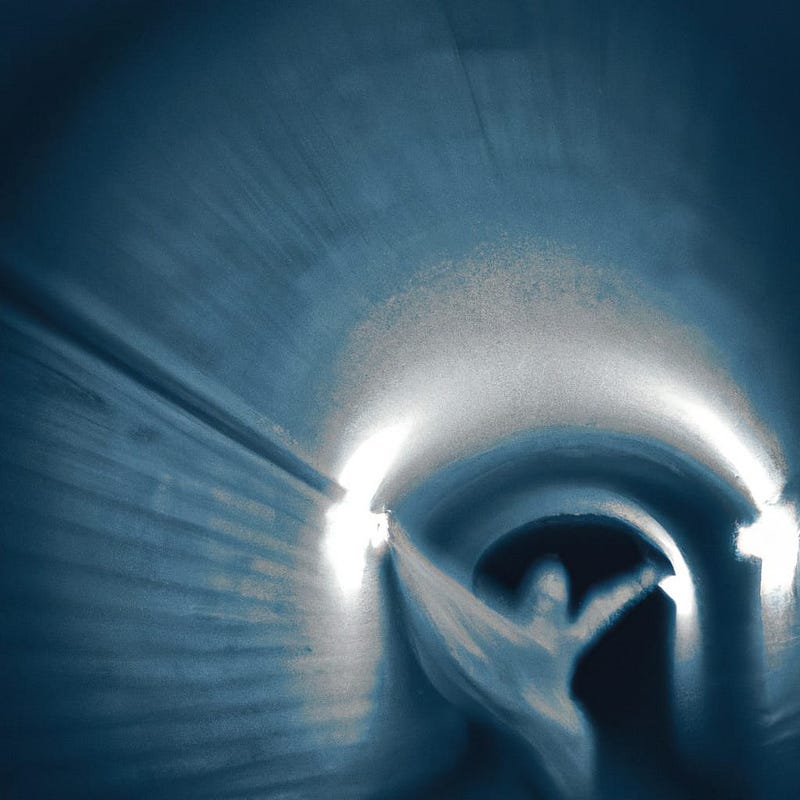
My last article described three near-death experiences (NDEs), the varieties of afterlives, and the afterlife tourism industry. This time we’ll look at related subjects, such as the most common experiences and general believability.
Are they dead enough?
Definitions of “dead” are all over the map. There’s clinical death, legal death, and brain death, for example. Some definitions say death is when breathing and blood circulation stops, but we know that can sometimes be reversed.
If we consider irreversible brain destruction as the measure of death, then no one has ever come back from the dead. We can’t really say these NDE people genuinely crossed over. Their experiences belong to people who could be resuscitated; partly alive, but near death.
It seems fair to speculate that the fantastic inner experiences they remember occur during resuscitation, when their brains are coming back online and trying to make sense of what happened. Our minds are good at taking impressions and creating understandable narratives.
It’s also worth noting that the majority of people revived from a near death state do not remember tunnels, light, love, and all the rest. Many remember nothing, and perhaps their experience (or lack thereof) is the “true” one.
The common elements of NDEs
Typical NDEs include: floating out of the body, peace, no pain, a life review, bright light, traveling through a tunnel, meeting people, and reluctance to go back.
Maybe the reason NDEs are so much alike is because there really is an afterlife. Maybe, contrary to everything we know about reality, invisible spirits leave our bodies and we enter an undetectable realm populated by celestial beings.
But there are other options.
One of the very first written descriptions of an NDE comes from a military doctor in France, Pierre-Jean du Monchaux. It’s from a report written around 1740. He had a patient who had lost consciousness, and upon waking the man said he had seen such a pure, bright light that he must have been in heaven.
Interestingly, the doctor speculated that too much blood flow to the brain had caused this experience. Today we might say too little blood. The point is that the doctor immediately went for a physiological explanation, which doesn’t require us to postulate mystic worlds of existence.
The doctor may have been onto something. We all have a similar psychological and biochemical makeup. We all have human brains and nervous systems.
If this is the reason for experiences being alike, we would expect to see people telling the same kind of stories when the brain is highly stressed, even if they aren’t near death. That’s exactly what we find. People have reported NDE-like stories from:
- fainting
- epileptic seizures
- sleep paralysis
- drugs such as psilocybin, LSD, DMT, and ketamine
- electrical stimulation of the brain
- centrifugal force
What causes the different elements of the story?
No one is sure why the same story elements occur in different people. Some researchers say it could work like this; a release of endorphins and serotonin (bliss, love, lack of fear or pain), excess carbon dioxide and lack of oxygen (tunnel effect, hallucination), and spikes in brain activity (heightened, vivid perceptions).
That’s one plausible explanation, and here’s another: Today many people have already heard accounts of NDEs. They may use that knowledge to fill in and embellish a confusing experience.
That’s similar to what happened in the UFO world. Space aliens with wide, stretched eyes and bulbous heads appeared on a couple science fiction TV shows in the 1960s. (Here’s one from 1962.) Since that time, non-fiction UFO reports began to include gray, almond-eyed, bare-headed extraterrestrials.

Evidence from beyond
Do people come back from being almost dead with information that demonstrates the reality of their experience? Not exactly. There are reports of the nearly dead showing awareness of what medical workers were doing while they lay seemingly unconscious. If these are verified it might be surprising, but not a demonstration of an afterlife.
There are anecdotes of people getting personal information during an NDE that they couldn’t or shouldn’t have known. Similar anecdotes are in ESP lore. As far as I know, this has never been demonstrated in a rigorous way. It would be huge news if it was.
I wish that the people encountered on the “other side” included Amelia Earhart giving the coordinates of her crashed airplane. Or murder victims providing solid evidence of the guilt of their killers. Mostly we get well-worn pronouncements about the importance of love and forgiveness and the joy of eternal life.
A tell-tale marker of doubt
In my always-humble opinion, a big giveaway about these afterlife visions is the preposterous set up of the universe they present. For example, many near-deathers say that before birth you get to choose the experiences you’ll have in life. Some choose to be beaten, tortured, and raped — because there’s a valuable lesson in that. Really?
Along with this is the despicable idea of telling trauma victims that their tragedy was something they asked for. Only earthbound humans could concoct such a perverse world view.
A popular afterlife vision is a joyous land of flowers, light, and reunions with loved ones. Who can blame us for wanting and imagining this? But it certainly sounds like something we came up with. Then there’s the one in which we spend eternity singing praises to a deity that created us — a dreary heaven believed by some religious fundamentalists.
It gets really confusing when we think about evolution. Did our forebears from 500,000 years ago (Homo heidelbergensis) die and go to the celestial plane to learn about love and redemption? How about a common ancestor of humans and apes, Nyanzipithecus alesi, a small fruit-eating creature with a brain the size of lemur’s that lived 13 million years ago?

All things considered, I think the afterlife is our own invention.
A hereafter feared by cowboys — (Ghost) Riders in the Sky
If you want to save your soul from hell a-riding on our range, Then cowboy change your ways today or with us you will ride
Get access to all Medium.com stories and support the writers for a mere $5.00 per month. Use this link.