
Expectant Moms and Their Babies Must Live in 2024
The Maternal Mortality Rate in the U.S. is Dire, especially for Black Women. We Must Change This Now.
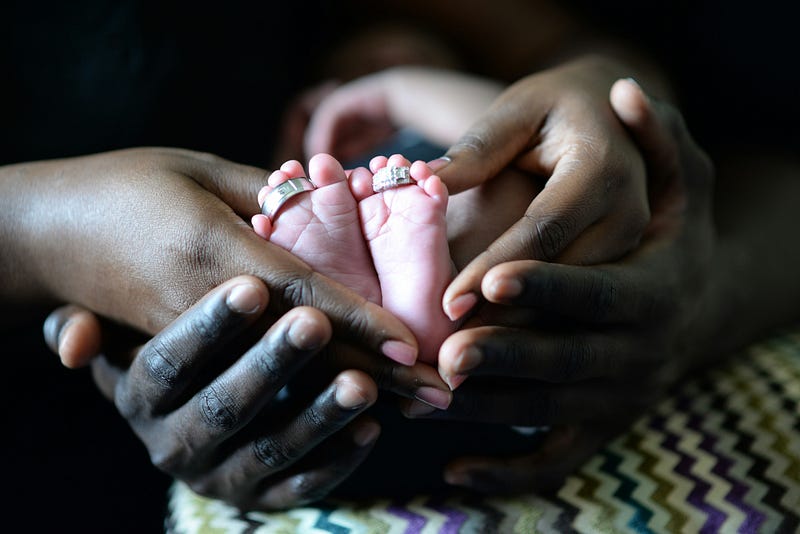
In 2018, I gave birth to my daughter in a hospital using a hospital-based midwife and with the support of a doula.
Four years later, my son was born at home, with the help of a midwife.
The first birth, I was afraid. I’d read about the stories and saw the statistics.
The number of women dying during childbirth in the United States was daunting, and the increasing and disproportionate number of Black women dying during pregnancy and childbirth was even more egregious. Maternal mortality data compiled by the Centers for Disease Control and Prevention shows that the U.S. has the highest maternal mortality rate in the world, and that Black women in the U.S. are dying at a rate three to four times higher than white women. One study shows that even when Black and white women are experiencing the same or similar medical conditions during and post pregnancy, Black women are three times more likely to die from those conditions than white women.
Why is that? Why are the lives of Black women who are eager and excited about motherhood cut short during what is supposed to be the happiest time of their life? Why is it that Black women, who represent only 14% of the population of women in the U.S., making up the majority of women who die during or soon after giving birth?
No, it’s not diet. Neither is it education, income status or access to healthcare.
The harsh and undebatable truth: It is structural racism. It is systemic bias. It is the institutionally racist practice of medical providers not listening to Black women when we express how we feel. It is a complete, systematic disregard for the bodies and wellbeing and lives and futures of Black women, and their babies.
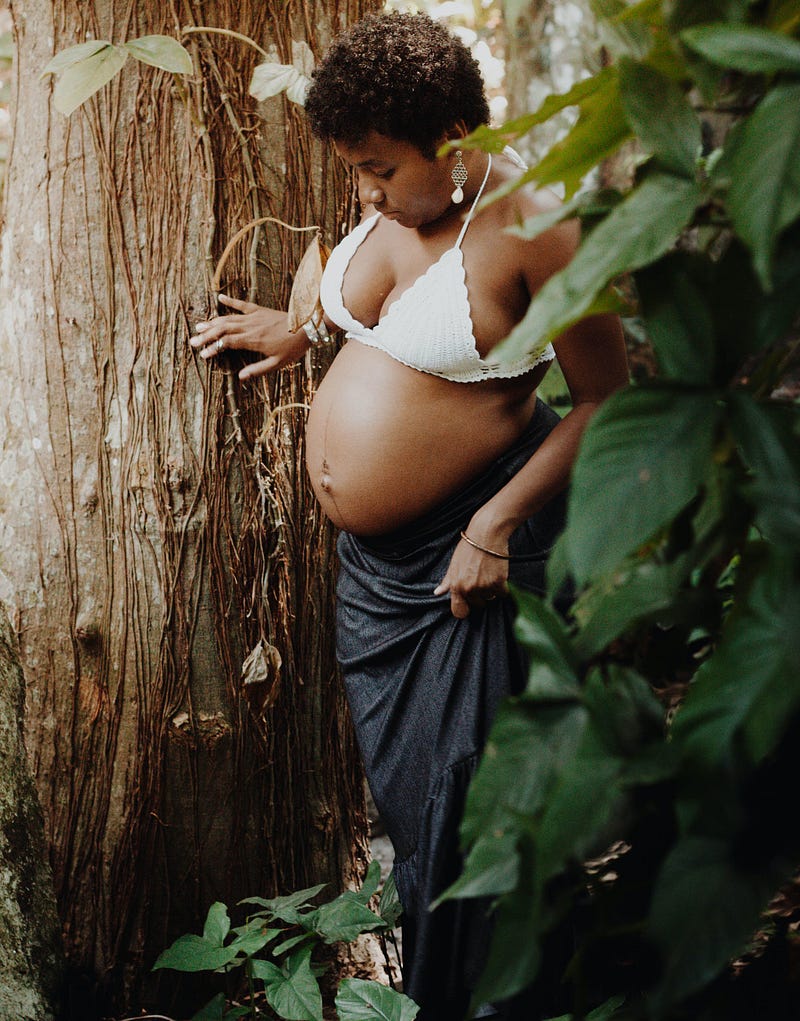
During my first birthing experience, I thought that maybe if I immersed myself in information, education and preparation I would surely escape the insidious pattern of Black pregnant women dying during and after childbirth.
I did my research to help craft a plan for a safe, healthy and enjoyable (yes, I believe an enjoyable childbirth, under the right and intentional care for birthing mothers is an option, though one not afforded to most Black women) birthing experience for me and my baby. I took the birthing education classes. I read all the books. I ate the right foods. I exercised. I practiced my labor techniques and breathing.
Yet, so did Kira Johnson who, at 39, bled to death after a scheduled C-Section after her husband pleaded for help from hospital staff for 10 hours straight.
So did Shalon Irving, who died at age 36, three weeks after giving birth to her daughter.
So did Yolanda Kadima, 35, who died from complications three days after a routine C-section delivery of her twins.
So did Amber Rose Isaacs, 26, who died from complications just days after tweeting about her negative experience at a Bronx hospital.
So did Shamony Gibson, 30, who died from a pulmonary embolism days after giving birth to her son.
I kept coming across the stories. I keep coming across the stories.
These women were aware of the systemic battles they faced as Black, pregnant, women. The paradox in which Black mothers exist is being daily engulfed by the horrific reality of what our children may face in a racist society while simultaneously being overwhelmed by trepidation over not even making it through pregnancy to be able to see our kids over and through societal adversities.
There is something that we can do in 2024 to one day, maybe this year, see no more of this:
Medical providers and all healthcare practitioners must listen to Black women, Black pregnant women and their advocates and treat them with the respect and humanity they deserve. Period.
If they had listened to Kira’s husband as he begged hospital staff for several hours to help his wife as she lay in her hospital bed suffering after receiving a C-section, she probably would not have hemorrhaged nearly four liters of blood in her abdomen and died.
If they had listened to Shalon as she pleaded with medical staff to help her, she likely would not have died from cardiac arrest just six hours after leaving the medical provider.
If they had not dismissed Shamony Gibson, Yolanda Kadima, Amber Rose Isaacs when they had complained of health issues but had instead listened to and cared enough for them as humans, as expectant mothers, they would likely still be here today.
The medical professionals at the other end of these and other Black maternal mortality stories reflect a variety of races and ethnicities. It is the racist, biased, white supremacist and colonized mindset that is the common thread, and the common threat.
I am grateful to have had safe and sacred birthing experiences. I sought out midwives and a doula for this very reason. The philosophy and practice of the midwife is to center the wellbeing of mother and her baby and do every single thing in their best interest. The doula’s is to support and advocate for mom and baby. I decided on a homebirth the second time because I wanted to multiply the chances of having a holistically healthy delivery, one that was according to my family’s plan, and not some medical institution.
This gave me a level of confidence and optimism that me and my baby would be OK. My faith in my God did the rest.
However, it is not the midwife nor the doula who can remedy the evil of racism in our society that is taking the lives of so many Black women and their babies. It is a dismantling of policies, practices and mindsets that perpetuate racist and biased actions and nonactions against Black women, Black mothers in particular.
Doctors and healthcare practitioners must be held accountable for their malfeasance.
We must keep pushing.
Black women and their advocates must continue to speak up and amplify our voices and experiences. We must bang on the table, on our metaphorical cymbals and call in reinforcements whenever we feel dismissed, overlooked and underserved as we seek care for us and our babies.
White women and our allies — you must do it too, like you’ve never done it before. It is our collective responsibility as women, as mothers.
For if one of us is not safe, none of us truly are.


