Expect the Unexpected When You Go on Safari
You never know what you will see, but it will be a powerful experience.
Traveling to Africa two weeks before Thanksgiving was a challenge. Would I be able to spend 15 days away, and then return with enough stamina to host 17 people during Thanksgiving and Christmas?
But I didn’t debate the pros and cons of a pre-holiday trip for long. Once I discovered the trip included a safari, I leaped at the opportunity to observe wild animals in their natural habitat. My concerns about being away at such a hectic time were dispelled as soon as we entered Kruger National Park, one of the largest game reserves in South Africa.
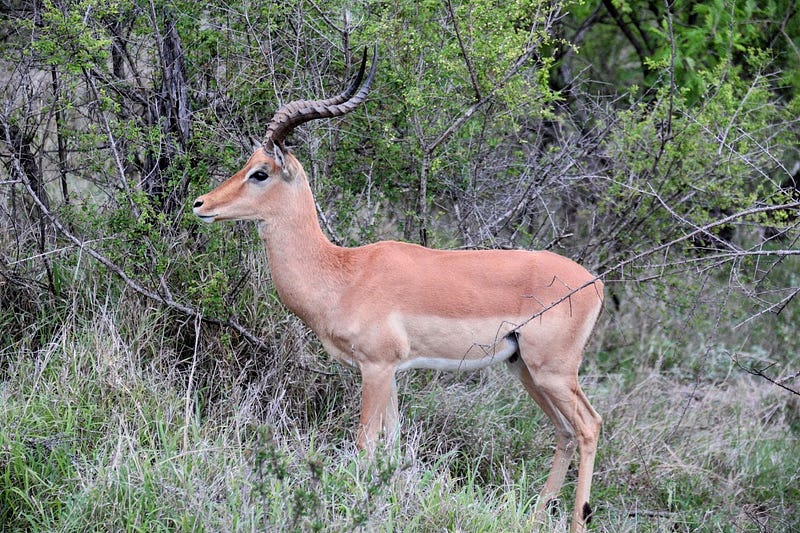
We were only a few feet inside the reserve when a herd of impalas generated so much excitement among our travel-weary group that we were jolted into full alert mode. I would soon discover that impalas in Africa are as common as deer in Georgia. After the fifth or sixth sighting, the novelty had worn off and my safari companions began saying, “Oh, it’s just another impala herd.”
But I never tired of watching those graceful, beautiful antelopes. Sometimes we saw hundreds of them grazing on shrubs and grasses, seemingly oblivious to so many predators prowling close by. We watched entire herds, suddenly startled, dash away into the bush, escaping real or imagined dangers.
Wildebeests and baboons hung out with impalas as if they were part of the herd, reminding me of Isaac Bashevis Singer's story, “The Cat Who Thought She Was a Dog and the Dog Who Thought He Was a Cat.”
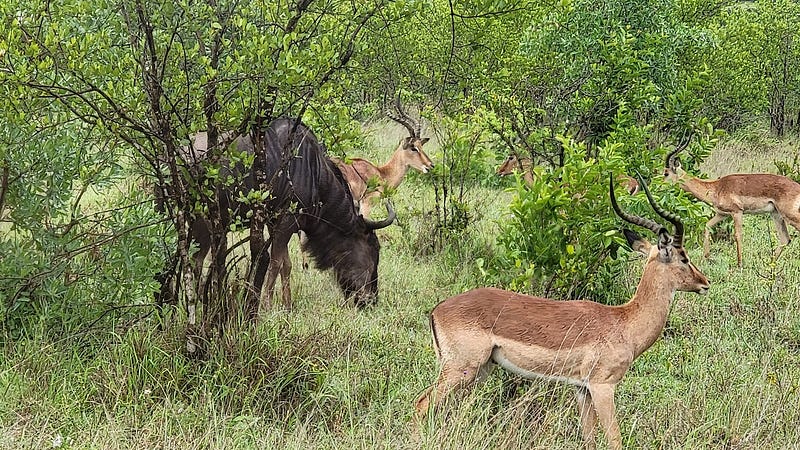
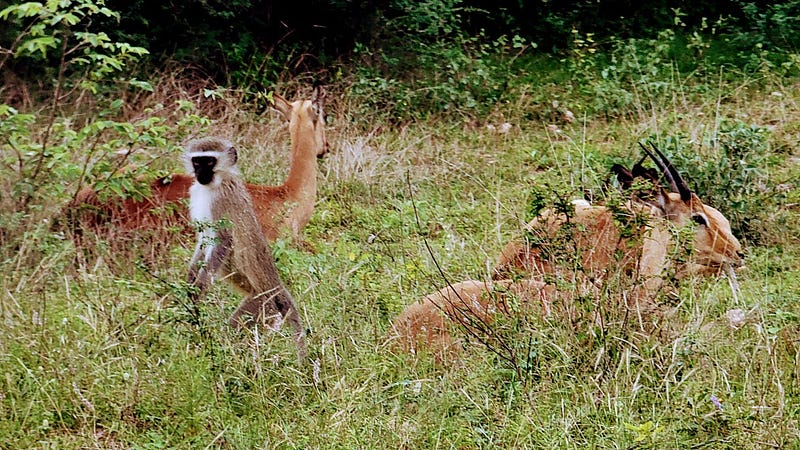
Impalas and steenboks, both part of the antelope family, are prey to lions, spotted hyenas, wild dogs, cheetahs, crocodiles, and leopards, so it’s no surprise they leap into flight at the slightest rustle of a bush.
We managed to spot several of their predators, although the predators were more elusive and camouflaged than the prey.
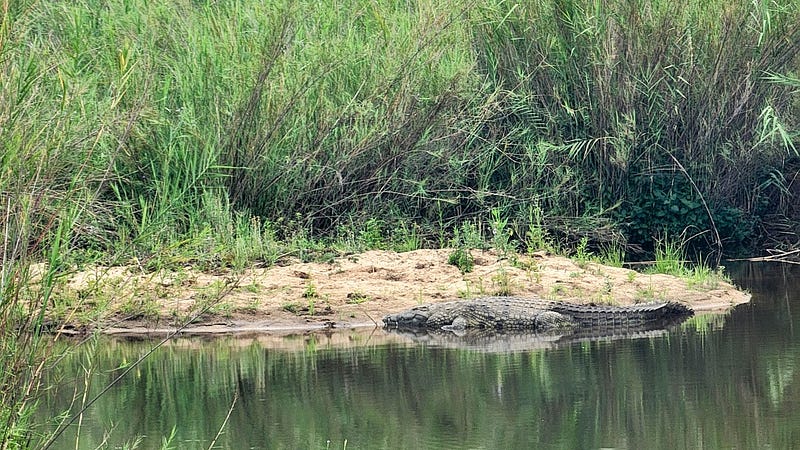
A crocodile is dangerous when an impala wanders down to the river for a drink, but a leopard is likely to attack any time.
We figured the likelihood of seeing a leopard was low, since they’re usually nocturnal and like to hide in trees and dense bushes. But one thing all good safari guides know is that when crowds gather, you gather with them. Our guide noticed a knot of vehicles parked close to the road. She jostled into position behind them and discovered they were watching a leopard.
I couldn’t see anything at first. The leopard had climbed a tree and was concealed behind a screen of leaves. Then two dark shadows moving in tandem jumped from the tree and slid away into the bushes. Not one, but two leopards!
Our guide, parked behind the other trucks, was able to pull out quickly and follow the route she believed the leopards would take.
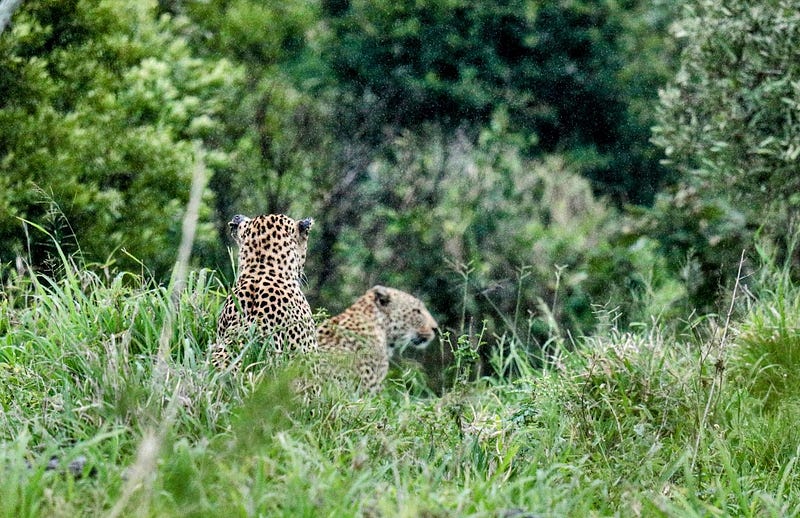
Her instincts were right. We spotted the pair as they emerged near a stream across the savanna. Although they were too far away for me to get a picture, one of my travel buddies had invested in an expensive Canon camera with a high-power telephoto zoom lens. His shot captured the leopards mating before they melted into the brush and disappeared.
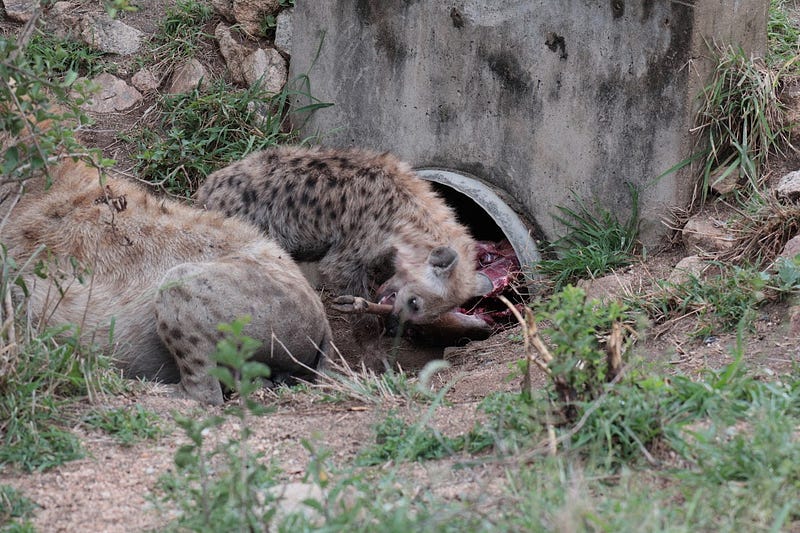
Another predator of the impala is the spotted hyena. Although hyenas are scavengers, eating leftovers from other predators, they obtain the bulk of their diet from direct kills. According to our safari guide, hyenas are the most common large carnivores in Africa and are surprisingly intelligent.
We observed a pair of cubs in a culvert snacking on what appeared to be an impala leg. Their mother guarded the entrance to their den while another hyena skulked nearby, hoping to gain access to the food.
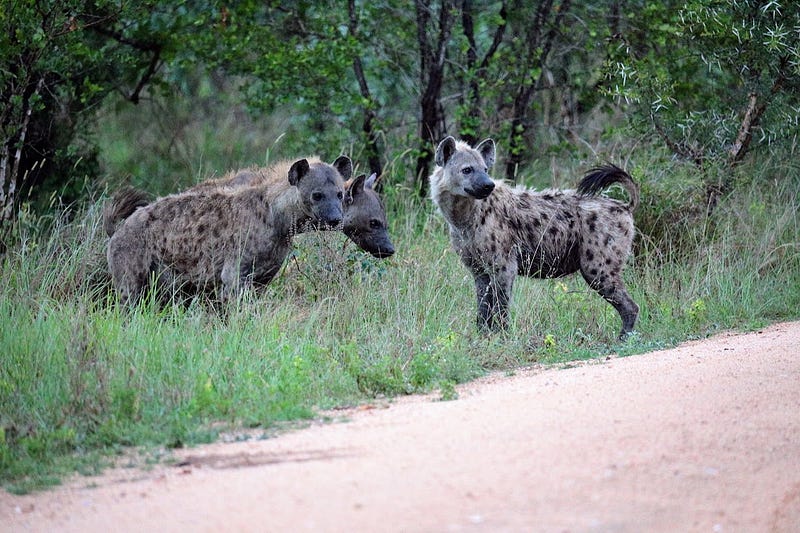
We watched three hyenas that didn’t seem interested in hunting at the moment. They acted like good friends, playing and hanging out while we followed behind in the safari truck.
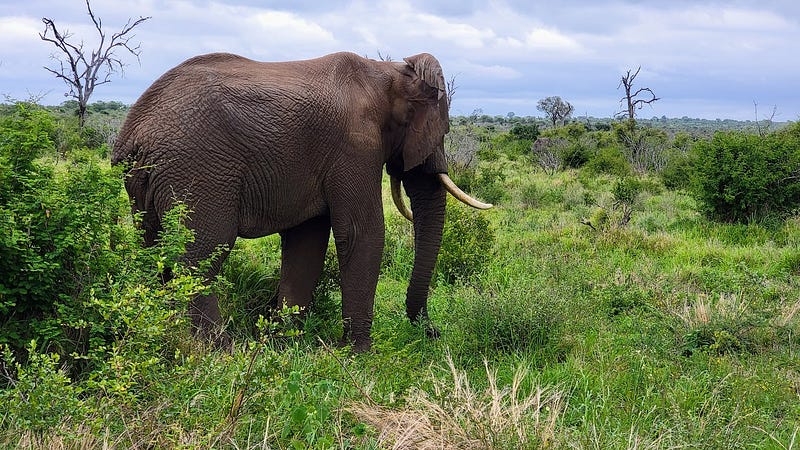
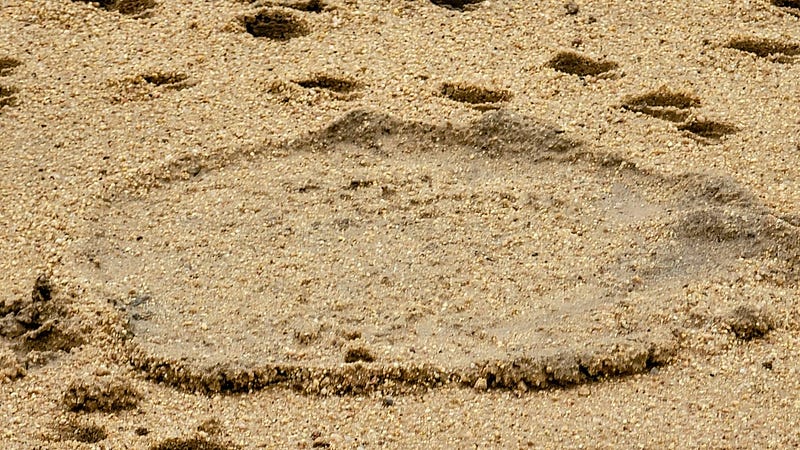
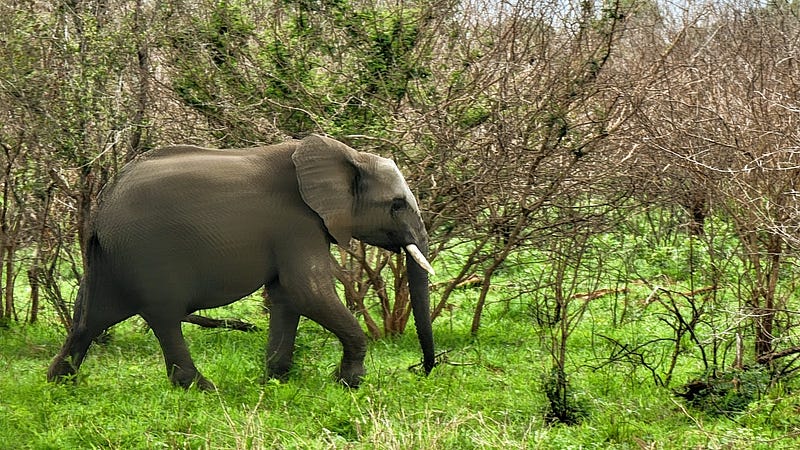
One animal everybody on safari wants to see is an elephant. But it seemed as if the elephants were teasing us, leaving behind huge splats of dung and enormous footprints, then disappearing minutes before our safari truck could catch up with them.
We followed their gigantic footprints but saw no sign of the elephants that must have passed this way minutes before.
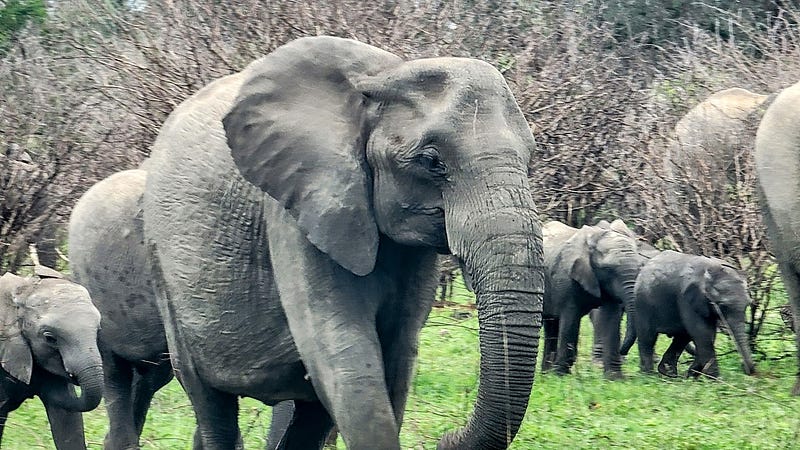
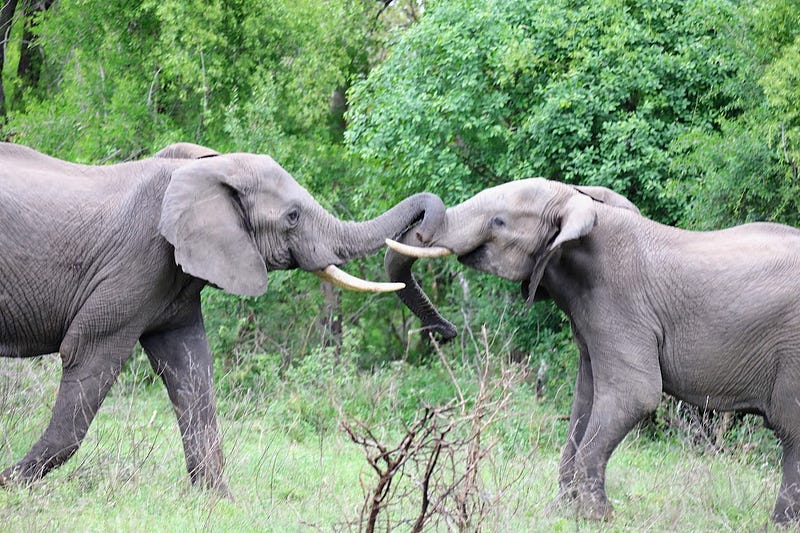
Then suddenly we spotted the herd, up close and personal. It was a memorable encounter because one of the younger males bringing up the rear did not take kindly to our proximity. He flared his ears and moved aggressively in our direction, prompting our safari guide to back up and give him some space.
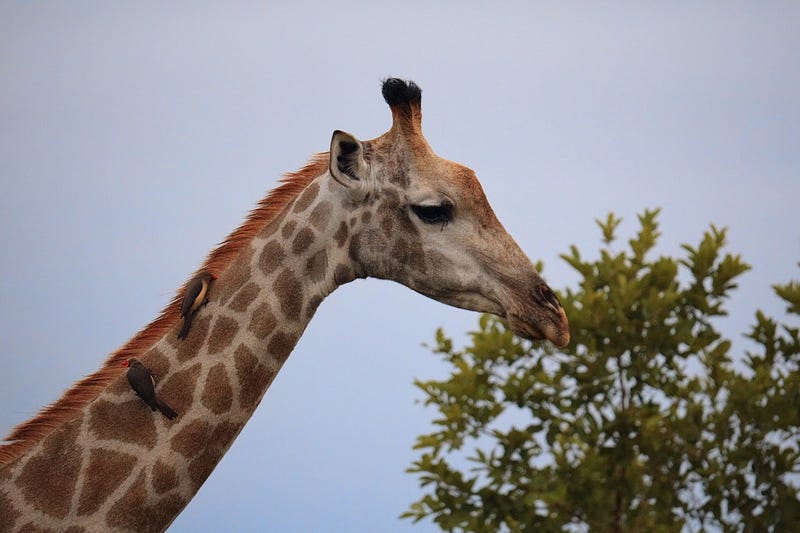
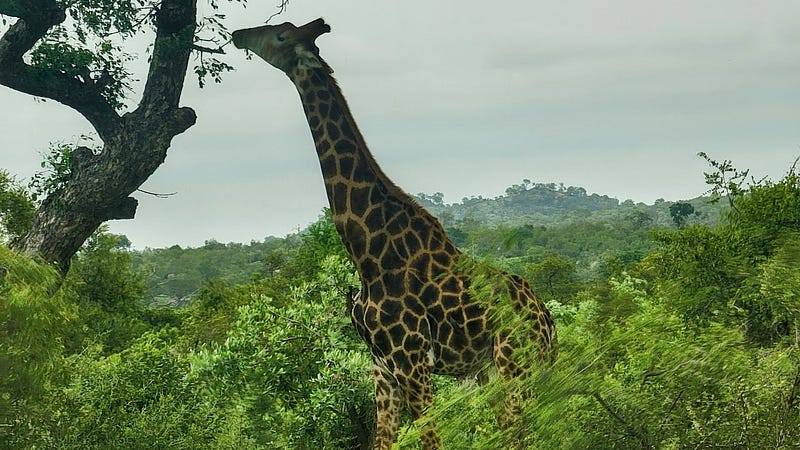
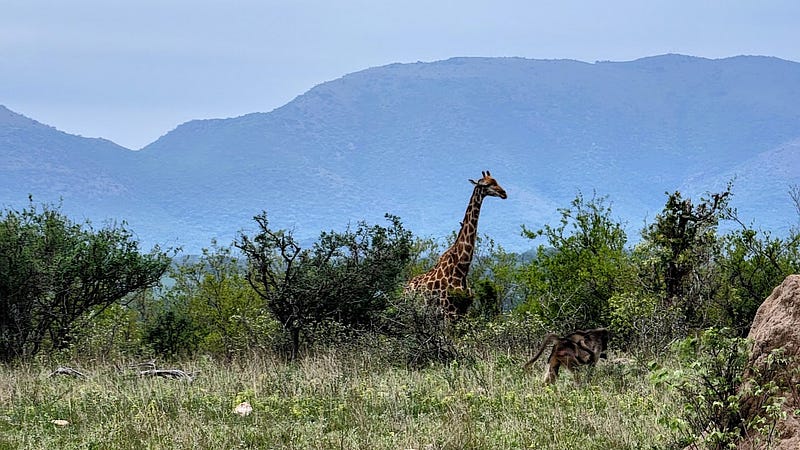
Giraffes were almost as commonplace as impalas, but no one tired of these marvelous creatures, the tallest terrestrial animals on earth. I read somewhere that they eat 66 pounds of food a day.
They love to eat the prickly Acacia and other thorny trees and shrubs, which are nutrient-rich, and they can do this because their thick tongues generate a sticky saliva. This saliva protects the mouth and digestive tract, so giraffes don’t suffer any pain when they chomp down on a prickly meal.
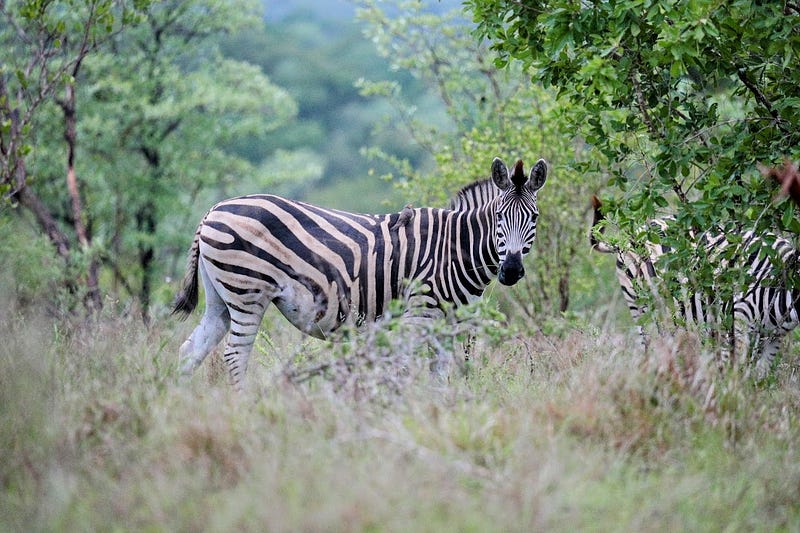
A safari wouldn’t be complete without zebras. They were elusive and skittish, but we were able to spot a small herd behind a screen of leaves. Our guide said the main enemy of the zebra is the lion. Zebras protect themselves from predators by kicking, biting, and running away.
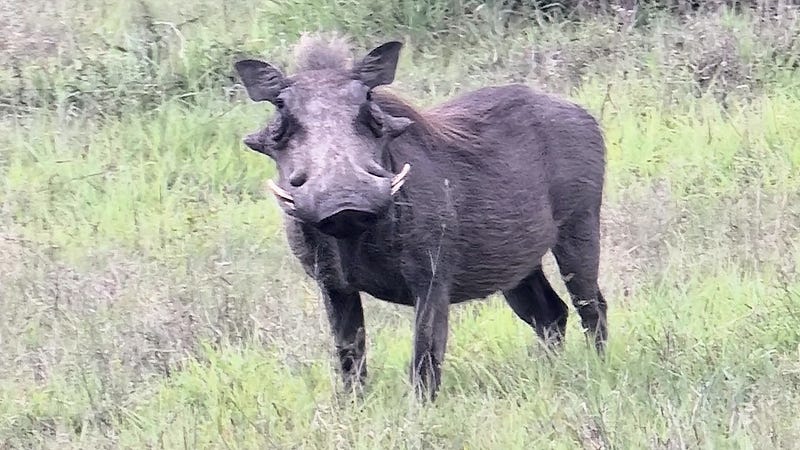
I never got tired of going on safaris, because there was always something different to see. On one excursion, we spotted a warthog who seemed as curious about us as we were about him.
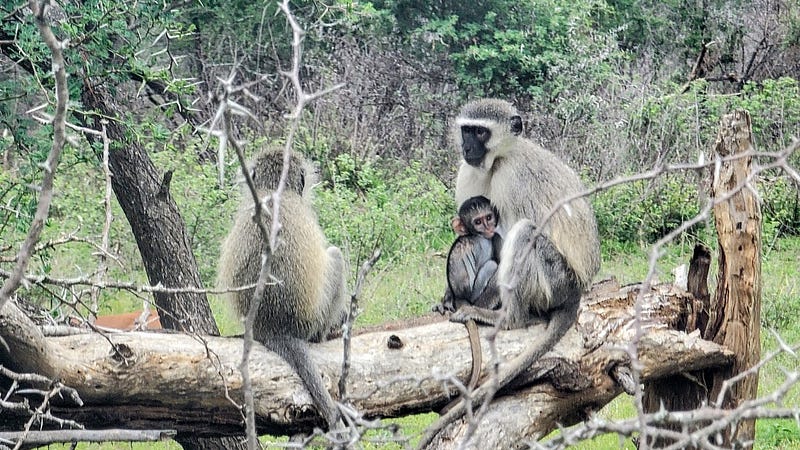
We saw baboons and other monkeys, but I especially liked seeing a mother vervet monkey and her baby relaxing on a tree branch. Someone on my tour said, “that baby has a face only a mother could love.” But I thought they were cute! The monkeys stayed calm as we snapped a few photographs.
After going on two daylight safaris, I was keen on doing a night excursion. I envisioned nocturnal animals stalking the land. But I soon discovered there was one obvious problem with a night safari. It’s hard to see!
The safari truck is equipped with bright headlights that illuminate the dark. A passenger on each side of the vehicle is entrusted with a spotlight, a practice called spotlighting. The person holding the light is instructed to sweep their side of the truck, searching for animals but making sure the light is never shone directly into an animal’s eyes.
On the second night, I won the lottery. I was asked to hold the spotlight. But after a few comments like, “Hold the light lower! Don’t shine it in the animal’s eyes! Do a general sweep and let us know if you see anything!” I felt a lot of pressure. I was supposed to find animals, shout for the driver to stop, and then point out exactly where I had seen the animal.
How did I land this gig? Fortunately, I spotted a few animals, so the people on my side of the truck didn’t instigate a mutiny and demand the spotlight back.
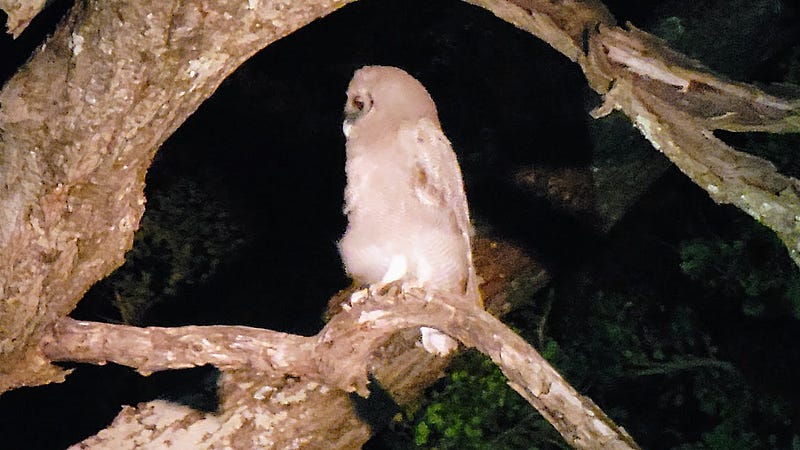
By aiming my spotlight high, I was able to locate several nocturnal birds. The only hippopotamus we saw was on a night safari, and after dark we were able to see several genets, a waterbuck, egrets, and a white-backed vulture.
If you go on safari, whether day or night, expect to be surprised by the unexpected.
We waited 20 minutes for a bright, lime-green chameleon to cross the road. For every two slow, rocking steps forward, it took one step back.
Dung beetles scurried out to attack fresh piles of dung, which they rolled into balls larger than ping pong balls and used as habitats for laying eggs.
Startled guineafowl raced across the ground in a haphazard, directionless panic, making me think of the expression, “running like a chicken with its head cut off.”
It’s surprising to see the amazing symbiosis in nature. Dissimilar animals live together in harmony, sometimes dependent on each other for survival. Nature is often brutal when one animal is prey, and another is a predator. But sometimes animals have a benign, mutually beneficial relationship.
Africa is home to a diverse array of wildlife, and when animals are involved, you can always expect the unexpected.