
Future Investments in Life
Expanded Emergency Evacuation Planning & Preparations
Fire, flood, earthquake, volcanic eruptions, plane crashes, explosions and other disaster preparations.
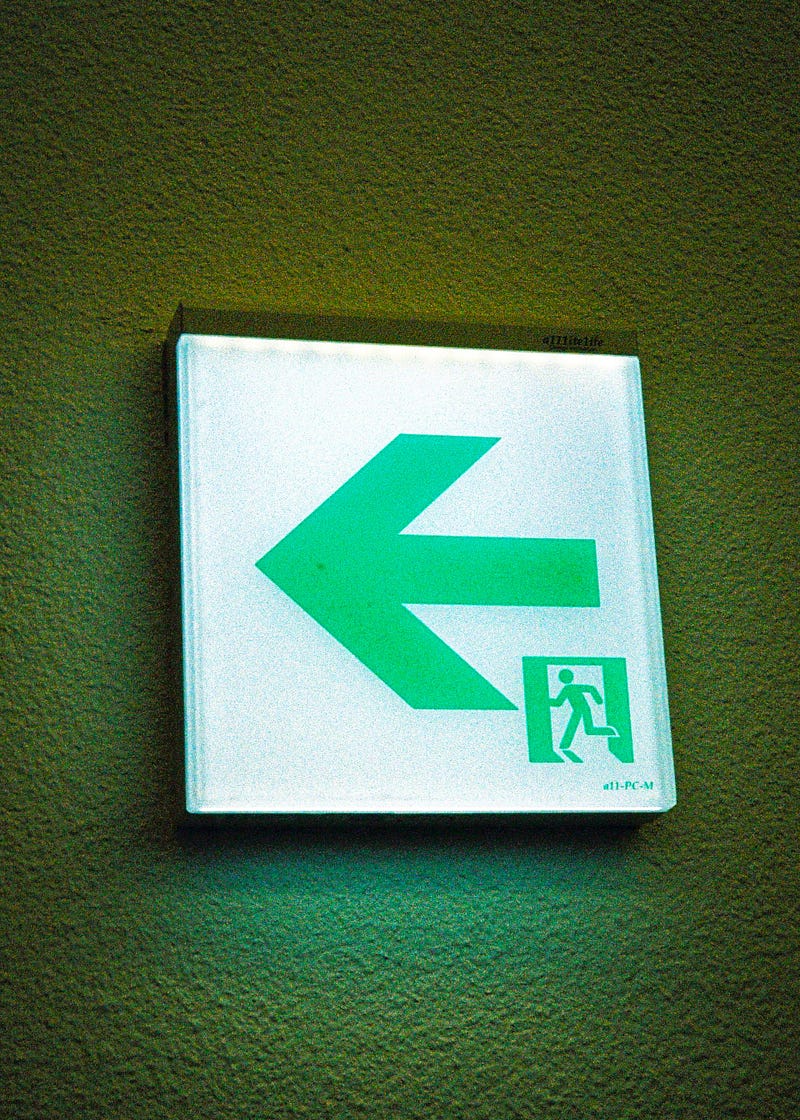
A comprehensive guide for creating and maintaining an emergency ‘go’, ‘bugout’, or preparation bag for the average person.
People in the wild require few essentials including food, water, and shelter. Reputable authorities estimate a healthy person can last up to two months without food if they have adequate hydration.
Worldhelp writes, “Most scientists and medical professionals agree that humans can survive only about three weeks without food — usually four to five weeks max. The more fat a person has stored up, the longer he or she will most likely survive.”
Survival during extremes doesn’t take into account our dependence on modern technology for navigation, prescription medications we take to treat or prevent illness, or our affinity for pets.
Communication, adequate clothing, and the means to stay clean and treat injuries can greatly impact our health and ability to remain safe. Many of us aren’t equipped for self-defense and don’t know how to find water or forage for food.
We rely on technology for GPS driving directions, credit and debit card transactions, and the internet for updates on road access, early warnings, and developing disaster news.
The Red Cross lists the following essentials in a preparation kit —
- Water: one gallon per person, per day (3-day supply for evacuation, 2-week supply for home)
- Food: non-perishable, easy-to-prepare items (3-day supply for evacuation, 2-week supply for home)
- Flashlight
- Battery-powered or hand-crank radio (NOAA Weather Radio, if possible)
- Extra batteries
- First aid kit
- Medications (7-day supply) and medical items
- Multi-purpose tool
- Sanitation and personal hygiene items
- Copies of personal documents (medication list and pertinent medical information, proof of address, deed/lease to home, passports, birth certificates, insurance policies)
- Cell phone with chargers
- Family and emergency contact information
- Extra cash
- Emergency blanket
- Map(s) of the area
If you have a baby you’ll also want baby food and diapers. Disabled or elderly may need canes, braces, and assistive devices they rely on. Women may want feminine products. Children and pets may benefit from games, toys, and comforts like favorite blankets to keep them calm and occupied. Special dietary and medication needs should be anticipated.
There are a few tools that come in handy if there’s rubble blocking your path or you need to assist in escape from a car or structure —
- dog leashes can be used as ropes for moving people or objects
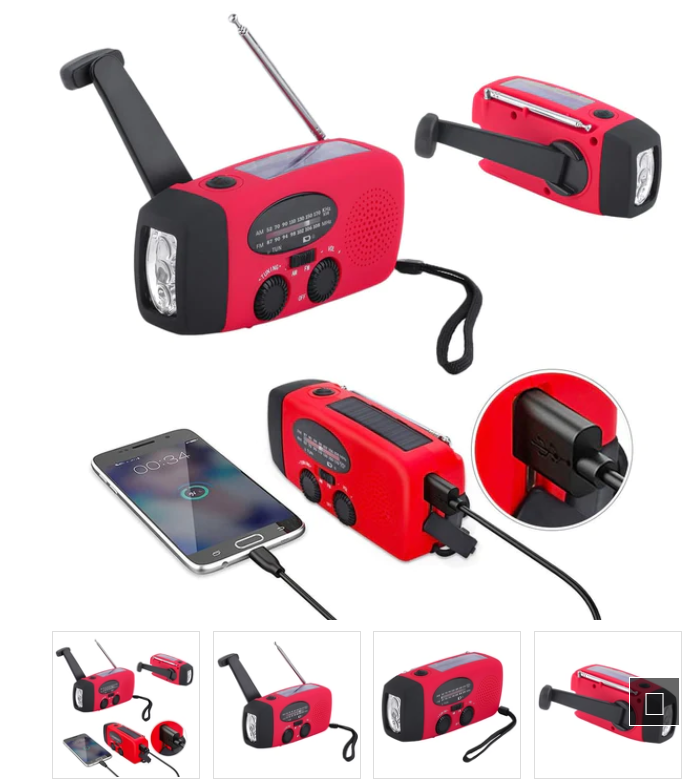
- multi-purpose wind-up tools like the one pictured below can help with radio news, charging devices, issuing alarms, and double as flashlights
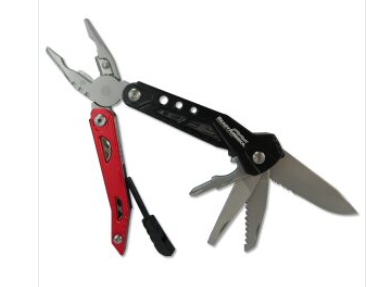
- a swiss-army type knife often includes screwdrivers, blades, and other utilities useful for opening canned goods and packages and cleaning and treating wounds
- pens and paper help make signs, notices, and instructions
- markers can be used to alert emergency services for triage needs and to identify dangerous or escape routes
- fire starters, whistles, and a compass help in extreme circumstances
Update your kit perishable items including food and medication. Ensure backup batteries work.
Kits such as those sold on Ready America for under $100 per person include masks, gloves, pre-packaged meals, tools, and first aid.
My family’s list of additional items
In addition to many of the items recommended by the Red Cross and the tools I’ve already outlined our emergency supplies include the following -
- portable flashdrive with backed-up critical information,
- combination tablet/cellphone,
- spare keys,
- Ace bandages, burn treatments, and pain medications
- pepper spray,
- filtering masks and gloves,
- cash in various denominations & small valuables for possible trades,
- copies of ID and insurance cards,
- written contact information,
- medical histories with medication lists and dosing instructions.
Due to earthquake awareness, we keep shoes, purses, and backpacks where they can be reached quickly and easily. Our area is threatened by wildfires, atmospheric rivers causing flooding, and potential terrorism.
Depending on the circumstances, we might take family heirlooms, photo albums, and laptops.
During an emergency evacuation, it’s hard to know if you’ll be able to secure your home, car, and belongings. People who fled tsunamis, fires, and other disasters may have lost their homes and may wish they’d packed up their cars. Those who escaped danger in their cars but had to abandon them may regret packing their treasures. Each situation is different and must be evaluated accordingly.
Establish a communications and meet-up plan ahead of time
Knowing where loved ones are and how to reach them is a major contributor to the high anxiety and confusion surrounding an emergency.
During a disaster, local phone lines may not operate or be reliable. Establishing remote predesignated points of contact can help minimize the overload and free up telecom for emergency services.
My young children memorized and stored their great-grandmother’s phone number in another state. Since my grandmother was the person most likely to learn of a disaster through the news and was most effective with updating family members in different states and countries, she was the most logical choice for managing an information hub for friends and family. An added benefit was she was less inclined to worry knowing there was a plan in place with predesignated coordination.
Plan evacuation and meet-up locations ahead of time. My kids were told to stay at school or evacuate according to the authority’s instructions. If they were in transit, we would meet at a specific restaurant or coffee shop. A nearby 24-hour safe public space like a police department, hospital, or church may be ideal. If my kids were taken to a hospital or shelter, or stuck somewhere, they were expected to update my grandmother.
Identify a secondary point of contact and someone other than yourself authorized to make decisions and take charge if you’re not able.
Educate others & be prepared to foster a sense of security
Family members need to understand how to access and use everything in your emergency kit. Understanding maps, tools and first aid, and fire extinguishers help provide a sense of security when everyone’s prepared.
We keep an emergency backpack for each family member and one for the pets. Duplicates are kept in the car along with additional supplies such as a fire extinguisher, a more complete first aid kit, and coats or blankets. More food for people and pets is also kept with a case of water and extra shoes. a
Knowing available exits, what’s expected, and how to communicate if people are separated doesn’t take a lot of time and provides a sense of security in knowing you’re prepared if and when an emergency arises.
We don’t practice evacuation routes or focus on worst-case scenarios on a regular basis, but establishing best practices and being prepared lets us all rest easier — similar to having money in the bank.
My family lives in an area of California with normally consistent mild weather. Our packed clothing includes light fire-resistant jackets and personal care items like hats, an umbrella, and sunscreen. These are appropriate for our environment, but may not be for yours.
Your family may wish to have a hatchet, rope, duct tape, and trash bags for erecting a shelter. Flares, fire starters, heavy coats, bear and predator defense, and 2-way radios are things we kept in the car when living in Montana. A tire iron, repair tools, and shovel for digging snow were usual.
What to expect during an emergency
When an emergency arises in your family home, there’s often confusion, anger, and panic. If you’re in a fight-or-flight mode, you experience a rush of hormones including adrenalin. How this impacts each individual can be different. Some freeze, others take charge, while many look for direction from the authorities.
I’ve worked with city governments, large companies, and disaster relief organizations to plan and prepare for, then coordinate relief efforts. Just as the heads of a large family may not all be present and accounted for, this happens with organizations as well.
Equipment and policies may break down. Redundant warning systems may not work, or be severely restricted. Technological advancements can’t always be relied upon when the power fails, even with backup generators. The person responsible for hitting a panic button may confuse their role with someone else’s, or be otherwise prevented from performing tasks.
It’s incredibly hard to plan for and test a response to each disaster, and many have their own unique challenges. For this reason, we regular citizens need to be prepared to care for ourselves in the immediate aftermath of a disaster.
Plans should be made calmly before a problem occurs. Effective communication is critical, as is preparation.
We don’t like to envision imaginary problems, yet we all work pretty hard to keep our bank balance positive and see the doctor before we’re on our deathbeds. Planning for the future should involve these proactive steps.
Remember to update your kit perishable items including food and medication. Ensure backup batteries and spare keys work.
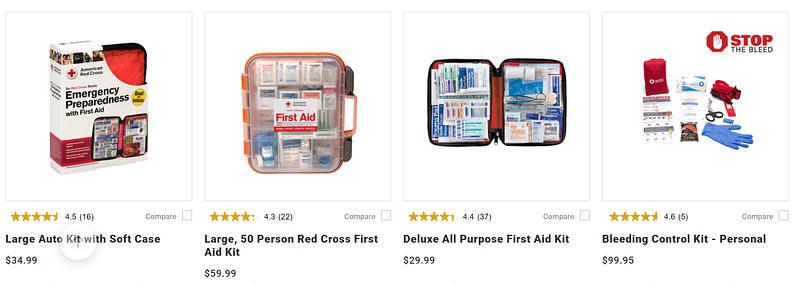
The Red Cross offers a wide variety of guides, instructional materials and kits in their online store.
After the immediate threat passes
People who have lived through a major disaster or emergency are often stunned by the aftermath. Goods and services may be in short supply. Assessment and organization work is needed as well as physical, mental, and emotional labor.
Internet and phone service may be limited. There are many negative consequences of being in a temporary shelter. Boredom can set in. Once the shock passes victims often become volunteers.
Search and rescue attempts may be underway as healthcare facilities and workers are inundated. Supply routes may be compromised.
We all have abilities and skill sets we may not recognize as important but are vital to a community in recovery. Helping clean up debris, clearing roads, serving coffee, providing emotional support, giving blood, providing childcare, and helping locate family and friends are all valuable contributions. Feeding a baby, walking a dog, and comforting a stranger can have a profound effect.
Years ago, a strong earthquake hit an area where my brother was living. I wanted to help but thought, “I can’t afford to make a big donation and physical labor is out due to a neck fracture.”
I walked into a local Red Cross satellite office intending to give blood. It was busy with dedicated nurses focused on blood donations, people patiently waiting to give, and phones ringing off the hook. I noticed no refreshments, forms were running out, and not enough workers were available to handle administration.
People waiting to give blood helped organize after learning the office manager was on the opposite coast for training. Local markets donated refreshments, waiting volunteers made copies and coffee, and we put a small dent in the chaos.
Almost reflexively, I answered the continuously ringing phone. I took messages, gave directions for donating to the Red Cross, conveyed blood donation wait times and hours, and provided what limited information we had to concerned relatives of those missing.
Over the next few weeks, we worked to develop a better communications system. I dated a county disaster response coordinator. This gave my daughter a false sense of security.
“He can keep the earthquakes from happening!” Um, no.
At a dinner to honor volunteers, I met interesting people who became important in my professional network.
Volunteer hands, minds, and hidden talents are always needed in every capacity — especially after a catastrophe.
If you’re able to donate or volunteer to help disaster victims, please do so.
Please leave additional suggestions for items I may have overlooked in the comments section.
This piece was inspired by the tragic fires that destroyed the town of Lahaina on Maui in Hawaii in August 2023. I was shocked to see a hotel where I once installed a system go up in flames on the news.
Feel free to share.
Megan Finley Horowitz wrote Hey Haoles — If You’ve Taken A Trip to Maui You Need to Give Right Now! with links to donation sites. I was working on a piece about my trips to beautiful Lahaina when I had to switch tracks to prepare for what would become known as Southern California’s Hurriquake. The full impact of Hurricane Hilary is not yet known, as heavy rains in the mountains will become flash floods. In one day we’ve seen hurricane / tropical storm weather, earthquakes, fires, floods, and tornados. I don’t think we have an active volcano nearby, but maybe I shouldn’t mention it.
Thanks for reading.
Copyright © 2023 Patricia Jeanne
I normally write satire, letting Lizzie Lizard Brain take over.
And essays related to computer technology, including Artificial Intelligence.


