
Exercising in the Heat: Myths and Emerging Realities
Heat affects people differently during exercise depending on their age and sex, but the science on this is only half-baked. Learn what’s known, what’s not, and the information you need to stay safe.
This article is part of a Wise & Well Special Report: Extreme Heat and Human Health.
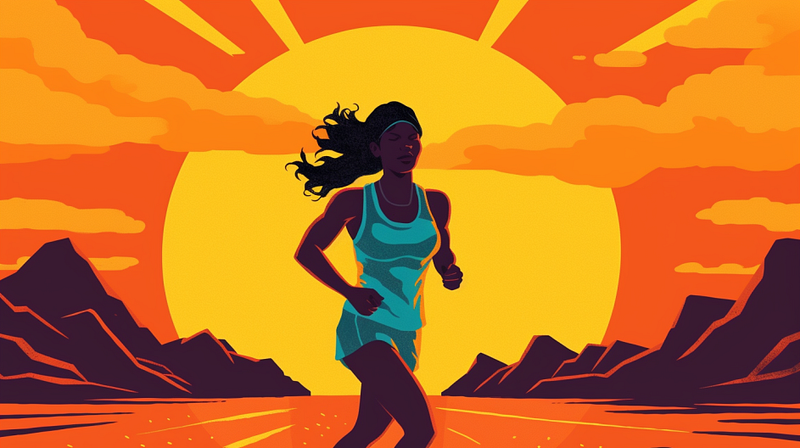
At the Canyons Endurance Run in Auburn, California this June, the temperature approached 90 degrees as the athletes ran on trails through exposed terrain over distances as long as a hundred miles (yes, I’m serious). After the race, I caught up with my friend, ultrarunner (and 100k finisher!) Jamie King. She described how some runners finished strong, while others were doubled over on the side of the trail, felled by muscle cramps, dizziness and nausea. Some runners just can’t hack it in the heat, she said.
This scene is one we can expect to grow more common. While average temperatures are rising around the globe, more people — especially women and older athletes — are participating in outdoor endurance sports like running and cycling. That hot June day in Auburn isn’t an outlier. It’s the new normal. And anyone who wishes to compete in outdoor sports, or simply walk, jog, bike or otherwise exercise outside in summer, will need to understand the risks as they pertain to each individual.
But on that note, why do some people tolerate heat so much better than others? And what does this mean for serious athletes or the casual fitness-oriented person exercising in the increasingly hot summer months? Science has some of the answers, but there are also a lot of questions, and some serious misconceptions — especially when it comes to sex and age differences in heat tolerance.
This is your body on heat
Human bodies are generally very good at regulating temperature. There are plenty of checks and balances that keep body temperature between about 97.7 and 99.5 degrees Fahrenheit. But exercising in extreme heat can tax the normal mechanisms of physiology.
When you start exercising, two major changes happen: Your core temperature rises (you feel warm) and you lose body water (you sweat). This happens because contracting muscles produce heat as they burn fuel for energy. Sweat evaporation helps to dissipate some of that heat. Your body sends more blood to the surface, too, which helps the cooling process along.
Under normal conditions, all this works pretty well, and the body reaches an equilibrium: You make heat, you lose heat, and your temperature stays about the same.
When you exercise in the heat, though, you heat up faster and sweat more. That accelerates the strain on your body, including your heart, nervous system, and muscles. Your heart rate can skyrocket quickly. Dehydration accelerates. Exercise feels harder (it’s not your imagination). The hotter it is outside, the harder it is on your body.
Your performance will suffer (you’ll slow down), and if your body can’t dissipate heat as fast as it creates it, you’ll eventually develop heat-related illnesses (you’ll get sick).
These processes happen to everyone, but they don’t happen to everyone in the same way, at the same temperature, or to the same extent. Think about those trail runners at the Canyons Endurance Run: They were all working hard in the same heat. So why did some, like Jamie, finish strong, when so many other capable, well-trained runners couldn’t rally?
Some of this difference can be explained by obvious factors like overall fitness, heat acclimation, and underlying health conditions. But not all of it.
A 2021 review published in Physiological Reviews laid out the current scientific understanding of heat stress, but the authors also noted that many of the mechanisms are still debated. There are lots of conflicting results. The science isn’t settled.
Part of the reason is likely that the mechanisms aren’t the same for everyone. We know that basic human physiology varies with characteristics like sex and age, so it stands to reason that responses to exercise and heat would, too. But sports science hasn’t yet fully explored that question.
Heat, exercise and hormones
There are definitely differences in the ways men and women react to heat stress. That much science has made clear. But exactly how and why we differ is still debated.
Considering that most of the foundational exercise physiology research was done exclusively with men exclusively as the subjects, most of the assumptions we make about exercising in the heat don’t account for sex-related hormonal variations. The general advice given by coaches and written up in training books and magazine articles may not be good for women at all, but without more high-quality science, we simply don’t know.
Cooling is clearly important for everyone who’s active in hot weather: Getting rid of the heat that’s generated with exercise is how the body stays in equilibrium. The best strategies to accomplish this may be different for women than for men, however. Compared to men, women sweat less, they start sweating at a higher temperature, and their sweat is more dilute, physiologist Stacy Sims, PhD, writes in her book Roar.
Skin temperature and blood flow are also affected by the menstrual cycle, so a woman’s response to heat can vary both across her lifespan and within a given monthly cycle. Sims says that heat dissipation is less efficient in the high-hormone phase of the cycle (between ovulation and the start of the period), as well as after menopause. Birth control pills probably alter the response, too, but there’s little research on this so far.
For athletes with menstrual cycles, the upshot is that different cooling strategies might work differently at different times of the month. Figuring out exactly how might take some individual trial and error until the science catches up.
Hydration is crucial for performance in the heat, too, and it also appears to differ by sex. For example, hyponatremia, or low blood sodium caused by drinking too much water, may manifest differently in women than in men. A recently published analysis of Ironman triathletes suggests that women are more likely to experience nausea, vomiting, diarrhea, increase in weight, and lower blood pressure, while men are more likely to experience cramps, dehydration, and higher blood pressure.
This kind of research is critically important. Defining specific female parameters and outcomes should be a high priority in sports science starting right now, both to protect health and to enhance performance. The more differences we find, the clearer this becomes.
Does getting old hurt your heat tolerance?
Conventional wisdom is that as you age, your cooling efficiency declines. But the evidence suggests that the decline is actually related to overall loss of fitness, not to age specifically. While there are likely some differences in sweat gland function with age (and those differences may vary by sex), it’s far from settled science. So don’t assume that just because you’re getting older you’re out of luck.
Similarly, the cardiovascular response to exercise in general appears to decline with age, and the age-related differences are seen in hot conditions, too. But again, fitness seems to be an important moderating variable.
The fitter you are, even as you age, the better your body’s response to exercise in the heat.
This is good news. Physical fitness is a modifiable factor, and it seems to mitigate both performance declines and the risk of heat-related illness significantly. An older athlete can tolerate a lot more heat than a sedentary person of the same age, and that’s helpful both for general health and for athletics.
Overall, the evidence suggests that there are some age-related declines in the body’s response to heat stress during exercise, but for fit people, the differences are not as significant as you might expect.
Most of the existing research compares younger people to older people, rather than older people to their younger selves. That means it’s hard to isolate the effect of aging specifically. We also need more science exploring the intersection of different characteristics: Do older black women tolerate heat differently than younger white men? Does function begin to decline at the same age for both sexes? Is there a different safe temperature threshold for female versus male masters athletes? We don’t yet have these kinds of answers.
Get after it, but stay safe
Hot days aren’t going away. Exercise is still good for you. And outdoor endurance sports are more popular than ever. That means hot-weather activity is going to be on the menu for the foreseeable future.
There are a few things you should know if you’re going to exercise outdoors in the heat, no matter what your age and gender. High-level athletes are at risk for heat-related illness, but so are weekend warriors (who are less likely to be super-fit). Protect yourself by knowing what you’re up against. Here are a few things you should know:
- What makes heat stress worse. The biggest culprits are ambient conditions (especially high humidity and direct sun exposure) and dehydration.
- How to mitigate the effects of heat. Staying hydrated and cooling the body help in the moment, and over time, heat acclimation helps. The International Olympic Committee recommends pre-cooling with ice and cool drinks, staying in the shade, using appropriate gear for the conditions, and being willing to modify the plan if needed.
- When to call it quits. Exertional heat illness happens when your body produces more heat than it can effectively dissipate. Signs and symptoms include muscle cramps or spasms, lightheadedness or fainting, nausea and vomiting, heavy sweating, and skin that is either cold and clammy or hot and dry (think of those unfortunate trail runners at the hot race this summer). If untreated, it can progress to heat stroke, with continually rising temperature, confusion, organ failure, and eventually death. Yikes.
The American College of Sports Medicine says that if someone shows signs of heat illness, they should stop activity, seek shade and/or air conditioning, take cool fluids, and rest. If you think someone has heat stroke, they need to be aggressively cooled and medically treated right away. Do not pass Go, do not collect $200. Just get help.
Ask the right questions to get the right answers
Gone are the days when studies on seven male college students were considered good enough evidence to apply to the whole population.
The future science of exercise and heat stress needs to include participants of different sexes, ages, and ethnicities, and researchers need to ask the right questions.
That’s how we’ll get the right answers—so that my ultrarunning friend Jamie, and the other trail runners, can all run strong and stay healthy, even on the hottest days.
Learn more in this Wise & Well special report:
Learn more about my coaching and advocacy work at www.flowerpower.health. If you’d like to support my deep dives into inclusive science, consider joining Medium– it directly helps me and gives you access to everything published on the site.


