avatarRemy Dean

Free AI web copilot to create summaries, insights and extended knowledge, download it at here

1455

Abstract

oria began the project by collecting and compiling a series of cultural motifs and private historical documents from the 1800s to 1900s from her cultural background as a way to understand her ancestry, global politics, and immigration history in the past, exploring what identity may mean. Identity, to her, is always an existing concept, yet it is not always definite, but constantly shifting and re-prioritised.</p><p id="3331"><b><i>“Good lighting is the true blindness: one does not see what is all-too-visible; one does not note what is ‘always there’…”</i></b></p><p id="5fa9"><b><i></i></b>Zygmunt Bauman,<i> <a href="https://www.cambridge.org/core/journals/social-anthropology/article/abs/identity-in-the-globalising-world/BBB61FE95A39B6CAAB3F90549B9401E1">Identity in the Globalising World</a></i></p><p id="c4e9">The work takes printed paper as a medium, using weaving as an act to reveal and hide intertwined identities, using bright colours to elude the painful memories of parting that was once experienced by her ancestors.</p><figure id="1471"><img src="https://cdn-images-1.readmedium.com/v2/resize:fit:800/1*R26MDiRr_FYNI5zbDEaMAA.png"><figcaption></figcaption></figure><figure id="6f23"><img src="https://cdn-images-1.readmedium.com/v2/resize:fit:800/1*8JjMcwjGYv82rQB4V-J-6Q.jpeg"><figcaption></figcaption></figure><figure id="1679"><img src="https://cdn-images-1.readmedium.com/v2/resize:fit:800/1*hiTJT4P3h9AbNLmQWJXJ9A.png"><figcapt

Options

ion></figcaption></figure><p id="059e">Following the Gold Rush Era of the late 1800s, the artist’s great grandfather moved to Guatemala from south eastern China in 1920, as a tradesmen in the textile industry, to search for new ways of living as the civil war in China began. He then moved back and forth between Guatemala and Hong Kong as World War II and recession took place, constantly displaced and replaced. Eventually, the artist’s father settled in Hong Kong. Fast forward to a hundred years later, in 2020, and Victoria has moved from Hong Kong to the UK.</p><p id="bf32">Victoria is an artist and architectural designer. Her practice is multi-disciplinary, cross-pollinating between architecture, textiles, and graphic design, focusing on diaspora and identity-making. These works were developed during 2021, her first year at London’s Royal College of Art, while she was dealing with the anxiety and uncertainty of migration and exile as a Hong Kong citizen moving abroad. The work was selected for the 2022 Royal Birmingham Society of Artists Prize Exhibition.</p><h2 id="b84a">Victoria Si Wah Dong</h2><figure id="73c2"><img src="https://cdn-images-1.readmedium.com/v2/resize:fit:800/0*ZSZACxFLJAB316lX.jpeg"><figcaption>: Six : Shot : Gallery</figcaption></figure><figure id="2a28"><img src="https://cdn-images-1.readmedium.com/v2/resize:fit:800/0*X5Xd4QLFOL46c23w.jpeg"><figcaption>read our publication</figcaption></figure></article></body>

“Excuse Me, But Where Do You Come From?”

Victoria Si Wah Dong
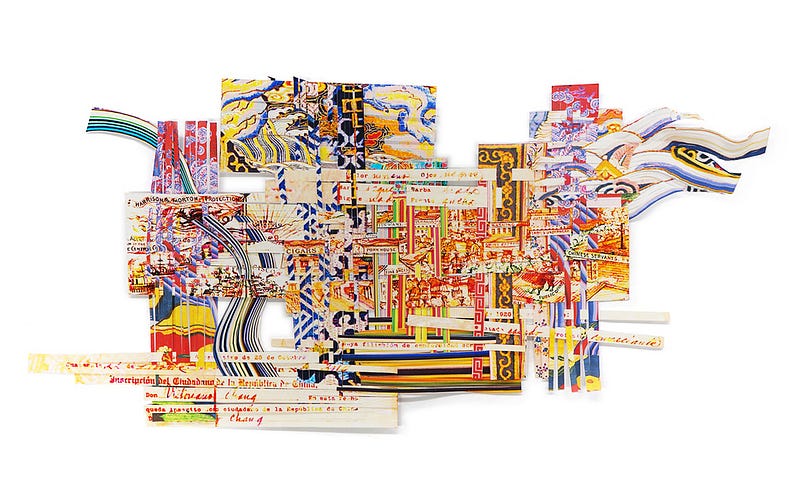
Victoria Si Wah Dong on: “Excuse Me, But Where Do You Come From?”

“Excuse me, but where are you actually from?” is a sensitive question for a lot of people, including the artist. Identity has always been a complex question, where no one’s identity is always a constant, but rather, a compilation of your past, present, and unpredictable future. The search of identity is:

“…a never-ending, always incomplete, unfinished and open-ended activity in which we all, by necessity or by choice, are engaged.”

Zygmunt Bauman, Identity in the Globalising World

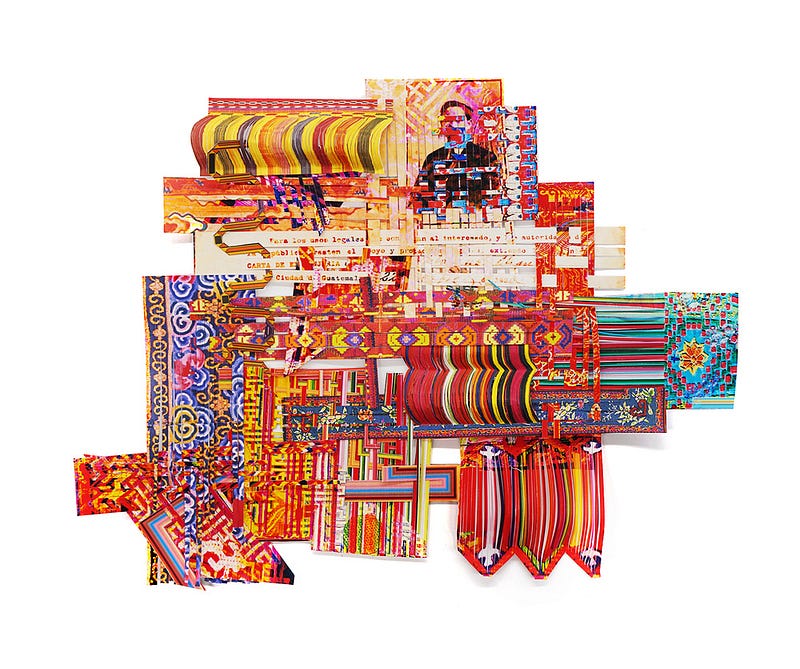
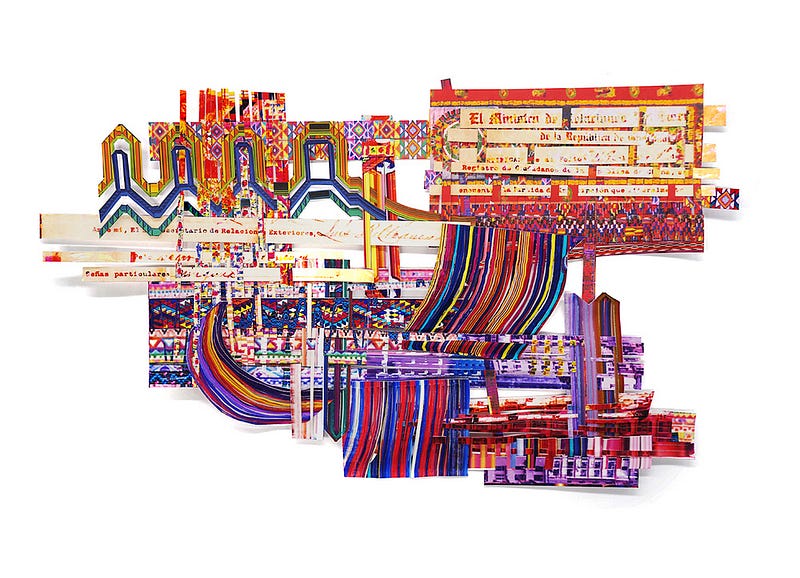
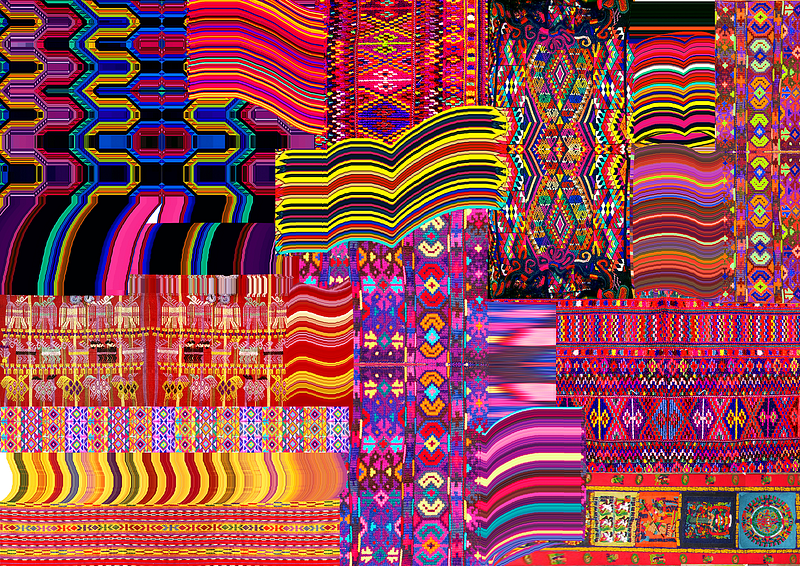
Living with a diasporic family coming from Guatemala, Hong Kong, and China, Victoria began the project by collecting and compiling a series of cultural motifs and private historical documents from the 1800s to 1900s from her cultural background as a way to understand her ancestry, global politics, and immigration history in the past, exploring what identity may mean. Identity, to her, is always an existing concept, yet it is not always definite, but constantly shifting and re-prioritised.

“Good lighting is the true blindness: one does not see what is all-too-visible; one does not note what is ‘always there’…”

Zygmunt Bauman, Identity in the Globalising World

The work takes printed paper as a medium, using weaving as an act to reveal and hide intertwined identities, using bright colours to elude the painful memories of parting that was once experienced by her ancestors.
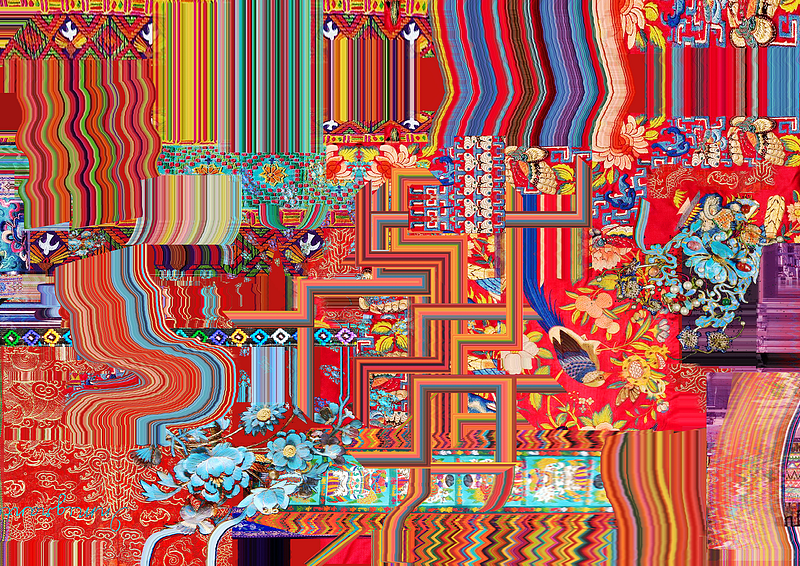
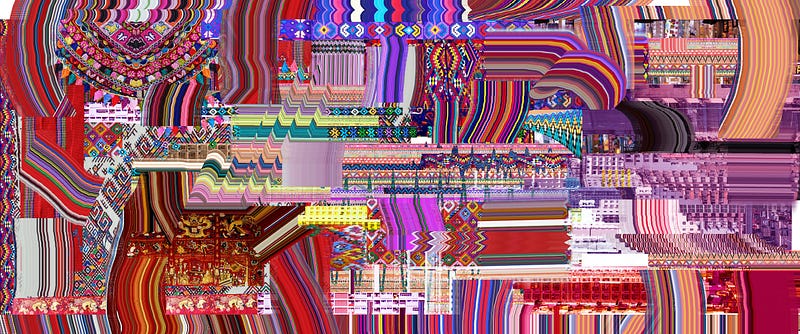
Following the Gold Rush Era of the late 1800s, the artist’s great grandfather moved to Guatemala from south eastern China in 1920, as a tradesmen in the textile industry, to search for new ways of living as the civil war in China began. He then moved back and forth between Guatemala and Hong Kong as World War II and recession took place, constantly displaced and replaced. Eventually, the artist’s father settled in Hong Kong. Fast forward to a hundred years later, in 2020, and Victoria has moved from Hong Kong to the UK.

Victoria is an artist and architectural designer. Her practice is multi-disciplinary, cross-pollinating between architecture, textiles, and graphic design, focusing on diaspora and identity-making. These works were developed during 2021, her first year at London’s Royal College of Art, while she was dealing with the anxiety and uncertainty of migration and exile as a Hong Kong citizen moving abroad. The work was selected for the 2022 Royal Birmingham Society of Artists Prize Exhibition.

Victoria Si Wah Dong
: Six : Shot : Gallery
read our publication
Art
Gallery
Identity
Culture
Textile
Recommended from ReadMedium