
Excessive Consumption of Protein and Renal Function
Protein from food consumption necessary to maintain various functions of our cells, when metabolized generates urea which is subsequently eliminated by the kidneys. Increasing the amount of protein ingested would lead to hyperfiltration by the kidneys that could increase renal activity and pressure on the glomeruli, so this increased pressure would lead to a deterioration of our kidneys, however, it is important to highlight that all of this is a hypothesis, having not been scientifically proven nor is there evidence of a clear association between the increase in hyperfiltration with the increase in the amount of protein ingested (within the limits of the reasonable — 2 to 3 grams for each kilogram of body weight) in healthy individuals (without any illness or health problem).

How to assess the health of the kidneys?
To clinically assess whether renal function is correctly assured, creatinine is used as an indicator because when the values of this substance are high it may mean that it was not completely or correctly filtered by the kidneys, however athletes or individuals who have superior muscular-mass indexes also have higher baseline levels of creatine present in skeletal muscle, so they will also produce greater amounts of creatinine balance compared to sedentary individuals, so maybe analyzing creatinine amounts is not at all the best method of verifying kidney functionality.
Another method that can be used is the measurement of urea levels (a product of protein degradation in the liver), however, the greater the amount of protein ingested the greater the activity of our liver to mobilize it and, consequently the greater amount of urea excreted, in athletes, there is also a greater degradation of contractile protein and therefore also a greater amount at the renal level of the same substance (urea), therefore this method should also be used with care in order not to raise false conclusions.
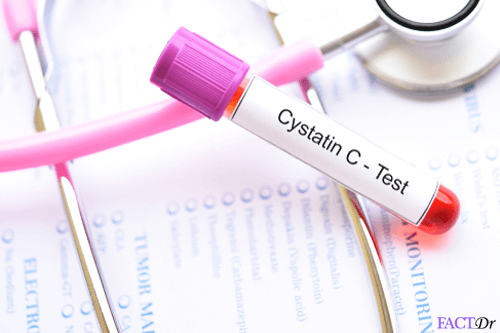
A more recent method uses cystatinC (small peptide) which in normal and healthy conditions is reabsorbed at the renal level, it is assumed that under unhealthy or abnormal conditions of renal filtration the concentrations of this peptide increase or are higher, indicating a malfunction of the kidneys.
Conclusion
Being a doubt that encompasses several aspects/nuances it is concluded that the measurement of the glomerular filtration rate is considered the direct method that gives us absolute values of renal activity and that the periodic diagnosis/analysis of this activity will be the most important and most correct factor to monitor the degradation or not of our kidneys.
For more information click here
Versão em Português
A proteína, macromolécula proveniente do consumo alimentar necessária para manutenção de várias funções das nossas células , quando metabolizada gera ureia((NH2)2CO) que, posteriormente é eliminada pelos rins, o aumento da quantidade ingerida de proteína levaria a uma hiperfiltração por parte dos rins o que conduziria a uma maior atividade renal e pressão nos glomérulos, assim este acréscimo de pressão levaria uma deterioração dos nossos rins, no entanto, é importante destacar que tudo isto constitui uma hipótese, não tendo sido cientificamente comprovado nem existe evidência de associação de forma clara entre o aumento da hiperfiltração com o aumento da quantidade de proteína ingerida(dentro dos limites do razoável-2 a 3 gramas por cada quilo de peso) em indivíduos saudáveis(sem nenhuma doença ou problema de saúde).
-Como assegurar a saudabilidade dos rins?
Para aferir clinicamente se a função renal está corretamente assegurada utiliza-se a creatinina(substância produzida aquando da degradação espontânea de fosfocreatina no músculo) como indicador pois quando os valores desta substância se encontram elevados pode significar que não foi totalmente ou corretamente filtrada por parte dos rins, no entanto atletas ou indivíduos que apresentam índices de massa muscular superiores apresentam também níveis basais de creatina superiores presente no músculo esquelético, assim irão também produzir maiores quantidades de equilíbrio de creatinina comparando com indivíduos sedentários, assim percebemos que a creatinina não constitui de todo o melhor método de verificar a boa funcionalidade dos rins.
Outro método que pode ser utilizado é a medição dos níveis de ureia (produto da degradação de proteína a nível hepático), no entanto quanto maior quantidade de proteína ingerida maior a atividade do nosso fígado para a mobilizar e consequentemente maior quantidade de ureia excretada, em atletas existe também uma maior degradação de proteína contrátil e por isso também uma maior quantidade a nível renal da mesma substancia (ureia). Percebemos então que este método deve também ser utilizado com cuidado para não levantar falsas conclusões.
Um método mais recente utiliza a cistatinaC (pequeno péptido) que em condições normais e saudáveis é reabsorvido a nível renal, pressupõe-se então que em condições não saudáveis ou anormais de filtração renal as concentrações deste péptido aumentem ou estejam mais elevadas indicando um mau funcionamento dos rins.
Concluímos então que é uma dúvida que engloba várias aspetos/nuances e que a medição da taxa de filtração glomerular é considerada o método direto que nos dá valores absolutos da atividade renal e que o diagnóstico/análise periódica desta atividade será o fator mais importante para monitorizar a degradação ou não dos nossos rins.