
Evolution of Clothing’s Future
Illuminating Consumers, Design Engineers and Technology
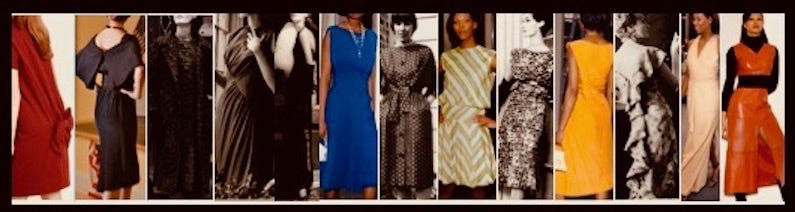
Consumers
In the future creative ideas will come from consumers as to what they want to wear. Every human being has the ability to create. Frivolous marketing of brands as known today will become extinct, following retail extinction, and reducing much meddling middle costs. Inner spirituality will dominate young consumer minds, and they will be drawn to understand their inner selves, with clothing as personal expression. Generation Z today is expressing anger at society’s mores, as seen in torn jeans and sloppy T-shirts.
Consumers must learn through history the true purpose of clothing, to express their own inner feelings, not those of celebrity or any other designers. Personal inner desires will become more prevalent in the future. James Laver, famous costume historian at the Victoria and Albert Museum is known for: “Fashion is the mirror of the soul”, as I taught in History of Costume at MassArt and other colleges and schools. My Self-A-Wear software games, designed in the 1980s, are a start by using costume history for how to express one’s inner soul and desires. It is explained in my Past Present Future Book.
Technology
MIT Technology Review had an article by Guardian, which proposed a germ of this idea in, “3D Clothes”.
“Shows could become even more immersive and hi-tech as the discipline evolves; 3D avatars wearing digitally created clothing, real models’ faces beamed on to 3D bodies and real models wearing real or digital clothing are all options. … Murphy firmly believes that 3D clothing will soon become a mainstream consumer pastime, as technological advances allow those without 3D modeling skills and software to digitally style their own outfits.“
Makers, including consumers making their own, will be engineers and educated to work with the specialized engineered clothing patterns, and find great joy again in making something into tangible reality with the hands.
Design Engineers
Clothing designers will go back to being engineers, as I remember in the 1940s and 50s in Boston, when stitching in garment factories. These design engineers were copyists — creativity came from Paris and gradually from New York. The emphasis on engineering enabled them to put their skills into great mass production techniques, which I learned by studying them in the factories. Unfortunately, like many businesses growing big and greedy for money, many of these skills got lost as the industry went after cheaper and cheaper production. Education taught the 19th century couture and promoted creativity and sensational marketing, because teachers came from dressmaking, and had no knowledge of design engineering skills. The present industry is doomed, and must die.
It is design engineers who must restart this new fashion industry. They will enable to artfully bring quality clothing back into existence, especially for the middle class. Also, beautiful, quality fashion clothing must be artfully engineered to enable many transformations and wearings, while maintaining its beauty for many consumers to wear. In so doing we avoid the “cheap throwaway culture”, that is ruining the earth. In the 1980s, in my “Fashion As A Business” class, I developed the “Telecom-Wardrobe Exchange, and we showed our results on TV’s “New England Today”.
Trend forecaster Li Edelkoort in her Anti Fashion manifesto
Edelkoort sees the present fashion industry and its dismal consequences right on. However, I disagree with the future she predicts. We can never go back to the past and bring it to the future. We certainly learn from the past, and the present when it becomes past. Couture with 800 hours to make a dress is a costly luxury for the elite and wealthy, and as much of a problem as greedy corporations and the stock market for money, power and fame.
I also disagree with cost cutting as a problem. It is only a problem when the goal is more money for executives and the shareholders. Lowering costs in all preparing and making processes through improvements in pattern engineering, and manufacturing engineering is an ideal to work toward in the future, to benefit makers and consumers. And, from what I have learned in 70 years experience, these skills can be highly creative and can have beautiful results. Anyone who doesn’t have some background in manufacturing will not see these great skills. From my history of working with academia in National Science Foundation grants, they are not being learned in education, but by work experience and improving oneself.
I do agree with Edelkoort, when she says, “Coronavirus offers a blank page for a new beginning”. Hopefully we will see the great future I illuminate here.


