
Everywhere I Go, I Eat Indian Food
Also Chinese food. And Thai food.
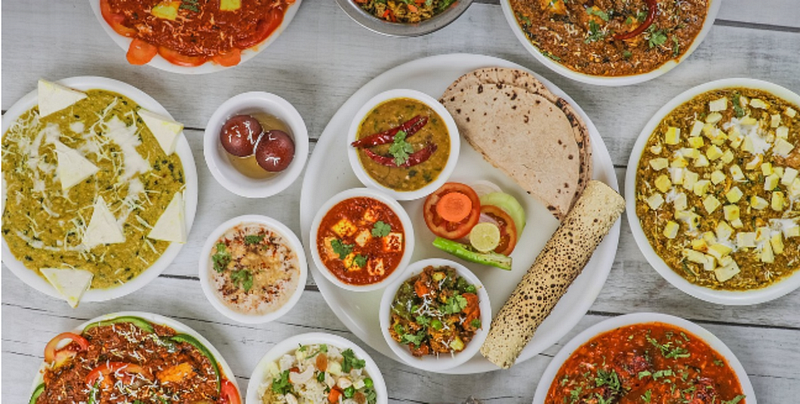
Enjoying the local cuisine is one of the joys of travel. I embrace that.
But everywhere I go, I also find myself in Indian, Chinese, and Thai restaurants. And I’ve never been to India, China, or Thailand.
I’ve been retreating (for lack of a better word) to these restaurants for as long as I’ve been traveling, but I only recently noticed what a habit it’s become. My partner and I had just checked into a room in a London suburb. Jetlagged, hungry, and price-wary, we strolled through town. There were lots of appealing places to dine, but time and again we looked them up and down, thought about it — and kept on moving. Until we came to an Indian restaurant.
“This works for me if it works for you.”
I relaxed my weary form, skimmed familiar menu items, and realized I’d performed this same routine many times.
Borrowed Comfort Foods
I’m not a “foodie,” I’m not a great cook, I’m not of Asian descent, and I’m not intimately connected to any Asian culture.
But I do love Asian foods. And I grew up with them, to an extent. My parents were adventurous cooks. General Tso’s Tofu (shaken up in a plastic bag to apply the cornstarch coating), naan bread (stovetop style)… these weren’t “our foods,” but we enjoyed them, both in restaurants and at home.
Like many white Americans, my DNA is a mix of many European groups. Three of my four grandparents and six of my eight great-grandparents were born in the US. I didn’t grow up with any connection to a separate “homeland.”
I’ve now lived in enough places that even the concept of “home” is fairly blurry. I love many lands, and I don’t feel a longing to return to where I’m from. Nor do I feel strong cultural ties to certain foods.
And while I’m always excited to try the local fare, I’m generally tired and confused as I seek out my first meal in a new place. Day one in a foreign country has enough complications without tripping through a confusing menu. In these moments, the familiarity of an Asian restaurant is a relief.
Why I Always End up in a Chinese Restaurant
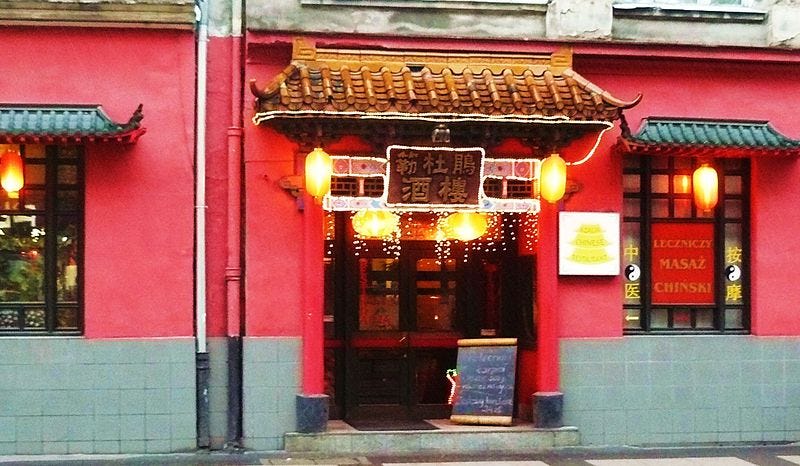
The US may be a fast food nation, but there are more than three Chinese restaurants (over 45,000) in The States to every McDonald’s (under 14,000).
Some folks say that most Chinese food served outside of China is inauthentic. What we know as “Chinese food” is actually numerous culinary traditions smushed together. Unfamiliar ingredients like turtles, insects, and sea vegetables are replaced with chicken, beef, and regionally-typical veggies.
For better or worse, Chinese restaurants offer a comforting uniformity for travelers. This often includes a major no-no for food snobs: pictures of the food.
The Gordon Ramsays of the world will tell you that if a restaurant displays photos of its dishes, that’s a red flag.
Here’s what the culinary textbook “Purchasing for Chefs: A Concise Guide” has to say:
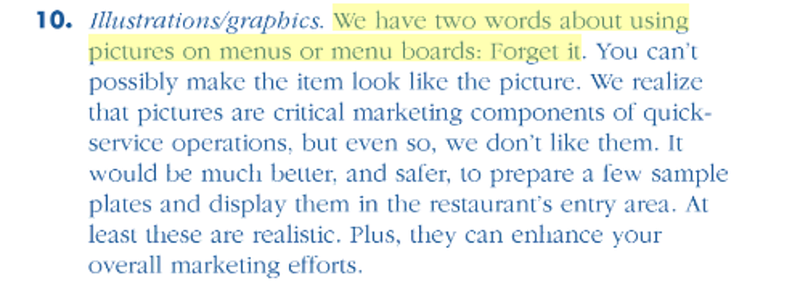
Well, I’m pretty sure that if I only ate at no-red-flag establishments, I wouldn’t be able to afford to travel. Please, show me pictures of your food. It’s useful. It helps us overcome language barriers.
Along with a convenient photo board, a Chinese restaurant is typically lower-priced, more vegetarian-friendly, and has faster service than the neighboring eateries. Perfect for a weary traveler.
And while uniformity is certainly part of the picture, that’s not to say that Chinese restaurants are the same everywhere. Rather, Chinese food often forms such a major presence in other countries that whole new blended cuisines are formed. For example, Indian-Chinese cuisine is enormously popular in India. This fare consists of Chinese dishes and ingredients, combined with Indian spices and techniques (or vice versa). Take Gobi Manchurian — cauliflower in cornstarch and soy sauce (Chinese staples), deep fried in chilis, garlic, and ginger (essential Indian flavors).
In Peru, where I’m currently based, a similar blending has occurred: Peruvian-Chinese cuisine is known as Chifa. In the capital city of Lima alone, there are 6,000 Chifa restaurants. In my first few weeks there, while I was still learning how Peruvian meals, groceries, and restaurants worked, I ate Chifa dinners almost every night.
Why I Always End up in an Indian Restaurant
When people ask me what type of music I like, I shrug and say “I don’t know, I like Neil Young.” When they ask me what type of food I like, I say, “Well, I like Indian food.” I find that sort of question to be unanswerable, but at least those responses are wholly truthful.
If you type into your search bar: “why does Indian food…” then Google will recommend that you finish the query with “…taste so good?”
Scientists have partially answered this question.
The average food ingredient contains 51 different flavor compounds. Between any two ingredients, there may be some overlapping compounds that occur in both, along with many unique compounds.
A meal may be marked by either:
- Positive food pairing: combining ingredients that share key flavor compounds
- Negative food pairing: combining ingredients that don’t share common flavor compounds
Western cuisine emphasizes positive food pairing. For example, how does a slice of pizza and a glass of white wine sound? Well, the tomatoes, the mozzarella, the parmesan, and the wine all contain 4-methylpentanoic acid. Yum!
On the other hand, East Asian and South Asian recipes tend to involve more cases of negative food pairing. This blending of opposites on a molecular level reflects traditional philosophy concepts from both China and India. Chinese Taoism presents yin and yang, the idea that opposing forces in balance create harmony. Indian Ayurvedic medicine offers similar principles, categorizing the contrasting qualities (e.g. hot/cold, sharp/dull) within us that must be held in balance.
Researchers from the Indian Institute for Technology analyzed the flavor profiles of 2,543 traditional Indian recipes and found that “Indian cuisine has a strong signature of negative food pairing.”
The figure below illustrates the minimal overlap between flavor compounds in key Indian ingredients.
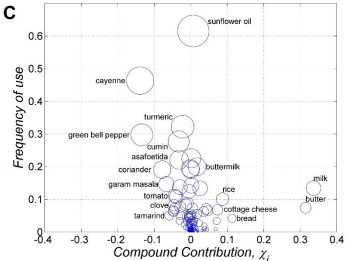
When you take a spoonful of curry and think that it “has a lot going on” in terms of flavor, you’re right. Compared to most Western foods, you’re probably tasting more ingredients, more individual compounds, and greater contrast between flavors.
Why I Always End up in a Thai Restaurant
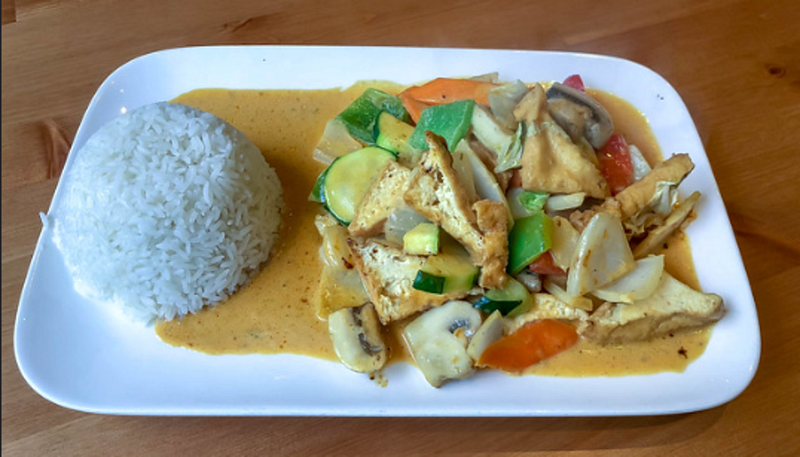
In the US, there are more than 5,000 Thai restaurants — despite a Thai American population of just 343,000. Thai restaurants aren’t as globally ubiquitous as Chinese or Indian spots, but they’re more common than you might expect — and more common than they used to be.
If you’re grateful to have pad thai in your life, you can thank the Thai government.
Gastrodiplomacy, also known as culinary diplomacy, refers to government campaigns that use food to improve a nation’s image and build goodwill. Many nations fund such practices, but few have invested in gastrodiplomacy like Thailand has.
In 2001, there were an estimated 5,500 Thai restaurants around the world. That year, the Thai government launched the “Global Thai Campaign” with the goal of branding their nation as a “Kitchen to the World.” More specifically, the program aimed to increase the Thai restaurant tally to 8,000 by 2003. The government had already been training chefs for years, and now it was time to deploy them.
When you visit a Thai restaurant, it’s not government-owned. But it may have been developed according to a government prototype, with state-sponsored training and support. The government conducted market research on food preferences around the world, set up meetings between restaurant owners and foreign business connections, and supplied loans.
Today, there are over 15,000 Thai restaurants abroad, nearly three times more than there were just 22 years ago. I, for one, am grateful.


