
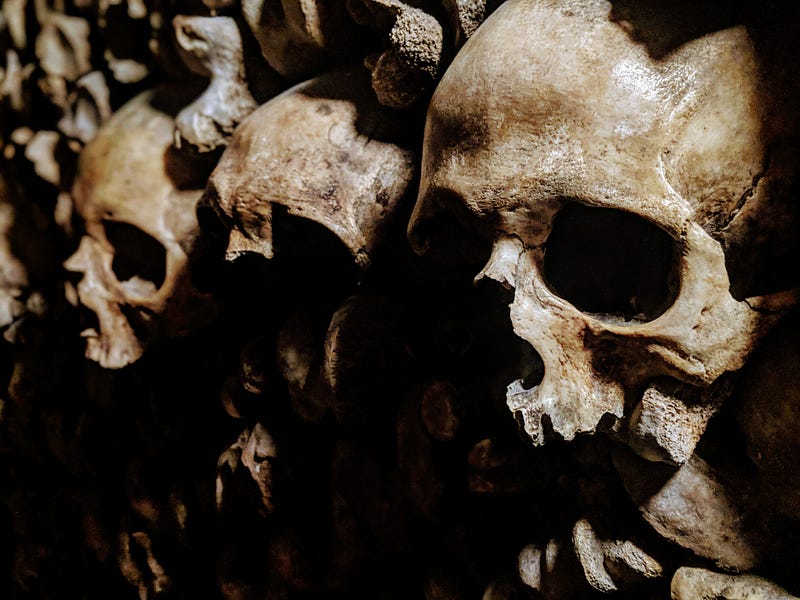
Everything You’ve Ever Wanted to Know About Human Cannibalism
What Science Has to Say About Human Cannibalism From Prehistory Until Now
Cannibalism…the word itself sparks a visceral fear within us. The word has come to be a theme at the forefront of much of our horror media. Zombies are cannibals. Serial killers are often depicted as cannibals. The idea of someone eating us strikes fear in our core. What kind of raw depravation or desperation must be needed to commit an act of cannibalism?
Cannibalism, by definition, is the process of eating a member of the same species. Disgusting as it may be to us, it’s a practice that’s extraordinarily commonplace in the animal world and is even practiced by some humans today. It might even be happening somewhere in the world, right now.
Humans have had many reasons for eating each other, ranging from religious practices to sexual gratification, and many more. Animals, on the other hand, cannibalize without so much as an afterthought or the faintest need for an explanation. Animals ranging from hippos to cute, cuddly-looking bears practice it, as well as toads, frogs, scorpions, and many, many more.
Could it be possible that — supposing we were pushed far enough, that we were desperate enough — that each and every one of us possesses some innate ability to flip on their cannibal switch and become a cannibal ourselves? From fending off starvation to religious ties with the deceased, the span of human history has given science the tools it needs to parse out quite a bit of understanding about this seemingly bizarre practice…
Prehistoric Human Cannibalism
It wouldn’t be hard, in today’s world, considering the current scientific and anthropological literature that we now have, to say with the utmost of extreme confidence that cannibalism is as old as humanity itself. Scientists and anthropologists have observed a wealth of evidence in the way of bite, cut, and tool marks that have shown that both humans and Neanderthals would occasionally and unapologetically venture into the eerie world of cannibalism.
It’s also been observed that starvation wasn’t the only reason people feasted upon their own in prehistory, with many instances of prehistoric cannibalism, particularly in the American Southwest, being accompanied by homicide and inter-tribal warfare. To put it plainly, the entire globe is replete with archeological digs that confirm the basic fact that prehistoric humans were sometimes violent, murderous, and of course, cannibalistic, sometimes finding themselves inclined to become cannibals in times when an enjoyable abundance of food was present.
Neanderthals & Cannibalism
There have been excavations at gravesites that have confirmed that Neanderthals would sometimes kill, cut up, and eat one another, as well. We have inferred this from the discovery of very early tools used for cutting straight lines through bone, which wouldn’t be found in the cases of just combat where blunt force trauma would be expected, or in the case of animal attacks where such wounds wouldn’t be straight across — animal bites and claw marks don’t leave straight cuts through bone.
It’s similarly safe to say that human cannibalism was taking place before humans were completely human. One site excavated in modern-day Croatia, Karina, is a large archeological dig with fragments and scattered remains of many Neanderthals. The site is a gold mine of evidence of Neanderthal cannibalism. The skeletal remains that were found have shown evidence of bones which have been cut through, then burned in a fire, and finally eaten by members of their same species, the early Neanderthal. Cannibalism: The Natural Thing to Do
For all of the gut-level disgust, revulsion, and repulsion we may feel when we try to close our eyes and imagine ourselves taking a bite of human flesh, the fact remains that cannibalism is actually quite natural. From animals to humans, it’s simply a part of our behavior.
Along with it being a natural, albeit comparatively rare thing for people to do, cannibalism is built into a dark corner of the fabric of the human mind. It’s in our DNA. As we will see, people have been eating people all across the globe for the entirety of human existence. One thing is for certain, as humans who came from human ancestors, and other primates, and mammals before them, cannibalism is likely a natural, innate trait, that can potentially come to life under certain environmental pressures.
I know many readers will have seen the movie Alive which depicts the Andes Disaster, where a soccer team was trapped after an airplane crash and forced to turn to the cannibalism of their dead friends in order to survive. This and many other instances demonstrate that even people who are usually grossed out by the thought of cannibalism, even people who may have very deeply-held religious beliefs against the practice would likely eat one another when push comes to shove, stuck somewhere far off in the deep, bone-chilling cold, with no help and no food.
What’s Kuru?
Kuru is a sweet little bit of natural karma, a deliciously juicy hint of revenge for all of those who’ve been cannibalized coming in the way of a protein that inhabits the surface of the human brain. Kuru is a disease and the protein that causes it is both devastatingly toxic and infectious. Western researchers first noted it’s peculiar prominence among the members of a highly cannibalistic tribe called the Fore, in New Guinea, when they were discovered and studied between the 1920s and 1950s. The word “kuru” is a word native to that tribe which translates into English, “Trembling in fear,” and it describes exactly what happens to some people after eating the brains of another person.
At first, kuru attacks the motor skills and throws the victim off-balance, making it difficult for them to perform everyday tasks. As time goes on, these difficulties get worse, though kuru is also usually fatal within one year of contracting the disease. The twist of fate is rather macabre, as the victims of kuru end up dying of dementia, the slow degradation of their own brain, as the protein from the brain which they’d consumed infects the very brain of the consumer.
The Prion Diseases
Prion diseases are additional diseases that come from cannibalism which have been discovered since the advent of science and its application to the study of cannibalism. There are many of them, in several classes, however, only a handful are known and understood. These can cause severe damage to the brain in the form of neurodegeneration which causes a general breakdown of the brain’s tissues. Creutzfeldt-Jakob Disease is one such prion disease (CJD), as well as Fatal Familial Insomnia, Gerstmann-Straussler-Scheinker Syndrome, and of course, Kuru.
When humans consume the flesh, blood, or bone of another that’s infected with these prions, which are forms of proteins that aren’t quite yet understood entirely, they’re at risk for contracting these various illnesses. Most of us are quite familiar with the animal version of prion diseases that come from consuming a member of the same species, oft-called “mad cow disease,” which is the bovine version of the disease that’s spread through the consumption of the same kinds of proteins.
Viva la Resistance
But, hey, the news isn’t all bad for the Fore people of New Guinea and other cannibals the globe over. The research has indicated something else that’s fascinating over the decades of studying such populations, as scientists have found evidence that seems to suggest an immunity developing to prion diseases, making those who practice cannibalism less and less susceptible to the virus over time. That’s right, cannibalism manifested a genetic mutation in the people who ate humans and survived, a mutation called V127, and anyone with that mutation was unable to catch Kuru. Subsequently, the V127 mutation spliced into the DNA of mice, who were then too resistant to a number of prion diseases. Necessity is the Mother of Consumption
The research is somewhat mixed on how much cannibalism has taken place out of necessity or for other reasons, and with tribes like the New Guinean Fore people who are also known to have committed cannibalism as a sacred funeral rite, or for reasons of religious signification, it’s sometimes difficult to determine their nutritional intake outside of eating other people. It’s certainly being proposed now, that the infamous Aztec sacrifices may have been more than just run-of-the-mill funeral rites, but rather, ecological necessity, as pressure to obtain nutrition for speedily growing populations increased, perhaps so did human sacrifice and cannibalism in response to the Malthusian Trap. But this still remains only a theory, like the Aztecs, from what is understood, generally performed human sacrifice in the times of harvest and abundance, as well, which were likely thanks given to the gods, rather than strictly necessity during times of famine. Hey, What About Digestion?
Throughout history, eating human meat, aside from any spiritual or emotional tie that may be imbued into the act, has largely been, at least when it comes to digestion, much like eating other animals. It should be noted, however, that while we contain many of the fats, oils, and other needs for human digestion than other meets contain, cannibalism is just not very nutritious, at least not compared to other meats. Human beings don’t pack the nutritional punch that could be obtained elsewhere, but we’re still very capable of being digested by one another.
We simply lack the vitamins and minerals that are necessary for human health that is found in other sources of meat. Given the nature of modern medicine and making sure experiments are ethical, tests haven’t been done on cooked human flesh, only raw, but if you trace our lineage back far enough, consuming raw human flesh may have been the only option many, many times. There are only approximately 1,300 calories per kilogram of human muscle; compare that to a full 4,000 calories for bears and boars. So, it just doesn’t make a whole lot of nutritional sense to eat other people unless you absolutely have to, but it absolutely can be done. The Nutritional Guide to Human-on-Human Calories
When it comes to consuming calories, the measurement of fuel for the human body, the amount of energy required to raise 1 milliliter of water, 1 degree Celsius, not all meats are created equal; humans are in the middle of that rage, with some meat, like open, being denser in calories, and others being significantly less. While you might run the risk of catching Kuru or a slew of other prion diseases, eating a human brain might fetch you about 2,700 calories, while an upper arm contains approximately 7,400 calories. An adult human male contains around 125,800 calories. When it comes to the intake of raw energy for survival, as our ancestors had done, human meat simply isn’t a good bargain, compared to other, more dense animals with heavier muscles. Compare a grown adult man’s 125,800 calories, to a woolly rhinoceros’ 1,260,000 calories, or a mammoth’s 3,600,000 calories; what kind of meat to look for if you’re trying to survive in the wild is a no-brainer.
Pound for pound, pun fully intended, humans are just another raw deal on the meat market of the natural world. Humans in the Lab
In case you thought cannibalism was a dying practice, doomed to be relegated to only those stricken with the extreme misfortune of starvation, and barbarians from centuries and eons past, you’re dead wrong. Modern science has actually come up with a pretty novel idea, and it will be interesting to see where it goes: human meat grown in a lab, made specifically for human consumption.
Maybe those of you who wanted to try cannibalism may someday be able to do so with the blessings and advances of modern science. The new process called In Vitro meat, or “clean meat,” is the process whereby animal meats are grown in a lab using only a few of those pesky stem cells that fundamentalists love to hate from a living specimen — the same process applies, of course, to create human meat from just a few cells. Scientists, including the notable scientific celebrity Richard Dawkins, have sampled how many people would actually eat human meat that was synthetically grown in a lab, and the results are pretty clear, most people absolutely would not. The real question is, however, would you?


