
Everything you need to know about IoT (Internet of Things)
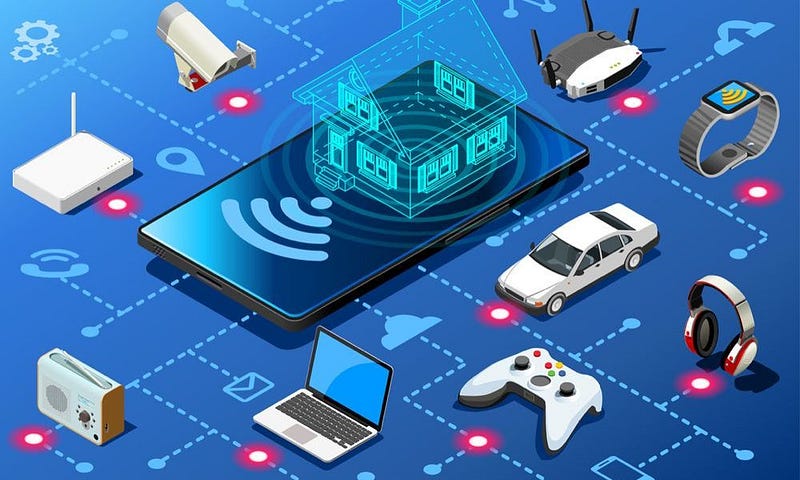
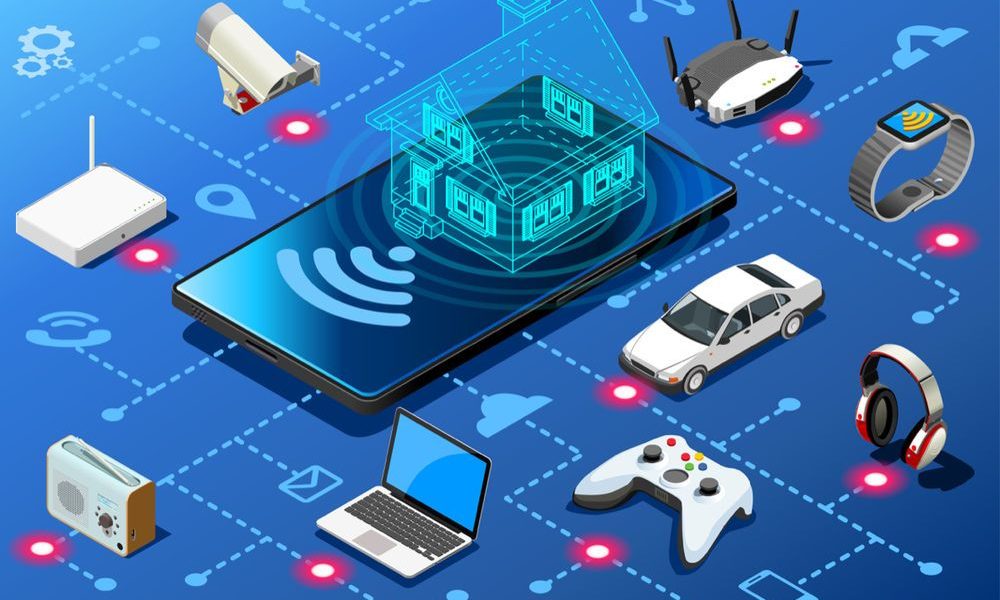
Hello everyone, you might have come across the buzzword IoT but may not have explored it in depth. Let us see about the Internet of Things in detail in this article.
What is IoT?
IoT refers to the devices or network of devices that are embedded with sensors and software to connect to other devices and systems over the internet. These devices are referred to as things and IoT refers to the connectivity of these devices without human intervention.
There are around 14 billion IoT devices in the world right now and the numbers are expected to go way higher to 30 billion devices by 2025. Some examples of IoT devices are
- Smart Mobiles
- Smart refrigerators
- Smartwatches
- Smart fire alarms
- Smart door locks
- Medical sensors
- Fitness trackers
- Security Camera
- Traffic Camera
- Driverless cars
- IoT enabled Drones
They have grown in popularity due to the growth of technology, increased connectivity, and the benefits they provide at a low cost.
With low-cost computing and minimal human intervention, these devices collect a lot of data and transmit it to the servers and with such data, people do Data Analytics and use the data for a lot of applications. One such example is the data transmitted by a fitness tracker is analyzed by the health application to provide health trends to the user.
Components for IoT Device Communication
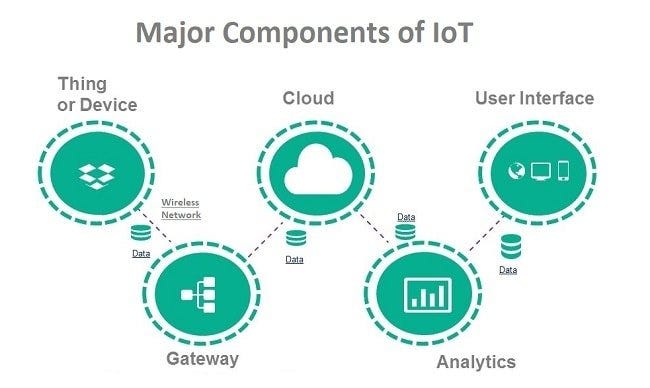

The IoT system usually will include the following components.
- IoT device — This is the physical IoT device that is used to capture data
- Local communication — The mode of communication between the devices eg: Bluetooth, NFC, WI-FI, etc
- Application protocol — How the information needs to be transmitted
- Gateways — These gateways gather data from the devices locally and transmit it over the internet usually to a server or application. The gateway is a physical device or virtual platform that can combine hardware and software.
- Network servers — Systems that accept IoT data. They sit inside a cloud environment
- Cloud applications — Applications that process the data in a meaningful form. Eg: Data Analytics and Machine Learning applications that are provided as SAAS by the cloud operators.
- User interface — To control the IoT devices and also visualize the data
IoT Applications in the Cloud
The IoT applications use Machine Learning algorithms to analyze the data stream from IoT devices. These algorithms provide key insights into the data and also help to find any anomalies and send alerts to users
With cloud-based IoT applications, businesses can leverage them instead of setting up all the needed software components from the scratch. This will enable business users to quickly enhance the existing processes for supply chains, customer service, human resources, financial services, and so on.
The following are the IoT platforms provided by the top cloud providers
1. AMAZON WEB SERVICES IOT PLATFORM
2. MICROSOFT AZURE IOT HUB
3. IBM WATSON IOT CLOUD PLATFORM
4. GOOGLE IOT CLOUD PLATFORM
5. ORACLE IOT
The IoT cloud platforms also bring massive benefits like Scalability, Data Mobility, Time to Market, Security, and Cost-effective.
Industrial IoT (IIOT)
The IoT when applied in the industry sector and applications, is called IIOT. This technology brings huge benefits in different sectors. I have just listed down some examples for every sector.
Manufacturing
Check the new equipment for accuracy and report malfunctioning
Automotive
Driverless cars transmit data to the owner and also to the motor company.
Transportation and Logistics
IoT sensors to track the temperature and alert about the logistics fleet of cars, trucks, ships, trains, etc. In extremer weather, it can help to reroute the goods through other means.
Retail
Smart shelves fitted with weight sensors can collect RFID-based information and send the data to the IoT platform to automatically monitor inventory and trigger alerts if items are running low.
Public Sector
Tracking of public utilities consumed by the households
Healthcare
If a hospital’s wheelchairs are equipped with IoT sensors, the staff can use the system to find out the available ones quickly
General Safety Across All Industries
Employees working in hazardous environments can get alerts of any danger from the IoT sensor-based applications.
How can IoT improve our lives?
The Internet of Things has a wide-ranging impact on human life and work. It allows machines to help us in our day-to-day lives over tedious tasks and helps us to focus our time on living a healthy, productive, and comfortable life.
With a limited supply of workers around the world, these devices would keep the world moving. Also, the schedule has become busy for everyone and we miss too many things as a part of our everyday routine. These devices can help us do that.
Eg:
- The fridge can place online orders when the groceries are finished,
- A car can book a service appointment when the due date has been reached
- The alarm clock can turn the coffee machine on.
The opportunities are endless in an IoT world
Drawbacks of IoT
Every technology comes with its own drawbacks and so is the IoT
- Security issues: Hackers know that we are relying too much on the devices and they can easily attack the system to do anything.
- Privacy concern: A lot of our personal data is used and shared by IoT devices. This could be a major issue with our personal data appearing everywhere on the web.
- Increased unemployment: The IoT devices could make unskilled and skilled workers redundant in most of the industrial sectors in the near future. The companies might prefer using devices to cut jobs as it's cost-effective and provides 24 / 7 support.
- The complexity of the system: Developing and maintaining IoT devices is a complicated process.
- System corruption: The possibility of system error is more as even a small issue in the software, the whole system will get corrupted.
- High dependency on the internet: Every IoT device is connected to the internet directly or through the gateways. Without the internet, we cannot obtain data from these devices easily. This makes them over-reliant on the internet and hence this technology cannot be used in places where there is no internet connectivity.
- Reduced mental and physical activity: There is every possibility that these devices make our life convenient but at the same time if we don't balance it, we could end up getting lazy and physically inactive
In this article, we saw IoT and the architecture of an IoT system. Then we saw IoT cloud platforms, Industrial IoT, and the benefits and drawbacks of IoT.
Hope this article was useful to you and thanks for reading this.
If you like to get more updates from me,
please follow me on Medium and subscribe to email alert.

If you are considering to buy a medium membership,
please buy through my referral link