
THE RELIGION FILES
Everything You Always Wanted to Know About Lent
As explained by a lifelong Catholic
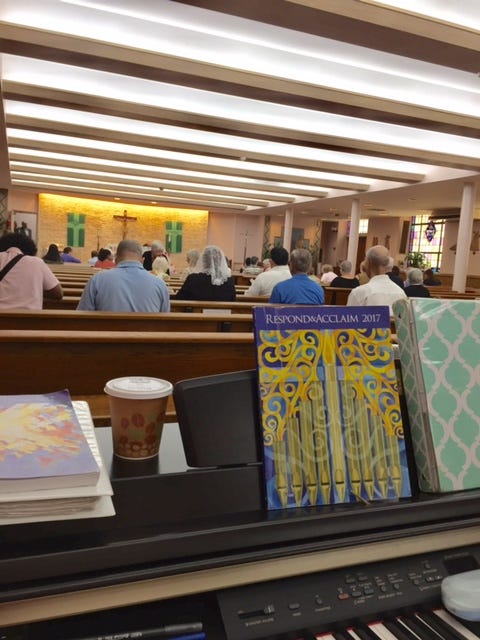
It’s every Catholic’s least favorite season — Lent. As a lifetime Catholic, I am an expert on Lent. Ask me anything. If I don’t know the answer, just give me a minute. I’ll google it and pretend I do.
Lent is the forty-day period before Easter Sunday. Flowers are blooming, and the world awakens from winter and enters spring. The whole universe is shouting, “Arise and celebrate!” And yet, Lent is a season of penitence. Amid all the blossoming life, we Catholics are supposed to think about death, sin, and Jesus’ suffering and crucifixion — the more sad, somber thoughts, the better.
If you think focusing on death, sin, and suffering in a world full of flowers, candy, and bunny rabbits is easy, try it sometime.
The retail world doesn’t help. It offers us cute stuffed bunnies, jellybeans, marshmallow peeps, chocolate eggs, and bags of bite-sized candy bars, all to tempt us to forget the misery we should embrace and start celebrating Easter early.
Back in the 1950s, when I was growing up, it was even worse. We Catholics were expected to abstain from eating meat throughout Lent. And anyone between 21 and 59 was expected to “fast” by only eating one full meal a day. This was great if you really liked fish or wanted to go on a diet, but it was a pain for everyone else. By the time I reached 21, thankfully, the rules had changed, and I could eat anything I wanted whenever I wanted it.
Except on Ash Wednesday and Good Friday.
Ash Wednesday is the first day of Lent. It is a day of fasting and abstinence from eating meat. Everyone goes to church and gets a smudge of ashes on their forehead, then walks around all day like that. It’s easy to tell who is Catholic on Ash Wednesday because they’ll be wearing that smudge. Even Catholics who never darken the door of a church any other time will go there on Ash Wednesday to get the smudge. The ashes are supposed to remind us that we are all going to die. The priest, when giving them, says, “Remember you are dust, and into dust you shall return.”

If you weren’t depressed when you came to church, you are now. And you have ashes on your forehead to prove it.
As a kid, it never bothered me to be told I would end up as dust. Who cared? That was a long way off. Now that I am in my seventies, this news hits a little harder. I could go home, forget what the priest said, and live in denial. Or I could start making my funeral arrangements in advance.
I’m going with denial.
For Lent, it is also traditional to give up something you enjoy for forty days. For kids, it’s usually candy. Adults decide what they want to give up. Hopefully, it won’t be something that will make your partner walk around weeping for forty days.
On the other hand, you don’t want to overthink your Lenten give-ups because, like New Year’s resolutions, they rarely last more than a few days anyway.
To lessen the effects of all that Lenten penitence, people in Catholic countries celebrate like maniacs on the days leading up to Ash Wednesday. This is the “carnival” season. Fun fact! “Carnival” comes from a couple of Latin words meaning “Goodbye, meat,” because meat was forbidden throughout Lent in the old days. The Tuesday before Ash Wednesday became “Fat Tuesday” — Mardi Gras.
The last week of Lent is known as Holy Week, which begins with Palm Sunday, a week before Easter. The problem with Palm Sunday is that nobody really knows if it is a day of celebration or not. Jesus’ triumphant final entry into Jerusalem is commemorated. So, celebration! But a very long gospel containing the details of his last sufferings and death is read at every Mass, more of a lamentation than a celebration.
Palm branches are given out, and many people are eager to grab a handful and take them home. Churches are packed not only with devout worshippers but also with people who are there for the free palm branches. Like ashes on Ash Wednesday, palm branches are some kind of badge of honor. It’s as if you’re not a true Catholic if you don’t get your ashes and palms.
These folks are jokingly known as A&P Catholics.
Holy Thursday is the Thursday before Easter when Jesus’ last supper with his disciples is commemorated. A lot of people don’t realize that the Last Supper was actually a Passover Seder. Jesus and his disciples were all Jews. Then comes Good Friday, when Jesus’ suffering and death are commemorated and again read out.
We church musicians both look forward to Holy Week and dread it. It means extra workdays, which is exhausting, but it usually means extra pay, which is always welcome. I am a church singer. I count on the additional money each year, but I’m always glad when the week is over, as much as I love the various services — and I do.
There is nothing more beautiful than taking part in the sacred services and singing to the glory of God.
Then comes the whole reason for everything that has been happening — Easter Sunday! We celebrate Jesus’ resurrection from death and the tomb. This event is glorious, beginning with the longest and most beautiful service of the year, the Easter Vigil Mass, usually held on Saturday evening.
On Sunday, children hunt easter eggs and eat candy; everybody enjoys a good Easter dinner and is happy. And we all agree that as challenging as it was to get through Lent, it was worth going through it to be here.


