Summary
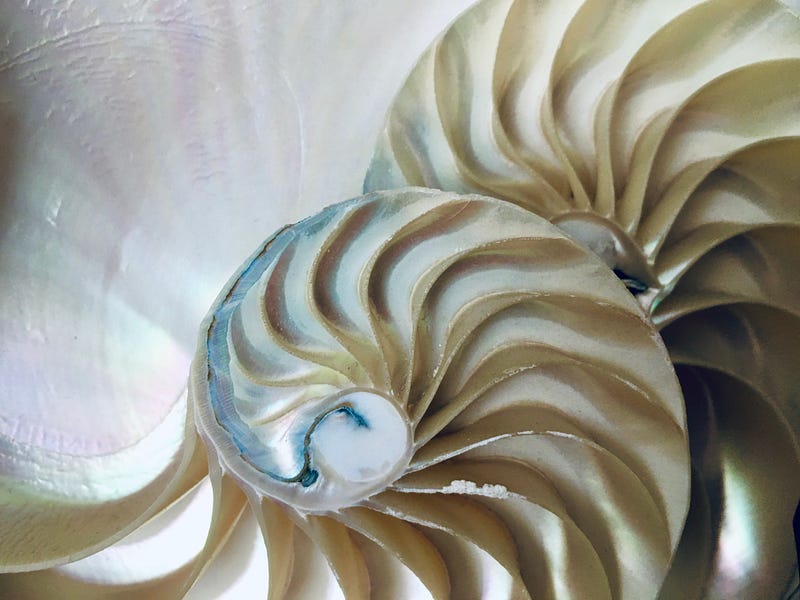
The undefined website features a "30 Days of SciKu Challenge" with Day 4 focusing on a mathematics-inspired haiku that playfully references the Fibonacci sequence and the beauty of numbers.
Abstract
The undefined website presents a creative challenge called the "#30DAYSOFSCIKUCHALLENGE," which encourages participants to blend science and haiku. On Day 4, the prompt is to write a haiku inspired by mathematics, specifically the well-known Fibonacci sequence. The haiku posted reflects the elegance and proportion found in mathematical patterns, such as the 5-7-5 syllable structure traditional to haiku. R. Rangan PhD acknowledges the seriousness with which the author takes this challenge. Additionally, there is a link to a related article titled "The Beauty in Numbers," which likely delves deeper into the mathematical concepts that can inspire poetic creativity. The haiku submitted by the author, "1+2 et seq. / add Infinitum, fraction? / It can’t be — it is," captures the essence of the prompt, highlighting the unexpected and intriguing nature of mathematical exploration.
Opinions
- The author takes the 5-7-5 structure of haiku seriously, as noted by R. Rangan PhD.
- Mathematics, particularly the Fibonacci sequence, is seen as a source of inspiration for poetry.
- There is an appreciation for the aesthetic aspects of mathematics, as evidenced by the phrase "Everything in Proportion" and the haiku that follows.
- The author seems to find beauty in the counterintuitive aspects of mathematics, as suggested by the final line of the haiku, "It can’t be — it is."