
Everyone Should Protest Like the French
Americans don't understand the significance of labor movements and corporate power.
We are so conditioned to obey our masters that we query France's behavior instead of asking why the French government passes unpopular policies. The democracy we cherish stipulates the majority rule, yet two-thirds of the population disapprove of President Macron's pension reform, and we scrutinize France's protests instead of Macron's undemocratic actions.
It's bizarre, but we don't stop there. Our backward or socially trained thoughts compel us to boast idiotic statements like the French have nothing to complain about. The government's slight pension adjustment from 62 to 64 years is lower than our full benefits retirement age of 67. Hurray?
Gloating about geriatric workers and longer working years is nothing to brag about, but we haven't figured out that US labor rights are among the worst globally, and we're the suckers. We shun and vilify strikes, claiming the workers' wages are nothing to moan about while ignoring the fat stacks that fill the shareholders' and corporate owners' pockets. It makes no sense.
French understand the ruling versus working class dynamics and the government's role in facilitating the wealthy capitalists' objectives. They maintain solid unions and "solidarity between the generations" to fortify the battle against the exploitative structure because they know it takes mass protests to combat the tremendous power imbalances.
“The right to strike is a shield against arbitrary corporate power and decisions taken by a government without prior negotiations.” — Michel Wieviorka, a renowned French sociologist
Bernard Arnault, the owner of the French luxury empire, usurped Elon Musk's position as the wealthiest man on earth, and there are forty-two French billionaires. Macron, "the president of the rich," aided their gains by cutting company taxes, reducing unemployment benefits, and eliminating a wealth tax. Yet, the president forced the pension measure through parliament because he worried "the financial risks were too great."
Rich labor history, communist-led union confederations, and work council elections influence French workplace conditions and culture. Instead of gushing over its capitalist overlords, protesters carry wanted signs with Arnault's face and refuse to live in a society where "capital crushes labor and people are just consumers."
The American labor movement gained momentum and some successes in the early 20th century, but it never achieved as much strength as the French. US corporate power and the government policies that aided it relentlessly knocked workers back and escalated the attacks during the global class war (the Cold War).
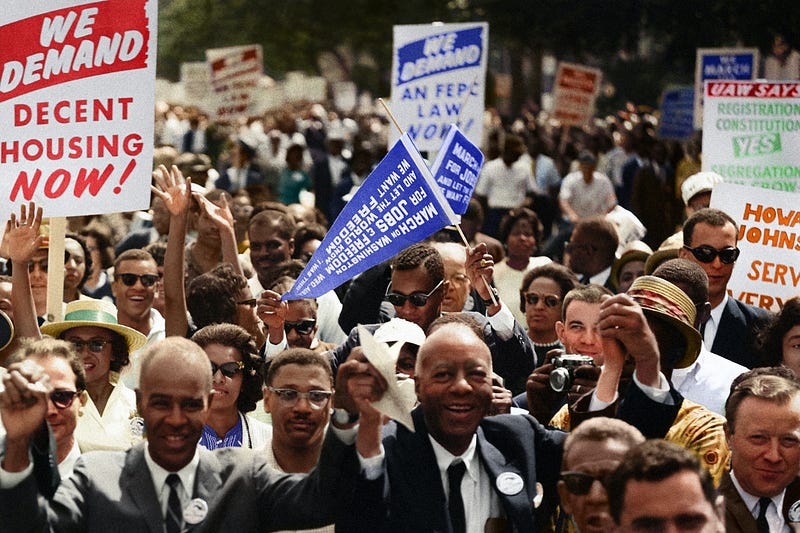
After WWII, the capitalist government chipped New Deal policies, wages, and labor rights away. Civil Rights activists protested unequal wealth distribution, segregation, classism, and US imperialism, but the FBI and CIA assassinated the movement and left-wing politics indefinitely.
Reagan stomped the remains of the capitalist-socialist economic model to death, and Clinton, Bush, Obama, Trump, and Biden continued to cater to American oligarchs. Union membership declined with wages, employment rights, income disruption, and quality of life, and Americans never established a Labor Party.
There isn't one federally mandated-paid day off, and "at-will" employment diminished employee leverage because there's no forceful body defending or fighting for the workforce. The two right-wing parties liberally fulfill their wealthy constituents' demands, while the corporate media intentionally polarize Americans, pitting them against each other in a dog-eat-dog arena.
Still, we don't fight like the French. Manual laborers work as long as their bodies function, forcing themselves through injuries until they collapse. They look healthier than the grey-faced, fast-food-filled office professionals who express their unhappiness by belittling service workers and drinking themselves to sleep every night. Everyone is miserable, and it's baffling there hasn't been a revolution.
And where would we be without drugs and alcohol? Undoubtedly, no one could sustain this lifestyle without the supplements taking the edge off. Working for the weekend and obliterating our brains until we disassociate from reality to cope with our meaningless existence. Perhaps, that's what keeps us from revolting.
France expects a decent quality of life, work-life balance, and a poverty-free retirement, and Americans anticipate more abuses. Our government planted the "there's no Social Security for your generation" seed decades ago and recently discussed raising the retirement age to 70. The Democrats will campaign as the Social Security heroes to win votes and blame the Republicans when Congress legislates austerity, and we won't make a fuss.
Some chumps will say it's our patriotic duty to work, and others will wonder if our government knows its duty, but that's just how it is. Banks receive bailouts when they run out of money, and Americans who pay the financial subsidies to private, corporate institutions get a kick in the rear.
France knows the capitalist tyrants will work it to death and pursue aggressive actions to achieve its goal because more than voting is required. They perceive the government as one body instead of blaming a party, forcefully demand rights as a united populace, and comprehend governments won't hand them rights without a blazing brawl, so they fight.
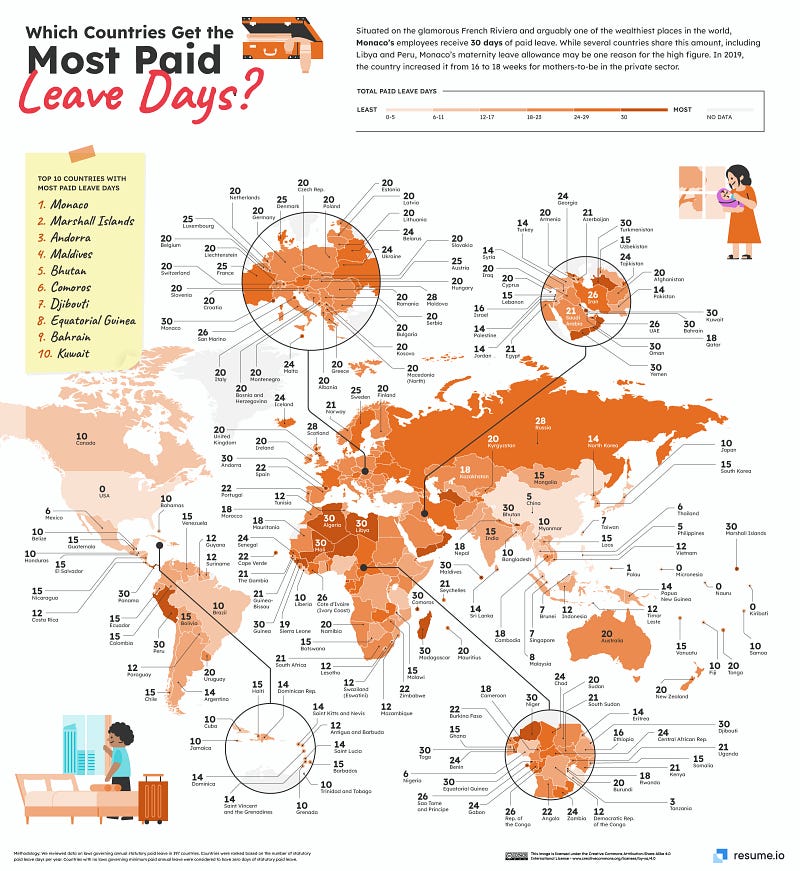
Globally, labor movements achieved four weeks of paid vacation, ten sick days annually, and parental, carers, bereavement, severance, and extended service leave. Yet, the world's largest (unless China surpassed the US) economy won't spare a day, and Americans don't patriotically defend each other's labor battles.
Perhaps, we'll realize labor power is democracy and capitalism is for the capitalists, but until then, we simultaneously and individually work to death.


