
Everyone Insatiably Seeks Happiness, but What is it Really for Us?
Happiness… Is it a Cliché Topic? Is it Possible to be Happy?

The question has been asked so many times that people already see it as a repetition.
Cliché? Maybe, but without doubt, a theme that will always talk about; why? Because whether we understand it or not, or we feel it in different ways, it is what the human being looks for in each step he takes, in each decision he makes, in each objective to be fulfilled, to be happy.
Everyone insatiably seeks happiness, but what is it really for us?
The Desired Happiness. Let’s Look at this From Different Points of View
Society: generally speaking, society regards it as fullness. Get all the things we want and provide us with well-being: prosperity, tranquility, security, etc.
The problem is that after achieving that “something” that provides us with all objectives, another element we want to possess immediately arises. So, is it possible to achieve such fullness?
From the religious and psychological perspective: Luís Ventura, a psychologist, professor, and believer that I have the opportunity to interview, told me the following:
“Happiness is a life project; a life project is a current that begins to emerge when the human being begins to meditate and see beyond what his reality is imposing on him. Religion adopts it as part of its existence when questions such as “what am I going to do now?” “What will I do next?” “what’s next?” “If happiness did not exist for the believer “believing” would not make sense, since being happy depends largely on our existence having a purpose.”
From a psychological and practical point of view, Mr. Ventura continues to explain that:
“Happiness consists in organizing your life based on objectives, in reaching goals, goals that involve not only you but also people who are around you. The possessions or things with economic value are not necessarily part of those objectives to be met, they are only objects that accompany us in the process, and that can never be essential to feeling the happiness we seek, since, if so, if we stop owning them, the desired purpose would be lost.”
According to what was discussed with Mr. Ventura, we can infer that being happy is being in an environment of full psychological, physical, and emotional well-being. Maturity influences this a lot, the independence of your actions without ceasing to be a sociable being, and of course, being very clear about your objectives.
Then, is it Possible to have Happiness?
Let’s go to the statistics and analyze a little.
As we saw before, happiness does not have the same sense or meaning for everyone, so it is usually difficult to define or understand.
A survey we conducted of 200 people aged 20 to 55, from different social backgrounds but within the same cultural background, asked simple questions about happiness. The result is interesting and contrary to the desire of our society to sell ourselves culturally and from the media.
Only 9% of those interviewed consider obtaining a university degree or a similar goal as part of happiness. This number may continue to decrease because the current generation prefers entrepreneurship to stay 4 or 5 years studying a university degree, implying that a degree does not define us or achieve.
Less than 7% relate happiness to partying. The percentage of this belief may drop significantly as the age of the individual increases since they begin to value other things or simply because they have already lived that stage.
35% associate happiness with economic stability, and without a doubt, it isn't easy to achieve peace if we have at least necessary to meet our primary needs, including certain tastes.
Between 44% and 46% relate happiness to emotional peace and a calm family environment.
But 50% consider that to be happy, a little of all the before is necessary. We understand that it is valid; this is called balance.
So, does Happiness Exist?
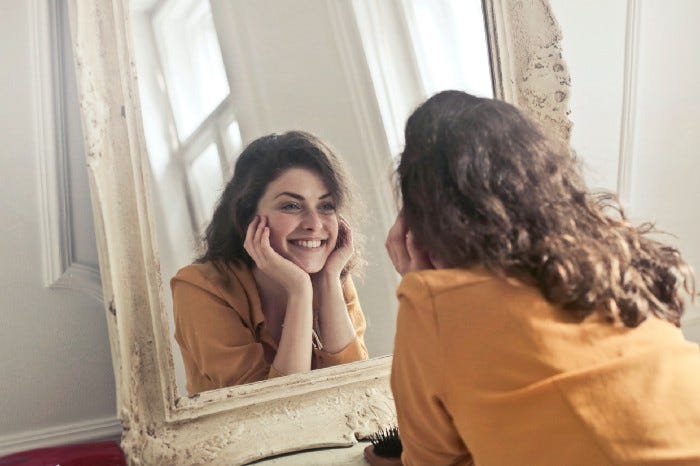
I think so, just that it is not a constant state, and it can be different in how each person interprets and feels it. I believe that the key to achieving the closest thing to happiness is to work on ourselves. We cannot find such a state-based solely on what we can have or achieve rather than what we already have. This does not mean we do not aspire; on the contrary, having goals and objectives makes our existence interesting.
Now, we should not pretend to be happy only when we achieve those goals. The answer is to be self-aware, to value all those things that we have before losing them, is to thank the universe, life, that higher entity that provides us with those tools that keep us alive, and when I speak of living, I do not mean to exist, but to feel special magic when waking up every day.
This, which I just mentioned, is NOT easy; if it were, people would not insatiably try to find instruments to be happy. Millions are not invested in books, courses, therapies, etc., to achieve that desired balance. But like almost everything in life, the most complicated has a simple answer.
To be happy, it is essential to reflect on ourselves, what we can be, doing, and above all, what we need to improve.
Being aware of what we have and value will help us be focused and enjoy every moment; therefore, that state of well-being or satisfaction ceases to become a goal and becomes a process that we can enjoy every second.


