
Every Vinyl Record Has a Story — And It’s Not Just The Music
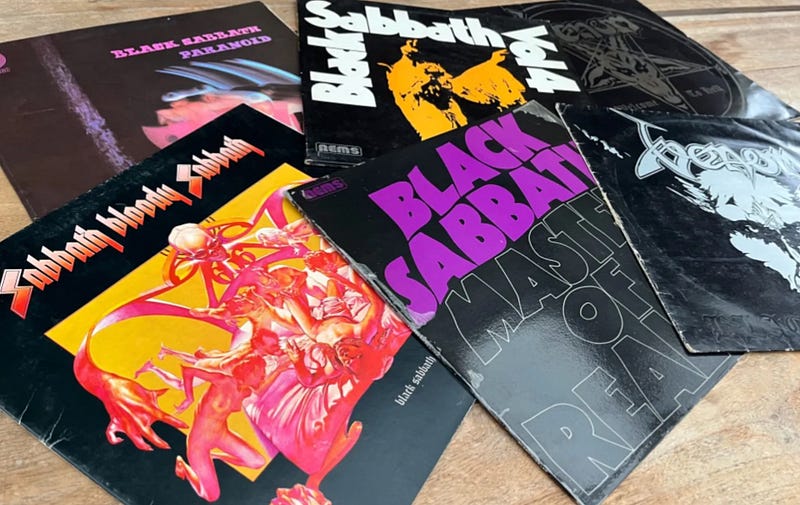
Every Old Record Tells a Story. You can tell a lot about who owned a record by the state you find it in. A musical take on the maxim — how you do anything is how you do everything…
Old records have a story, even if it’s a story of your own creation.
And even in instances where you’ve inherited LPs from someone you know, most of the narrative about the record’s life-to-date will be extrapolated from the condition you find it in.
Understanding that the recording was significant to the previous owner contributes, but ultimately, it’s a history for the new owner to determine. And if you’ve never considered this relationship when dropping a used record onto the turntable, you’re going to now.
Like any pre-loved possession, a degree of mystery can’t be found in new artifacts. Maybe that’s why antiques have noteworthy appeal. Did the previous owner connect with this record the same way you have? Did they play it enough? Was it appreciated? What was the context in which they listened?
Sidebar: What Constitutes an Old Record?
For the purposes of this discussion, a vinyl record pressed between 1970 and 1982. If a car is vintage at 30, a vinyl record at 40+ is adequate.
The Miracle of Vinyl Survival
The vinyl format is durable, and unlike Compact Discs or MP3 files, the threat of corruption is more explicit, and the destruction event readily explainable.
If well stored, vinyl records can easily survive across decades. This assumes the previous owners must’ve taken reasonable steps to keep these LPs away from their natural predators:
- Excessive sunlight
- Unwanted water
- Mold
- Smoke
- Gravity
- Children — your own or someone else’s
- Endless rotations under the stylus and so on.
The miracle occurs whenever a record has survived these natural forces—a celebration of responsible vinyl ownership. We appreciate responsible vinyl ownership.
You can tell a lot about who owned a record by the state you find it in.
I’ve found records where the sleeve is worn, but the vinyl seems almost pristine.
My working theory on these LPs is that the owner desperately wanted someone to experience it with them. It wasn’t something they were inclined to play alone, and it may have been an unwelcome title in the family home. So they took it from place to place, party to party, hoping that someone wanted to make this covenant through a shared listening experience.
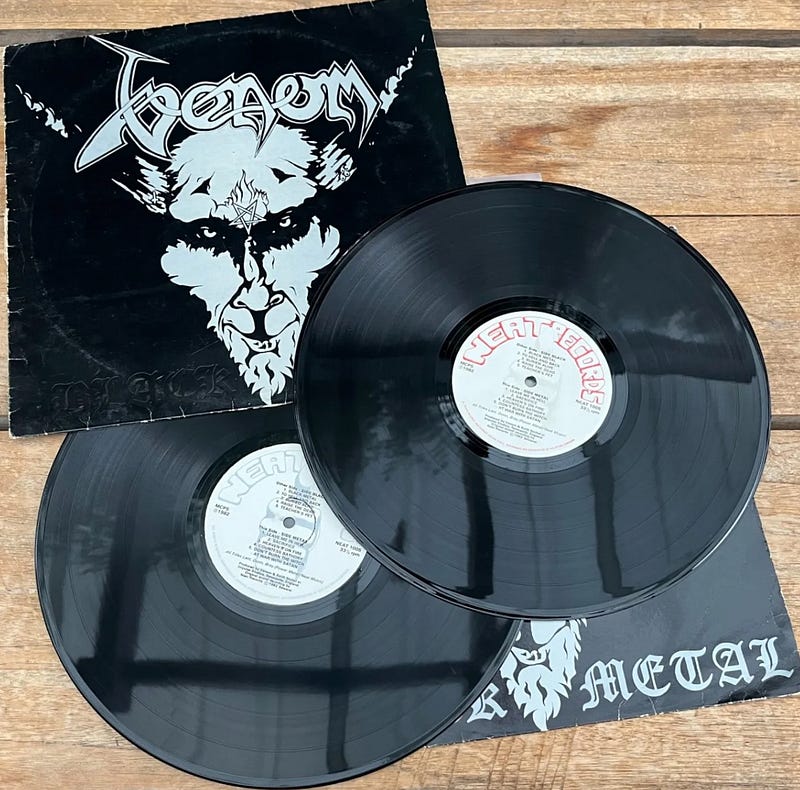
Sorry, mate, no Venom in this house.
Radio Station Libraries tend towards the same explanation - those sleeves have been flipped hard.
My working theory is pretty obvious here. I sent out a lot of promos during my record company days, and the cutout sleeves and heavily thumbed covers — through curiosity and simply maneuvering around during a search — aren’t indicative of what state the vinyl itself will be.
Radio station promo vinyl can be an excellent source if you care more about listening than visualization.
Sleeve = Poor, Vinyl = VG+
And then there’s literal deadstock.
This is the stuff that people didn’t want when it was pressed, the stuff left behind by deceased relatives, or titles that people outgrew, found their way into storage, or were otherwise missing in some metaphoric chasm for a decade or two.
The best kinds of used records.
Old, early pressings, especially when they still have the posters, lyric sheets, and other affectations. It’s hard to find inexpensive early editions now, but all collectors have stories of noteworthy finds.
What Makes An Old Record Different?
Audially speaking, fanatics can quickly blanket the conversation with a declaration of analog being superior to digital, and in my experience, I feel these old recordings more than I do their stylistic contemporaries.
That aura, however, is attributed to more than an instinct rather than a scientifically proven assessment of sounding better. The Bonfire CD Box Set remaster of Back In Black destroys my Atlantic vinyl Pressing from the 80s.
It’s a conflation of nostalgia, the antiquated characteristics of the record itself, and beliefs intentionally adopted and passively gained that conspire together towards formulating these ideas. It’s literally a feeling, but that doesn’t diminish its worth to the listener.
The arrangements, dynamics, methods of recording, and the competency of the artists each play a role, though it’s hard to misplace an authentic recording of the 1970s being from any other period.
Considering that the earliest digital recordings were from 1977 and digital mastering was common throughout the 1980s, the idea of anything predating the compact disc being categorically analog is misguided.
Having said that, it goes to the mystique of these ancient recordings, and coupled with the narrative one can fold into the listening experience of an old record, there’s a degree of elevation that’s hard to compare. And if you listen to new versions of old records, invariably remastered - that ouija-styled presence I’m suggesting is manifest in the presence of ancient recordings is definitely not there.
Top 10 Quirks of Old Records
- Vinyl care instructions. How to get the optimal sound from your LP. Sometimes on the sleeve, other times on the paper inserts. Weird and a little bit funny. It is hard to imagine a time when people were so naive about the basic functions of a music format. Having said that, these were not as excessive as the early CD care instructions, however — even if you could read that fine print.
- The flimsy sleeves with their thin spines now cracked and illegible.
- That hyper sheen varnished outer sleeve but unvarnished inner gatefold. Good chance it’s peeling away now.
- The smell.
- Thin vinyl that looks cheap and mass-produced, yet somehow sounds inspired, making me feel that the whole 180-gram production is a conspiracy cooked up between music and freight companies.
- Ring wear. Can you get ring wear on a contemporary sleeve?
- Age spotting. Especially on the inner gatefold sleeve. Adds to the ancient vibe.
- Deadwax communications. Cryptic messages scrawled into the run out.
- Nerds on Discogs dissecting the virtue of one pressing over another and driving up the perceived worth of various editions.
- Messages discouraging Home Taping. Our friend with the Venom LP would have loved someone to tape his record… no euphemism intended.
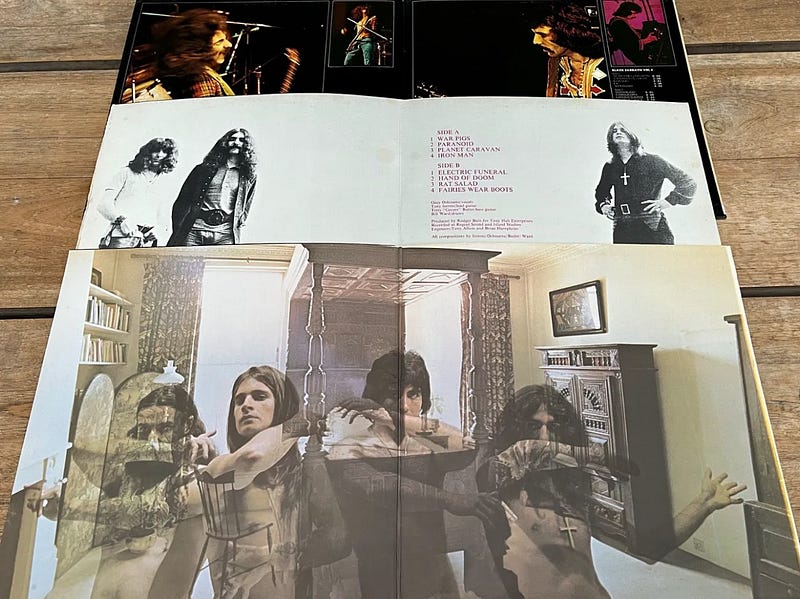
Records That Inspired This Piece:
- Black Sabbath Paranoid 1971, Australian Pressing
- Black Sabbath Master of Reality 1976, Australian Pressing
- Black Sabbath Vol 4 of Reality 1976, French Pressing
- Black Sabbath Sabbath Bloody Sabbath 1973, Australian Pressing
- Venom Welcome To Hell 1981, UK Pressing
- Venom Black Metal 1982, UK Pressing
Note: The years referenced above indicate when these records were pressed, not the year of release.
Advice for People Who Want to Collect Old Records?
- Make friends with old people in possession of records.
- Seek out deceased estates.
- Advertise to buy collections from people who don’t know any better.
- Buy ONLY what you love and can’t live without.
- As much as I love Discogs, good deals are thin on the ground. eBay prices are insane. Go back to point 1.