
Every Question You Ever Had (Or Will Have) About Wine Has the Same Two-Word Answer
9 letters that makes everything about wine simultaneously easier and harder
Do the drips that slide down a wine glass mean anything?
It depends.
Should white wine always be served chilled and red at room temperature?
It depends.
Is Sauvignon Blanc a white wine?
Believe it or not, it depends.
It depends is the answer to nearly every single wine question you ever had or ever will have.
It doesn’t make the subject easy. It doesn’t make for easily digestible nuggets of information. Most of all, it probably means that everything you think you know about wine — from your dislike of Chardonnay to your insistence on only serving white wine with fish — is wrong. Or at least, not absolutely correct.
When it comes to wine, there are very few absolutes. If you choose to drink the stuff, here’s why that matters.
It means your patronizing know-it-all-about-wine acquaintance is probably full of BS
If you want to see the Dunning Kruger effect in full swing, find someone who’s about a year into learning about wine as their hobby:
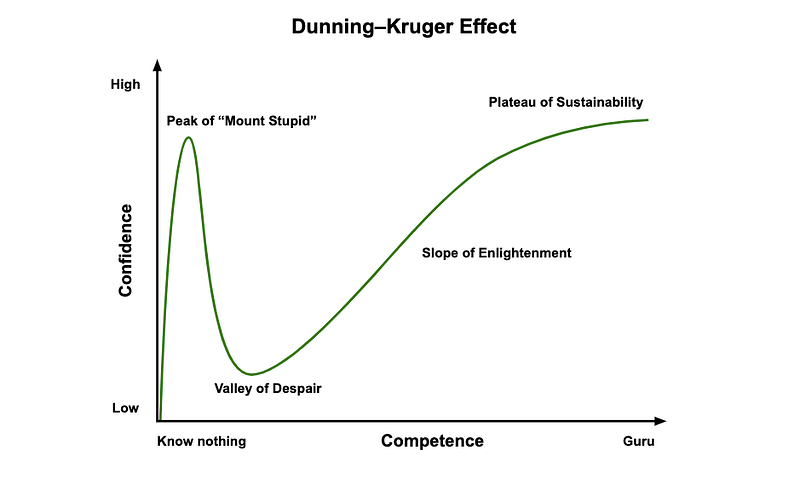
They’re riding high on that Mount Stupid, spouting their knowledge as if it’s a done deal.
I’ve seen this more times than I care to count. Hell, I’ve been that person.
A lot of people — including in my experience, many professionals, never move off Mount Stupid because they never want to acknowledge those two little words — it depends.
I get it. If you dive into the complexity of wine it makes it hard. There are fewer absolutes and that can make you feel, well, a bit stupid. It this point that you’re on an easy slide from Mount Stupid to The Valley of Despair. Heck, you can sled down the mountain on skis made from the words It and Depends
This matters to you because you’re the one who has to put up with these know-it-alls, be it your dad, your colleague, or your friend. We all have one in our life. And they’re truly annoying.
But now you know what to tell them. You tell them that some Sommelier chick on Medium told you the answer to every single wine question.
They probably won’t like it. But it will do them some good in the end.
It means you can check your wine prejudices at the door (which makes everything more fun)
So you think you hate Chardonnay, huh? Have you tried them all? The ones from the Jura in France that taste like licking wet stones? How about the ones from Burgundy that taste like popcorn? Or the natural one that’s all cloudy and funky and smells faintly of nail polish remover?
How about natural wines, organic wines, or light red wines? Croatian, Spanish, Italian, French?
The professional wine industry has tried to “demystify” wine so much that it’s homogenized the whole thing into something that it’s not. It loves to spout memorable bits of knowledge consumers can latch onto.
Like all Sauvignon Blancs should taste like grass.
Like all Zinfandels should taste like jam.
That “you can’t go wrong” with Spanish wine.
That all German wines are sweet.
The real answer? You guessed it — it depends.
One of my favorite methods of wine tasting in my bar was to get customers to taste wine blind.
I converted life-long Chardonnay haters into life-long Burgundy lovers. I convinced someone who thought “all organic wine tastes like farmyard” that that is hardly ever true. I got red wine drinkers into white and white drinkers into red.
And I fucked everyone up with a skin contact Pinot Grigio that’s almost as dark as a red wine (fun fact — Pinot Grigio has reddish-pink skins and some of the best examples use the skins to make their wines a far cry from your average supermarket bottle).
Once you realize there are no absolutes when it comes to wine, you can start to forget everything you think you know, from a hatred of a certain grape variety to rejecting oaky white wine to never serving a white wine with steak or a red wine with fish.
Unless you’ve tried them all, you can’t make these absolute judgments.
Which is fun! It means you can throw away the rule book — and your prejudices — and explore a world beyond picking up your usual bottle on a Friday night.
It means you never have to worry about asking a stupid wine question again
Because the answer to everything is “it depends” it means there are literally no stupid wine questions.
Anyone who makes you think that they are might still be perched atop Mount Stupid, so you have a pass to ignore their scoffs.
You can ask whatever you want. Hell, you can certainly ask me whatever you want.
And I promise I’ll try and expand from it depends.
Lack of nuance gets you nowhere (both in wine and in life)
Absolutes are what make haters hate. They’re what makes people lose countless hours of their life to pointless online arguments.
This world is too freaking interesting, personal, and batshit crazy to get bogged down in absolutes.
And that includes the world of wine.
Wine isn’t a narrow subject. It can’t be reduced to universal truths. That’s why it’s so freaking interesting.
The sooner you recognize that the sooner you can get on with enjoying everything this fascinating, geeky, weird world has to offer.
Fun, eh?
Sign up for my Substack Simple and Straightforward, to help you live simply, sustainably, and with intention in a complex modern world.


